February 8, 1983: A Horse Is a Horse Of Course

As a horse, Shergar had it pretty good.  He’d earned his place in the sun.  The Irish racehorse, a bay colt with a distinctive white blaze, won the Epsom Derby in 1981 by ten lengths— the longest winning margin in the race’s history. He was named European Horse of the Year that year and was retired from racing in September after winning £436,000 in prize money for his owners.

A month later, Shergar arrived in Newbridge, greeted by the town band and cheering, flag-waving throngs as he paraded up main street on his way to begin his stud career. It was another successful career for Shergar who produced 35 foals that season. His second season was looking good as well, with 55 mares on hand.

“A clue… that is what we haven’t got,” Chief Superintendent “Spud” Murphy told reporters shortly after the evening of February 8, 1983, when Shergar disappeared. Sherlock Holmes fans might by forgiven if they start claiming this scenario is right out of the great detective’s adventure, Silver Blaze.   Perhaps the perpetrators read Arthur Conan Doyle.

In any event, at 8.30 pm, Shergar’s groom,  James Fitzgerald thought he heard a car in the yard. He listened, heard nothing more, and forgot about it. Ten minutes later, there was a knock at the door and his son answered it. The uniformed caller asked the boy to fetch his father, but when he turned his back, the visitor hit him from behind, knocking him to the floor. Fitzgerald entered the room to see a pistol pointed at him. Three more armed men, one carrying a sub-machine gun, pushed their way into the house. They held the family at gunpoint while Fitzgerald led two more thieves to Shergar’s stall. Fitzgerald was forced to help the thieves load Shergar into a horse trailer, and the horse was towed away. Fitzgerald was driven around in another vehicle for several hours before being thrown out of the car having been given a password the thieves would use in ransom negotiations.

The investigation and the negotiations were a lesson in ineptitude on all sides, featuring detection by psychics and diviners, demands, counter demands, botched meetings, all amid rumors that the horse was already dead or that the owners were only negotiating to buy time with no intention of paying ransom.

Whatever the truth, after four days the thieves called no more.  Officials blamed the Irish Republican Army for the crime.  Shergar has never been found.  Sherlock Holmes fared better with Silver Blaze.  Unfortunately, he was no longer available.


These Guys Would Have Been Prepared

William D. Boyce was an American newspaper man, entrepreneur, publisher and a bit of an explorer. In 1909, Boyce happened to be exploring the streets of London. It was, as they say, a foggy day in London town. It may not have had him low, had him down, but it did have him lost, or so the legend goes.

As he wandered through the pea soup, haunted by thoughts of Jack the Ripper perhaps, a young lad stepped out of the haze and led him to his destination. Boyce tried to reward they boy who had come to his aid, but the boy would not accept a tip, explaining that he had merely done his duty as a Boy Scout.

The Boy Scout departed, off to help another poor soul lost in the fog, and Boyce returned to the United States, but not before he had visited London’s Boy Scout headquarters, where he immersed himself in scouting lore, starting campfires, tying knots.

Four months later on February 8, 1910, Boyce trustworthily, loyally, helpfully, friendlily, courteously, kindly, obediently, cheerfully, thriftily, bravely, cleanly and reverently founded the Boy Scouts of America.

A Clever Segue

“So here we are, stuck on Gilligan’s Island – Chickenshit Crusoe and his faithless companion, Good Friday.”

“I was a Boy Scout for two weeks,” Paul offered.

“What a relief. And to think I was starting to get worried. But you obviously know how to start a fire without matches, forage for food, and carve a comfortable existence out of the cruel jungle.”

“Well I did learn how to tie a square knot.”

“Well there you are. You little rascals are always prepared, aren’t you? And kind and reverent and true and God-fearing and above all helpful. If we only had a little old lady, you could help her back and forth across the beach.”

A brief bit from Voodoo Love Song, fun and adventure for you good little scouts, boy or girl, while you’re being prepared.  You can find it here.

FEBRUARY 7, 1908: Been There, Done That

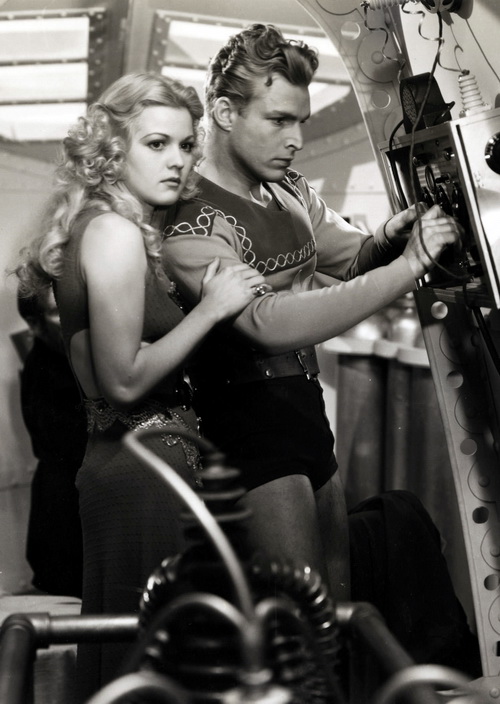
Not another man swinging through the trees in Africa wearing nothing but a loincloth.  Afraid so.  Athlete turned actor, Buster Crabbe (born Clarence Linden Crabbe II, on February 7, 1908), followed in Elmo Lincoln’s footsteps, starring as the ape man in Tarzan the Fearless, a 1933 serial that was later compiled into a full-length movie.  Crabbe dived into his movie career after winning Olympic gold for freestyle swimming in 1932.

Although he was Tarzan only once, passing his loincloth to Johnny Weissmuller, he played a variety of jungle men in movies such as King of the JungleJungle Man, and King of the Congo. When he wasn’t swinging in the jungle, he was speeding through for the far reaches of space as both Buck Rogers and Flash Gordon, taming the West as Billy the Kid and a posseful of other cowboy heroes, or Americanizing the French Foreign Legion His three Flash Gordon serials were Saturday morning staples in the 30s and 40s. The serials were also compiled into full-length movies. They appeared extensively on American television in the 1950s and 60s, and eventually were edited for release on home video.  As his acting career wound down, he became a spokesman for his own line of swimming pools. He died in 1983.

Imagine Jacob Marley in Chains and a Loincloth

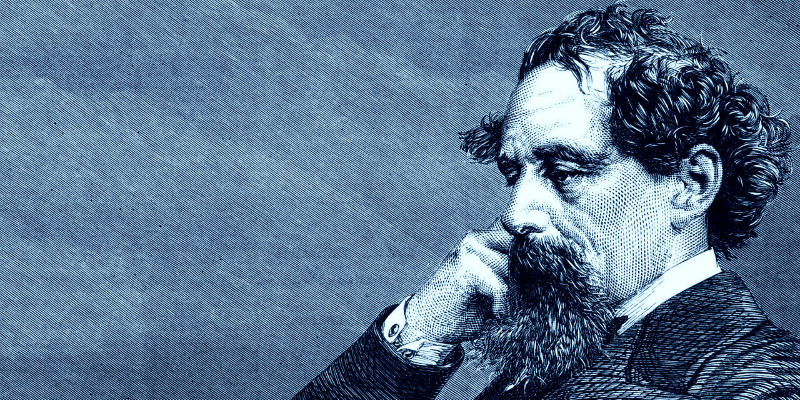
Little Charles Dickens knew the adversity he would later write so effectively about. Born February 7, 1812, he attended school in Portsmouth during his early years but was sent to work in a factory in 1824 at the age of 12, when his father was thrown into debtors’ prison. Dickens learned first-hand about the deplorable treatment of working children and the horrors of the institution of the debtors’ prison.

In his late teens, Dickens went to work as a reporter and soon began publishing humorous short stories. A collection of those stories was released in 1836 under the title Sketches by Boz (later titled The Posthumous Papers of the Pickwick Club). The stories about the quixotic innocent Samuel Pickwick and his fellow club members quickly became popular: 400 copies were printed of the first installment, but by the 15th episode the print run had reached 40,000. Publication of the stories in book form in 1837 established Dickens as the preeminent author of his time.

Oliver Twist followed in 1838 and Nicholas Nickleby in 1839. In 1841, Dickens visited the United States, where he was treated as a conquering hero. As a writer, he kept churning out major novels at almost a yearly pace each one seemingly more masterful than the last, among them: David Copperfield in 1850, Bleak House 1853, Hard Times 1854, A Tale of Two Cities 1859 and Great Expectations in 1861.

Dickens was the literary giant of his age, unparalleled in his realism, social criticism and humor, a master of characterization (think Fagin, the Artful Dodger, Pip, Uriah Heep, Oliver Twist, Tiny Tim and, of course, Ebenezer Scrooge). The 1843 novella that featured Scrooge, A Christmas Carol, is one of the most influential works ever written, still popular after 170 years and still inspiring adaptations in every artistic genre. Dickens even has his own adjective, Dickensian.

Dickens died in 1870 at the age of 58, leaving an enigmatic unfinished novel, The Mystery of Edwin Drood. He has been celebrated by statuary, in museums and even on currency — all against his dying wishes.


February 6, 1889: Me Elmo, You Jane

A man swings through the trees of Africa, wearing nothing but a loincloth and doesn’t get pinched.  Well maybe by a completely naked chimpanzee.  That beefy fellow in the loincloth can only be Tarzan of the Apes.  Edgar Rice Burroughs introduced audiences to his character Tarzan in a 1912 pulp magazine followed two years later by the novel Tarzan of the Apes. Tarzan became so popular that Burroughs followed up with sequels into the 1940s — a good two dozen.

Tarzan was a natural for the movies as well, and fans only had to wait until 1918 to leer at their skimpily attired hero, his skimpily attired mate, and the aforementioned naked chimpanzee. The first movie Tarzan was Elmo Lincoln, born on February 6, 1889.  As onlookers gathered around his crib listening to his cooing and admiring the little tyke in his little diaper, they little realized that they were looking at the future mighty man of the jungle, already in his loincloth and ready to swing. (Well, maybe not entirely ready: Elmo was afraid of heights and required a stand-in to do his swinging for him.  Chances are pretty good he was afraid of lions and tigers as well.)

Elmo may have been born to play Tarzan, but he got to the role by a circuitous route through a dozen other films, some notable (Birth of a Nation, Intolerance) but not for his appearance. Tarzan of the Apes took theaters by storm. It was the most faithful to its source of all the film adaptations: Lord and Lady Greystoke are bound for Africa, when their ship is taken over by mutineers. A sailor saves them from being murdered, but they are marooned on the tropical coast, where they die. Their infant son is adopted by Kala, an ape, who raises him as her own. Little Tarzan grows up never noticing that he is not as hairy as his siblings. Hairy or not, he becomes king of the apes. The sailor returns to Africa, discovers the ape man and reports this to his family in England. An expedition under the leadership of a Professor Porter sets out to find Tarzan. In the meantime, Kala has been killed by a native, and is avenged by Tarzan — now an adult and played by Elmo Lincoln. This naturally sets off a feud with the natives who kidnap Porter’s daughter Jane. Tarzan rescues Jane, nature steps in, and there go the loincloths.

Tarzan of the Apes covered only the first part of the novel. The remainder became The Romance of Tarzan, released that same year. Lincoln starred in that film and in a 1921 serial The Adventures of Tarzan. Elmo starred in nine other movies before leaving Hollywood at the end of the silent movie era. Tarzan the Ape Man was remade in 1932 starring Johnny Weissmuller, who went on to star in eleven other Tarzan films.

A Man in a Toga

No loincloth for Ramón Novarro, but he did manage to set the screen smoldering in a toga in Ben Hur. Born Jose Ramón Gil Samaniego in Mexico on February 6, 1899, he began his career in silent films and became a top box office draw during the 1920s and 1930s. Billed as the Latin Lover, he became the heir apparent to Rudolph Valentino. His career in movies, stage and television spanned five decades. He was murdered in 1968 by two young men who believed he had a stash of cash in his home.

February 5, 1861: Every Peeping Tom, Dick and Harry

A lady rode through the streets of London on horseback, naked (the lady not the horse), and didn’t get pinched (in the law and order sense, that is).  But more of that later.

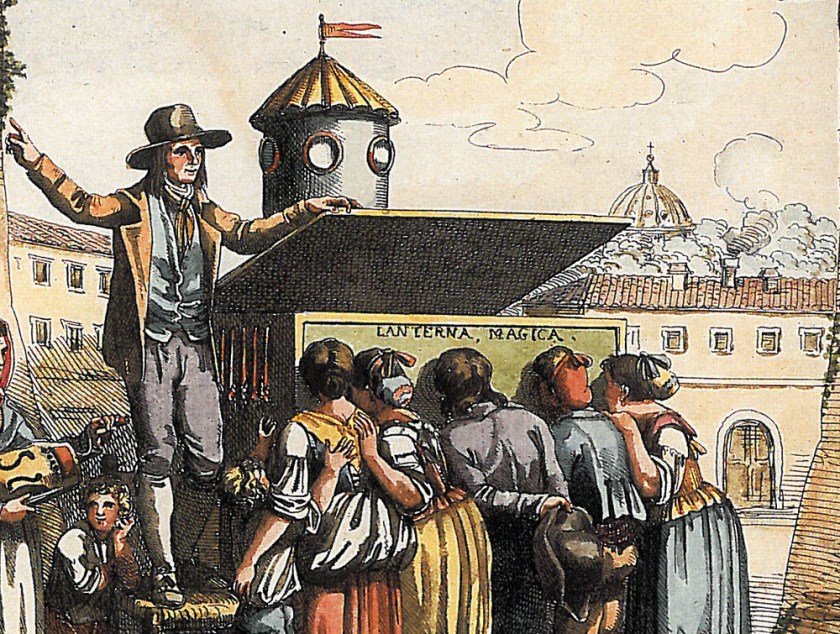
In 1861, Samuel B. Goodale who hailed from Cincinnati received a patent for a clever hand-operated stereoscope device on which still pictures were attached like spokes to an axis which revolved, causing the pictures to come to life in motion — a mechanical peep show that folks viewed through a small hole for a penny a pop.  The usual subjects for peep shows were animals, landscapes,  and theatrical scenes, high-minded, proper subjects.  Nothing naughty or titillating.  How long could that last, you ask.  Not long of course. The peep show quickly came to stand for pictures and performances involving sex.

The term peep show itself comes from Peeping Tom, a sneaky British tailor who made a hole in the shutters of his shop so he might surreptitiously spy on Lady Godiva who felt the need to ride naked naked through the streets of the city.  He was struck blind for his effort.

Collier, John; Godiva; Herbert Art Gallery & Museum

What about this Lady Godiva?  Was she for real?  Yes kids, she was.  And the performance she is famous for took place back in the 11th century.  According to her press agent, Lady Godiva was not just your ordinary exhibitionist giving the folks of Coventry, particularly the Toms, Dicks and Harrys of Coventry, their daily eyeful.  She was a noblewoman, married to the “Grim” Earl of Mercia, a nasty fellow who burdened the folks under his sway with high taxes and poor service.  Lady Godiva pleaded frequently with her husband to give the poor some relief, to no avail.  He eventually agreed to lower the taxes if she would ride through town completely naked. The Lady called his bluff.  To keep her ride from becoming something of the magnitude of a Taylor Swift concert,  the townspeople were told to shutter themselves indoors with no peeping.  Which they did, except for you know who.  In a later interview, Blind Tom said it was worth it.

That Ain’t No Cat in the Hat

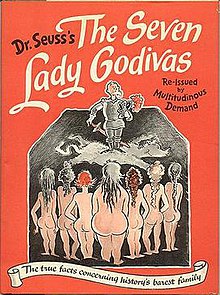
“It was all full of naked women, and I can’t draw convincing naked women.  I put their knees in the wrong places.”  What’s better than a Lady Godiva?  Two Lady Godivas.  Or how about seven?  The story of the seven Godiva sisters was penned by none other than Dr. Seuss, his fourth book and one written for adults or “obsolete children” as he called them.  The seven sisters never wear clothing, not even when they leave the seven Peeping brothers, and head off in the world to warn of the dangers of horses.

The 1939 book had a 10,000 print run with most of them remaining unsold, what Seuss called his greatest failure.  It is one of only two Dr. Seuss books allowed to go out of print.

But Please Lose That Sports Jacket

It has been endlessly debated when and with whom rock and roll actually began, but most enthusiasts have pretty much settled on a guy who cut an unlikely figure for a rock artist but who brought rock and roll into the public eye with a bang in 1955. The man was Bill Haley, along with his Comets, and the song was “Rock Around the Clock” introduced in the film Blackboard Jungle. During the next few years a string of hits including “Shake, Rattle and Roll” and “See Ya Later, Alligator” followed.

Time passes quickly and when you’re at the pinnacle of musical stardom, you’re on a slippery slope. Along comes a guy named Elvis and you’re yesterday’s sha-na-na. Who’s going to scream and carry on for a thin-haired, paunchy 30-year-old musician with a silly curl in the middle of his forehead and a garish plaid sports jacket?

The Brits, that’s who.

By 1957, Bill Haley and the Comets had already enjoyed their golden days of American super-stardom. But the battle of Britain lay ahead. When they stepped off the Queen Elizabeth in Southampton on February 5, they began the first ever tour by an American rock and roll act and launched what rock historians called the American Invasion.

When Haley and the band reached London later that same day, they were greeted by thousands in a melee the press called “the Second Battle of Waterloo.” These were the British war babies just becoming teenagers, and they were ready for American rock and roll.

February 4, 1912: It’s a Bird, It’s a Plane, It’s the Flying Tailor

Born in Austria, Franz Reichelt moved to Paris in 1898 at the age of 19. There he went into business as a tailor, creating fashionable dresses for the many Austrians who visited Paris. He was quite successful at his chosen trade, but he yearned for something more. He had the mind of an inventor, and we all know what troubles that can get a person into.

As with many such dreamers in the early 20th century, he looked to the skies, which were now filled with magnificent men in their flying machines. Reichelt became obsessed with the idea of a tailor-made suit that would convert to a parachute should a hapless aviator leave his or her flying machine for some reason. Parachutes had been around for ages, but his would be sartorial as well as utilitarian.

He developed his garment and tested it on dummies dropped from his fifth floor apartment. (“Mon Dieu, here comes another falling dummy,” a Parisian pedestrian might be heard to remark.) These experiments were less than successful. What he needed was a higher perch from which to launch his dummies. A lesser man might have moved to a tenth floor apartment, but Reichelt saw the Eiffel Tower gleaming in the distance, a steel siren calling to him.

Reichelt somehow wheedled the Parisian Prefecture of Police to grant him permission to conduct a test from the tower. However, when he arrived at the tower on February 4, 1912, he was not accompanied by a dummy. It quickly became clear that he had duped them, that Reichelt himself would be the dummy. Despite all attempts to dissuade him, Reichelt, about to become known as the flying tailor, jumped from the tower platform, down to the icy ground below and into the history books. Charles Darwin strikes again.

Other Than the Previous One, That Is

In 1789, George Washington was elected president receiving 100% of the vote, the only president to ever do so.

Unfriended

On this day in 2004, Mark Zuckerberg and fellow Harvard students launched Facebook.  It was limited to Harvard students only.  Alas, it did not remain that way.

February 3, 1882: You’re a Big One, Aren’t Ya

A rather large sales transaction took place on February 3, 1882: Flamboyant showman and circus entrepreneur P.T. Barnum purchased his largest performer, a single-named star who stood ten feet at the shoulders, Jumbo. Jumbo of course was an elephant, a very big elephant. He was born in the Sudan and took a rather circuitous journey north to Germany, France and finally England and the London Zoo, where he resided for 17 years, becoming famous for giving rides to zoo visitors.

Londoners were not happy about the sale. The Zoological Society was up in arms. 100,000 schoolchildren petitioned Queen Victoria to halt the sale. A lawsuit was filed against the zoo. The zoo attempted to renege on the sale, but the court sided with Barnum.

The deal was a bonanza for Barnum. He exhibited Jumbo to huge crowds at Madison Square Garden, recovering the entire cost of his investment in three weeks. With Jumbo as its main attraction, the circus earned $1.75 million for the season.

Jumbo’s circus career would be short-lived, however. In 1885, he was struck by a train and died within minutes.

What’s in a Name

While jumbo as an adjective is used today to describe everything from CDs to shrimp, the word did not have that meaning when the London zookeeper association gave it to the big fellow. Its derivation could be Indian from jambu (pronouced jumboo) a tree that grows on a mythical island whose fruits were said to be as big as elephants or Swahili from jambo (hello) or jumbe (chief). It is safe to say it has no relation to jambalaya or gumbo.

Never Forget Elephants

Although Jumbo is arguably the most famous elephant, there are many, many others who might be in the running — circus elephants, movie elephants, rescue elephants, war elephants, zoo elephants, pet elephants (Charlemagne, Pope Leo X and Henry III all had one), gift elephants (Ronald Reagan and Jimmy Carter both received one),  and very naughty elephants.  Here’s a portrait gallery from which you may choose your own favorites.

From the top: Tusko (world’s meanest elephant), Babar, Thomas Nast’s GOP, Horton, Dumbo.

He-e-e-y Abbott

Radio’s Kate Smith Hour was a mainstay during the 30s and 40s. On February 3, 1938, the comedy duo of Bud Abbott and Lou Costello made their first radio outing on the program and became regular performers. They first performed their classic “Who’s on First?” the following month.

abbott-costelloThe former vaudevillians quickly became major stars in radio, followed by movies and television. They left the Kate Smith show after two years to star in their own radio program, as well as a Broadway revue, The Streets of Paris, and their first film, One Night in the Tropics, in which, although cast in supporting roles, they stole the show with several classic comedy routines and cemented their film careers.

Universal Pictures signed them to a long-term contract. Their second film, Buck Privates, made them box-office stars and in the process saved Universal from bankruptcy. In most of their films, the plot was not much more than a framework that allowed them to reintroduce comedy routines they had first performed on stage. Universal also added glitzy production numbers to capitalize on the popularity of musical films, featuring such performers as the Andrews Sisters, Ella Fitzgerald, Martha Raye, Dick Powell and Ted Lewis and his Orchestra. The Andrews Sisters hits “Boogie Woogie Bugle Boy” and “I’ll Be With You In Apple Blossom Time” were both introduced in Buck Privates.

During the following years, Abbott and Costello “met” many other movie legends – Frankenstein, Dracula, the Wolf Man, the Invisible Man, Captain Kidd, Dr. Jekyll and Mr. Hyde, the Mummy, the Killer (Boris Karloff).  And they traveled throughout the world (and beyond): in a Harem, in the Foreign Legion, Lost in Alaska, Mexican Hayride, Mars, and Africa Screams, which featured both Clyde Beatty and Frank Buck as themselves. They made a total of 36 films.

On television, they frequently hosted the Colgate Comedy Hour and had their own syndicated television program.


They dissolved their partnership in 1957, with Lou making sporadic appearances until his death in 1959.  Bud died in 1974.

February 2, 2001: Elk Cast Very Large Shadows

It was a morning filled with anticipation in the Great Smoky Mountain National Park.  Not for the groundhogs looking for their shadows.  For the annual return of the elk to North Carolina.  Sort of like the swallows returning to Capistrano — only this was the East Coast not the West, and the elk couldn’t fly.  And it was only the first annual return of the elk.  But folks were excited; there’s not a lot going on in the North Carolina wilderness in February.  The welcoming committee numbered 900 or so two-legged creatures of all ages, many of whom saw their shadows.  

To refresh your memory.  Elks are big guys.  Bulls go about 1,000 with a rack that might span five feet.  They’re a little smaller than moose, larger than caribou. 

North Carolina had been elkless since the 1700s, and this scheme by the National Park Service hoped to right that wrong — to re-introduce these guys to the Southern comfort of the Tarheel State.  All 25 of the returning elk had been plucked from their old Kentucky homes in the Land Between the Lakes National Recreation Area. They expressed a certain amount of optimism about the change of scenery.  A little grumbling about missing the Derby, but all in all okay.

And the Park Service provided the elk with welcoming gifts of smart phones so they could document their adventure and perhaps send an occasional selfie.

The Shadow Knows

The first weather forecast by a rodent meteorologist took place on February 2, 1887, in the metropolis of Punxsutawney, Pennsylvania. The Punxsutawney folk maintain that Phil (for that’s his name) is the one and only true weather-forecasting groundhog in all of North America.  Phil’s original prediction has been lost to history, but it was either six more weeks of winter or an early spring.

New Yorkers would put their weather bets on Staten Island Chuck, whose fame includes an altercation with a New York City mayor.  The lucky mayor was Michael Bloomberg, the occasion was Groundhog Day 2009, and some would say it was the mayor’s own fault. Practically anyone, groundhog or otherwise, would not enjoy being roused out of a deep sleep at seven in the morning and asked to pontificate on the weather. Chuck wasn’t up for the celebration and the mayor was just a little too persistent, so of course Chuck bit him. Wouldn’t you?

Later in the day, Mayor Bloomberg, his left finger bandaged, was keeping mum. “Given the heightened response against terrorism, and clearly in this case a terrorist rodent who could very well have been trained by Al Qaeda in Afghanistan, I’m not at liberty to say any more than that,” the mayor said.

Did the Human Fly See His Shadow?

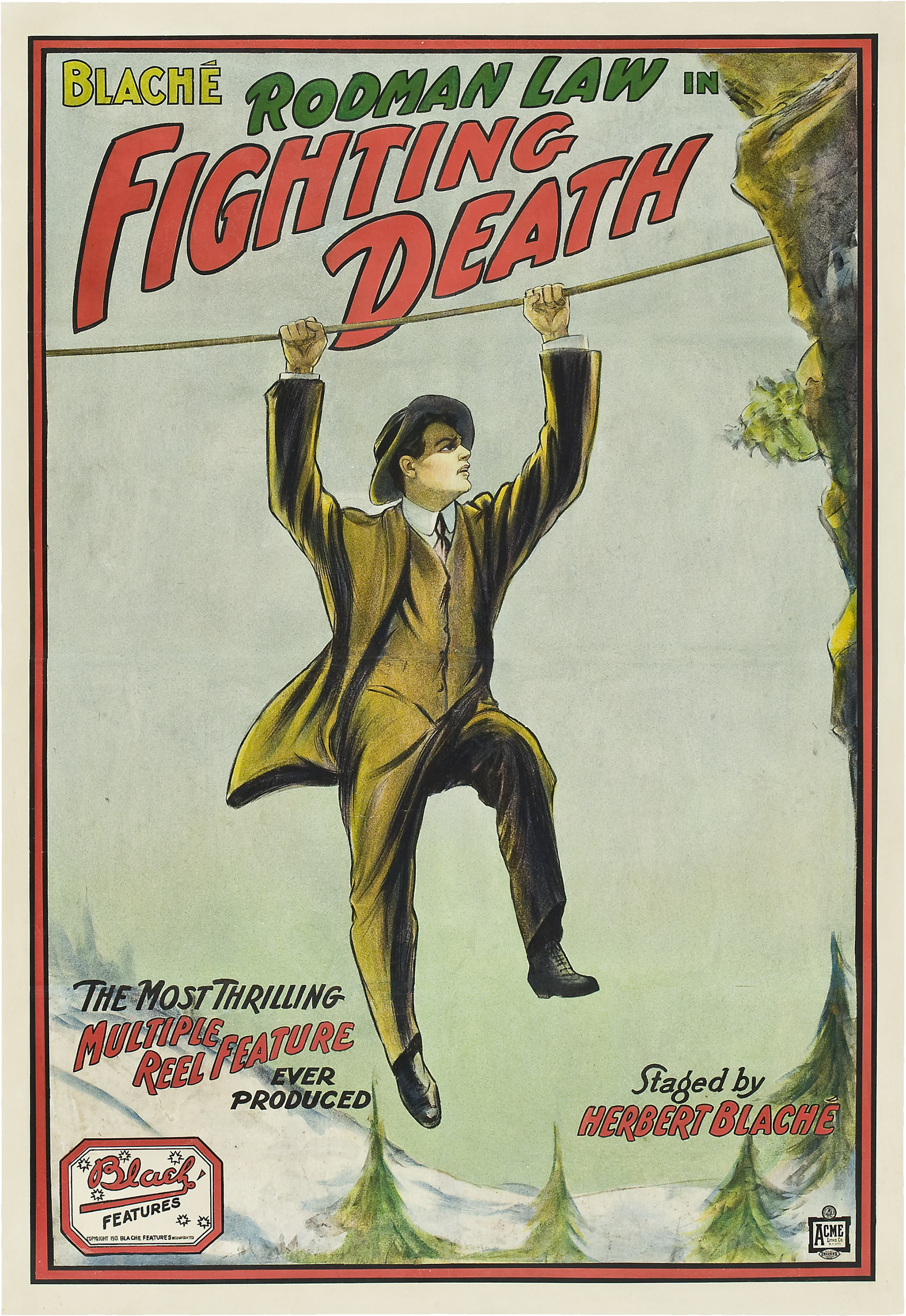
On February 2, 1912, a brave steeplejack jumped from the torch platform of the Statue of Liberty, some 345 feet above the ground. He fell like a dead weight for 75 feet before his parachute opened and he floated safely to the ground, 30 feet from the water’s edge. Pathé News paid him $1,500 for his derring-do, which they filmed. Frederick Rodman Law, who became known as the Human Fly, went on to perform other feats, jumping from the Brooklyn Bridge and from a dynamited balloon above the Hudson River. A short movie career followed, and he is widely credited as being the first motion picture stuntman. He died in 1919 of tuberculosis.


February 1, 1896: Poor People of Paris

Opera patrons packed the Teatro Regio in Turin, Italy, on the evening of February 1, 1896, for the world premiere of Giacomo Puccini’s latest, La Boheme. Conducting the evening’s performance was a rising young star, Arturo Toscanini. Critics were divided over the opera, but audiences lapped it up, and it remains the world’s most popular opera. It is a timeless story of love among struggling young artists in Paris during the 1830s.

Our Bohemians– a poet, a painter, a musician and a philosopher — share a garret in the Latin Quarter as they try to eke out a living. It’s Christmas Eve; it’s cold. Rodolfo, the poet, and Marcello, the painter, are feeding a small fire with one of Rodolfo’s manuscripts. Their two companions arrive with food and fuel, one having had the good fortune to sell a bit of music. As they eat and drink, the landlord comes looking for their overdue rent. They distract him with wine and, pretending to be offended by his stories, throw him out. The rent money is divided for a night out in the Latin Quarter. Rodolfo stays behind as the other three leave, fortuitously, as a pretty neighbor comes looking for a light for her candle: “They call me merely Mimi.” Merely Mimi faints (she’s not well, folks), she and Rodolfo immediately fall in love, and they head off to the Latin Quarter, singing of their love.

In Act 2, our Bohemians are making merry in the Latin Quarter. Marcello’s one-time sweetheart, Musetta, enters on the arm of the old but wealthy Alcindoro. Trying to get Marcello’s attention, she sings an aria about her own charms (Musetta’s Waltz, recorded as Don’t You Know by Della Reese in 1959). She sends Alcindoro off on a bogus errand and promptly leaps into Marcello’s arms. They all scurry off, stiffing the returning Alcindoro for the check.

Act 3 brings a series of flirtations, jealousies, lovers’ quarrels and, for Mimi, a lot of coughing. At this point, we’re pretty sure she’s not going to make it through Act 4.

Which she doesn’t. After a few attempts at being cheerful, the others leave Mimi and Rodolfo who recall their meeting and happy days together until Mimi is overtaken by violent coughing. The others return, Mimi drifts into unconsciousness and dies.

Enrico Caruso owned the role of Rodolfo during his life, as did Luciano Pavarotti. And Maria Callas was all over Mimi.


Singin’ the Blus

Fast forward to another Italian who took the musical world by storm.  His name was Domenico Mondugno and he wrote a happy little chanson about a man who paints his hands and face blue then flies around above his lover.  It’s probably best left untranslated from the original Italian.  Nel Blu Dipinto Di Blu was released on February 1 and soared to the top of the Billboard 100, finishing out the year as the number one song of 1958. Shortly thereafter, it picked up the Grammy for Record of the Year and Song of the Year.  Every working singer had his or her own recording of it, usually under the title Volare, a word that was added as an afterthought to the chorus.

January 31, 1696: Gobsmacked by a Dutch Undertaker

One would not think of undertakers as having particularly fiery dispositions.  Especially Dutch undertakers. They’d probably look at a current corpse  and realize they had it better than that poor bloke.  The most you might expect would be a mild oath such as “Go stick your finger in a dike.”  Thus it comes as a surprise that Dutch undertakers rose up in revolt on January 31, 1696.  On that day, they rioted in the streets 0f Amsterdam.

The cause of their dudgeon was a death tax, a tax on the burial of people, and since the person being buried would not be paying the tax, the undertakers got stiffed.  Not only that, the Amsterdam City Council reduced the number of official undertakers allowed from 300 to 72.  (They also reduced the number of political commentators to 1, but no one seemed to care.) The petulant undertakers stormed right up to the house of the Mayor of Amsterdam.  Someone in the crowd (most likely an undercover government operative) shouted “We’ll huff and we’ll puff and we’ll blow your house down.”  Which they did.  And they carried off the Mayor and tossed him into the Zuider Zee, wooden shoes and all.  Sailors and Dutch Uncles joined the revolt which moved on to the houses of the City Captain, Burgomasters and other city elite who also received their comeuppance.

Then as quickly as it had started, the riot ended.  Some say the undertaker’s hearts grew three sizes that day; others say it was cocktail time.  Nevertheless the Aansprekersoproer (that’s the official title of the event) ended, and shortly afterward the death tax was repealed.


Glasnost on a Sesame Seed Bun

Muscovites lined up on January 31, 1990, to try a most unRussian guilty pleasure. The Soviet Union might be crumbling around them, but that icon of Western decadence was riding high. McDonald’s had come to town.

Those Big Macs, with fries and shakes might cost a day’s wages, but the people of Moscow were eating them up. The notorious golden arches of capitalism were signs that times they were a’changing in the Soviet Union – in fact, within two years the Soviet Union would dissolve. A Soviet journalist saw no great political earthquake but rather an “expression of pragmatism toward food.” Could the Quarter Pounder be the ultimate example of the People’s Food?

Photographer: Andrey Rudakov/Bloomberg via Getty Images

Located in Pushkin Square, this McDonald’s was the world’s largest, boasting 28 cash registers and a seating capacity of 700. Its opening day broke a McDonald’s record with more than 30,000 customers served.

Moscow resident Natalya Kolesknikova told Russian State Television that when out-of-town guests came to visit, she showed them two things, McDonald’s and the McKremlin.

In 2022, there were 850 McDonald’s in Russia. Then Russia invaded Ukraine.  And McDonald’s is pulling out of a market it’s been a part of for 32 years, “de-arching” and selling every one of its restaurants.


January 30, 1798: Was That a Yea or a Nay?

The US House of Representatives, known for its deliberative diligence, lyonduelgood comradeship, and decorous behavior, was not always thus. Take for instance the morning of January 30, 1798. Members had just concluded a vote on the impeachment of a Tennessee senator, and the House had recessed to tally ho the ballots. Members stood about chatting informally, waiting for the results. One member, Representative Matthew Lyon of Vermont was waxing passionate about another bill before the House. During his rant he took to task Connecticut politicians, whom he accused – rather loudly – of hypocrisy and corruption. He also mentioned greed and a few other deadly sins.

Not surprisingly, given the volume of his oratory, he was heard by one of the very men he disparaged, one Representative Roger Griswold of Connecticut. Griswold fumed, then shouted back, dredging up Lyon’s temporary dishonorable discharge from the Continental Army. Lyon either did not hear Griswold’s comment or chose to ignore it. Griswold naturally felt duty-bound to repeat the comment at closer range; he approached Lyon, grabbed his arm, and repeated once more. Lyon, insulted and embarrassed before his peers, responded as any gentleman would – he spit in Griswold’s face. Without a word, Griswold wiped away the spit and exited the chambers. The Committee of Privileges immediately drew up a formal resolution calling for the expulsion of Matthew Lyon for “a violent attack and gross indecency.”

The two men nursed their respective angers until they were bound to boil over again, which they did on the morning of February 15.  Pandemonium, it is fair to say, broke out when, without a word of warning, Representative Griswold stormed across the chambers to where Lyon sat preoccupied with correspondence of some sort. Cursing him as a “scoundrel,” Griswold pounded the Vermont Republican’s head and shoulders with a thick, hickory walking stick. A witness described the attack:

“I was . . . interrupted by the sound of a violent blow. I raised my head, and directly before me stood Mr. Griswold laying on blows with all his might upon Mr. Lyon, who seemed to be in the act of rising out of his seat. Lyon made an attempt to catch his cane, but failed — he pressed towards Griswold and endeavored to close with him, but Griswold fell back and continued his blows on the head, shoulder, and arms of Lyon who, protecting his head and face as well as he could, then turned and made for the fireplace and took up the fire tongs. Griswold dropped his stick and seized the tongs with one hand, and the collar of Lyon by the other, in which position they struggled for an instant when Griswold tripped Lyon and threw him on the floor and gave him one or two blows in the face.”

The combatants were separated, and Lyon retreated to the House water table; but Griswold approached him again, and Lyon lunged forward with the fire tongs and initiated a second brawl. As Representative Jonathan Mason commented, the central legislative body of the United States of America had been reduced to “an assembly of Gladiators.” A lesson, perhaps, for today’s legislators, although the House of Representatives has become a place of cooperation and reasoned debate where no harsh words, let alone blows, are ever exchanged. Although it’s rumored that Marjorie Taylor Greene beats up fellow legislators and takes their lunch money.

With a Hearty Hi Yo Silver

That iconic Robin Hood of the Old West, the Lone Ranger, made his radio debut in 1933  He and his faithful companion Tonto pursued and vanquished black hats for more than 20 years and 3,000 episodes until 1956.  From 1949 to 1957, they hi yo silvered on TV as well.  Who was that masked man whose selfless heroism and defense of the innocent and helpless tamed the West? Well it certainly wasn’t Marjorie Taylor Greene.