When New Yorkers paid their $1 admission price to enter St. John’s Hall 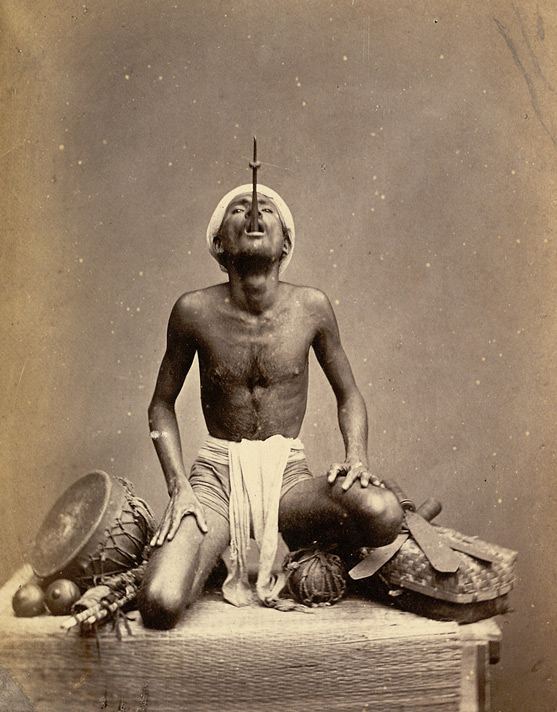 on November 11, 1817, they were prepared to be amazed. And amazed they were, by an Indian juggler Ramo Sammee (also known as Senna Samma or Samaa because to Americans all Indian names sound alike).
What New Yorkers witnessed that day was not just another juggling act; no, Ramo stupefied the spectators by swallowing a sword. Now Indian street performers had been swallowing swords for centuries — along with climbing ropes into mid-air and staring down cobras –but this was a first for this continent. Sword swallowing in this country presented its own kind of danger as demonstrated later that month by the announcement that Ramo would be swallowing a new sword of American manufacture as “a substitute for the one lately stolen from him by some villain.”
Ramo continued to swallow that sword and others, gaining a certain fame, until his death in 1850. Live by the sword . . .
Those who followed Ramo, particularly in this country, sought to distinguish themselves with longer swords, multiple swords, hot swords, cutlasses, bayonets and even glowing neon Star-Wars swords.
The Sword Swallowers Association International (yes, there is one) reports that there are fewer than a dozen professional sword swallowers actively performing today. That led the association to create World Sword Swallowers Day (yes, there is one) “to honor and celebrate these courageous and daring performers” and to bring together dozens of amateurs and professionals for a sword swallowing extravaganza. The celebrations help raise funds for the Injured Sword Swallowers Relief Fund (yes, there are injuries).
And occasional deaths. But — mea culpa for misleading you — Ramo Sammee did not die by the sword.