JUNE 23, 1626: ANOTHER FISH STORY

A codfish was brought to market in Cambridge, England, on this day in 1626. Codfish were probably brought to market every day in 1626 – and in 1627 and throughout the centuries, but this was a rather unusual fish. Upon being opened, it was found to have a book in its stomach.  There are plenty of  fish in books, but how many books in fish are there?

The book had seen better days, but it remained readable. It had been written by one John Frith and included several essays on religious subjects evidently written by Frith when in prison. Oddly enough, he had been confined in a fish cellar where many of his fellow prisoners died from smelling too much salt cod. Frith got past the salt cod but was eventually taken to the Tower, and in 1533 was burned at the stake for unacceptable religious beliefs.  How he got his essays – which were no doubt inflammatory – into that cod is still a mystery.

The folks at Cambridge reprinted the work, which had been totally forgotten for a hundred years until it turned up inside the fish.  The reprint was called Vox Piscis, which would translate to “voice of the fish.”  There’s definitely a morale booster for writers here:  When Random House says no, go find yourself a big fish.

JUNE 20, 1890: PAINTING OUTSIDE THE LINES

Oscar Wilde’s only published novel, The Picture of Dorian Gray, appeared as the lead story in Lippincott’s Monthly Magazine in the July 1890 issue, released on June 20.

In the novel, the title character is the subject of a painting by artist Basil Hallward. Basil is impressed by Dorian’s beauty and becomes infatuated with him. Dorian is also infatuated by Dorian’s beauty, especially the beauty in the painting, and more than annoyed that the man in the painting will remain the same, while Dorian himself will get old and wrinkled and forget people’s names and so forth. Obviously the only answer is to put his soul on the market, which he does, with the purchaser (you know who) promising that the painting will age while Dorian himself stays the same.

In an apparent effort to make the painting age as quickly as possible, Dorian embarks on a life of debauchery, and each sin takes its toll on the portrait.

The book had about the same effect on British critics as Dorian’s naughtiness had on the painting. “Vulgar”, “unclean”, “poisonous” and “discreditable” were a few of their nicer comments. “A tale spawned from the leprous literature of the French Decadents – a poisonous book, the atmosphere of which is heavy with the mephitic odours of moral and spiritual putrefaction,” said the Daily Chronicle.   And this was after Wilde’s editor had already deleted a lot of “objectionable” text before it made its first appearance in Lippincott’s, eliminating titillating bits of debauchery and elements of homosexuality.

Deciding that the novel contained things that might upset an innocent woman, the editor cut further, removing many more decadent passages before the book was published in 1891.

MAN THE TOMATOES, FULL SPEED AHEAD

It’s a battlefield out there. Each morning I prepare my weaponry and fortify myself to better face the enemy.  Then it’s out into the morning mist, bellying my way through the trenches, my trusty trowel at my right, my insecticidal soap at my left. Half a league, half a league, half a league onward, into the valley of Death – mine not to reason why, mine but to do or die.  “Huzzah, huzzah,” I shout,  “Be valiant, stout and bold.”

With scant warning, they attack!  Tufts of crabgrass pop up behind every rock, aphids to the right of me, weevils to the left of me. A slug squadron advances relentlessly head on.   Japanese beetles at four o’clock.  The battle is joined.  Almost at once, I’m ambushed by an elite corps of exotic man-eating weeds, snapping at my ankles and calves, while trash-talking thistles peek out from between tomatoes, taunting me with Donald Trump slogans.

But I’ll not be intimidated.

“Forward,” I shout and storm into the mouth of Hell. I manage to free a tiny pepper plant being held prisoner by a half dozen stinging nettle goons.  Moments after I make a clearing to let the cucumbers once again see sunlight, the neighbor’s cat claims it for his own and begins his morning toilette.  He glowers at me, unflinching, as I try to encourage him to move on, his eyes saying I may not be big but I can bring down a gazelle and I can bring down you.  Enjoying the moment, knotweeds laugh merrily and loudly insult my gardenerhood.

I jump in with both feet, hacking and pulling and spraying.  When I’m done, a pile of green debris lies all around me shattered and sundered.  The day is mine.  The tomatoes, cucumbers and beans all nod in appreciation as I holster my trowel and spray bottle and ride off into cocktail time.

Later, exhausted, I’ll sleep, perchance to dream – of late potato blight.

MAY 27, 1936: PROUD MARY KEEP ON BURNIN’

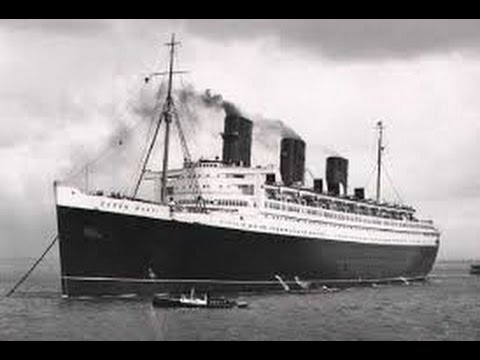
Although, out of superstition, women were banned from the workplace during the construction of the ocean liner Queen Mary, she was christened by a woman in September 1934.  By a queen actually — Queen Mary herself, the wife of George V who had died earlier that year and queen mother to Kings Edward VIII and George VI.

On May 27, 1936, throngs of cheering spectators looked on as the 80,000-ton liner, “the most beautiful ship afloat,” departed Southhampton on her maiden transatlantic crossing.. She carried 2,100 passengers who were pampered by a crew of 1,100. The passengers were as stylish as the ship’s Art Deco interior as they strutted through ballrooms, promenaded on deck, frolicked in the swimming pool, and occasionally visited their children in the nursery or their dogs in the kennel. Along with an amazing amount of food (50,000 pounds of meat), the Queen Mary carried over 14,000 bottles of wine and 25,000 cigarette packs.

The Queen Mary pretty much ruled the Atlantic for the rest of the decade until elegance gave way to utility as she was refitted as a troop ship during World War II. After the war the Queen Mary was returned to passenger service and along with her sister ship the Queen Elizabeth dominated transatlantic travel until 1967 when she left Southhampton on her last voyage arriving in Long Beach, California, where she was permanently moored.

Converted to a hotel, the Queen Mary has the dubious distinction of giving tourists a taste of transatlantic travel without ever leaving dry land. Yippee!

Don’t Stop the Carnival

Pulitzer Prize winner Herman Wouk was born in 1915. His books include The Caine Mutiny, The Winds of War, War and Remembrance, Marjorie Morningstar, and    Don’t Stop the Carnival, a must-read for anyone interested in the Caribbean. In the following excerpt, Norman and Henny Paperman have embarked on a new Caribbean enterprise and, at a party, they tell their friends about it:

During this evening, nearly every person there told Norman or Henny, usually in a private moment, that they were doing a marvelous, enviable thing. The Russians at the time were firing off new awesome bombs in Siberia, and the mood in New York was jittery, but there was more than that behind the wistfulness of their friends. All these people were at an age when their lives were defined, their hopes circumscribed. Nothing was in prospect but plodding the old tracks until heart disease, cancer, or one of the less predictable trap-doors opened under their feet. To them, the Papermans had broken out of Death Row into green April fields, and in one way or another they all said so.

Wouk died in 2019, ten days short of his 104th birthday.

MAY 15, 1856: Over the Rainbow

Glinda the Good stepped down from her ruby throne to give the little girl a good-bye kiss, and Dorothy thanked her for all the kindness she had shown to her friends and herself.

Dorothy now took Toto up solemnly in her arms, and having said one last good-bye she clapped the heels of her shoes together three times saying, “Take me home to Aunt Em!

Lyman Frank Baum, born in Chittenango, New York, on May 15, 1856 (died 1919), was best known for writing The Wonderful Wizard of Oz, although he wrote a total of 55 novels, 83 short stories, over 200 poems, and made many attempts to bring his works to the stage and screen.

In 1897, after several abortive early careers, Baum wrote and published Mother Goose in Prose, a collection of Mother Goose rhymes written as prose stories, and illustrated by Maxfield Parrish. The book was a moderate success, allowing Baum to quit his door-to-door sales job and devote time to his writing. In 1899, Baum partnered with illustrator W. W. Denslow, to publish Father Goose, His Book, a collection of nonsense poetry. The book was a success, becoming the best-selling children’s book of the year. Then in 1900, the duo published The Wonderful Wizard of Oz to critical acclaim and financial success.   The book was the best-selling children’s book for two years after its initial publication.

Oz was a popular destination long before the famous 1939 screen version of the book.  A  musical  based closely upon the book,  the first to use the shortened title “The Wizard of Oz”, opened in Chicago in 1902, then ran on Broadway for 293 performances.   Baum went on to write another 13 Oz novels.

Baum’s intention with the Oz books, and other fairy tales, was to tell American tales in much the same manner as the Brothers Grimm and Hans Christian Andersen , modernizing them and removing the excess violence.  He is often credited with the beginning of the sanitization of children’s stories, although his stories do include eye removals, maimings of all kinds and an occasional decapitation.

Most of the books outside the Oz series were written under pseudonyms. Baum was variously known as Edith Van Dyne, Laura Bancroft, Floyd Akers, Suzanne Metcalf, Schuyler Staunton, John Estes Cooke, and Capt. Hugh Fitzgerald.

Baum wrote two newspaper editorials about Native Americans that have tarnished his legacy because of his assertion that the safety of white settlers depended on the wholesale genocide of American Indians. Some scholars take them at face value, others suggest they were satire. Decide for yourself.

The Pioneer has before declared that our only safety depends upon the total extermination of the Indians. Having wronged them for centuries we had better, in order to protect our civilization, follow it up by one more wrong and wipe these untamed and untamable creatures from the face of the earth. In this lies safety for our settlers and the soldiers who are under incompetent commands. Otherwise, we may expect future years to be as full of trouble with the redskins as those have been in the past.

Way Over the Rainbow

Paolo Toscanelli, born in 1397, was your typical Italian Renaissance Man, dabbling in everything from astronomy to mathematics to philosophy to cartography. He rubbed elbows (and influenced) the likes of Leonardo da Vinci and Christopher Columbus. In fact, that fickle finger of fate could have just as easily pointed at Paolo instead of Columbus.

As we all know, Christopher Columbus as a boy used to sit on the docks in Genoa watching ships slowly disappear over the horizon. While all the other boys sitting on the docks attributed this phenomenon to the ships falling off the edge of the world, Christopher determined that ships were gradually disappearing because the world was actually round. A fairy tale, of course. Columbus knew the world was round because Paolo Toscanelli told him it was round. Toscanelli even gave Columbus a map (a flat map admittedly) that showed Asia to the left on the other side of the Atlantic. Neither of them had reckoned on that other continent lying in-between. Yet Columbus got an October holiday and a city in Ohio while Toscanelli got squat.

Another near miss for Paolo was his observation of a comet in 1456. Although Paolo was the first to identify it, it remained known only as the Comet of 1456 until 300 years later when English astronomer Edmond Halley predicted its 1759 return and got naming rights.

Paolo died on May 15, 1482, ten years before Columbus sailed the ocean blue and some 350 years before “Halley’s” Comet did an encore.


March 12, 1609: Wanna Get to Heaven, Let Me Tell You What To Do

Prophet, evangelist, guardian of the gates of heaven and hell, and notorious pain in the butt Lodowicke Muggleton was born in 1609. Uneducated, he worked as a tailor until his forties when he began to have revelations, announcing to the world that he and his cousin were the last two witnesses of God that would ever be appointed on earth and the exclusive deciders of who got into heaven and who didn’t. When his cousin died, Muggleton took this great burden upon himself.

Blessing those who listened to him and cursing those who didn’t, he eventually attracted a few followers who became known as Muggletonians. His cursing and raving made him enough of a public nuisance that he was twice jailed, fined and sentenced to stand in the pillory for several days. He had a particular dislike of Quakers which he spelled out in his book with the catchy title The Neck of the Quakers Broken or Cut in Sunder by the Two-Edged Sword of the Spirit Which Is Put Into My Mouth (1663).

Among some of the more interesting Muggletonian beliefs: Heaven is six miles above Earth; God is between five and six feet tall and has absolutely no interest in the affairs of mankind. Man’s greatest enemy is not the Devil, who doesn’t exist, but Reason, which, for humans, is unclean and filthy. They had no organized worship; they would sometimes meet in taverns to talk and sing rancorous Muggletonian songs.

Muggleton died at the age of 88, and his religion more or less continued for centuries after him. One Philip Noakes who bequeathed to the British Library an archive of Muggletonian documents in 1979 is thought to have been the last surviving Muggletonian, although this entry is bound to bring a few more out of hiding.

Perhaps He Was a Muggletonian

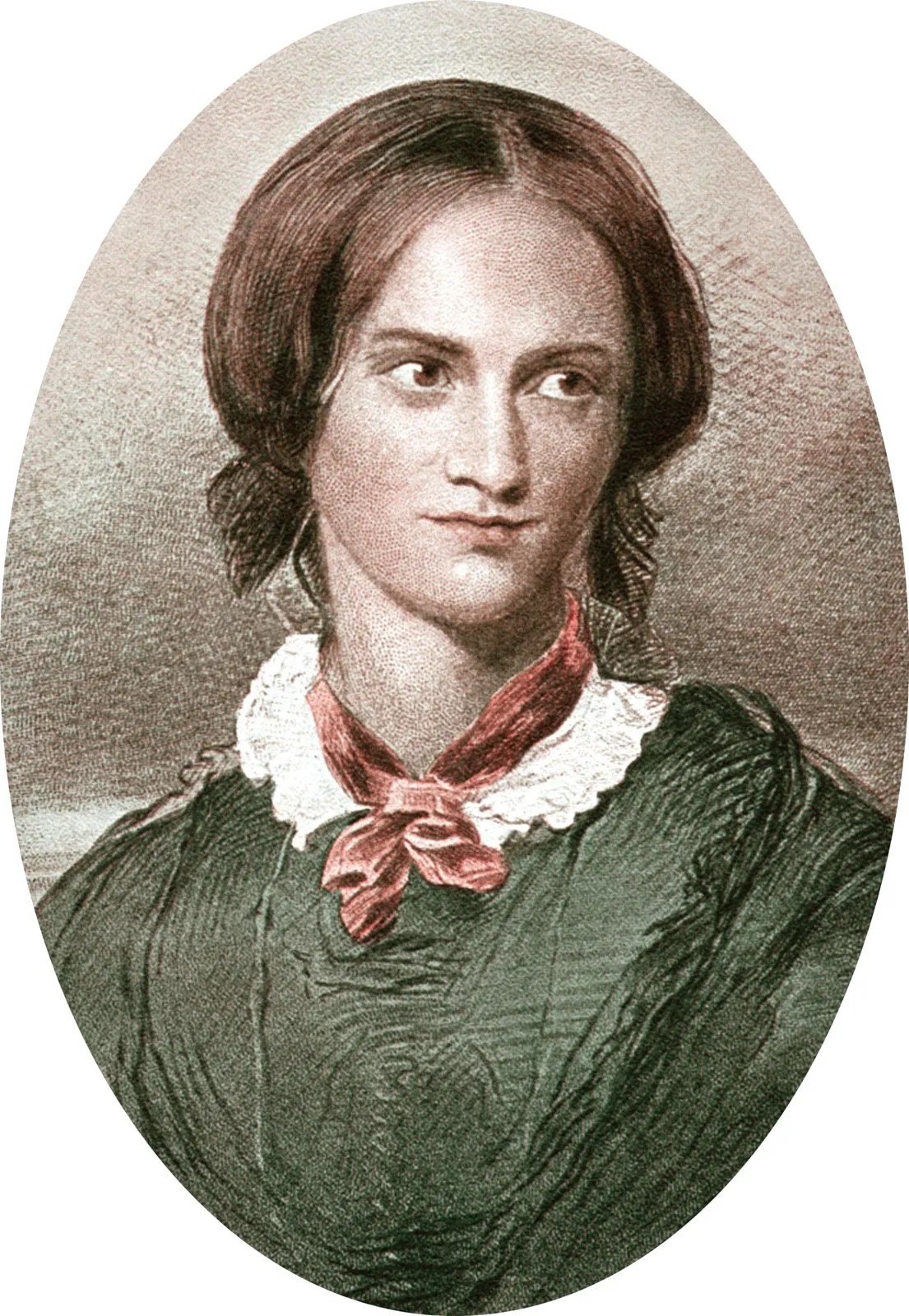
In 1837, British poet laureate Robert Southey wrote a letter to 20-year-old Charlotte Brontë.  The letter was in reply to her letter of a few months earlier asking him for his opinion on whether a poem she enclosed was any good and whether she should continue to write.  Her letter and the poem are lost, but Southey’s infamous reply was not.  One noted passage: “Literature cannot be the business of a woman’s life, and it ought not to be. The more she is engaged in her proper duties, the less leisure will she have for it even as an accomplishment and a recreation. To those duties you have not yet been called, and, when you are, you will be less eager for celebrity.”

Brontë’s thank you letter resonates with veiled sarcasm: “Once more allow me to thank you with sincere gratitude.  I trust I shall never more feel ambitious to see my name in print; if the wish should rise, I’ll look at Southey’s letter and suppress it.”  Ten years later, she wrote Jane Eyre.  Raise your hand if you remember Robert Southey.


March 7. 1766: Gentlemen Rhymesters Out on a Spree

A certain Miss Molly Mogg of the Rose Tavern in Wokingham, England, turned up her dainty toes on March 7, 1766, at the age of 66. Some 40 years earlier she had been the subject of an amusing ballad written by “two or three men of wit.” The ballad, perhaps to the surprise of its authors, became quite popular. Literary historians have determined that the “men of wit” were Alexander Pope, Jonathan Swift, and John Gay and that the three were probably quite drunk when they penned the tribute to the pretty Molly.

It begins:

The schoolboy delights in a play-day,

The schoolmaster’s delight is to flog;

The milkmaid’s delight is in May-day,

But mine is in sweet Molly Mogg.

and continues on for eleven verses each ending with “sweet Molly Mogg. This, of course required the three rhymesters to come up with 11 words to rhyme with Mogg. Which they did.  In addition to the aforementioned flog, there’s bog, cog, frog, clog, jog, fog, dog, log, eclogue and agog — bypassing hog and Prague.

Cogito Airgonaut

Jean-Pierre Blanchard, the noted 18th century “Airgonaut,” made his first successful balloon flight in Paris back  in 1784, in a hydrogen gas balloonballoon4 launched from the Champ de Mars. Blanchard’s flight nearly ended in disaster, when one spectator slashed at the balloon’s mooring ropes and oars with his sword after being refused a place on board. Observer Horace Walpole wrote of the flight that the Airgonauts were just like birds; they flew through the air, perched in the top of a tree, and some passengers climbed out of their nest to look around.

Nevertheless, these early balloon flights set off a public “balloonomania”, with clothing, hairstyles and various objects decorated with images of balloons or styled to resemble a balloon. In 1793, Blanchard scored another first — the first balloon flight in North America, ascending in Philadelphia and landing in New Jersey. Witnesses to the flight included President George Washington, and future presidents John Adams, Thomas Jefferson, James Madison, and James Monroe. Some say Washington threw a silver dollar at the balloon.

Now famous, our  Airgonaut  married Marie Madeleine-Sophie Armant in 1804. But his run of fame, fortune and good luck came to a sudden end four years later, when Blanchard had a heart attack while ballooning above the Hague. He fell from his balloon and died of his injuries on March 7, 1809. His widow Sophie inherited everything including the ballooning bug which would be her undoing as well: she continued to support herself with ballooning demonstrations until it also killed her.  In 1819, she became the first woman to be killed in an aviation accident when, during an exhibition in the Tivoli Gardens in Paris, she launched fireworks that ignited the gas in her balloon. Her balloon crashed on the roof of a house, and she fell to her death.  Don’t try ballooning at home.

February 24, 1942: The Bombs Bursting in Air

It had been less than three months since the Japanese attack on Pearl Harbor brought the United States into World War II, and tensions were running high.  And then on the evening of February 24, 1942, in Los Angeles, it appeared that we were being attacked once again.  The United States Navy responded with an anti-aircraft artillery barrage.  The resulting brouhaha lasted through the night with 1,400 shells fired until the Secretary of the Navy announced the end of the air raid.  He also admitted that the entire incident had been a false alarm, a case of “war nerves.”

The attacking force, it seems, was an errant weather balloon, and “once the firing started, imagination created all kinds of targets in the sky and everyone joined in.”  The incident was later derisively dubbed the “Battle of Los Angeles” or the “Great Los Angeles Air Raid.”

A Midsummer Night’s Prayer Meeting

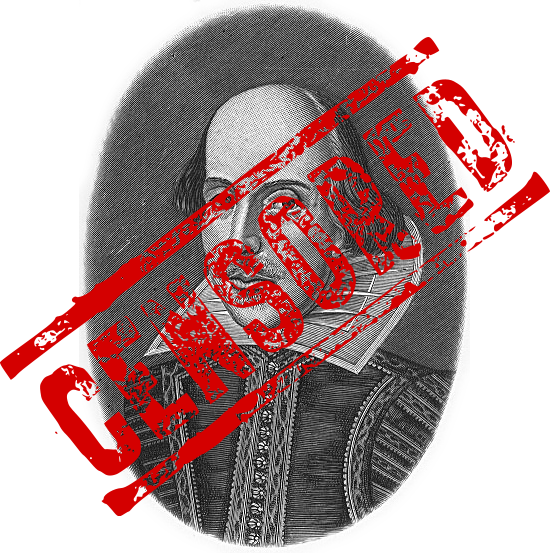
“The Family Shakespeare — in which nothing is added to the original text,censored-shakespeare but those words and expressions are omitted which cannot with propriety be read aloud in a family. My great objects in this undertaking are to remove from the writings of Shakespeare some defects which diminish their value.”

Thus read an introduction for the 1807 edition of Shakespeare’s works, finally made suitable for general audiences by Thomas Bowdler some 200 years after the Bard was safely buried. Certainly Shakespeare, were he alive, could not have objected to having the defects which diminished their value removed from his works. Shakespeare and family values — together at last.

Bowdler undertook this project, along with his sister Henrietta, thanks to childhood memories in which his father had entertained his family with readings from Shakespeare. Only later as an adult did Bowdler realize that his father had been leaving out some of the naughty parts of the plays, anything he felt unsuitable for the ears of his wife and children. Realizing that not all fathers were clever enough to censor on the spot, Bowdler decided it would be worthwhile to publish an edition which came already sanitized.

Shakespeare no doubt would have thanked Thomas Bowdler who joined him in the hereafter on February 24, 1827.


MARCH 18, 1902: ITALIAN TENORS ARE A LIRE A DOZEN

Tenor Enrico Caruso recorded ten arias for the Gramophone & Typewriter Company in Milan, Italy. He was paid 100 pounds sterling, and was not required to do any typing. These acoustic recordings, recorded in a hotel room on March 18, 1902, created a win-win situation for both Caruso and the Gramophone Company. The gramophone, and its flat circular discs, quickly became victorious in the recording competition, besting both Thomas Edison’s phonograph cylinders and eight-track tapes. The gramophone recordings became best-sellers, helping to spread the 29-year-old Caruso’s fame.

Caruso was signed by London’s Royal Opera House for a season of appearances in eight different operas ranging from Verdi’s Aida to Don Giovanni by Mozart. His successful debut at Covent Garden occurred just two months after his recording session. The following year, Caruso traveled to New York City to take up a contract with the Metropolitan Opera.

By 1920, Caruso had made nearly 300 recordings. His 1904 recording of “Vesti la giubba” from Leoncavallo’s opera Pagliacci was the first sound recording to sell a million copies. All of these recordings are available today on CD, as digital downloads, and in garages throughout the world on eight-track tapes.


Ivan Was Probably a Baritone

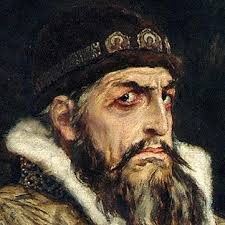
Ivan IV Vasileyevich, known to his friends as Ivan the Terrible, died in 1584 while engaged in a particularly wicked game of chess. He rose to prominence, and some might say infamy, as the Grand Prince of Moscow a position he held from 1533 to 1547, when he declared himself the first ever Tsar of All the Russias, a title he held until his death. He was succeeded by his son, Feodor the Not So Terrible.

Historians disagree on the exact nature of his enigmatic personality. He was described as intelligent and devout, yet paranoid and given to rages, episodic outbreaks of mental instability, and late-night tweet storms.

He was also know as Ivan the Fearsome but is not to be confused with Ivan the Gorilla.

Wretched Richard’s Little Literary Lessons – No. 3

plot

plät/  noun

~ the sequence of events of a play, novel, movie, or similar work that develops a story.

Use it in a sentence perhaps?

“What do you do when you’re not floating around the West Indies?” asked Albert.

“I write mostly.”

“A writer, says he,” Basil had returned from the bar and sat across the table from Terry. “I was a writer meself once upon. Never made any money at it, though. I was always a poor writer what never had a plot to piss on.”

Here’s where the plot thickens.


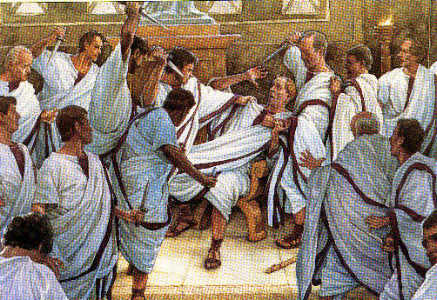
March 15, 44 BC: I Only Have Ides for You

Beware. Today is the ides of March, a day once enthusiastically celebrated among the common people with picnics, drinking, and revelry. In the ancient Roman calendar, each of the 12 months had an ides (from the Latin to divide). In March, May, July and October, the ides fell on the 15th day. In all other months, the ides fell on the 13th.  There is a reason for this, but the logic declined and fell with Rome, and the ides lost their original intent and purpose and eventually came to mean the day that a bunch of guys are going to stick knives into you.

This was thanks to Shakespeare,  Julius Caesar, and Caesar’s pals Brutus et al.  In Act I, Scene 2, of Shakespeare’s history, the old soothsayer utters these words, dripping with foreboding: “Beware the Ides of March.” Pretty straightforward, but does Caesar pay attention? Of course not. And on March 15, 44 BC, aided by his friends, he buys the forum, so to speak, exiting stage left halfway through the play even though it bears his name.

Despite an occasional pretentious allusion to the Ides of March and the popular song, today’s calendar is pretty much ideless (as ideless as a painted ship upon a painted ocean, to slip in a quick pretentious allusion).


Wretched Richard’s Little Literary Lessons – No. 2

al·lu·sion

əˈlo͞oZHən/

noun

As a literary device, an allusion is an expression designed to call something to mind without mentioning it explicitly; an indirect or passing reference to another person, event, work etc.

For example:

“That’s a rather abrupt and indifferent exit. Feel guilty?”

“I’m not sure. You don’t approve?”

“Well, I suppose it’s better than ‘I’m running off to hook up with Lolita for a few days. I’ll be back when I’m tuckered out. I hope you don’t mind.”

“Lolita? You’re hardly a nymphet.”

“I beg your pardon,” Huey huffed. “Would you care to elaborate on that point?”

“A nymphet is fourteen or fifteen years old, tops.”

“Maybe I’m only fifteen.”

“You also pointed out that you weren’t trying to seduce me.”

“Maybe I was lying. And maybe I’m no Lolita – as hot as I am – but you most definitely fit the part of Humbert Humbert, you old fart. Just remember you’re here of your own free will. You can’t claim I forced you to come along.”

“I won’t if you won’t,” said Paul.

Not forcing anyone to come along, just inviting: Voodoo Love Song

March 12, 1609: Wanna Get to Heaven, Let Me Tell You What To Do

Prophet, evangelist, guardian of the gates of heaven and hell, and notorious pain in the butt Lodowicke Muggleton was born in 1609. Uneducated, he worked as a tailor until his forties when he began to have revelations, announcing to the world that he and his cousin were the last two witnesses of God that would ever be appointed on earth and the exclusive deciders of who got into heaven and who didn’t. When his cousin died, Muggleton took this great burden upon himself.

Blessing those who listened to him and cursing those who didn’t, he eventually attracted a few followers who became known as Muggletonians. His cursing and raving made him enough of a public nuisance that he was twice jailed, fined and sentenced to stand in the pillory for several days. He had a particular dislike of Quakers which he spelled out in his book with the catchy title The Neck of the Quakers Broken or Cut in Sunder by the Two-Edged Sword of the Spirit Which Is Put Into My Mouth (1663).

Among some of the more interesting Muggletonian beliefs: Heaven is six miles above Earth; God is between five and six feet tall and has absolutely no interest in the affairs of mankind. Man’s greatest enemy is not the Devil, who doesn’t exist, but Reason, which, for humans, is unclean and filthy. They had no organized worship; they would sometimes meet in taverns to talk and sing rancorous Muggletonian songs.

Muggleton died at the age of 88, and his religion more or less continued for centuries after him. One Philip Noakes who bequeathed to the British Library an archive of Muggletonian documents in 1979 is thought to have been the last surviving Muggletonian, although this entry is bound to bring a few more out of hiding.

Wretched Richard’s Little Literary Lessons – No. 1

nov·el

nävəl

A fictional prose narrative of book length, usually involving multiple major characters sub-plots, conflicts and twists. Its length, at 40,000 words or more, allows it to be read at several sittings. A novella is 17,000 to 39,999 words, a novelette is 7,500 to 16,999 words. Under 7,500 words, its either a short story, flash fiction, a memo or a shopping list.

For example:

“Rain.”

It was the first word uttered during the past hour, and even it was unnecessary – not to mention understated – since the dark sky had ruptured, and a heavy downpour pummeled both the beach and the choppy sea that stretched away from it. The sun had been playing hide-and-go-seek for a week now, its occasional appearances bracketed by rains such as this one. Rain is, of course, a word of four letters, and it was spoken in this case in the tone of voice reserved for four-letter words. Albert Lafitte, the speaker who had so eloquently described the spectacle they now witnessed, sat between two other men. The three of them sat in distressed director’s chairs and remained for the most part dry, thanks to a large thatched canopy held above them by four wooden corner posts. From this vantage point, they settled in for what would likely be an afternoon of silent observation of nature’s life giving, but occasionally irritating, miracle.

For when the rain was this plentiful, the visitor’s weren’t, and Albert’s Booby Bay Cafe was lifeless; they might just as well shut the doors, if it had any. Actually the Booby Bay Cafe was pretty much lifeless rain or shine. The tiny island of Soleil, whose windward beach it graced, was a long ten miles from its nearest neighbor, an island whose seaport, Bluebeard’s Reef, had at one time been small but bustling. Back then, Albert’s cafe had been a popular watering hole for a steady parade of seafarers, from vacationing sailors to fishermen to the pilots of odd junk crafts whose reason for being at sea remained a mystery. That was until Hurricane Glenda, which had been following a ladylike northward course through the islands, not threatening anyone, turned fickle and suddenly westward, nearly eliminating Bluebeard’s Reef. And with Bluebeard’s Reef all but gone, the journey from civilization to Booby Bay became more trouble than it was worth.

Quick quiz: The preceding was the beginning of:

a. novelette

b. novella

c. novel

d. whichever one it is, it’s just a cheap ploy to get you to buy it. For proof, go here.