JULY 30, 2003: TAKE A SPIN IN MY KRAFT-DURCH-FREUDE-WAGEN?

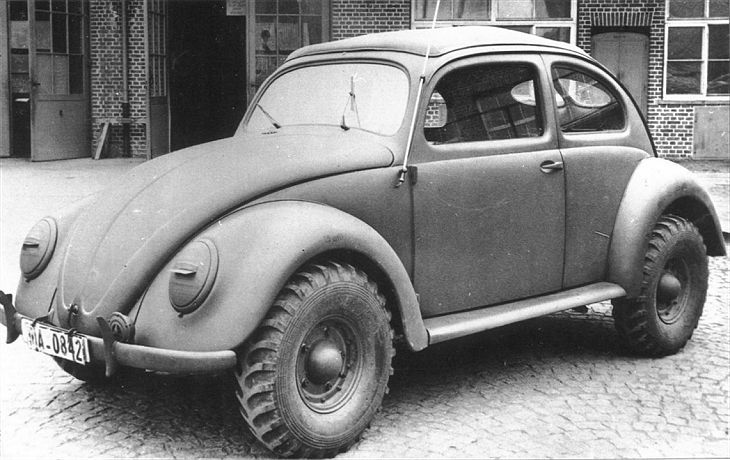
Volkswagen Beetle number 21,529,464 rolled off the production line at the VW plant in Puebla, Mexico, on this day in 2003. It was the last of the Beetles, a car that had been built since World War II. kdf-wagenIt was baby blue and destined for a museum near Volkswagen headquarters in Wolfsburg, Germany, where its oldest ancestors were made.

This was the classic VW Beetle, the real one, not the redesigned retro Beetle that Volkswagen started producing in 1998. It was first visualized back in the 1930s by Austrian automotive engineer Ferdinand Porsche (yes, that Porsche).  Adolf Hitler wanted a small, affordable passenger car to satisfy German transportation needs, something smaller than a Panzer and more family-friendly. Porsche’s auto fit the bill and was introduced in 1939 as the Kraft-durch-Freude-Wagen (or “Strength-Through-Joy” car), not a moniker that would send anyone other than Nazis running to their nearest automobile dealer.  A much-needed name change would later make it the “people’s car” or Volkswagen.

The Kraft-durch-Freude-Wagen was quickly given the nickname “Beetle” for its funny round shape and because — well, would you call it the “Kraft-durch-Freude-Wagen?”  The Wolfsburg factory churned out vehicles until production was halted by Allied bombing in 1944.

Production was resumed after the war, and the Beetle was distributed throughout the world during the following years. After a slow start in the United States, the Beetle became the top import by 1960 as the result of a clever advertising campaign. In 1969, a Beetle named Herbie starred in a hit movie The Love Bug and a couple of sequels.

Hard times hit in 1977, however, as the Beetle was banned in America for failing to meet safety and emission standards. Sales throughout the world declined and, by the late 1980s, the classic Beetle was sold only in Mexico. The Beetle was doomed even in Mexico, thanks to increased competition from other compact cars and burros. And in 2003 it was adios fraulein.

 

March 9, 1974: Lay Down Your Arms

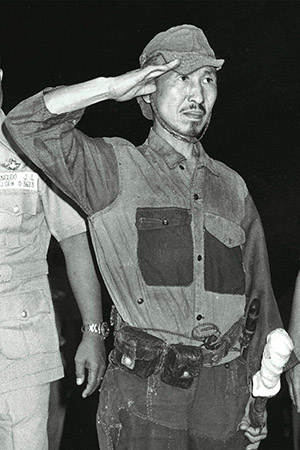
soldierLt. Hiroo Onoda, a soldier in the Japanese army, was sent to the remote Philippine island of Lubang in 1944 to conduct guerrilla warfare. Onoda was supposed to blow up the pier at the harbor and destroy the Lubang airfield. Unfortunately, his commanders, who were worried about other matters, decided not to help Onoda on his mission and soon the island was overrun by the Allies.  Time passed, the war ended, but nobody officially told Onoda; so for 29 years, Onoda remained a dedicated soldier, living in the jungle, eating coconuts and bananas and deftly evading searching parties. Hiding out in the dense jungles, Onoda ignored the leaflets, newspapers, photographs and letters from relatives dropped by planes during the years; he was convinced they were all part of an Allied plot.

In 1974, a college dropout named Norio Suzuki traveled to the Philippines, telling his friends he was out to find a panda, the Abominable Snowman and Lt. Onoda. Where others had failed, Suzuki succeeded. He found Lt. Onoda and tried to convince him that the war was over. However, Onoda refused to leave the island until his commander ordered him to do so. Suzuki traveled back to Japan and found Onoda’s former commander, who had become a bookseller. On March 9, 1974, Suzuki and the commander/bookseller met Onoda and delivered orders that all combat activity was to be ceased, and Onoda laid down his arms.

Tiny Tomato Killer Strikes Again

It is better to light a candle than curse the darkness, or so says some annoying pundit.  Likewise, I suppose, it is better to do something positive than curse the mounds of snow encircling us.  I’ve always been of the curse the darkness ilk, but occasionally I do try and rise above the winter of my discontent and light a candle in the snow.  One of the better remedies for my malaise is the old seed catalog – tiptoeing through the tulips, tomatoes and zinnias almost brings warmth to my icy heart.

If you ever order anything from a seed catalog, you will never have to worry about being without one again.  They will arrive every January just as reliably as the foot of snow they said would be an inch.  There’s Seed City, Happy Seeds, Seeds R Us and many more.  Funny thing is they all come from the same little town in the Midwest where a single little old lady – Granny Burpee – takes seeds out of great big jars and puts them in little envelopes with all those different names.

Nevertheless full seed ahead.  Seven tomato varieties, a couple of cucumbers, greens, beans, okra.  Snapdragons, sweet peas, exotic species I’ve never heard of.  “And there’s no such thing as too many sunflowers,” I’m reminded.

There is such a thing as too many seeds, however.  Granny Burpee doesn’t hold back – a hundred seeds here, two hundred there, a thousand.  I’d like to order six tomato seeds, please.  I really only need two cucumber seeds.  The theory seems to be that you must overplant, just in case some of them don’t sprout.

But they all sprout.

I wanted a couple of tomatoes.  I planted a plastic seed-starting tray, two or three seeds in each of its six cubicles.  Twenty tomato plants emerge.  Just thin out the extra plants, the catalogs advise, leaving one healthy tomato plant in each cubicle.  That’s theory again.  From over my shoulder, as I carefully pull out the runts of the seedlings:  “You’re not going to murder those little plants, are you?”

Come June, I have twenty tomato plants, a dozen cucumbers, a dozen nasturtium, I don’t know how many dozen sunflowers, a sea of seedlings that I forgot to label, and six zucchini.   With six zucchini plants, I’ll be able to place a giant zucchini on the back seat of every unlocked car in Vermont.

Maybe I’ll curse the darkness for a while.

JULY 30, 2003: TAKE A SPIN IN MY KRAFT-DURCH-FREUDE-WAGEN?

Volkswagen Beetle number 21,529,464 rolled off the production line at the VW plant in Puebla, Mexico, on this day in 2003. It was the last of the Beetles, a car that had been built since World War II. kdf-wagenIt was baby blue and destined for a museum near Volkswagen headquarters in Wolfsburg, Germany, where its oldest ancestors were made.

This was the classic VW Beetle, the real one, not the redesigned retro Beetle that Volkswagen started producing in 1998. It was first visualized back in the 1930s by Austrian automotive engineer Ferdinand Porsche (yes, that Porsche).  Adolf Hitler wanted a small, affordable passenger car to satisfy German transportation needs, something smaller than a Panzer and more family-friendly. Porsche’s auto fit the bill and was introduced in 1939 as the Kraft-durch-Freude-Wagen (or “Strength-Through-Joy” car), not a moniker that would send anyone other than Nazis running to their nearest automobile dealer.  A much-needed name change would later make it the “people’s car” or Volkswagen.

The Kraft-durch-Freude-Wagen was quickly given the nickname “Beetle” for its funny round shape and because — well, would you call it the “Kraft-durch-Freude-Wagen?”  The Wolfsburg factory churned out vehicles until production was halted by Allied bombing in 1944.

Production was resumed after the war, and the Beetle was distributed throughout the world during the following years. After a slow start in the United States, the Beetle became the top import by 1960 as the result of a clever advertising campaign. In 1969, a Beetle named Herbie starred in a hit movie The Love Bug and a couple of sequels.

Hard times hit in 1977, however, as the Beetle was banned in America for failing to meet safety and emission standards. Sales throughout the world declined and, by the late 1980s, the classic Beetle was sold only in Mexico. The Beetle was doomed even in Mexico, thanks to increased competition from other compact cars and burros. And in 2003 it was adios fraulein.