December 25, 1914: Over There

Just after midnight on December 25, 1914, British, French and Russian troops at European battle fronts were stunned as German joyeauxtroops ceased firing and began to sing Christmas carols — in some cases, even backed up by oompah bands.

World War I had begun five months earlier and would continue for another devastating four years. This spontaneous Christmas truce continued through the night and into daylight when many of the German soldiers emerged from their trenches and called out “Merry Christmas” in their enemies’ native tongues. Finally, Allied soldiers, seeing that the Germans were unarmed, climbed out of their trenches as well. Men from both sides ventured through the so-called No Man’s Land to shake hands with the enemy. The men exchanged small presents and sang carols and songs. In one case, soldiers played an international soccer game.

It was, of course, short-lived as both sides went back to their business of killing each other.  (This true story is told in the 2005 French film Joyeux Noel.)

On Christmas Day in 1941 Bing Crosby introduced a new Christmas song on his weekly NBC radio program. The song, written by Jewish composer and lyricist Irving Berlin, went on to become the gold standard of Christmas music — the top-selling Christmas single ever and the top-selling single of any kind for another 55 years.

The success of “White Christmas” came as no surprise to Berlin, who was already a musical legend. He modestly called it “the best song I ever wrote…the best song anybody ever wrote.” Although Berlin did not celebrate Christmas, it was a day that did hold special meaning to him: his infant son died on December 25, 1928. That perhaps explains some of the ambiguous emotional strength of the song.
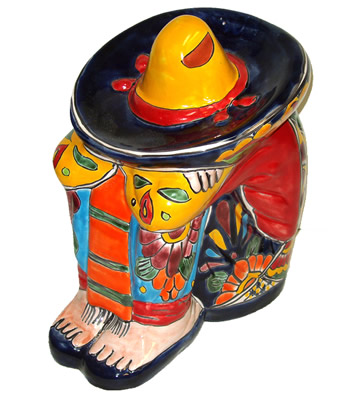
 

JULY 19, 1918: MANANA IS GOOD ENOUGH FOR ME

The nations at war had already soldiered on for more than four years, and the war would end in another few months, but Honduras President Francisco Bertrand awakened from a siesta and jumped into the fray by declaring war on Germany, taking the dubious honor of becoming the last nation in the world to declare war as part of World War I.

     One can imagine the reaction in the German War Room when word arrived that Honduras had gone to the other side. The German command couldn’t have been too surprised since Britain, Serbia, Montenegro, Japan, Italy, Australia, Canada, India, New Zealand, United States, Panama, Greece, Guatemala, Nicaragua and Haiti had all declared war on Germany. And for its part, Germany had declared war against France, Russia, Belgium, and Portugal. (Practically everybody declared war on Bulgaria and the Ottoman Empire.)  But Honduras!

     The Honduran president was all set to commit troops to the worldwide effort before realizing that Germany was halfway around the world and had no rum. And the war declaration was really more a matter of sucking up to the United States by showing sympathy for its position than any actual hostility toward Germany. In fact, there were a large number of Germans living in Honduras, and they were not pleased.  A year later they retaliated by supporting Bertrand’s political enemies in overthrowing him.


December 25: Tis the Season

Today is of course Christmas Day in much of the world.  To some folks who pack a lot into their ’tis the season, it is the beginning of Christmastide or Twelvetide, the first of a dozen days of Christmas.  This is infamously celebrated by the carol in which on this day, the first day of Christmas, someone’s True Love bestows upon him or her a gift of a partridge in a pear tree.  While we might point out that a crock pot or a circular saw would be a bit more practical, we won’t quibble with the sentiment.

It would also seem that Charles Dickens missed the boat.  Imagine the twelve ghosts of Christmas:  The first ghost of Christmas shows Ebenezer Scrooge how happy his parents were before he was born.  Stay tuned, Ebenezer; there’s more to come.

Over There

Just after midnight on December 25, 1914, British, French and Russian troops at European battle fronts were stunned as German joyeauxtroops ceased firing and began to sing Christmas carols — in some cases, even backed up by oompah bands.

World War I had begun five months earlier and would continue for another devastating four years. This spontaneous Christmas truce continued through the night and into daylight when many of the German soldiers emerged from their trenches and called out “Merry Christmas” in their enemies’ native tongues. Finally, Allied soldiers, seeing that the Germans were unarmed, climbed out of their trenches as well. Men from both sides ventured through the so-called No Man’s Land to shake hands with the enemy. The men exchanged small presents and sang carols and songs. In one case, soldiers played an international soccer game.

It was, of course, short-lived as both sides went back to their business of killing each other.  (This true story is told in the 2005 French film Joyeux Noel.)

On Christmas Day in 1941 Bing Crosby introduced a new Christmas song on his weekly NBC radio program. The song, written by composer and lyricist Irving Berlin, went on to become the gold standard of Christmas music — the top-selling Christmas single ever and the top-selling single of any kind for another 55 years.

The success of “White Christmas” came as no surprise to Berlin, who was already a musical legend. He modestly called it “the best song I ever wrote . . . the best song anybody ever wrote.” And written by a man who did not celebrate Christmas.

JULY 19, 1918: MANANA IS GOOD ENOUGH FOR ME

The nations at war had already soldiered on for more than four years, and the war would end in another few months, but Honduras President Francisco Bertrand awakened from a siesta and jumped into the fray by declaring war on Germany, taking the dubious honor of becoming the last nation in the world to declare war as part of World War I.

     One can imagine the reaction in the German War Room when word arrived that Honduras had gone to the other side. The German command couldn’t have been too surprised since Britain, Serbia, Montenegro, Japan, Italy, Australia, Canada, India, New Zealand, United States, Panama, Greece, Guatemala, Nicaragua and Haiti had all declared war on Germany. And for its part, Germany had declared war against France, Russia, Belgium, and Portugal. (Practically everybody declared war on Bulgaria and the Ottoman Empire.)  But Honduras!

     The Honduran president was all set to commit troops to the worldwide effort before realizing that Germany was halfway around the world and had no rum. And the war declaration was really more a matter of sucking up to the United States by showing sympathy for its position than any actual hostility toward Germany. In fact, there were a large number of Germans living in Honduras, and they were not pleased.  A year later they retaliated by supporting Bertrand’s political enemies in overthrowing him.