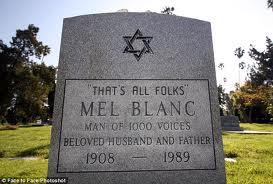
MAY 30, 1908: THAT’S ALL FOLKS

Although Mel Blanc, “the Man of a Thousand Voices,” is most often remembered as the voice of Bugs Bunny, Porky Pig, Daffy Duck, Woody Woodpecker, Tweety Bird, Sylvester, Yosemite Sam, Speedy Gonzales, Foghorn Leghorn, Pepé Le Pew, the Tasmanian Devil and many of the other characters from theatrical cartoons and Hanna-Barbera’s television cartoons, he had a long career as a comedian and character actor in radio and television. He was born on May 30, 1908, and died in 1989.
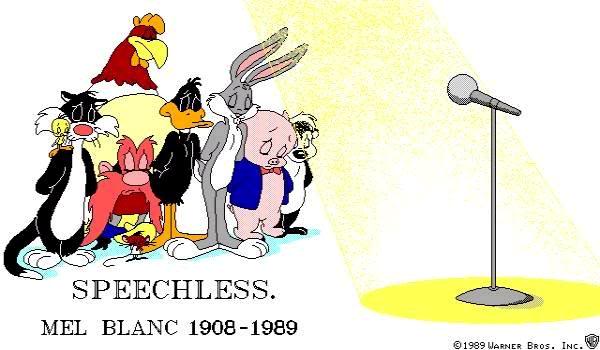
Blanc was a regular on The Jack Benny Program in various roles, and appeared on many other shows (Fibber McGee and Molly, Great Gildersleeve, Abbott and Costello, Burns and Allen), including his own which ran from September 1946 to June 1947. In the Jack Benny radio show he was Carmichael, the irascible polar bear who guarded the comedian’s underground vault; his outspoken parrot; his violin teacher, Monsieur Le Blanc; his Mexican gardener, Sy; and even his Maxwell automobile.

Blanc was easily the most prolific voice actor in the history of the industry and the first to be identified in the ending credits. In his 60-year career, he helped develop nearly 400 characters and provided voices for some 3,000 animated cartoons. During the cartoon heydays of the 1940’s and 50’s, he voiced 90 percent of the Warner Brothers cartoon empire. As movie critic Leonard Maltin said, “It is astounding to realize that Tweety Bird and Yosemite Sam are the same man!”

A gem from The Jack Benny Program:

APRIL 27, 1899: I COULDA BEEN A TENOR

Walter Lantz, who was born in 1899 to Italian immigrant parents,  actually had the surname Lanza until an immigration official anglicized it. Had he not, Walter could have grown up to be an opera singer rather than the creator of Woody Woodpecker and many other cartoon characters.

The first of these characters was Oswald the Lucky Rabbit, star of a 1928 cartoon series for Lantz_OswaldUniversal Studios. The character, who bears more than a passing resemblance to Mickey Mouse, had once belonged to Disney. Lantz won it in a game of poker.

Other less memorable characters followed: a trio of chimps, Meany, Miny and Moe; Baby-Face Mouse; Snuffy Skunk; Doxie (a dachshund); and monkeys Jock and Jill. One character stood out from the crowd – Andy Panda became the comic star for 1939.

A year later, Lantz married actress Grace Stafford. While on their honeymoon, Walter and Grace were pestered by an insistent woodywoodpecker02woodpecker pecking on their roof, and Grace suggested that Walter use the bird as a cartoon character. Woody Woodpecker appeared for the first time in an Andy Panda cartoon and soon became a leading character.

Mel Blanc was originally the voice of Woody Woodpecker, but after only three cartoons, he left to join Warner Brothers. Lantz held anonymous auditions for a new Woody. Lantz’s wife Grace made a secret audition tape and was chosen to be the new voice. She continued in the part until production ceased in 1972.

Woody Woodpecker is the only comic character to have his own hit song. Kay Kyser recorded “The Woody Woodpecker Song,” a top hit and Academy Award nominee in 1948.

Ho-ho-ho ho ho! Ho-ho-ho ho ho! Oh, that’s the Woody Woodpecker song.  They don’t write lyrics like that anymore.

APRIL 27, 1899: I COULDA BEEN A TENOR

Walter Lantz, who was born in 1899 to Italian immigrant parents,  actually had the surname Lanza until an immigration official anglicized it. Had he not, Walter could have grown up to be an opera singer rather than the creator of Woody Woodpecker and many other cartoon characters.

The first of these characters was Oswald the Lucky Rabbit, star of a 1928 cartoon series for Lantz_OswaldUniversal Studios. The character, who bears more than a passing resemblance to Mickey Mouse, had once belonged to Disney. Lantz won it in a game of poker.

Other less memorable characters followed: a trio of chimps, Meany, Miny and Moe; Baby-Face Mouse; Snuffy Skunk; Doxie (a dachshund); and monkeys Jock and Jill. One character stood out from the crowd – Andy Panda became the comic star for 1939.

A year later, Lantz married actress Grace Stafford. While on their honeymoon, Walter and Grace were pestered by an insistent woodywoodpecker02woodpecker pecking on their roof, and Grace suggested that Walter use the bird as a cartoon character. Woody Woodpecker appeared for the first time in an Andy Panda cartoon and soon became a leading character.

Mel Blanc was originally the voice of Woody Woodpecker, but after only three cartoons, he left to join Warner Brothers. Lantz held anonymous auditions for a new Woody. Lantz’s wife Grace made a secret audition tape and was chosen to be the new voice. She continued in the part until production ceased in 1972.

Woody Woodpecker is the only comic character to have his own hit song. Kay Kyser recorded “The Woody Woodpecker Song,” a top hit and Academy Award nominee in 1948.

Ho-ho-ho ho ho! Ho-ho-ho ho ho! Oh, that’s the Woody Woodpecker song.  They don’t write lyrics like that anymore.

MAY 30, 1908: THAT’S ALL FOLKS

Although Mel Blanc, “the Man of a Thousand Voices,” is most often remembered as the voice of Bugs Bunny, Porky Pig, Daffy Duck, Woody Woodpecker, Tweety Bird, Sylvester, Yosemite Sam, Speedy Gonzales, Foghorn Leghorn, Pepé Le Pew, the Tasmanian Devil and many of the other characters from theatrical cartoons and Hanna-Barbera’s television cartoons, he had a long career as a comedian and character actor in radio and television. He was born on May 30, 1908, and died in 1989.

Blanc was a regular on The Jack Benny Program in various roles, and appeared on many other shows (Fibber McGee and Molly, Great Gildersleeve, Abbott and Costello, Burns and Allen), including his own which ran from September 1946 to June 1947. In the Jack Benny radio show he was Carmichael, the irascible polar bear who guarded the comedian’s underground vault; his outspoken parrot; his violin teacher, Monsieur Le Blanc; his Mexican gardener, Sy; and even his Maxwell automobile.

Blanc was easily the most prolific voice actor in the history of the industry and the first to be identified in the ending credits. In his 60-year career, he helped develop nearly 400 characters and provided voices for some 3,000 animated cartoons. During the cartoon heydays of the 1940’s and 50’s, he voiced 90 percent of the Warner Brothers cartoon empire. As movie critic Leonard Maltin said, “It is astounding to realize that Tweety Bird and Yosemite Sam are the same man!”

A gem from The Jack Benny Program: