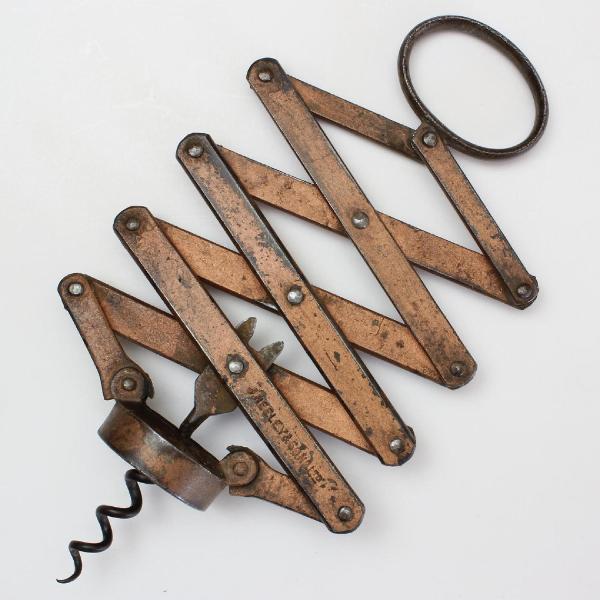
Back through the centuries wine lovers never aged their wines; they consumed it quickly before it went bad. Then in the 18th century, British 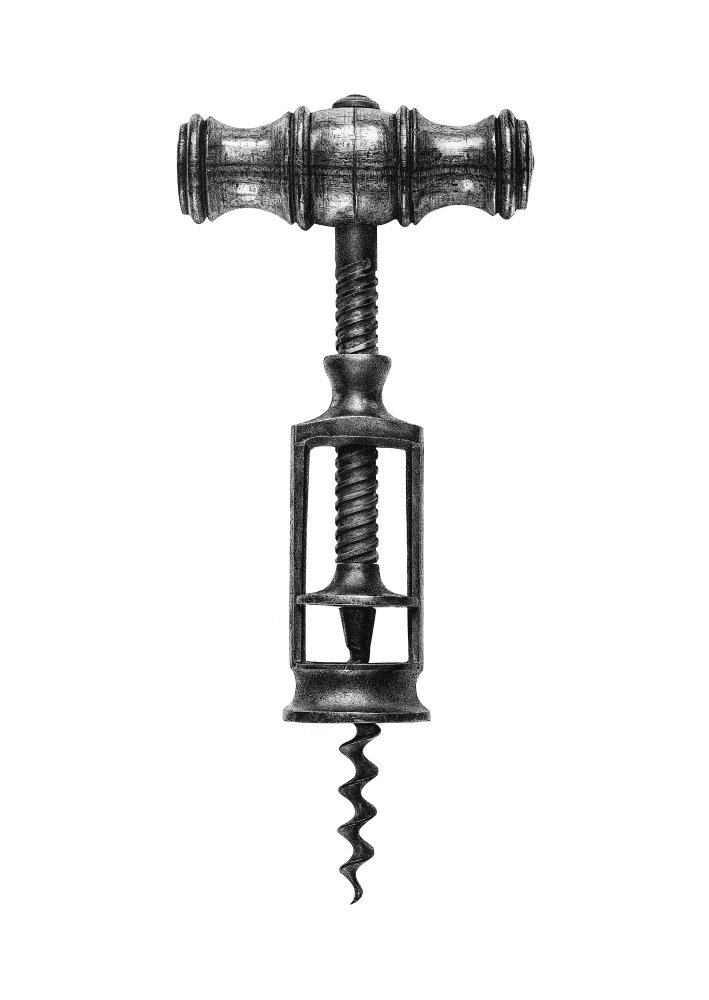 glassblowers began to make bottles with narrow necks for wine that made airtight storage possible. Corks were used to seal the bottles. This quickly led to the invention of one of the dandiest little gizmos ever devised — the corkscrew. The design was based on a similar device used to clean muskets. The first corkscrews were T-shaped devices that twisted into the cork and after a certain amount of pulling extracted the cork. Corkscrews were first patented in England and France, then on March 27, 1860, M. L. Byrn of New York City received an American patent.
Since then, hundreds of corkscrews have been designed of every shape, size and mechanics you can imagine — single-lever, double-winged, air pump, electric, mounted. Naturally there are corkscrew books, corkscrew clubs, and corkscrew collectors, helixophiles.
I LEFT MY HEART AND A BUNCH OF QUARTERS . . .
The bane of drivers everywhere, the toll-taker, notably went missing from from San Francisco’s Golden Gate Bridge on March 27, 2013. Not the tolls themselves, just those  human beings who had previously greeted motorists with smiling faces on and official hands out. On that morning, officials threw the switch on a new electronic system of collecting tolls. This was the future; this was progress.
Empty toll booths were joined by a new 27-foot LED sign instructing motorists to keep on moving as the Golden Gate Bridge became the only span in California and one of the few in the world to convert to all-electronic tolls.
Now motorists go online to register license plates and credit card information with the bridge district and pay tolls as they are incurred. Those who don’t have online accounts have about 48 hours after they cross the bridge to pay the toll at one of the payment kiosks located along thoroughfares leading to and from the Golden Gate. Those who don’t pay up receive invoices, because Big Brother knows who they are.
The bridge has been a San Francisco icon since it was opened in 1937. Before that the only practical short route between San Francisco and what is now Marin County was by a half-hour boat trip across San Francisco Bay. During the bridge-opening celebration, before vehicle traffic was allowed, 200,000 people crossed the bridge on foot and roller skate.
In addition to being a major tourist attraction, the bridge is the world’s most popular suicide spot. An official suicide count is kept, sorted according to which of the bridge’s 128 lampposts the jumper was nearest when he or she jumped. (Lamppost #19 is particularly recommended.) Today, the suicide count was just a couple of goodbye cruel worlds shy of 2,000. Formed several decades ago, The Golden Gate Leapers Association, is a sports pool in which bets are placed on which day the next jump will occur.
A few years ago, savvy officials came up with a plan to thwart would-be jumpers: a “suicide deterrent” net spanning both sides of the bridge that will capture them like hapless butterflies. The net will have cost $200 million by the time it is completed in 2023. Most likely there will be a toll collected from those butterflies to help pay for it.
 Wretched Richard's Almanac