In 1957, the most infamous Christmas curmudgeon since Ebeneezer Scrooge made his debut in a picture book called How the Grinch Stole Christmas by the amazing Dr. Seuss (Theodor Geisel). It marked the first time an adult had been featured as the main character in a Seuss book and the first time a villain had starred. The book has remained a classic since then. Some conspiracy theorists suggest (and the doctor concurs) that the Grinch is Dr. Seuss himself. In the story, the Grinch complains that he has put up with the Whos’ Christmas celebrations for 53 years. Dr. Seuss was 53 when the book was written and published.
Several years later, on December 18, 1966, the furry misanthrope, now a sickly shade of green, was ready for prime time – television, that is. Chuck Jones of Warner Brothers cartoon fame brought the story to living room screens featuring Boris Karloff as narrator and Grinch. In addition to providing the story, Dr. Seuss created the lyrics for the songs featured in the animated special. (The songs were sung by Thurl Ravenscroft, who some will remember as the bass voice on Rosemary Clooney’s “This Ole House” or Tony the Tiger – “They’re grrreat!”)
The word grinch has found its way into dictionaries as a person whose lack of enthusiasm or bad temper spoils or dampens the pleasure of others. “Noise, noise, noise, noise.”
The New York Jets were leading the home team Oakland Raiders by a skinny three points, 32-29, on the afternoon of November 17, 1968. NBC was airing the game for sports fans throughout the country.It was a game between two formidable adversaries, and a hard fought one. The intensity of the play had led to injuries, penalties, extra timeouts and lots of scoring, with the lead changing eight times. As a result, the game ran longer than usual, longer than the three hours NBC had allotted for it. That meant that on the East Coast the game ran right into the 7 p.m. time slot when the evening’s prime time schedule was set to begin.
With just minutes left in the game, eastern viewers were switched to Switzerland for the television movie Heidi, the heartwarming story of a sweet little girl and her kindly grandfather, filled with Alps and yodeling and stuff, but no football. Worse, still, as Heidi cavorted with her goats, the Raiders scored two touchdowns in nine seconds to win the game. Football fans were not pleased.
As it turns out, NBC executives had decided to postpone the start of the film, but they couldn’t get through to the studio because the switchboard was jammed with irate football fans.
The Heidi Game, as it came to be called, led to a change in the television broadcasting of football; the NFL inserted a clause into its TV contracts that guaranteed all games would be broadcast completely. Television networks had separate telephone exchanges installed (known lovingly as Heidiphones) to prevent such incidents from happening in the future.
In 1997, the Heidi Game was voted the most memorable regular season game in U.S. professional football history. Heidi remains the most memorable film about little girls and mountain goats.
And a Memorable Dog
A noted canine was born on this day in 1933. Terry, a female cairn terrier, appeared in 16 motion pictures during her career. If you don’t recognize her name, it’s probably because fame went to her head after a star turn in the 1939 blockbuster The Wizard of Oz, and she changed her name to Toto.
Long before he debuted in his own television show on October 15, 1954, Rin Tin Tin had become an international celebrity. It was as good a rags-to-riches story as Hollywood could churn out. He was rescued from a World War I battlefield by an American soldier who trained him to be an actor upon returning home. He starred in several silent films, becoming an overnight sensation and going on to appear in another two dozen films before his death in 1932.
Rinty (as he was known to his friends) was responsible for a great surge in German Shepherds as pets. The popularity of his films helped make Warner Brothers a major studio and pushed a guy named Darryl F. Zanuck to success as a producer.
During the following years Rin Tin Tin Jr. and Rin Tin Tin III kept the Rin Tin Tin legacy alive in film and on the radio. Rin Tin Tin IV was slated to take the franchise to television in The Adventures of Rin Tin Tin, but he flunked his screen test and was shamefully replaced by an upstart poseur named Flame.
The TV series featured an orphan named Rusty who was being raised by soldiers at a cavalry post known as Fort Apache. Rin Tin Tin was the kid’s dog. It was a low budget affair, filmed on sets used for other productions with actors frequently called upon to play several soldiers, Apaches, and desperadoes in a single episode. Although it was children’s programming, you might not guess that by the lofty literary titles of many episodes: Rin Tin Tin Meets Shakespeare, Rin Tin Tin and the Barber of Seville, Rin Tin Tin and the Ancient Mariner, Rin Tin Tin and the Connecticut Yankee.
Meanwhile, IV stayed at home on his ranch, fooling visitors into believing he was actually a TV star (and perhaps contemplating a run for President).
Rated P. G.
“Freddie experienced the sort of abysmal soul-sadness which afflicts one of Tolstoy’s Russian peasants when, after putting in a heavy day’s work strangling his father, beating his wife, and dropping the baby into the city’s reservoir, he turns to the cupboards, only to find the vodka bottle empty.” One line from someone who had a great knack for them, which he displayed in over 300 stories, 90 books, 30 plays and musicals, and 20 film scripts. Comic novelist P.G. Wodehouse, creator of Jeeves the butler, was born on this day in 1881 in Surrey, England.
He had the look of one who had drunk the cup of life and found a dead beetle at the bottom.
Mike nodded. A sombre nod. The nod Napoleon might have given if somebody had met him in 1812 and said, “So, you’re back from Moscow, eh?”
I could see that, if not actually disgruntled, he was far from being gruntled.
She looked as if she had been poured into her clothes and had forgotten to say ‘when.’
The fascination of shooting as a sport depends almost wholly on whether you are at the right or wrong end of the gun.
Every author really wants to have letters printed in the papers. Unable to make the grade, he drops down a rung of the ladder and writes novels.
It was my Uncle George who discovered that alcohol was a food well in advance of modern medical thought.
And she’s got brains enough for two, which is the exact quantity the girl who marries you will need.
At the age of eleven or thereabouts women acquire a poise and an ability to handle difficult situations which a man, if he is lucky, manages to achieve somewhere in the later seventies.
The name Frances Allison probably doesn’t ring a bell with most people. In the days of live programming and test patterns, the radio comedienne and singer became well known to those who huddled around the TV set early evenings to watch the misadventures of the Kuklapolitan Players. She was better known simply as Fran, and she was one-third of the trio Kukla, Fran and Ollie.
Created by puppeteer Burr Tillstrom, the show got its start as Junior Jamboree locally in Chicago, on October 13, 1947. Renamed Kukla, Fran and Ollie, it began airing nationally on NBC in early 1949. Although the show, all puppets except for Fran, was originally targeted to children, it was soon watched by more adults than children. It was entirely ad-libbed.
Fran assumed the role of big sister and cheery voice of reason as the puppets engaged each other in life’s little ups and downs. It was a Punch and Judy kind of show but with less slapstick and more character development. Kukla was the nerdy leader of the amateur acting troupe, plucky and earnest, and Ollie (short for Oliver J. Dragon) was his complete opposite, a devilish one-toothed dragon who would roll on his back when sucking up or slam his chin on the stage when annoyed. Joining them were Madame Oglepuss, a retired opera diva; Beulah, a liberated witch; Fletcher Rabbit, a fussy mailman, and several others.
KFOs fan base included Orson Welles, John Steinbeck, Tallulah Bankhead, and Adlai Stevenson among many others. James Thurber wrote that Tillstrom and the program were “helping to save the sanity of the nation and to improve, if not even to invent, the quality of television.”
Kukla, Fran and Ollie ran for ten years until 1957. Mister, we could use a Kukla, Fran and Ollie today.
To Swazzle or Not To Swazzle
Kukla and Ollie didn’t come on the scene until the mid-20th century; but puppets has already been around for some 4,000 years. And they come in many different flavors: marionettes, finger puppets, rod puppets. The Tillstrom characters are glove puppets, controlled by a hand inside the puppet.
Punch and Judy are the most famous of this type of puppet. Their first recorded appearance in England was during the Restoration when King Charles II replaced wet blanket Oliver Cromwell and the arts began to thrive. Punch and Judy shows generally feature the fine art of slapstick with characters hitting each other as frequently as possible.
Punch speaks with a distinctive squawk, created by means of a swazzle, an instrument held in the mouth while speaking. Punch’s cackle is deemed so important in Punch and Judy circles (yes, there are Punch and Judy circles) that a non-swazzled Punch is considered no Punch at all.
“I knew Punch. Punch was a friend of mine. Senator, you’re no Punch.”
It may be every kid’s dream to run away and join the circus. Not many do, but Jack Carlton Moore, born September 14, 1914 did at the tender age of eight. It may also be every kid’s dream to grow up to be the Lone Ranger. Jack did that too. With his new name, Clayton Moore, he donned a black mask, picked up a Native American buddy and rode into television history.
Following his stint in the circus, Moore worked as a model, a stunt man and a bit player in western movies. In 1949, his work in the serial Ghost of Zorro brought him to the attention of the producer of the Lone Ranger radio program. He was signed to play the ranger in the television series, along with Jay Silverheels as Tonto. The series was the first Western written specifically for television. It aired for eight seasons — 221 episodes.
After the series ended, Moore refused to give up his mask, wearing it in public appearances. This rather dismayed the owner of the rights to the character who in 1979 secured a legal ruling preventing Moore from wearing his mask in public. In response, the daring and resourceful masked rider of the plains began wearing oversized sunglasses. The ruling was eventually reversed.
Return with us now to those thrilling days of yesteryear. The Lone Ranger rides again!
We Come in Pieces
Back in 1957, the Soviet Union had stunned the rest of the world with the success of Sputnik. In the United States this was viewed as a major crisis, triggering a catch-up effort. The Space Race, the scientific side of the Cold War, was on. And two years later, on September 14, 1959, those pesky commies did it again. Luna 2 landed on the moon.
Luna 2, son of Luna 1, was the first spacecraft to reach the surface of the moon, and in fact the first man-made object to land anywhere in space.
It certainly wasn’t the last. Since then, the moon has become somewhat of a landfill for us Earthlings. Crash landings, the preferred method of landing for unmanned spacecraft, have left the remains of more than 70 vehicles spread across the moon. Other spacecraft, just passing by, have jettisoned junk of all sorts, it too finding a home on the lunar surface. And visiting astronauts rarely practiced “carry in, carry out” when visiting. Estimates suggest the moon is home to over 400,000 pounds of man-made castoffs.
A highly selective inventory: Rovers, modules and orbiters; a dozen pair of boots; hammers, rakes and shovels: cameras; javelins: objets d’art; barf bags; golf balls; a silicon disc with the words “Man has reached out and touched the tranquil moon. May that high accomplishment allow man to rediscover the Earth and find peace there. –Pierre Elliot Trudeau;” a plaque that reads “we came in peace for all mankind.”
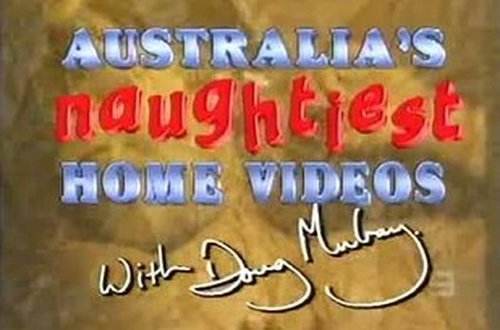
You’ve got this great idea. Take all those funny home videos people sent you that were too risqué for the TV program Funniest Home Videos and use them to create a brand new TV program called Naughtiest Home Videos. Better still call it Australia’s Naughtiest Home Videos because that’s where the racy adult program aired on September 4, 1992.
How racy? Well, there were shots of various animals’ private parts, both animals and humans humorously having sex (which not only begs the question how do you have sex humorously but also blurs the line between human and animal), people losing their clothing in unusual ways, an elderly woman removing an envelope from a male stripper’s skivvies using her dentures, two men lifting a barbell without using their hands . . . well, one could continue listing these hilarious bits but one would be in danger of laughing so hard one would pee one’s pants.
“I’d like to sincerely say that if we’ve offended just one of you, we’ve failed,” said the show’s host returning from the first commercial break. “We were hoping for half a million offended viewers by now.”
It took an agonizing 34 minutes for the network owner, who was enjoying a quiet dinner out with friends, to hear about the program and call the studio to cancel the program or, in his words, “get that shit off the air.” Almost immediately, a network announcer said: “We apologize for this interruption. Unfortunately, a technical problem prevents us continuing our scheduled program for the moment ” and the show made history, being the shortest running television series ever.
The following morning was not a pleasant one for anyone who had had anything to do with airing the program. They were berated loudly and had their careers cut just as short as Australia’s Naughtiest Home Videos.
Rabbits Behaving Badly?
As far as we know, there were no racy bits featuring anthropomorphic rabbits scheduled for the unseen portion of Naughtiest Videos. A much tamer depiction of the same had it’s beginnings a century earlier in a letter written on September 4, 1893, that included an illustrated story about a rabbit named Peter. The letter was written by Beatrix Potter to the five-year-old son of her former governess, Annie Moore. Moore suggested that the story be made into a book.
Potter further developed the storyline, added additional illustrations, and in 1901, self-published 250 copies of The Tale of Peter Rabbit. Today with 45 million copies sold it remains one of the most popular children’s books of all time.
You Are So Rare
Howie Morris, born September 4, 1919, ( died 2005) was best known for his portrayal of Ernest T. Bass on the Andy Griffith Show and numerous characters on Sid Caesar’s Your Show of Shows.
To many of those who have even heard of Jean Shepherd, he is the voice of the grown-up Ralphie Parker whose childhood struggle to score an Official Red Ryder 200-Shot Range Model Air Rifle for Christmas is the subject of the holiday classic A Christmas Story. The film is based on Shepherd’s stories about growing up in Indiana.
Born July 26, 1921, Shepherd was an American raconteur, radio and TV personality, writer and actor. After several radio gigs, he settled in at WOR radio New York City in 1956 with an overnight slot on which he delighted fans by telling stories, reading poetry, and organizing listener stunts. The most famous of his stunts was the creation of a book, I, Libertine, by an 18th century author. Shepherd suggested that his listeners visit bookstores and ask for a copy of it, which led to booksellers attempting to purchase the book from their distributors. Fans of the show also planted references to the book and author so widely that demand for the book led to its being listed on The New York Times Best Seller list even though it hadn’t been written. Shepherd’s radio stories found their way into magazines and were later collected in the books In God We Trust, All Others Pay Cash; Wanda Hickey’s Night of Golden Memories and Other Disasters; The Ferrari in the Bedroom; and A Fistful of Fig Newtons.
“What the hell time is it?” muttered the old man. He was always an aggressive sleeper. Sleep was one of the things he did best, and he loved it. Some look upon sleep as an unfortunate necessary interruption of life; but there are others who hold that sleep is life, or at least one of the more fulfilling aspects of it, like eating or sex. Any time my old man’s sleep was interrupted, he became truly dangerous.” – Wanda Hickey’s Night of Golden Memories: And Other Disasters
From A Christmas Story:
I had woven a tapestry of obscenity that as far as I know is still hanging in space over Lake Michigan.
Only I didn’t say “Fudge.” I said THE word, the big one, the queen-mother of dirty words, the “F-dash-dash-dash” word!
Now, I had heard that word at least ten times a day from my old man. He worked in profanity the way other artists might work in oils or clay. It was his true medium; a master.
And of course: You’ll shoot your eye out, kid.
July 26, 1895: Say Goodnight
With husband George Burns, Gracie Allen (born on July 26, 1895) made comedy history – in vaudeville, the movies, on radio and television.
The Burns and Allen comedy act began with Allen as the straight man, feeding lines to Burns who delivered the punchlines. George explained later that he noticed Gracie’s straight lines were getting more laughs than his punchlines, so he reversed their roles. Audiences immediately fell in love with Gracie’s character, a clever combination of ditziness and total innocence.
George attributed their success to Gracie, even though he was a brilliant straight man: “All I had to do was say, ‘Gracie, how’s your brother?’ and she talked for 38 years. And sometimes I didn’t even have to remember to say ‘Gracie, how’s your brother?'”
I read a book twice as fast as anybody else. First, I read the beginning, and then I read the ending, and then I start in the middle and read toward whatever end I like best.
“Gracie, those are beautiful flowers. Where did they come from?” “Don’t you remember, George? You said that if I went to visit Clara Bagley in the hospital I should be sure to take her flowers. So, when she wasn’t looking, I did.”
Presidents are made, not born. That’s a good thing to remember. It’s silly to think that Presidents are born, because very few people are 35 years old at birth, and those who are won’t admit it.
♦
A word of warning: The F-dash-dash-dash word appears on page 3 of Terry and the Pirate. You could cross it out if you wanted, if you owned your own copy.
Ed Sullivan was to the golden age of television what Google is to searching. He ruled Sunday night TV for 23 years – from 1948 to his very last broadcast on this day in 1971. Sullivan presented acts from the era’s biggest stars to acrobats, dancing bears, puppets, contortionists, you name it. Ten thousand in all – if they were entertainers, an appearance on the Sullivan show was their holy grail.
Musical performances from rock to opera were a staple of the program. Even its first broadcast, when it was known as Toast of the Town, made music history as Broadway composers Richard Rodgers and Oscar Hammerstein II previewed the score of their upcoming musical, South Pacific. And after that, West Side Story, Cabaret, Man of La Mancha – if it was on Broadway, it was on Sullivan. One of those Broadway musicals, Bye Bye Birdie, was all about making it on the Sullivan show.
Sullivan also chronicled the history of rock and roll from Elvis Presley’s appearance in 1956 through the Supremes, the Beatles, the Rolling Stones, the Doors, the Mamas and the Papas, and on June 6, 1971, the last program, Gladys Knight and the Pips.
When CBS canceled the show, the network let it end with a whimper. But in the 33 years since cancellation, numerous tribute shows and DVDs have kept Sullivan in the public eye.
Soldiers, Sailors and Airmen of the Allied Expeditionary Force! You are about to embark upon a great crusade, toward which we have striven these many months. The eyes of the world are upon you. The hopes and prayers of liberty loving people everywhere march with you. In company with our brave Allies and brothers in arms on other fronts, you will bring about the destruction of the German war machine, the elimination of Nazi tyranny over the oppressed peoples of Europe, and security for ourselves in a free world. — General Dwight D. Eisenhower, June 6, 1944
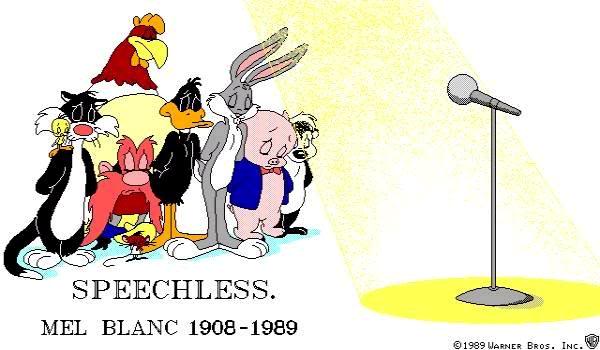
Although Mel Blanc, “the Man of a Thousand Voices,” is most often remembered as the voice of Bugs Bunny, Porky Pig, Daffy Duck, Woody Woodpecker, Tweety Bird, Sylvester, Yosemite Sam, Speedy Gonzales, Foghorn Leghorn, Pepé Le Pew, the Tasmanian Devil and many of the other characters from theatrical cartoons and Hanna-Barbera’s television cartoons, he had a long career as a comedian and character actor in radio and television. He was born on May 30, 1908, and died in 1989.
Blanc was a regular on The Jack Benny Program in various roles, and appeared on many other shows (Fibber McGee and Molly, Great Gildersleeve, Abbott and Costello, Burns and Allen), including his own which ran from September 1946 to June 1947. In the Jack Benny radio show he was Carmichael, the irascible polar bear who guarded the comedian’s underground vault; his outspoken parrot; his violin teacher, Monsieur Le Blanc; his Mexican gardener, Sy; and even his Maxwell automobile.
Blanc was easily the most prolific voice actor in the history of the industry and the first to be identified in the ending credits. In his 60-year career, he helped develop nearly 400 characters and provided voices for some 3,000 animated cartoons. During the cartoon heydays of the 1940’s and 50’s, he voiced 90 percent of the Warner Brothers cartoon empire. As movie critic Leonard Maltin said, “It is astounding to realize that Tweety Bird and Yosemite Sam are the same man!”

 In 1957, the most infamous Christmas curmudgeon since Ebeneezer Scrooge made his debut in a picture book called How the Grinch Stole Christmas by the amazing Dr. Seuss (Theodor Geisel). It marked the first time an adult had been featured as the main character in a Seuss book and the first time a villain had starred. The book has remained a classic since then. Some conspiracy theorists suggest (and the doctor concurs) that the Grinch is Dr. Seuss himself. In the story, the Grinch complains that he has put up with the Whos’ Christmas celebrations for 53 years. Dr. Seuss was 53 when the book was written and published.







 Wretched Richard's Almanac