
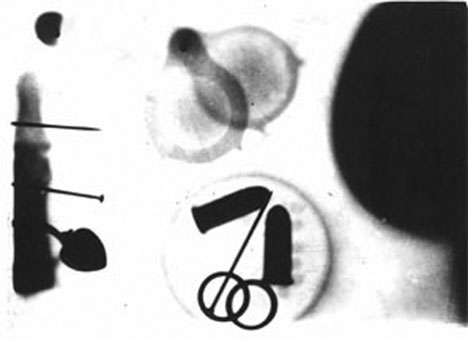
 Dr. Henry Louis Smith was a professor of physics at Davidson College in North Carolina where he was pioneering the use of X-rays in America. He planned to duplicate the work of the German physicist who discovered x-rays. Smith made the mistake of telling his students about his plans. On the night of January 12, 1896, three of Smith’s students bribed a janitor to let them into the medical laboratory on campus, where they played around until the wee hours, finally producing an X-ray photograph of two .22 caliber rifle cartridges, two rings and a pin inside a pillbox,some pills, a magnifying glass and a human finger they had sliced from a cadaver with a pocketknife — a historical first in the United States (the x-ray photograph not the finger). Smith went on to create his own images and to spread the use of x-rays throughout the medical community. The students kept their little adventure a secret until years later when they decided they would probably be forgiven for their naughtiness if they revealed their part in making history.
Surely There’s Some Noble Use for X-rays
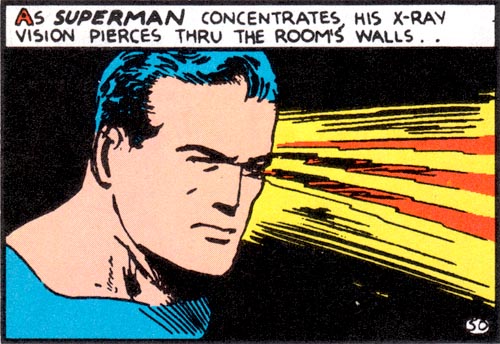
X-rays have since then become an important tool in medicine, saving many lives and other such noble stuff, but what has been more important to generations of boys is the concept of x-ray vision — the 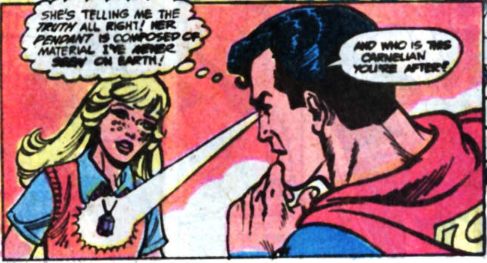 ability to see what’s on the other side of a wall, in a box, or under various articles of clothing. Most boys learned about x-ray vision from Superman, easily the most famous employer of the art. Superman only used his powers of x-ray vision for completely innocent pursuits such as the apprehension of bad guys. However, those bad boys who sent for the x-ray spectacles advertised in comic books are quite another story.
A Man’s Home Is His Stonehenge
Stonemason, sculptor and oddball Edward Leedskalnin was born on January 12, 1887, in Latvia. He left Latvia for the United States at the age of 26 after 16-year-old Agnes Skuvst broke their engagement on the day before they were to be married.
 Edward eventually purchased a parcel of land in Florida City and began what would become his life’s work — the construction of a massive structure he called “Rock Gate” and which he dedicated to his lost love Agnes. Working alone, he quarried and sculpted 1,100 tons of limestone into the titanic structure that came to be known as The Coral Castle and which was often called America’s stonehenge.
When asked how he moved all that heavy stone by himself, he answered: “I understand the laws of weight and leverage and I know the secrets of the people who built the pyramids.” He eventually opened his castle to the public, charging ten cents admission.
Ever the eccentric, he lived as a recluse and existed on a diet of crackers and sardines. He also published several pamphlets, the first being a dissertation on morality with text only on the left-hand pages so that his readers might offer their own opinions on the right. He got particularly worked up on the subject of teenage lust: “. . . everybody knows there is nothing good that can come to a girl from a fresh boy. When a girl is sixteen or seventeen years old, she is as good as she ever will be, but when a boy is sixteen years old, he is then fresher than in all his stages of development.”
And he probably owns x-ray glasses.
 Wretched Richard's Almanac