November 17, 1968: A Girl, a Goat and a Football

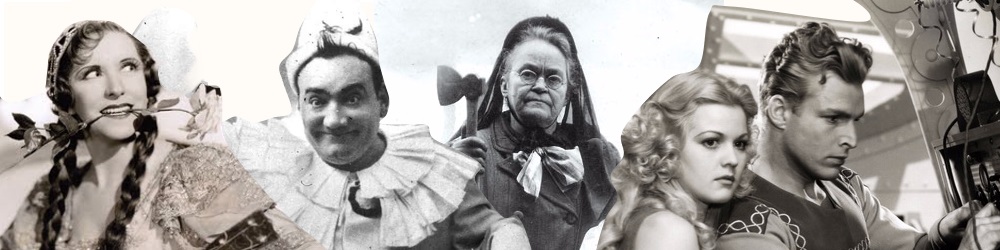
The New York Jets were leading the home team Oakland Raiders by a skinny three points, 32-29, on the afternoon of November 17, 1968. NBC was airing the game for sports fans throughout the country.heidi1 It was a game between two formidable adversaries, and a hard fought one. The intensity of the play had led to injuries, penalties, extra timeouts and lots of scoring, with the lead changing eight times. As a result, the game ran longer than usual, longer than the three hours NBC had allotted for it. That meant that on the East Coast the game ran right into the 7 p.m. time slot when the evening’s prime time schedule was set to begin.

With just minutes left in the game, eastern viewers were switched to Switzerland for the television movie Heidi, the heartwarming story of a sweet little girl and her kindly grandfather, filled with Alps and yodeling and stuff, but no football. Worse, still, as Heidi cavorted with her goats, the Raiders scored two touchdowns in nine seconds to win the game. Football fans were not pleased.

As it turns out, NBC executives had decided to postpone the start of the film, but they couldn’t get through to the studio because the switchboard was jammed with irate football fans.

The Heidi Game, as it came to be called, led to a change in the television broadcasting of football; the NFL inserted a clause into its TV contracts that guaranteed all games would be broadcast completely. Television networks had separate telephone exchanges installed (known lovingly as Heidiphones) to prevent such incidents from happening in the future.

In 1997, the Heidi Game was voted the most memorable regular season game in U.S. professional football history. Heidi remains the most memorable film about little girls and mountain goats.

And a Memorable Dog

A noted canine was born on this day in 1933. Terry, a female cairn terrier, appeared in 16 motion pictures during her career. If you don’t recognize her name, it’s probably because fame went to her head after a star turn in the 1939 blockbuster The Wizard of Oz, and she changed her name to Toto.
JUNE 12, 1349: IF YOU OUTLAW BOWS AND ARROWS . . .

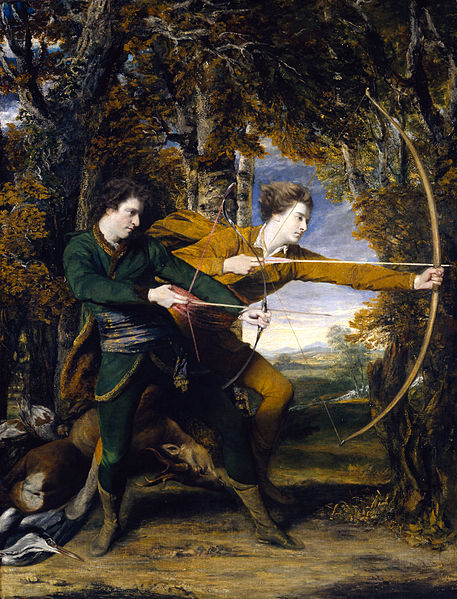
. . . only knaves will have bows and arrows.  In a letter dated June 12, 1349, England’s King Edward III wrote how the people of his realm, archboth rich and poor, had in previous times exercised their skill at shooting arrows and how that practice had brought honor and profit to the kingdom. But, he continued, that skill had been laid aside in favor of other pursuits. Therefore he commanded sheriffs throughout the realm to proclaim that every able citizen in their leisure time use their bows and arrows, and learn and exercise the art of archery.   And furthermore, they should not in “any manner apply themselves to the throwing of stones, wood, or iron, handball, football, bandyball, cambuck, or cockfighting”  or any other such trivial pursuits (that includes golf).

     A hundred years later, Edward IV continued the tradition, decreeing that all Englishmen, other than clergymen or judges, should own  bows their own height, keeping them always ready for use and providing practice for  sons age seven or older. Fines were levied for failing to shoot every Sunday.

     Sir Wayne of LaPierre complained that the law did not go far enough, that it lacked a provision that citizens should carry concealed bows and arrows and quivers with more than a ten-arrow capacity.  And a ban on background checks for potential archers, of course.


MAY 8, 1854: A MILE IN WHOSE SHOES?

     Celebrated pedestrian Robert Barclay Allardice, 6th Laird of Ury, generally known simply as Captain Barclay, died on May 8, 1854. During his life he accomplished many feats in the world of walking, and is, in fact, considered the father of pedestrianism, a popular sport of the 19th century.

     His first feat, at the age of fifteen, was to walk six miles in an hour ‘fair heel and toe.’ Heel and toe was a rather vague rule of pedestrianism, that the toe of one foot could not leave the ground before the heel of the other foot touched down. It was randomly enforced. In 1801, at the age of 22, Barclay walked from Ury to Boroughbridge, a distance of 300 miles in five oppressively hot days, and in that same year, he walked 90 miles in 21 and a half hours, winning 5000 guineas for his fancy footwork.

     His most famous feat came in 1809 when he undertook the task of walking 1000 miles in 1000 successive hours, a mile within each hour, a challenge in which many had failed and none had succeeded. At stake was 100,000 pounds (roughly 8 million dollars today). This feat captured the imagination of the public, and 10,000 people came to watch over the course of the event, cheering him on or wishing him ill fortune depending on the direction of their own wagers. He began his course at midnight on June 1 and finished it at 3 p.m. on July 12.

     Pedestrian races were popular with both the media and the public throughout the 19th century, drawing throngs of spectators, along with bookies, touts and other unsavory characters who frequent such competitions. With the coming of the automobile, however, pedestrianism became an endangered sport as pedestrians themselves became an endangered species, serving mostly as targets for mechanized sporting types.  It does remain in our popular culture, however, with such paeans to pedestrianism as “The Stroll,” “Walk on the Wild Side,” “Walk Like a Man,” and “Walk This Way.”


Walking the Dogs

On May 8, 1877, 1,201 of the classiest American canines convened at the Hippodrome in New York City to compete for the the title of top dog.  This was the first dog show to be held under the guidance of the Westminster Kennel Club, and it has been held annually ever since.  Among the luminaries at that first event were two Staghounds from the pack of the late General George Custer and two Deerhounds bred by Queen Victoria.

Eighteen years later, on May 8, 1895, felines had their turn in the spotlight at the first cat show held in New York at Madison Square Garden.  This was a more down to earth affair with prizes given in several categories including the best stray alley cat.

MAY 8, 1854: A MILE IN WHOSE SHOES?

Celebrated pedestrian Robert Barclay Allardice, 6th Laird of Ury, generally known simply as Captain Barclay, died on May 8, 1854. During his life he accomplished many feats in the world of walking, and is, in fact, considered the father of pedestrianism, a popular sport of the 19th century.


His first feat, at the age of fifteen, was to walk six miles in an hour ‘fair heel and toe.’ Heel and toe was a rather vague rule of pedestrianism, that the toe of one foot could not leave the ground before the heel of the other foot touched down. It was randomly enforced. In 1801, at the age of 22, Barclay walked from Ury to Boroughbridge, a distance of 300 miles in five oppressively hot days, and in that same year, he walked 90 miles in 21 and a half hours, winning 5000 guineas for his fancy footwork.


His most famous feat came in 1809 when he undertook the task of walking 1000 miles in 1000 successive hours, a mile within each hour, a challenge in which many had failed and none had succeeded. At stake was 100,000 pounds (roughly 8 million dollars today). This feat captured the imagination of the public, and 10,000 people came to watch over the course of the event, cheering him on or wishing him ill fortune depending on the direction of their own wagers. He began his course at midnight on June 1 and finished it at 3 p.m. on July 12.


Pedestrian races were popular with both the media and the public throughout the 19th century, drawing throngs of spectators, along with bookies, touts and other unsavory characters who frequent such competitions. With the coming of the automobile, however, pedestrianism became an endangered sport as pedestrians themselves became an endangered species, serving mostly as targets for mechanized sporting types.  It does remain in our popular culture, however, with such paeans to pedestrianism as “The Stroll,” “Walk on the Wild Side,” “Walk Like a Man,” and “Walk This Way.”


Walking the Dogs

On May 8, 1877, 1,201 of the classiest American canines convened at the Hippodrome in New York City to compete for the the title of top dog.  This was the first dog show to be held under the guidance of the Westminster Kennel Club, and it has been held annually ever since.  Among the luminaries at that first event were two Staghounds from the pack of the late General George Custer and two Deerhounds bred by Queen Victoria.

Eighteen years later, on May 8, 1895, felines had their turn in the spotlight at the first cat show held in New York at Madison Square Garden.  This was a more down to earth affair with prizes given in several categories including the best stray alley cat.

November 17, 1968: A Girl, a Goat and a Football

The New York Jets were leading the home team Oakland Raiders by a skinny three points, 32-29, on the afternoon of November 17, 1968. NBC was airing the game for sports fans throughout the country.heidi1 It was a game between two formidable adversaries, and a hard fought one. The intensity of the play had led to injuries, penalties, extra timeouts and lots of scoring, with the lead changing eight times. As a result, the game ran longer than usual, longer than the three hours NBC had allotted for it. That meant that on the East Coast the game ran right into the 7 p.m. time slot when the evening’s prime time schedule was set to begin.

With just minutes left in the game, eastern viewers were switched to Switzerland for the television movie Heidi, the heartwarming story of a sweet little girl and her kindly grandfather, filled with Alps and yodeling and stuff, but no football. Worse, still, as Heidi cavorted with her goats, the Raiders scored two touchdowns in nine seconds to win the game. Football fans were not pleased.

As it turns out, NBC executives had decided to postpone the start of the film, but they couldn’t get through to the studio because the switchboard was jammed with irate football fans.

The Heidi Game, as it came to be called, led to a change in the television broadcasting of football; the NFL inserted a clause into its TV contracts that guaranteed all games would be broadcast completely. Television networks had separate telephone exchanges installed (known lovingly as Heidiphones) to prevent such incidents from happening in the future.

In 1997, the Heidi Game was voted the most memorable regular season game in U.S. professional football history. Heidi remains the most memorable film about little girls and mountain goats.


And a Memorable Dog

A noted canine was born on this day in 1933. Terry, a female cairn terrier, appeared in 16 motion pictures during her career. If you don’t recognize her name, it’s probably because fame went to her head after a star turn in the 1939 blockbuster The Wizard of Oz, and she changed her name to Toto.

JUNE 12, 1349: IF YOU OUTLAW BOWS AND ARROWS . . .

Only knaves will have bows and arrows.  In a letter dated June 12, 1349, England’s King Edward III wrote how the people of his realm, archboth rich and poor, had in previous times exercised their skill at shooting arrows and how that practice had brought honor and profit to the kingdom. But, he continued, that skill had been laid aside in favor of other pursuits. Therefore he commanded sheriffs throughout the realm to proclaim that every able citizen in their leisure time use their bows and arrows, and learn and exercise the art of archery.   And furthermore, they should not in “any manner apply themselves to the throwing of stones, wood, or iron, handball, football, bandyball, cambuck, or cockfighting”  or any other such trivial pursuits (that includes golf).


A hundred years later, Edward IV continued the tradition, decreeing that all Englishmen, other than clergymen or judges, should own  bows their own height, keeping them always ready for use and providing practice for  sons age seven or older. Fines were levied for failing to shoot every Sunday.


Sir Wayne of LaPierre complained that the law did not go far enough, that it lacked a provision that citizens should carry concealed bows and arrows and quivers with more than a ten-arrow capacity.  And a ban on background checks for potential archers, of course.


Face Down in a Cranberry Bog, Part 1: two bicycles passing

A person pushing sixty pretty hard probably has no business on a bicycle in the first place. Like skis, surfboards and roller skates, they are the dominion of those young enough to have more vigor than common sense. And if people pushing sixty are foolish enough to bicycle the six miles to ‘Sconset, they tend to tire about halfway. If they’re at all smart, they’ll stop and rest, rather than continue on until the bicycle just rolls to a stop and plops over sideways. Which is what I did, and why I’m in this mess.

There’s a particularly good resting spot that’s almost exactly halfway. You reach it about two minutes before your heart and lungs give out completely. It’s where, on the side of the road opposite the bike path, a dirt pathway takes off through the tangles of scrub oak and meanders a quarter mile to the bogs. And it’s also where, if you’ve timed it just right, she emerges from that very dirt path. She’s young enough that she probably doesn’t have to stop and catch her breath and pretty enough that she takes mine away. At least she did.

For the past week, she appeared and captured my fantasies. She’d cross the road, stop, her bicycle nuzzling mine, and devour me with big brown eyes and a seductive smile. We’d laugh, touch and – she didn’t really stop, of course; she gave me a quick smile as she passed me and headed off in the direction from which I’d just come.

Until today, that is. I arrived at the same time as usual and waited for her appearance. But it didn’t happen. I waited for five, ten minutes and, yes, I worried. I don’t know why. Obviously, I should have forgotten my disappointment and, with hope she’d be there tomorrow, just continued on to ‘Sconset. Instead I pushed my bicycle across the road, rested it behind a large bush and trudged off down the dirt path. I walked the full quarter mile without seeing anyone, and rounding a patch of heath, reached the first bog, an oasis of dark green foliage pregnant with bright red cranberries girded by a sandy dike. Every twenty yards a sign reminded me that the bogs were private property and the picking of cranberries illegal. Each bog forms the center of a man-made crater and the dikes between craters form a meandering path. At harvest time in October, the crater is flooded and with a little prodding the cranberries just float right up to the surface for easy scooping.

It’s a fascinating process, and I guess in my fascination my mind wandered off somewhere – they do that when you’re pushing sixty. I don’t know how long it was gone, but when it returned I was standing at the edge of the second bog. Looking down, I saw it – him. A man, clad only in red boxer shorts, lying face down in the cranberry bog.

continued