OCTOBER 18, 1963: SPACE, THE FELINE FRONTIER

The story of cats in space is a dramatic tale indeed. It begins in an unlikely place with the 1957 Soviet launch of Sputnik 2, carrying of all felicettethings a dog named Laika. Laika was a stray found on the streets of Moscow who could have been the star of a dandy rags-to-riches shaggy dog story, except that things didn’t go all that well and the pooch perished under mysterious circumstances.

This was viewed as an early skirmish in the superpower space race to which NASA responded by sending a chimp into space and successfully returning him.

The French meanwhile had been plotting their own animal space probe. Fifteen cats had been chosen to undergo extensive training involving centrifuges, compression chambers and other medieval torture devices for a space mission in which the French would prove that they belonged at the table with the big guys and a cat would demonstrate to its fanciers everywhere that cats were superior to dogs in yet another way.

A pretty black and white Parisian chatte was eventually selected for the mission, because she was the only one who hadn’t become overweight during training, something to do with croissants most likely. On October 18, 1963, at 8:09 am, Chatte Félicette boarded a Véronique AGI 47 rocket at a base in the Algerian Sahara Desert and was blasted 97 miles into space. Fifteen minutes later, she parachuted safely to earth and pussycat immortality. Voilà!

ANOTHER CAT CAME BACK

In 1813, Londoners were amazed to see, floating down the Thames River toward London Bridge, a large bowl with a passenger on board — a tortoiseshell cat, quite relaxed and seemingly enjoying the journey. As she approached the fall, onlookers were certain she would be overturned and thrown into the water. But she stayed seated and, to loud cheers, deftly shot the center arch with as much dexterity as a white water kayaker.

A young boy in a boat having observed this feat rowed toward her and lifted her into his boat. He discovered a parchment scroll hanging from a collar around her neck. The note stated that if she should reach London safely she should be taken to a Mrs. Clarke in Highstreet who would reward the person delivering the cat. The boy conveyed the cat to Mrs. Clarke who gave him half a crown. Mrs. Clarke was well aware of the circumstances of the cat’s arrival, the voyage having been the result of a wager between two Richmond gentlemen. With precious little to do, it would seem.

November 30, 1954: Stars Fell on Alabama

It was a pleasant afternoon on November 30, 1954, in Sylacauga, Alabama, a small town a few hours away from Tuscaloosa and Birmingham. Quiet — until folks saw something streaking across the sky — a bright red fireball like a Roman candle with a long tail of smoke. Some thought it was a visitor from outer space; others were sure it was a Russian invasion.

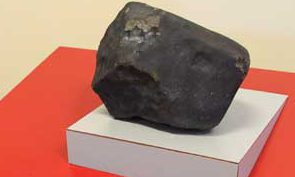
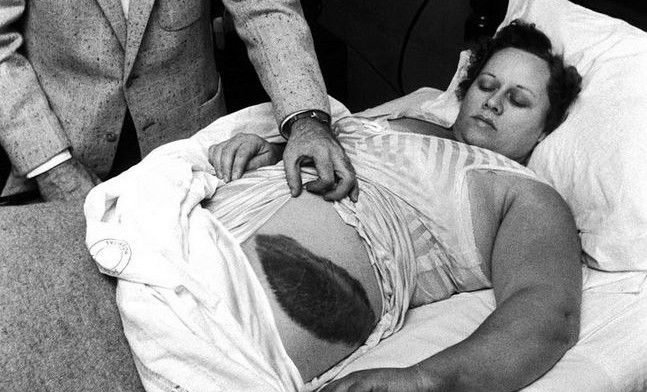
Ann Elizabeth Hodges thought neither. Under the weather, under a ann-hodges-meteoritequilt, napping, she didn’t see the thing — not until it crashed through her ceiling, bounced off her big console radio and onto the couch where she reclined, striking her in the hip. The eight-pound thing, which was indeed from outer space, left a bruise the size of a football. And to make matters worse, her house was soon overrun by curious Alabamans from miles around. A government geologist called to the scene identified the thing as a meteorite, many of which fall to earth but usually end up in an ocean or some remote wilderness.

A legal battle followed over who now owned the meteorite. “I feel like the meteorite is mine,” Elizabeth said. “I think God intended it for me. After all, it hit me!” Unfortunately, the law was not on her side. She and her husband rented their house, and their landlady claimed ownership. The case was settled out of court, with the landlady relinquishing control for a settlement of $500. After all, there was a hole in her roof.

Elizabeth’s husband thought they would be able to earn some big bucks by showing off the meteorite, but he was disappointed, and the Hodges eventually donated it to the Smithsonian.

Elizabeth did earn a spot in the record books, being the only person ever struck by a meteorite. Evidently, the odds of being struck by a meteorite are about the same as tripping over the body of a dead clown, falling into an open elevator shaft and being struck by lightning on the way down.

OCTOBER 18, 1963: SPACE, THE FELINE FRONTIER

The story of cats in space is a dramatic tale indeed. It begins in an unlikely place with the 1957 Soviet launch of Sputnik 2, carrying of all felicettethings a dog named Laika. Laika was a stray found on the streets of Moscow who could have been the star of a dandy rags-to-riches shaggy dog story, except that things didn’t go all that well and the pooch perished under mysterious circumstances.

This was viewed as an early skirmish in the superpower space race to which NASA responded by sending a chimp into space and successfully returning him.

The French meanwhile had been plotting their own animal space probe. Fifteen cats had been chosen to undergo extensive training involving centrifuges, compression chambers and other medieval torture devices for a space mission in which the French would prove that they belonged at the table with the big guys and a cat would demonstrate to its fanciers everywhere that cats were superior to dogs in yet another way.

A pretty black and white Parisian chatte was eventually selected for the mission, because she was the only one who hadn’t become overweight during training, something to do with croissants most likely. On October 18, 1963, at 8:09 am, Chatte Félicette boarded a Véronique AGI 47 rocket at a base in the Algerian Sahara Desert and was blasted 97 miles into space. Fifteen minutes later, she parachuted safely to earth and pussycat immortality. Voilà!