November 24, 1859: Insulting Monkeys

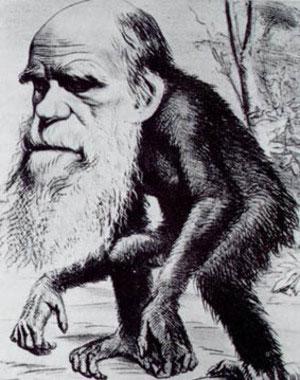
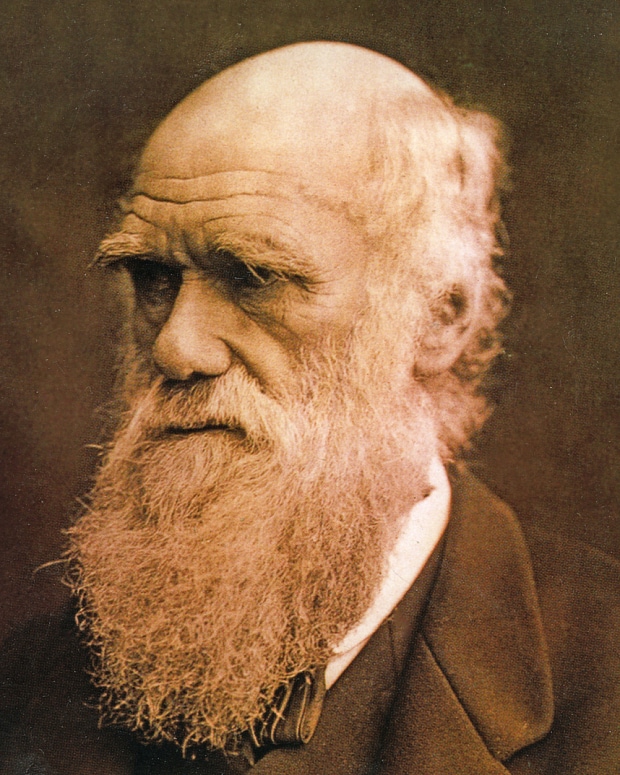
Charles Darwin was not expecting a seismic event when on November 24, 1859, he introduced a little volume with the catchy title On the Origin of Species. Although it didn’t go viral at the time, the printing run of 1,250 copies did sell out.  A few more have sold since then.

In his book, Darwin suggested that all species of life have descended over time from common ancestors.  That sounds a lot like a plug for family values, but weren’t people upset anyway.  Although Darwin’s only allusion to human evolution was a cryptic “light will be thrown on the origin of man and his history,” the title of his book might just as well have been Men from Monkeys because that’s what detractors brought away from it.  And any attempt on the part of scientists to explain that it’s not about that pretty much put people to sleep.  Even though enlightenment eventually crept into the scientific community, to many others Darwin became forever the symbol of runaway science.  Were he alive today, he’d probably be conspiring with the 99 percent of scientists involved in the vast climate change hoax.

What is Man? Man is a noisome bacillus whom Our Heavenly Father created because he was disappointed in the monkey. ― Mark Twain


New Rule: Stop asking Miss USA contestants if they believe in evolution. It’s not their field. It’s like asking Stephen Hawking if he believes in hair scrunchies. Here’s what they know about: spray tans, fake boobs and baton twirling. Here’s what they don’t know about: everything else. If I cared about the uninformed opinions of some ditsy beauty queen, I’d join the Tea Party. ― Bill Maher


It is even harder for the average ape to believe that he has descended from man. ― H.L. Mencken


Organic life, we are told, has developed gradually from the protozoan to the philosopher, and this development, we are assured, is indubitably an advance. Unfortunately it is the philosopher, not the protozoan, who gives us this assurance. ― Bertrand Russell


OCTOBER 18, 1963: SPACE, THE FELINE FRONTIER

The story of cats in space is a dramatic tale indeed. It begins in an unlikely place with the 1957 Soviet launch of Sputnik 2, carrying of all felicettethings a dog named Laika. Laika was a stray found on the streets of Moscow who could have been the star of a dandy rags-to-riches shaggy dog story, except that things didn’t go all that well and the pooch perished under mysterious circumstances.

This was viewed as an early skirmish in the superpower space race to which NASA responded by sending a chimp into space and successfully returning him.

The French meanwhile had been plotting their own animal space probe. Fifteen cats had been chosen to undergo extensive training involving centrifuges, compression chambers and other medieval torture devices for a space mission in which the French would prove that they belonged at the table with the big guys and a cat would demonstrate to its fanciers everywhere that cats were superior to dogs in yet another way.

A pretty black and white Parisian chatte was eventually selected for the mission, because she was the only one who hadn’t become overweight during training, something to do with croissants most likely. On October 18, 1963, at 8:09 am, Chatte Félicette boarded a Véronique AGI 47 rocket at a base in the Algerian Sahara Desert and was blasted 97 miles into space. Fifteen minutes later, she parachuted safely to earth and pussycat immortality. Voilà!

ANOTHER CAT CAME BACK

In 1813, Londoners were amazed to see, floating down the Thames River toward London Bridge, a large bowl with a passenger on board — a tortoiseshell cat, quite relaxed and seemingly enjoying the journey. As she approached the fall, onlookers were certain she would be overturned and thrown into the water. But she stayed seated and, to loud cheers, deftly shot the center arch with as much dexterity as a white water kayaker.

A young boy in a boat having observed this feat rowed toward her and lifted her into his boat. He discovered a parchment scroll hanging from a collar around her neck. The note stated that if she should reach London safely she should be taken to a Mrs. Clarke in Highstreet who would reward the person delivering the cat. The boy conveyed the cat to Mrs. Clarke who gave him half a crown. Mrs. Clarke was well aware of the circumstances of the cat’s arrival, the voyage having been the result of a wager between two Richmond gentlemen. With precious little to do, it would seem.

OCTOBER 1, 1989: YOU SAY BRONTO AND I SAY . . .

In 1989, the United States Post Office issued a series of four stamps depicting dinosaurs, little realizing that it was re-igniting the infamous Bone Wars of more than a hundred years earlier.

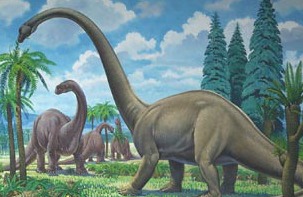
The Bone Wars, also known as the Great Dinosaur Rush, was a period of fossil fever during the late 19th century during which a heated rivalry between two paleontologists (yes, it sounds bizarre) led to dirty tricks, bribery, theft, and even the destruction of bones. Each scientist also attacked the other in scientific print, hoping to ruin his credibility and have his funding cut off. During this period, one of the combatants hastily brought to public that big cuddly dinosaur we’ve come to love, the brontosaurus. Turns out he had gone public with that same dinosaur a couple of years earlier under an entirely different name, apatosaurus.

Another paleontologist brought this mistake to light in 1903, pointing out that protocol required the first name used, apatosaurus, to be the official name. Why did the name continue to be used in popular books, articles and even on museum displays? It seems the 1903 discovery was only presented in a very obscure scientific journal. It took another 70 years for the brontosaurus to officially get the boot to synonym status.

And along comes the U.S. Post Office in 1989 identifying the big guy as a brontosaurus. Well, didn’t some dinosaur groupies with not enough to keep themselves busy get all hot and bothered, accusing the Postal Service of promoting scientific illiteracy.   And even after this brouhaha, most of us still insist on having our brontosaurus.

Maybe it’s because brontosaurus means “thunder lizard” and apatosaurus means (ho-hum) “deceptive lizard.”

You Thought These Guys Were Big?

Compared to Bronto or Apato or practically any other dinosaur you’d like to name, we homo sapiens are a rather puny lot these days, even those few who top out at seven feet or so. Back in the day, as they say — way back in the day — folks were somewhat larger. We have a very convenient adamcatalog of how we don’t measure up provided for us back in 1718 by an astute French academician named Henrion. Both his first name and biography have been lost to the ages (he was probably short). What remains, however, is his scholarly demonstration of the height of several important figures.

Starting right at the beginning as Henrion did, Adam was a towering drink of water at 123 feet, 9 inches. Interestingly he had been even taller. When first created, he was so tall his head reached into the heavens where it evidently nonplussed the angels enough that God was forced to shrink him to a more comfortable size. God very wisely kept him taller that Eve’s 118 feet, 9 inches. (Adam would have looked pretty silly with a fig leaf and elevator shoes.)

The kids didn’t measure up to their parents, nor did the next generation. In fact, a significant downsizing was underway. Noah was only 27 feet tall, Abraham 20 feet, and Moses a mere 13 feet. (The trend is becoming alarming!) Alexander was hardly the Great at six feet, and Julius Caesar was downright little at five feet. Mankind was on a course that would leave us microscopic little things, not even visible to the naked eye.

But, according to the learned Monsieur Henrion, Christianity saved us. We got religion and began to grow again.


JULY 24, 1934: SERIOUSLY, ARE YOU MY MOTHER?

Ornithologists at Cornell University in Ithaca, NY, having precious little to do in 1934, hatched – or rather engineered the hatching of, since they didn’t actually sit on the eggs themselves or do much of anything other than whisper words of encouragement to those actually sitting on the eggs – the very first ptarmigans in captivity. Ornithologists and students of game birds throughout the country – and possibly the world – held glasses on high and stood and cheered this bold step in quasi-motherhood. These folks had been increasingly interested in experiments in hand-rearing and introducing game birds to new areas, for reasons that remain unclear.

     Known to their devotees in the bird world as Lagopus leucurus, the hatchlings also went by the name White-tailed Ptarmigan or Eskimo Chicken. They came from two and a half cartons of ptarmigan eggs “collected” by a Doctor (conspiracy theorists take note) Alien, of Cornell’s Department of Ornithology on Canada’s Hudson Bay. They were then smuggled transported to Ithaca where they were put under unsuspecting and very confused bantams.  These foster mothers broke several of the eggs while trying to figure out what they were. Nevertheless several hatched, leaving the mothers wondering if they had truly given birth to these strange little creatures, even though the Mysterious Doctor Alien had read the “Ugly Duckling” to them several times.  One small step for ptarmigans, one giant leap for aviankind.


It may be hard for an egg to turn into a bird: it would be a jolly sight harder for it to learn to fly while remaining an egg. − C. S. Lewis
  • TERRYCOVERjune13If you know someone who is patiently sitting on eggs, you could keep her contented by reading her passages from Terry and the Pirate.  You never know what might hatch.  Check it out at Amazon, Barnes and Noble, Apple.

JUNE 22, 1774: RUN SILENT, RUN DEEP

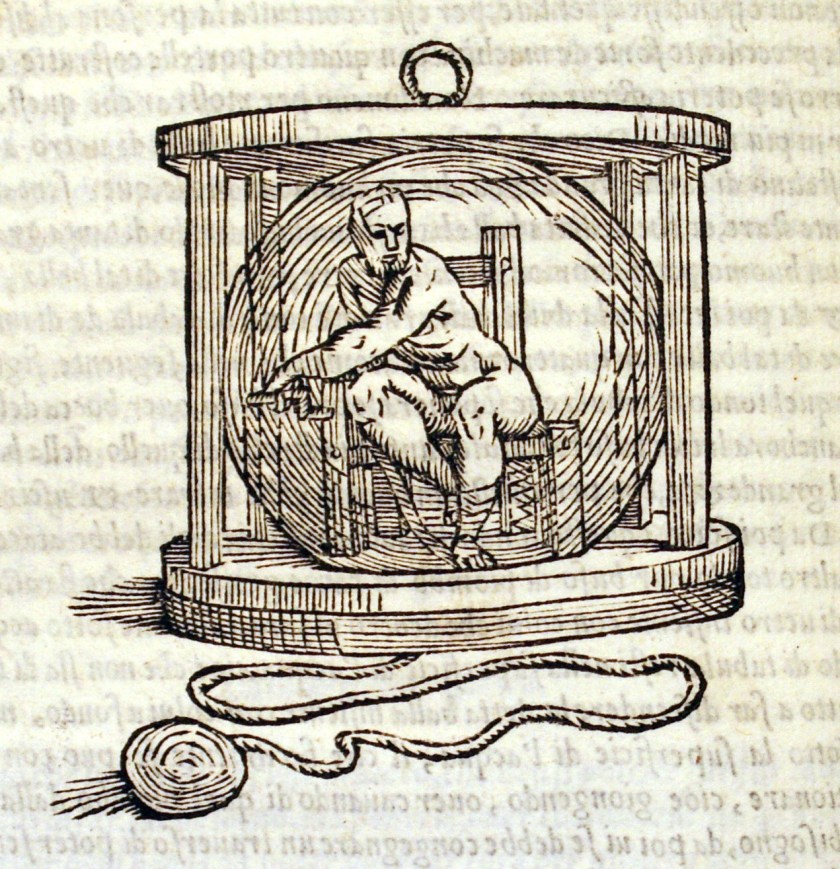
In 1774, John Day, an ignorant but ingenious English millwright, fancied that he had devised a plan by which he could remain completely underwater at any depth for at least 24 hours. The contraption he had devised for this feat would afford him a degree of comfort until, at his leisure, he returned to the surface.  Day could think of no useful purpose for his invention other than making money by wagering on his feat. He therefore contacted a local gambler who agreed to furnish funds for the construction of Day’s diving machine for a lion’s share of all the bets gained by it.

If nothing else, Day’s plan had the virtue of simplicity. His machine was merely a watertight box attached to a weight by means of screws. After entering the box and sealing the entrance, the vessel would be sunk and would remain underwater until, at the designated time, Day would remove the screws and he and the box would rise to the surface.

The machine was finished, bets were taken, and everyone convened at a designated spot on Plymouth Sound where the water was 132 feet deep. Day entered the compartment with a comfortable chair, a watch, some biscuits, a bottle of water and a candle.  Perhaps had he taken a basic science book with him — it may have enlightened him (if he read fast enough) but at that point it wouldn’t have helped.   The box was tightly closed and sunk 132 feet to the bottom from where neither it nor the unfortunate John Day ever arose.


MAY 15, 1856: Over the Rainbow

Glinda the Good stepped down from her ruby throne to give the little girl a good-bye kiss, and Dorothy thanked her for all the kindness she had shown to her friends and herself.

Dorothy now took Toto up solemnly in her arms, and having said one last good-bye she clapped the heels of her shoes together three times saying, “Take me home to Aunt Em!

Lyman Frank Baum, born in Chittenango, New York, on May 15, 1856 (died 1919), was best known for writing The Wonderful Wizard of Oz, although he wrote a total of 55 novels, 83 short stories, over 200 poems, and made many attempts to bring his works to the stage and screen.

In 1897, after several abortive early careers, Baum wrote and published Mother Goose in Prose, a collection of Mother Goose rhymes written as prose stories, and illustrated by Maxfield Parrish. The book was a moderate success, allowing Baum to quit his door-to-door sales job and devote time to his writing. In 1899, Baum partnered with illustrator W. W. Denslow, to publish Father Goose, His Book, a collection of nonsense poetry. The book was a success, becoming the best-selling children’s book of the year. Then in 1900, the duo published The Wonderful Wizard of Oz to critical acclaim and financial success.   The book was the best-selling children’s book for two years after its initial publication.

Oz was a popular destination long before the famous 1939 screen version of the book.  A  musical  based closely upon the book,  the first to use the shortened title “The Wizard of Oz”, opened in Chicago in 1902, then ran on Broadway for 293 performances.   Baum went on to write another 13 Oz novels.

Baum’s intention with the Oz books, and other fairy tales, was to tell American tales in much the same manner as the Brothers Grimm and Hans Christian Andersen , modernizing them and removing the excess violence.  He is often credited with the beginning of the sanitization of children’s stories, although his stories do include eye removals, maimings of all kinds and an occasional decapitation.

Most of the books outside the Oz series were written under pseudonyms. Baum was variously known as Edith Van Dyne, Laura Bancroft, Floyd Akers, Suzanne Metcalf, Schuyler Staunton, John Estes Cooke, and Capt. Hugh Fitzgerald.

Baum wrote two newspaper editorials about Native Americans that have tarnished his legacy because of his assertion that the safety of white settlers depended on the wholesale genocide of American Indians. Some scholars take them at face value, others suggest they were satire. Decide for yourself.

The Pioneer has before declared that our only safety depends upon the total extermination of the Indians. Having wronged them for centuries we had better, in order to protect our civilization, follow it up by one more wrong and wipe these untamed and untamable creatures from the face of the earth. In this lies safety for our settlers and the soldiers who are under incompetent commands. Otherwise, we may expect future years to be as full of trouble with the redskins as those have been in the past.

Way Over the Rainbow

Paolo Toscanelli, born in 1397, was your typical Italian Renaissance Man, dabbling in everything from astronomy to mathematics to philosophy to cartography. He rubbed elbows (and influenced) the likes of Leonardo da Vinci and Christopher Columbus. In fact, that fickle finger of fate could have just as easily pointed at Paolo instead of Columbus.

As we all know, Christopher Columbus as a boy used to sit on the docks in Genoa watching ships slowly disappear over the horizon. While all the other boys sitting on the docks attributed this phenomenon to the ships falling off the edge of the world, Christopher determined that ships were gradually disappearing because the world was actually round. A fairy tale, of course. Columbus knew the world was round because Paolo Toscanelli told him it was round. Toscanelli even gave Columbus a map (a flat map admittedly) that showed Asia to the left on the other side of the Atlantic. Neither of them had reckoned on that other continent lying in-between. Yet Columbus got an October holiday and a city in Ohio while Toscanelli got squat.

Another near miss for Paolo was his observation of a comet in 1456. Although Paolo was the first to identify it, it remained known only as the Comet of 1456 until 300 years later when English astronomer Edmond Halley predicted its 1759 return and got naming rights.

Paolo died on May 15, 1482, ten years before Columbus sailed the ocean blue and some 350 years before “Halley’s” Comet did an encore.



MAY 6, 1782: YOU’VE GOT THAT MIDAS TOUCH

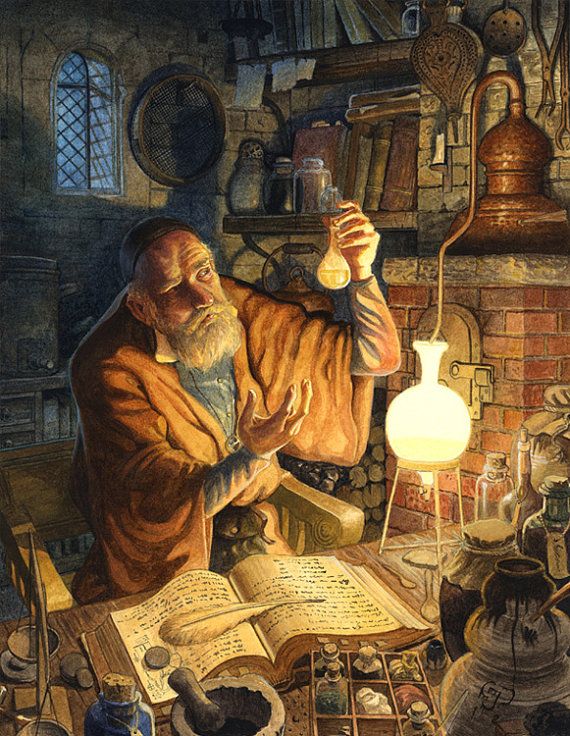
     On this day, one James Price, a distinguished amateur chemist and a Fellow of England’s Royal Society began a series of remarkable experiments. The seven experiments were witnessed by peers, baronets, clergymen. lawyers and chemists – men of unimpeachable public character. In these experiments, mercury was apparently transmuted into various quantities of gold and silver. Some of the gold was presented to His Majesty George III.

     Price became a celebrated figure, and many saw in his work the dawning of an era of unparalleled prosperity for England. Naysayers claimed that Price was merely a clever juggler or that he had deceived himself. In his favor were the facts that he was already a wealthy man and no needy adventurer and that he had already distinguished himself in chemistry.

     A fierce paper battle ensued over the veracity of the experiments, and eventually the Royal Society stepped in, calling upon Price as a Fellow of the society to prove to the satisfaction of his fellow Fellows the truth of his transmutations by repeating his experiments in their presence.

     Price dithered, making various excuses for not repeating the experiments (one of which was that it cost more to produce gold than the gold was worth).  Finally, however, he yielded to their exhortations and announced that he would leave London for his laboratory in the country to prepare for the experiment. He pledged to return in a month, but the month passed, and a second and a third. Six months passed, and even his friends had given up on him.  Just when everyone was convinced he had fled to France or some other criminal haven, he  reappeared, inviting members of the Royal Society to meet him at his laboratory for the experiment.

     Although only a year earlier they were contending for the honor of witnessing the experiments, only three society Fellows accepted his invitation. Stepping before them, Price hastily produced a flask and swallowed its contents. Noting a sudden change in his appearance, the visitors called for medical assistance, but in a few moments Price was dead.

     One thing was sure.  Price had not transmuted himself to gold.  It is speculated that in the beginning he had probably deceived himself, then in the usual slippery slope of skullduggery  attempted to deceive others, and finally,  lacking the moral courage to confess his mistake, checked himself out. In any event, the last belief in the possibility of alchemy among England’s scientific community came to an end in 1782 with Price’s death.

APRIL 18, 1968: IF YOU BELIEVE THIS, I’VE GOT A BRIDGE . . .

Famous real estate deals abound — the sale of Manhattan for beads, the Louisiana Purchase, Seward’s Folly. One of the more unusual is the April 18, 1968, sale of London Bridge for a mere $1 million (of course, as any schoolchild knows, the thing was falling down). American oil sphinx_magnate Robert McCullough was the buyer and he bought it as a large conversation piece for his Arizona real estate development in an out-of-the-way spot that had previously only been an inspiration for Roadrunner cartoons.  The bridge was disassembled in London, each piece numbered, then hauled to Lake Havasu City, Arizona, where it was reassembled.

McCullough had wanted to buy the Brooklyn Bridge for his project, but it had already been sold. Many times, actually. One George Parker had made his living selling the bridge to oil magnates and other naive visitors to New York, some of whom actually tried to erect toll booths.

The relocation of London Bridge inspired, in addition to a great deal of laughter, a forgettable 1985 made-for-television movie Bridge Across Time (aka Arizona Ripper or Terror at London Bridge) in which several murders are committed in Lake Havasu by the spirit of Jack the Ripper, whose soul is transported to the United States in one of the stones of the bridge (sorry you missed it, aren’t you).

Although the Sphinx may have been more architecturally appropriate to the location, McCullough wasn’t interested. “Something about the nose,” he said.

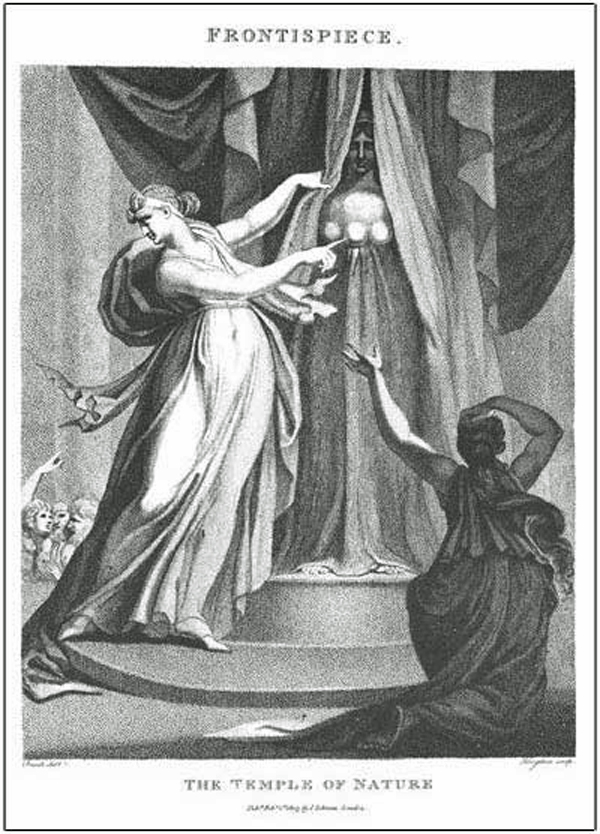
Legumes in Love

British poet and physician Erasmus Darwin died on April 18, 1802.  As a physician graduated from Cambridge, he didn’t really distinguish himself. When he is remembered at all, it is for his poetry, and one particular poem, The Loves of the Plants, part of a larger work called The Botanic Garden (the other part being The Economy of Vegetation), in which the physiology and classification of the vegetable world is presented in a rather lofty and lyrical manner. Although the subject was mundane and the technical accuracy questionable, the poetic frenzy reached amazing heights. Had Erasmus Darwin’s grandson Charles presented his discoveries in a more poetic fashion, perhaps they would have been more warmly received.

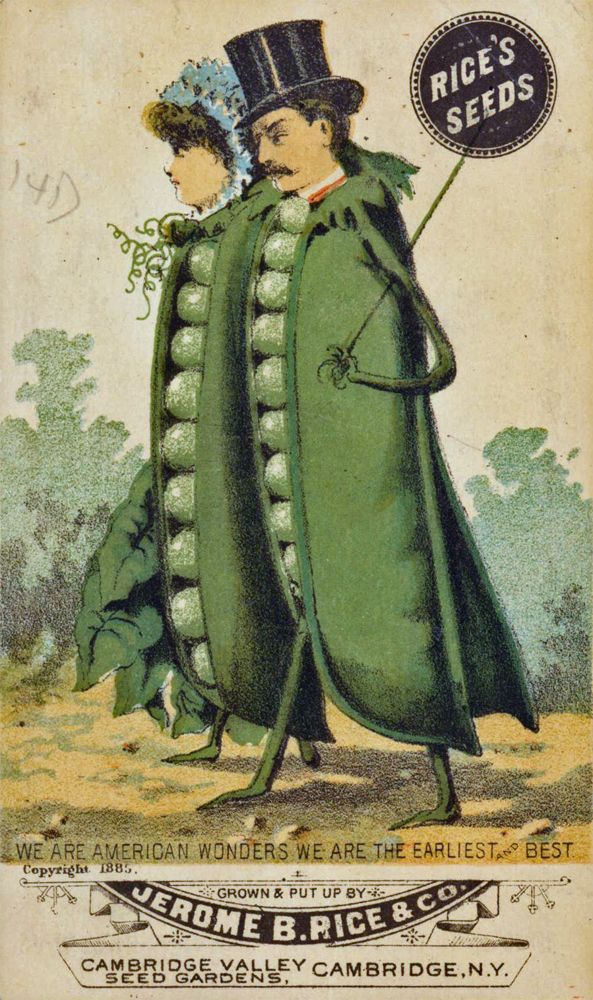
January 6, 1884: Pea Picking 101

Gregor Mendel was a friar/scientist/pea picker born in Austria in 1822. Had he been born later he would have been a Czech friar/scientist/pea picker since the part of Austria in which he was born is now the Czech Republic. He is remembered today for minding his peas and cukes, and even has a law named after him.

Gregor had this strange fascination with the propagation of peas. This and his inquiring mind led him to crossbreed short plump green peas with tall skinny yellow peas. Well wasn’t he surprised when all the little baby peas from this union were tall, skinny and yellow. He pondered this at great length and eventually had a forehead-slapping moment.

“Peas have genes!” he probably shouted. (Jeans, on the other hand, were just a twinkle in Levi Strauss’ eyes at the time.) Not only did peas have genes; some of them were dominant and some were recessive — just like kids on a playground or in the House of Representatives.

As any dominant kid of five knows, Mendel’s pea play became the science of genetics and Mendel became (posthumously) the father of same. He died on January 6, 1884, eleven years after the birth of blue jeans.

Elementary, my dear Mendel

Consulting detective Sherlock Holmes, a master of observation and deduction was born on January 6, 1854. The greatest detective in history, he has been depicted in more than 25,000 stories, plays and films. Guinness lists him as the “most portrayed movie character” of all time. His legion of fanatical fans — Sherlockians, Holmesians and Baker Street Babes — celebrate the day annually.  Holmes would have approved of Mendel’s scientific methods.

Many other fictional detectives have vied for our attention over the years.  And while not as versed in scientific methodology as Sherlock, they all could turn a catchy phrase now and then:

The truth must be quite plain, if one could just clear away the litter.”Jane Marple

I don’t mind your showing me your legs. They’re very swell legs and it’s a pleasure to make their acquaintance. —Phillip Marlowe

‘And when you’re slapped you’ll take it and like it.’ — Sam Spade

Because I am Hercule Poirot! I do not need to be told.”

It was a Friday night. I was tooling home from the Mexican border in a light blue convertible and a dark blue mood.” –Lew Archer

All right, talk, but do you mind putting the gun away? My wife doesn’t care, but I’m pregnant.” — Nick Charles

(Nero) Wolfe still paid no attention to me. As a matter of fact, I didn’t expect him to, since he was busy taking exercise. He had recently got the impression he weighed too much- which was about the same as if the Atlantic Ocean had decided it was too wet…” — Archie Goodwin

Have two ears, but can only hear one thing at time.” — Charlie Chan


MAY 6, 1782: YOU’VE GOT THAT MIDAS TOUCH

On this day, one James Price, a distinguished amateur chemist and a Fellow of England’s Royal Society began a series of remarkable experiments. The seven experiments were witnessed by peers, baronets, clergymen. lawyers and chemists – men of unimpeachable public character. In these experiments, mercury was apparently transmuted into various quantities of gold and silver. Some of the gold was presented to His Majesty George III.

Price became a celebrated figure, and many saw in his work the dawning of an era of unparalleled prosperity for England. Naysayers claimed that Price was merely a clever juggler or that he had deceived himself. In his favor were the facts that he was already a wealthy man and no needy adventurer and that he had already distinguished himself in chemistry.

A fierce paper battle ensued over the veracity of the experiments, and eventually the Royal Society stepped in, calling upon Price as a Fellow of the society to prove to the satisfaction of his fellow Fellows the truth of his transmutations by repeating his experiments in their presence.

Price dithered, making various excuses for not repeating the experiments (one of which was that it cost more to produce gold than the gold was worth).  Finally, however, he yielded to their exhortations and announced that he would leave London for his laboratory in the country to prepare for the experiment. He pledged to return in a month, but the month passed, and a second and a third. Six months passed, and even his friends had given up on him.  Just when everyone was convinced he had fled to France or some other criminal haven, he  reappeared, inviting members of the Royal Society to meet him at his laboratory for the experiment.

Although only a year earlier they were contending for the honor of witnessing the experiments, only three society Fellows accepted his invitation. Stepping before them, Price hastily produced a flask and swallowed its contents. Noting a sudden change in his appearance, the visitors called for medical assistance, but in a few moments Price was dead.

One thing was sure.  Price had not transmuted himself to gold.  It is speculated that in the beginning he had probably deceived himself, then in the usual slippery slope of skullduggery  attempted to deceive others, and finally,  lacking the moral courage to confess his mistake, checked himself out. In any event, the last belief in the possibility of alchemy among England’s scientific community came to an end in 1782 with Price’s death.