
“The Salvation Army will attract the Kingdom of the Devil in Harry Hill’s Variety Theater on Sunday, March 14, 1880 at 6:30 pm sharp” Thus read the announcement of the first public meeting of the Army in the United States. It was a meeting of the strangest of bedfellows — the Army and the infamous Harry Hill who ran New York’s most well-know concert saloon, a place they said was “nothing more than one of the many gates to hell.”
 A small platoon of the Salvation Army under the command of George Scott Railton had arrived in New York City just two days earlier. The enterprising Harry Hill, having read about their arrival from England, contacted Railton with an offer to pay the group to take the stage on Sunday evening. Although Railton was warned that respectable people would refuse to attend a meeting in such a vile place, Railton was intrigued by the idea that such a notorious sinner would welcome him before any of the local churches did.
On Sunday evening, Railton and seven Salvation Army lasses took the stage. Railton knelt and the seven lasses formed a semicircle around him assuming “various and curious positions.” They sang hymns and invited the audience to repent and be saved. The audience applauded politely, but other than one habitual drunkard, Ashbarrel Jimmie, no one accepted the invitation to repent.
Undeterred, the Salvation Army soldiered on and, red kettle by red kettle, became a fixture in the United States.
Saving Nanki-Poo
Gilbert and Sullivan’s most famous work The Mikado premiered in London in 1885. It almost didn’t happen. A year earlier, Arthur Sullivan, whining about his 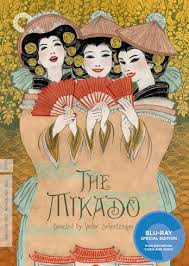 precarious health and a desire to devote himself to more serious music, told W.S. Gilbert that he couldn’t bring himself to do another piece of the kind the two had previously written. Gilbert was surprised to hear of Sullivan’s qualms, having started work on a new opera in which people fell in love against their wills after taking a magic lozenge. Gilbert wrote Sullivan asking him to reconsider, but the composer replied that he was through with such operas. Gilbert, after much whining of his own, persuaded Sullivan by promising a plot in which no supernatural element occurs “. . . a consistent plot, free from anachronisms, constructed in perfect good faith and to the best of my ability.”
The Mikado was born. With a setting in Japan, an exotic locale far away from Britain, Gilbert was able to poke fun at British politics and institutions by disguising them as Japanese and, with Sullivan’s music, create one of the greatest comic operas, featuring such characters as Nanki-Poo, the wandering minstrel; Yum-Yum, Nanki-Poo’s love; Ko-Ko, the Lord High Executioner; and Pooh-Bah, the Lord High Everything Else. This is the origin of the word poo-bah — a pretty important person, a high muckety-muck, nabob, honcho, Donald Trump.
 Wretched Richard's Almanac