
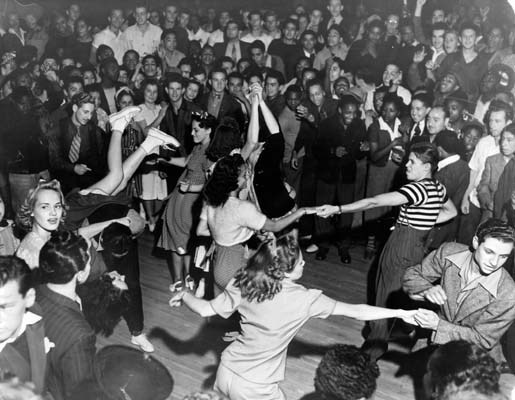
The swing era in American music had its roots in 1920s jazz as small improvisational groups gave way to larger ensembles using written arrangements. A typical swing song features a strong rhythm section supporting loosely-tied wind and brass sections and in later years string and vocal sections. It has a lively danceable beat and, well, it swings.
Although it might have seemed so, not everyone in 1930s America wanted to sing and sway and snap fingers to the music of the proliferating number of big bands.
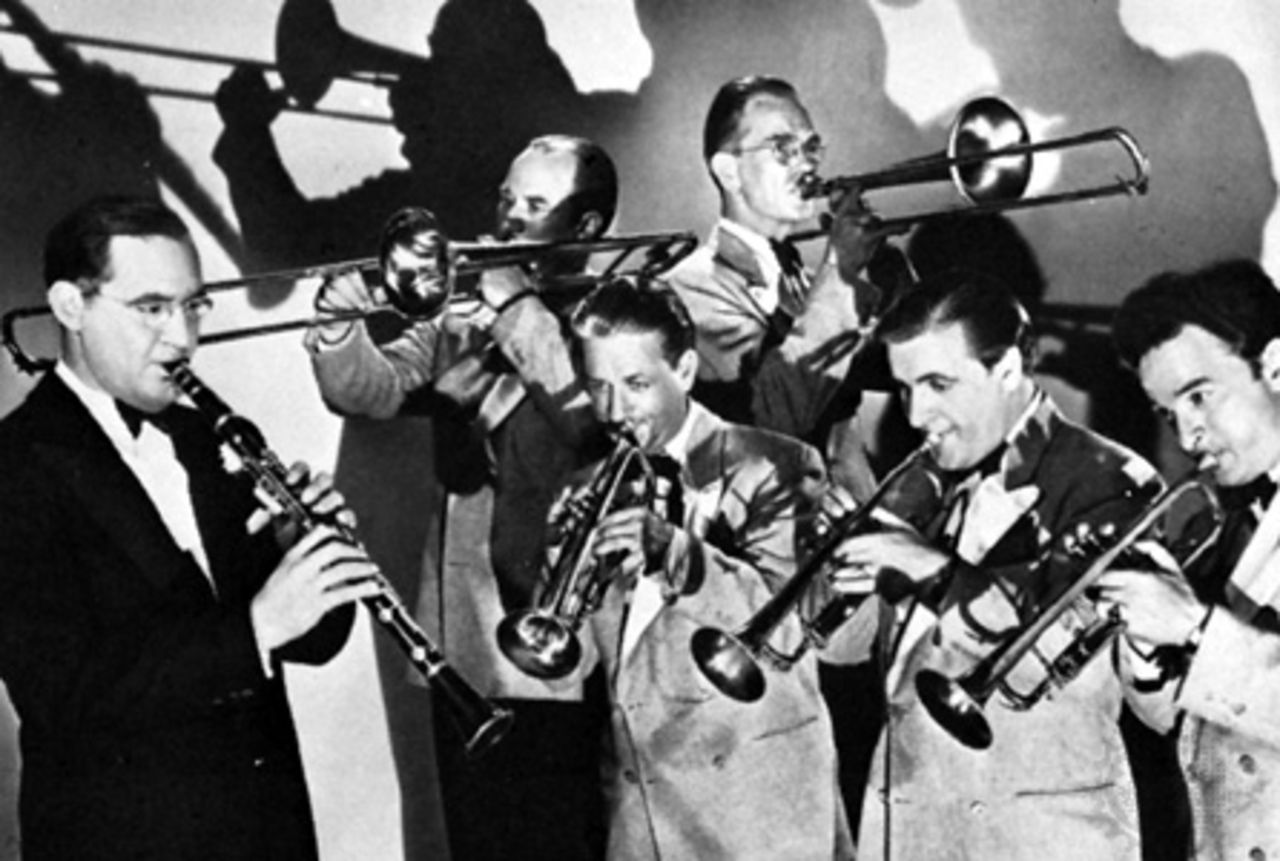
Francis Beckman was ordained to the Catholic Ministry in 1902, and moved steadily up the theological ladder until finally becoming Archbishop of Dubuque in 1930, guiding his flock through both the Depression and World War II. He undertook several crusades during his tenure, the least of which was most likely his campaign against swing music beginning in 1938. His holy war came to national attention when on October 25, 1938, in a speech before the National Council of Catholic Women, he denounced swing music in no uncertain terms. It was, he said, “a degenerated musical system… turned loose to gnaw away the moral fiber of young people” which would lead one down the “primrose path to Hell.” Perhaps, it’s just as well the Archbishop was whistling heavenly tunes when rock and roll came around (having died in 1948).
The success of his campaign can no doubt be measured by how infrequently the name Francis Beckman rings a bell compared to Louis Armstrong, Cab Calloway, Benny Goodman, Duke Ellington, Glenn Miller, or Count Basie.
Politics as Unusual
Ross Perot suddenly dropped out of the 1992 presidential race in  July amid swirling controversies after having suddenly dropped into it a few months earlier with an off-the-cuff announcement on Larry King’s television show. Campaign managers were becoming increasingly disillusioned by his unwillingness to follow their advice to be more specific on issues, and his need to run the show on his own. They bridled at such practices as forcing volunteers to sign loyalty oaths and his nine-to-five style of campaigning. When he jumped back into the race in October, the campaign professionals were gone, replaced by amateurs of unquestioned loyalty.
In another bizarre turn, Perot went on 60 Minutes on October 25, claiming his July withdrawal from the race was the result of his hearing that President Bush’s campaign was planning to smear his daughter with a computer-altered photograph and to disrupt her wedding. Perot offered no evidence, only quoting an unidentified “top Republican.” “I can’t prove any of it today,” he said. “But it was a risk I did not have to take,” he added, “and a risk I would not take where my daughter is concerned.”
A spokesman for the President dismissed Mr. Perot’s assertions as “all loony.”
Maybe not so unusual these days.
 Wretched Richard's Almanac