December 12, 1937: Is That a Snake in Your Fig Leaf?

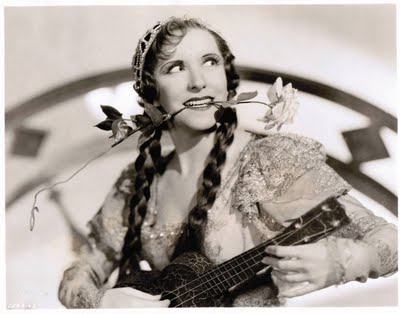
Mae West was certainly not a stranger to controversy. But on December 12, 1937, she brought her outrageous humor to radio and in less than a half hour managed to get herself banned from the air waves for good – or at least, as it turned out, for a dozen years until finally invited to perform on Perry Como’s Chesterfield Supper Club in 1950.

The vehicle of Mae’s descent into disgrace was ventriloquist Edgar Bergen’s radio show The Chase and Sanborn Hour. She went on the show to promote her latest movie, Every Day’s a maewHoliday, and playing herself, appeared in two sketches with Charlie McCarthy. As usual she was all wit and double entendre, referring to Charlie in the first sketch as “all wood and a yard long” and commenting that his kisses gave her splinters.

But it was the second sketch that started the phones ringing. Mae played Eve and Don Ameche was Adam in the Garden of Eden.  Charlie McCarthy entered as the snake and the dialog got dicey.

Eve: Listen, what are you — my friend in the grass or a snake in the grass?

Snake: But, forbidden fruit.

Eve: Are you a snake or are you a mouse?

Snake: I’ll — I’ll do it [hissing laugh].

Eve: Now you’re talking. Here — right in between those pickets.

Snake: I’m, I’m stuck.

Eve: Oh — shake your hips. There, there now, you’re through.

Snake: I shouldn’t be doing this.

Eve: Yeah, but you’re doing all right now. Get me a big one. I feel like doin’ a big apple.

For days after the broadcast, the studio received calls and letters labeling the show immoral and obscene. Women’s clubs and Catholic groups went after the show’s sponsor for “prostituting” their services and being far from good to the last drop. The Federal Communications Commission weighed in, finding the broadcast “vulgar and indecent.”

Standing a little less than tall, NBC personally blamed West for the incident and banned her (and the mention of her name) from their stations. It was not the content of the skit (which the network had provided), but the way she delivered it. Charlie McCarthy and Don Ameche escaped punishment.  Just like in the Bible, it was all Eve’s fault.


OCTOBER 30, 1938: JUST ME AND MY RADIO

It’s easy from the comfort of our 21st century recliners to dismiss the mass hysteria of an earlier generation as so many Chicken Littles or Turkey Lurkeys, afraid of their own shadows. We’ve seen it all, any horror one can imagine, right there on the screen in front of us, and should it become too squirmy, well we can always just hit a button. The remote is there to protect us.

But what if you were at home, alone perhaps, on that October night back in 1938. It’s dark out; Halloween and all its spookiness is just a day away. But there’s the radio to keep you company. Like millions of other Americans, you’ll tune in to Edgar Bergen and Charlie McCarthy. That should lighten up a dark night. They finish their comedy routine at ten after eight. A singer you’ve never heard of follows so, like millions of Americans, you surf the radio stations (Wasn’t there supposed to be a dramatic program on?) pausing to hear an unenthusiastic announcer: “. . . the Meridian Room in the Hotel Park Plaza in downtown New York, where you will be entertained by the music of Ramon Raquello and his orchestra.” You listen for a minute; it’s not that great. You’re all set to surf again when the announcer interrupts, reporting that a Professor Farrell of the Mount Jenning Observatory has detected explosions on the planet Mars. The music returns, but only for a minute. The announcer is back with the news that a large meteor has crashed into a farmer’s field in Grovers Mills, New Jersey.

Now your ears are glued to the radio, as announcement after announcement confirms the impossible – a Martian invasion. “Good heavens, something’s wriggling out of the shadow like a gray snake. Now here’s another and another one and another one. They look like tentacles to me … I can see the thing’s body now. It’s large, large as a bear. It glistens like wet leather. But that face, it… it … ladies and gentlemen, it’s indescribable. I can hardly force myself to keep looking at it, it’s so awful. The eyes are black and gleam like a serpent. The mouth is kind of V-shaped with saliva dripping from its rimless lips that seem to quiver and pulsate.”

Now’s the time to surf the radio. If you do, you’ll quickly realize that everything is normal on other radio stations, that you’ve been listening to a realistic but fictional radio drama. But if you don’t, chances are you’ll join the thousands of people jamming highways, trying to flee the alien invasion.

Orson Welles was just 23 years old when his Mercury Theater company broadcast its update of H.G. Wells’ War of the Worlds with no idea of the uproar it would cause. He employed sophisticated sound effects and top notch acting to make the story believable.

And believed it was. In Indianapolis, a woman ran into a church where evening services were being held, yelling: “New York has been destroyed! It’s the end of the world! Go home and prepare to die!”

When the actors got wind of the panic, Welles went on the air as himself to remind listeners that it was just fiction. Afterward, he feared that the incident would ruin his career, but three years later he was in Hollywood working on Citizen Kane.

JULY 26, 1921: EXCELSIOR, YOU FATHEADS

To many of those who have even heard of Jean Shepherd, he is the voice of the grown-up Ralphie Parker whose childhood struggle to score an Official Red Ryder 200-Shot Range Model Air Rifle for Christmas is the subject of the holiday classic A Christmas Story. The film is based on Shepherd’s stories about growing up in Indiana.

Born July 26, 1921, Shepherd was an American raconteur, radio and TV personality, writer and actor. After several radio gigs, he settled in at WOR radio New York City in 1956 with an overnight slot on which he delighted fans by telling stories, reading poetry, and organizing listener stunts. The most famous of his stunts was the creation of a book, I, Libertine, by an 18th century author. Shepherd suggested that his listeners visit bookstores and ask for a copy of it, which led to booksellers attempting to purchase the book from their distributors.  Fans of the show also planted references to the book and author so widely that demand for the book led to its being listed on The New York Times Best Seller list even though it hadn’t been written.  Shepherd’s radio stories found their way into magazines and were later collected in the books In God We Trust, All Others Pay Cash; Wanda Hickey’s Night of Golden Memories and Other Disasters; The Ferrari in the Bedroom; and A Fistful of Fig Newtons.


“What the hell time is it?” muttered the old man. He was always an aggressive sleeper. Sleep was one of the things he did best, and he loved it. Some look upon sleep as an unfortunate necessary interruption of life; but there are others who hold that sleep is life, or at least one of the more fulfilling aspects of it, like eating or sex. Any time my old man’s sleep was interrupted, he became truly dangerous.”Wanda Hickey’s Night of Golden Memories: And Other Disasters


From A Christmas Story:

I had woven a tapestry of obscenity that as far as I know is still hanging in space over Lake Michigan.

Only I didn’t say “Fudge.” I said THE word, the big one, the queen-mother of dirty words, the “F-dash-dash-dash” word!

Now, I had heard that word at least ten times a day from my old man. He worked in profanity the way other artists might work in oils or clay. It was his true medium; a master.

And of course:  You’ll shoot your eye out, kid.


July 26, 1895: Say Goodnight

With husband George Burns, Gracie Allen (born on July 26, 1895) made comedy history – in vaudeville, the movies, on radio and television.

The Burns and Allen comedy act began with Allen as the straight man, feeding  lines to Burns who delivered the punchlines. George explained later that he noticed Gracie’s straight lines were getting more laughs than his punchlines, so he reversed their roles. Audiences immediately fell in love with Gracie’s character, a clever combination of ditziness and total innocence.

George attributed their success to Gracie, even though he was a brilliant straight man: “All I had to  do was say, ‘Gracie, how’s your brother?’ and she talked for 38 years.  And sometimes I didn’t even have to remember to say ‘Gracie, how’s your brother?'”


I read a book twice as fast as anybody else. First, I read the beginning, and then I read the ending, and then I start in the middle and read toward whatever end I like best.


“Gracie, those are beautiful flowers. Where did they come from?”
“Don’t you remember, George? You said that if I went to visit Clara Bagley in the hospital I should be sure to take her flowers. So, when she wasn’t looking, I did.”


Presidents are made, not born. That’s a good thing to remember. It’s silly to think that Presidents are born, because very few people are 35 years old at birth, and those who are won’t admit it.


A word of warning: The F-dash-dash-dash word appears on page 3 of Terry and the Pirate.  You could cross it out if you wanted, if you owned your own copy.


MAY 30, 1908: THAT’S ALL FOLKS

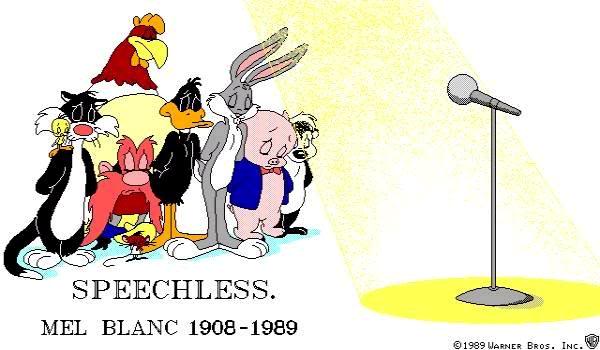
Although Mel Blanc, “the Man of a Thousand Voices,” is most often remembered as the voice of Bugs Bunny, Porky Pig, Daffy Duck, Woody Woodpecker, Tweety Bird, Sylvester, Yosemite Sam, Speedy Gonzales, Foghorn Leghorn, Pepé Le Pew, the Tasmanian Devil and many of the other characters from theatrical cartoons and Hanna-Barbera’s television cartoons, he had a long career as a comedian and character actor in radio and television. He was born on May 30, 1908, and died in 1989.

Blanc was a regular on The Jack Benny Program in various roles, and appeared on many other shows (Fibber McGee and Molly, Great Gildersleeve, Abbott and Costello, Burns and Allen), including his own which ran from September 1946 to June 1947. In the Jack Benny radio show he was Carmichael, the irascible polar bear who guarded the comedian’s underground vault; his outspoken parrot; his violin teacher, Monsieur Le Blanc; his Mexican gardener, Sy; and even his Maxwell automobile.

Blanc was easily the most prolific voice actor in the history of the industry and the first to be identified in the ending credits. In his 60-year career, he helped develop nearly 400 characters and provided voices for some 3,000 animated cartoons. During the cartoon heydays of the 1940’s and 50’s, he voiced 90 percent of the Warner Brothers cartoon empire. As movie critic Leonard Maltin said, “It is astounding to realize that Tweety Bird and Yosemite Sam are the same man!”

A gem from The Jack Benny Program: