OCTOBER 23, 4004 BC: AND ON THE 29TH HE RESTED

Those who predict the imminent end of the world display a certain amount of chutzpah if not foolhardiness (such as Micheal Stifel, October 19 and William Miller, October 22).  It probably takes even more of those qualities to identify the exact date of the beginning of the world, but didn’t James Ussher (1581-1656) do just that.

As Archbishop of Armagh, Primate of All Ireland, and Vice-Chancellor of Trinity College in Dublin, Ussher was rather highly regarded in his day as both churchman and scholar. He was not your average man on the street (“Tell me sir, when did the world begin?”) making bold proclamations. And evidently he didn’t just pull important dates out of a hat. His declarations were based on an intricate correlation of Middle Eastern and Mediterranean histories and Holy writ, incorporated into an authorized 1701 version of the Bible, or so he explained. And they were accepted, regarded without question as if they were the Bible itself.

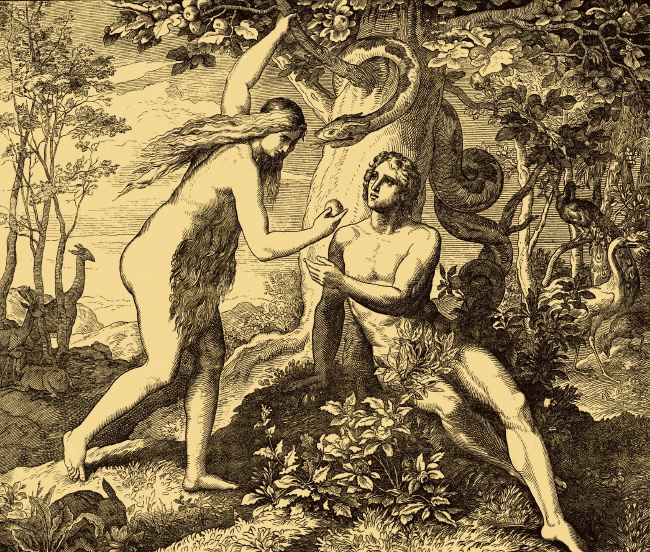
Through the aforementioned methods, Ussher established that the first day of creation was Sunday, October 23, 4004 BC. He didn’t give a time. On a roll, Ussher calculated the dates of other biblical events, concluding, for example, that Adam and Eve were driven from Paradise on Monday, November 10 of that same year BC. (It took them less than three weeks to get in trouble with God.) And Noah docked his ark on Mt Ararat on May 5, 2348 BC. That was a Wednesday if you were wondering.


Late-breaking news: Dr. John Lightfoot, of Cambridge, an Ussher contemporary, declared in a bold bid for oneupsmanship, that his most profound and exhaustive study of the Scriptures, showed that “heaven and earth, centre and circumference, were created all together, in the same instant, and clouds full of water,” and that “this work took place and man was created by the Trinity on October 23, 4004 B.C., at nine o’clock in the morning.”


Okay Lightfoot, Take This

Wretched Richard will jump out onto the proverbial limb and give you a few more dates you might be wondering about.

January 29, 3995 BC, 8 a.m. — God creates children.

March 12, 3906 BC, 5:00 p.m.  — Shouting something about his damn sheep, Cain slays Abel.

September 3, 3522 BC, 6:00 p.m. — God creates Facebook, then decides the world isn’t ready for it.

October 2, 2901 BC, 4:00 p.m.  God, having been in a bad mood all day, turns Lot’s wife into a pillar of salt.

June 7, 2549 BC 11:15 a.m.  God once again in a creative mood creates marijuana.

1:30 p.m. –Later that day, God, thoroughly annoyed with all his creations except his latest, instructs Noah to build an ark because he, God, is going to destroy the world.

August 14, 2371 BC,  5:30 a.m. — Methuselah finally turns his toes up after 969 years on this good earth.

July 7, 1425 BC, 8:30 p.m. — God gives Moses the Ten Commandments.

March 1, 2 AD, 10:15 a.m. — God creates an amusing diversion featuring Christians and lions.

July 2, 1854 AD, 11:45 p.m. — After a few too many martinis, God creates Republicans.

November 9, 2016, 2:45 a.m. — Feeling rather wicked, God makes Donald Trump president.

December 25, 2019, 10 a.m.  –Filled with Christmas spirit, God removes Donald Trump from office and makes Rudolph the red-nosed reindeer president.


AUGUST 25, 1913: WE HAVE MET THE ENEMY

Starting his career as an anonymous young storyboard artist for Walt Disney Productions on Donald Duck cartoons and other shorts, the cartoonist who would later be compared to everyone from Lewis Carroll and James Joyce to Aesop and Uncle Remus moved to the animation department in 1939. There, during the next five years he contributed to such Disney classics as Pinocchio (Gepetto in the whale), Fantasia (a drunk Bacchus riding a donkey), and Dumbo (the crow sequence).  Walt Kelly was doing pretty well at $100 a week.

During the 40s, Kelly devoted himself more and more to comic book art at Dell. The little possum with whom he is now most closely associated came on the scene in 1943 in Dell’s Animal Comics. Pogo would go on to star in 16 issues of his own comic book and 26 years as a syndicated newspaper comic strip.  Along with Pogo, there were  Albert the Alligator, Churchy LaFemme (a turtle), Howland Owl, Beauregard (Houndog), Porkypine, and Miz Mamzelle Hepzibah (a skunk).

Kelly’s liberal political and social views were rarely disguised as he used the strip to champion the powerless and the oppressed and to satirize political dogmas and figures such as Senator Joseph McCarthy (Simple J. Malarkey, a gun-toting bobcat), Vice President Spiro Agnew, and FBI Director J. Edgar Hoover. Many newspapers dropped Pogo, and others moved it to the editorial page. Walt and Pogo were probably most remembered for their campaign on behalf of the environment and the battle cry: “We have met the enemy, and he is us.”

Walt Kelly died in 1973.

kelly

AUGUST 15, 1935: WILL POWER

Cowboy, vaudeville performer, humorist, social commentator and motion picture actor, Will Rogers was one of the world’s best-known celebrities in the 1920s and 1930s and adored by the Will-Rogers-StampAmerican people. Known as “Oklahoma’s Favorite Son,” Rogers was born in 1879 to a prominent Cherokee Nation family in Indian Territory (now part of Oklahoma). During his amazing career, he traveled around the world three times, wrote more than 4,000 nationally-syndicated newspaper columns, and starred in 71 movies (a majority of them silent ) and several Broadway productions. He was the top-paid Hollywood movie star at the time, and in 1934, was voted the most popular male actor in Hollywood.

     As a radio broadcaster and political commentator, he was the leading political wit of the Progressive Era.  He called politics “the best show in the world” and described Congress as the “national joke factory.”

     Rogers died on August 15, 1935, with aviator Wiley Post, when their small airplane crashed in Alaska.

Never miss a good chance to shut up.


wr


There are three kinds of men. The one that learns by reading. The few who learn by observation. The rest of them have to pee on the electric fence for themselves.


We can’t all be heroes because somebody has to sit on the curb and clap as they go by.


When I die, I want to die like my grandfather who died peacefully in his sleep. Not screaming like all the passengers in his car.


Will-Rogers-Quotes-1


Ten men in our country could buy the whole world and ten million can’t buy enough to eat.


The best way to make a fire with two sticks is to make sure one of them is a match.

AUGUST 14, 1619: THOU SHALT NOT

Those folks who think they have it pretty rough in Virginia these days should thank their reactionary stars things are not as they were back in 1619. The very first general assembly got together in Jamestown that year to pass laws that pretty much told everyone how they could and could not behave. The burgesses, as members of the assembly were called, were 30 old white men determined to dictate morality to everybody else, a tradition that hasn’t changed much over the years.

     Nor has the politics. The burgesses passed laws requiring all colonists to attend two religious services every Sunday and to bear arms (pieces, swords, powder and shot) while doing so – just in case religious fervor pushed someone over the edge.  Even those bearing arms were forbidden from gambling, drinking, idleness and “excesses in apparel,” (which probably didn’t mean too much clothing).  Not wishing to overlook any sin they hadn’t thought of, the burgesses also approved a stern enactment against immorality in general. In the eyes of the burgesses, one can imagine, that might cover a lot of territory (and the colonies had lots of territory). The planting of mulberry trees, grapes and hemp was also proscribed, for we all know that that seemingly innocuous flora is the first step on the road to degradation (spelled with a ‘d’ and that rhymes with ‘p’).

     The burgesses had only nice things to say about tobacco however. Colonists were urged to dedicate the times they were not in church to the growing of said crop. The colonists responded with enthusiasm, even to the point of growing tobacco in the streets of Jamestown – 20,000 pounds a year – despite His Royal Stick in the Mud King James calling it “dangerous to the lungs.”

“Adam was but human—this explains it all. He did not want the apple for the apple’s sake, he wanted it only because it was forbidden. The mistake was in not forbidding the serpent; then he would have eaten the serpent.” ― Mark Twain

JULY 27, 1793: OFF WITH THEIR HEADS

On July 27, 1793, Maximilien Robespierre was elected to the Committee of Public Safety, whose function was to oversee the government of France and protect it against its enemies, foreign and domestic. Exactly one year later, he was removed from office. One day later, his head was removed.

During his year as committee member and president of the National Convention, he came to exercise virtual dictatorial control over the French government and proved himself a bit of a black hat. Faced with the threat of real or imagined civil war and foreign invasion, he inaugurated what was lovingly referred to as the Reign of Terror. He compiled himself a rather lengthy enemies list – some 300,000 suspected enemies made the list and were arrested. At least 10,000 died in prison. Robespierre proved himself mighty handy with a guillotine, executing 17,000 of them as “enemies of France”.

But just as he was getting the guillotine really smoking, the threat of a foreign invasion just up and disappeared, and those who still had their heads formed a coalition to oppose Robespierre and his followers.

And on July 27, 1794, Robespierre and his allies were placed under arrest by the National Assembly. When he received word that the National Convention had declared him an hors-la-loi, he shot himself in la tete but only succeeded in wounding his jaw. Nevertheless troops of the National Convention helped him finish the job the very next day – as French sages often say, live by the guillotine, die by the guillotine.


Another List Maker

Fast forward a couple of centuries: Richard M. Nixon had himself an enemies list, though not nearly as long as Robespierre’s.  And his Saturday Night massacre pales by comparison. But on July 27, 1974, didn’t they vote to impeach him anyway. At least, there was no guillotine.

JULY 14, 1789, 1973: BREAKING UP IS HARD TO DO

Every écolier and écolière knows that the breakup of France – Révolution française – began in 1789, its defining moment the storming of the Bastille on the morning of July 14. 1789. This medieval fortress in the center of Paris represented royal authority. That the Bastille housed only seven inmates – all with good reason to be there – was unimportant. It was a symbol of the abuses of the absolute monarchy, and the French had had it with monarchs, aristocrats, and pretty much anyone in power. Bring on liberté, égalité, fraternité.   King Louis XVI, exit stage right


Bye Bye Don

Another momentous breakup took place on the evening of the same day, nearly 200 years later, in 1973, at Knott’s Berry Farm in California (Knott’s Berry Farm was America’s first theme park and probably the only one devoted to grapes and strawberries and such things). Every schoolgirl and schoolboy knows that the Everly Brothers were one of America’s most successful pop duos, lending their sibling harmony to such hits as “Bye Bye Love”, “All I Have To Do is Dream” and “Wake Up Little Susie”, a franchise that would seemingly go on forever. Well, forever is a long time, and brothers Don and Phil had, by the end of the 1960s pretty much had it with liberté, égalité, fraternité and most definitely with each other.

The defining moment of their breakup came in the middle of their set when the stage manager told the audience that the rest of the show had been canceled because brother Don was “too emotional” to play.  In reality, Brother Don was too drunk to play. His skipped guitar notes and bungled lyrics sent brother Phil into a real snit. Phil smashed his guitar and stormed off stage into a solo career, promising he would “never get on stage with that man again.”


Phil and Don reached a sort of detente a decade later.  Louis XVI, on the other hand, was beheaded.

(Phil Everly died in January 2014).

I have no intention of sharing my authority. — King Louis XVI

Death Visits Aunt Agatha, Part 2: A Bargain Is Struck

Monty hated the thought of paying Bridget Berman seventy-five dollars a day to do practically nothing and eat his food in the bargain. What if Aunt Agatha held on for three or four days? No matter how bad she looked, she was a tough old bird. She could rack up a couple hundred dollars while he was in the city.

By the time Monty bit the bullet and finally contacted Bridget Berman, he had already devised a scheme to avoid paying the old hag more than what he considered appropriate remuneration for her services. Emphasizing how sick the old lady was, how she probably wouldn’t make it through the next 24 hours, Monty proposed a flat fee for Bridget’s sitting services. “Ninety dollars,” said Monty, “It’ll be like getting paid time and a half most likely.”

Bridget didn’t trust Monty at all; she assumed right off that he was trying to procure her services on the cheap. But if the old woman were really dying . . . Bridget also hated to pass up something extra for next to nothing. She expressed doubt about the arrangement. “But I will consider it. Mind you, just consider it. First I must see your aunt for myself.” Bridget had watched a good many people check out of this world and felt confident that she could reasonably judge the amount of time a person had left.

Later, as they stood at Aunt Agatha’s bedside, Bridget, after carefully studying the dying woman for several minutes, concluded that here lay one very sick woman and that she had better get an agreement quickly, before Aunt Agatha expired. “I don’t know,” said Bridget, “She doesn’t look all that bad to me. But I understand your situation, and I want to be as agreeable as I possibly can. One hundred and fifty dollars.”

Monty stood silently thinking. Aunt Agatha groaned.

“One twenty-five,” said Bridget.

“You’ll stay until she dies,” said Monty.

“Or until you return,” said Bridget.

“Agreed.”

Ten hours passed. Monty was in the city, Bridget sat bedside, and Aunt Agatha lay there still looking as though the next minute would be her last. Bridget sighed and dozed off. She awoke Saturday morning to find Aunt Agatha just as ill and just as alive as she had been the night before. For eight hours, Bridget stared at the bedridden woman just lying there, continuing to breathe without consideration for others, taking money from Bridget as though she were a common pickpocket.

continued

JULY 12, 1960: MR. POTATOHEAD WAS NOT AMUSED

Two knobs in the lower corners on the front of a plastic cube-like structure, when rotated clockwise or counterclockwise, move a stylus that displaces a metallic powder on the back of a screen, leaving horizontal and vertical lineographic images – in layman’s terms, magic. In the Romneywords of the French inventor, L’ecran Magique. Or in the words of the marketers who made it one of the 100 most memorable and most creative toys of the 20th century, Etch-a-Sketch.

The mechanical drawing toy, which was inducted into the National Toy Hall of Fame in 1998, was first marketed on July 12, 1960, by the Ohio Art Company, timed perfectly to catch the big wave of the Baby Boom. In England, it was known as the DoodleMaster Magic Screen. (There was also the Magna Doodle and the Mystic Writing Pad.)

Although it remained popular throughout the fifty plus years of its existence, the Etch-A-Sketch reached a new notoriety in 2012, when it became a part of the demise of a presidential campaign. The simple plastic rectangular box may have contributed as much to the 2012 election – in influence –  as all the SuperPACs put together. It happened when candidate Mitt Romney’s campaign manager, asked if Romney was boxing himself into ultra-conservative opinions during the primary, answered: “I think you hit a reset button for the fall campaign. Everything changes. It’s almost like an Etch-A-Sketch. You can kind of shake it up, and we start all over again.”

Trying to contain the brouhaha, the Romney campaign only added to its woes by saying that since the mention of Etch-A-Sketch caused its maker’s stock price to triple, they would next mention Mr. Potatohead.


JULY 10, 1984: IN THE AFTERNOON HE HUGGED A TREE

To burnish his environmental creds, President Reagan visited the salt marshes and crabbing grounds of the Chesapeake Bay. There he claimed credit for cleanup efforts in the area, provoking a hue and cry among critics who found his environmental policies wanting.

In a bit of derring-do, the President climbed to the top of a 50-foot observation tower at the Blackwater National Wildlife Refuge and made eye contact with two wild bald eagles.

Lunching with a group of Republican Chesapeake Bay fishermen at a Tilghman Island fishing village, Reagan asserted that his efforts to protect the environment were ”one of the best-kept secrets” of his Administration, which indeed they were, since no one had been able to find them. The grateful fishermen donated two bushels of crabs to his re-election campaign.

When a reporter asked the President where former EPA head Anne Burford who had resigned amid charges of mismanagement fit into his secret record, press secretary Larry Speakes ordered the lights turned off. Reagan, who was used to being in the dark was unfazed. “My guardian says I can’t talk,” he quipped. Thus, his environmental record remained a closely guarded secret.


JUNE 26, 1927: LOOK MA, NO HANDS

In 1927, thrill-seekers plunked down their quarters to take a ride on the Cyclone, a new attraction at Brooklyn’s Coney Island. Noting the success of the Thunderbolt in 1925 and the Tornado in 1926, Jack and Irving Rosenthal jumped into the roller coaster business to the tune of about $175,000, and the Cyclone was built.   It would take only 700,000 riders to recoup their investment. The Cyclone was built on the site of America’s first roller coaster, known as Switchback Railway, which had opened in 1884.

The Cyclone remained extremely popular through the years and has accumulated its share of legends. One is from 1948, when a coal miner with aphonia, the loss of speaking ability, took a ride. He had not spoken in years, but screamed as the Cyclone plummeted down the first drop, and said “I feel sick” as his train returned to the station, whereupon he fainted.

Statistics were never kept to tell us how many other people got sick on the Cyclone or how many threw up.  And of course there were more serious incidents. Two men were killed in separate incidents during the 1980s, both Darwin Award contenders who felt the need to stand up during the ride. One fell out and the other was whacked by a crossbeam.

The Cyclone began to deteriorate during the 1960s and was shut down in 1969. Two years later, the city of New York bought it for one million dollars. It was condemned a short time later and, in 1972, it was nearly destroyed to make way for an expansion of the New York Aquarium. A “Save the Cyclone” campaign did just that, and it was refurbished and reopened in 1975. The Cyclone was declared a city landmark in 1988 and a National Historic Landmark in 1991.

That quarter ticket now costs nine dollars.


TRUE CONFESSIONS: MY DARK DAYS AS A REPUBLICAN

I used to be a Republican.  There, it’s out in the open.  It was a long time ago, and I was too young to see the error of my ways.  At the time, our family was pretty much all Republican – not avid table thumping Republicans, but Republicans all the same.  Truman was a swear word, and we all liked Ike.  Ike was like a grandfather, and my grandmother loved him.

As long as I’m confessing, I might as well admit that I probably would have voted for Nixon over Kennedy.  Fortunately, I was not old enough to vote.  It was a couple of years later  in college that I began to change.  See, the conservatives are right.  Colleges take our respectable fresh-faced Republican youths and teach them unsavory liberal things like literature and philosophy and science.

Honest John

It happened to me, and I never saw it coming.  For a few days, I was just an independent.  But it’s a slippery slope indeed, and the leftward lurch was inevitable.  And by the time I graduated from the halls of propaganda, my mind had been molded into the liberal quagmire it is today.

In the space of time between my Republican innocence and my liberal decadence, I did my mandated military time.  Since I was a Republican and Republicans love guns, I naturally opted for service that dealt with guns.  I joined the artillery because they had big guns, guns they didn’t have to carry over their shoulders.

After my six mouths of basic gun toting, I became a typical weekend warrior spending some miserable hungover Sunday mornings doing my thing for my country.  And every summer I did my two weeks duty, even as I was fast becoming a liberal.   Being an artillery sort of guy, we got into big guns, really big guns during our summer mission.  This really big sucker of a gun we toted was called an Honest John, and I guess it was technically a rocket not a gun.  One summer we got to fire the thing.  Actually we didn’t get to pull a trigger or anything; we just stood around while it was fired.  It was a holy shit moment when that thing took off, like a launch at Cape Canaveral only lots faster.

During the rest of the two weeks, we got to tote the sucker around the woods of Washington, pretending we were in pitched battle with an unseen enemy (probably Mexican rapists and murderers).  For me, the high point of the exercise was the day we camouflaged Honest John so well we couldn’t find it for several hours.

Our Honest John rocket, hidden

Yes, you can see it happening: I was morphing into nasty liberalism, and liberals like nothing better than to hide guns from conservatives.   Sad but true.  I don’t really like guns any more, little or big, or rockets. As Johnny Cash sang:  “Don’t take your rockets to town son, leave your rockets at home, Bill.  Don’t take your rockets to town.”

Or perhaps as Waylon Jennings sang: “Mamas, don’t let your babies grow up to be liberals.”


JUNE 17, 1972: CREEPS THAT GO BUMP IN THE NIGHT

It was the middle of the night in June 1972, and while much of the nation slept, something was afoot at a large apartment complex in the Foggy Bottom area of Washington DC. A security guard noticed pieces of tape covering the latch on the locks on several doors, leaving the doors unlocked. He removed the tape, naively thinking nothing of it – the wind maybe?  (He evidently had never read a suspense novel.)  An hour later, he discovered that the locks had been retaped and realized that this was something more than just the wind. He called the police who discovered not just one but five intruders in the offices belonging to the Democratic National Committee.

     The five men were charged with attempted burglary and attempted interception of telephone and other communications. In September, a grand jury indicted them and two other men (E. Howard Hunt, Jr. and G. Gordon Liddy) for conspiracy, burglary, and violation of federal wiretapping laws.

     The men who broke into the office were tried and convicted in early 1973.  An investigation, tied all five men to CREEP. CREEP is the loving acronym applied to the 1972 Committee to Re-elect the President, the President being Richard Milhouse Nixon. Trial judge, John J. Sirica, (who evidently did read suspense novels) suspected a conspiracy involving people at the pinnacles of government.

     In March 1973, James McCord, one of the original gang of five claimed that he was told to plead guilty. He implicated Attorney General John Mitchell and other top Nixon aides, who began to topple like so many Republican dominoes, and the June 17 Watergate robbery quickly escalated into one of the juiciest political scandals of the century — wherein the aforementioned President Nixon resigned to avoid — dare we use the word?