Caucus Race

As she stepped through the door which was now the perfect size for a person of her size, Alice spotted a sign that read Donaldland, Center of the Universe, brilliantly ruled by our most revered Queen. Everything on this side of the door was the right size. “I think I’m going to like this place,” she predicted..

She set off to explore, passing through lovely meadows and gardens filled with colorful flowers, past dear little ponds. The only things marring the beauty of the place were the many signs saying Make Donaldland Great Again. At one of those ponds, she spotted a queer-looking group of animals marching around it. “Curiouser and curiouser,” she said, although everything was curious today. There was an Auk, an Emu, an Ostrich, a Tasmanian Devil and several other strange animals. And leading the parade was a Dodo. They moved about the pond, each at its own pace, some faster, some slower, some stopping now and then, some bumping into one another, until the Dodo suddenly cried out: “The Caucus-race is over.”

“Who has won?” the others all shouted.

The Dodo thought for a moment then said: “Everyone. We all have won.” The animals all cheered. Alice, who was now standing among them, asked: “What is a Caucus-race?”

The Dodo pressed a finger to its forehead and thought some more. “It’s like a real caucus only it’s not, because we’re not invited to real Caucuses anymore. We used to be GOPs, but we’re outcasts now. We’ve been tweetstormed by the Queen.”

Alice was filled with questions, and she blurted them right out: “What’s a GOP? What’s a tweetstorm? What kind of animal are you?”

“I’m a Dodo.”

“Aren’t Dodos extinct?”

“Might as well be. I guess I’m a Dodo In Name Only. And a GOP in Name Only.”

“You haven’t told me what a GOP is,” Alice complained.

“A Grouchy Old Poop. I was once proud to be one — to wear a campaign button on my lapel, a flag on my butt, and make patriotic noise. But that was then and this is now. I’ve — we’ve all been tossed from the poopdeck, bundled off, shown the exit ramp. Unfriended. Tweetstormed.” The Queen doesn’t know us and therefore we don’t exist.”

Stay tuned, same time same place — a royal revelation

Going Down

Alice was growing sleepy, sitting next to her sister who was reading a book. “What’s the use of a book if it can’t get you online?” she muttered to herself. Just as she was beginning to drift off, a large White Rabbit ran by. This was rather remarkable in and of itself but even more so as the Rabbit pulled a watch out of its waist-coat pocket and said “Oh dear! Oh dear! I shall be too late. The Queen will have my head for sure.”

Now wide awake with curiosity, Alice jumped up and chased after the Rabbit, just in time to see it pop down a large rabbit hole. Alice went right down the hole herself, never giving it a thought, and found herself falling. The hole was very deep and she was falling very slowly, for she had time to look around. The sides of the hole had become walls, covered with pictures. Mostly they were grumpy looking old men, but one of them looked like a Queen. She wore a royal gown, the kind you see on a playing card, and a royal crown nestled in a strange outcropping of very orange hair. The Queen had big hands and — Alice didn’t finish the thought for she landed with a thud on the floor of an ornate room.

The room had no windows and just one tiny door barely big enough for a mouse. It was certainly too tiny for Alice to go through it. The only furniture in the room was a single table. On the top of the table was a small bottle with a note attached that read: Drink me, if you want to become small enough to go through the door. She took a sip from the bottle and waited. Nothing happened. She finished it off. Still nothing. Then she saw more writing on the back of the note: I lied. The only way to get small is to think small. It’s like pulling yourself up by your own bootstraps, except there are no boots or straps and it’s down rather than up.

Alice sat down in front of the little door and recited “I am small. I am small.” As she continued to repeat these words, she saw that the little door was growing larger. Or was she getting smaller? When the door looked like a normal-sized door she said loudly: “I really am small.” She took a deep breath and opened the door.

Stay tuned, same time, same place — a caucus-race

APRIL 14, 2019: Right Out Loud

It’s okay to laugh out loud today. You don’t even need a reason because today is International Moment of Laughter Day and that ought to be reason enough. The day is the brainchild of Izzy Gesell, a self-described humorologist.

“Laughter comes right after breathing as just about the healthiest thing you can do,” he says. “It relieves stress, instills optimism, raises self-confidence, defuses resistance to change, and enhances all your relationships.”

To help you celebrate the day, here is a list of ways you can laugh. You can titter, giggle, chuckle or chortle. You can cackle or crow. You can snicker, snigger or snort. Ha-ha, hee-haw, ho-ho, tee-hee, yuk-yuk. You can guffaw, belly laugh or horselaugh. You can roar or shake with laughter. Split your sides, bust a gut, roll in the aisles and perhaps die laughing. And of course there’s the ever-popular laughing until you pee your pants.

THE FUTURE WILL BE BETTER TOMORROW

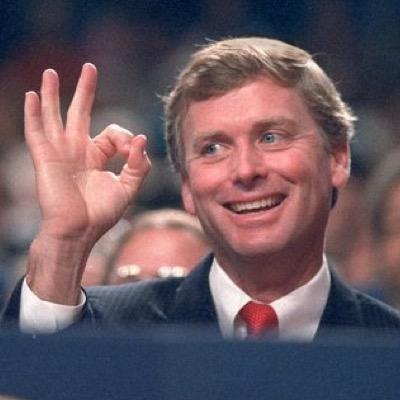
Fireworks, rock music and, yes, laughter punctuated the April 14, 1999, announcement by former Vice President Dan Quayle that he was tossing his hat into the Republican ring for the 2000 presidential race. He offered himself as the antidote for “the dishonest decade of Bill Clinton and Al Gore.” He promised to restore integrity, responsibility and more malaprops to the White House.  He exited the race a few months later, after finishing eighth in the first Republican straw poll, cheating the world out of future Quayle gems such as these:

If we don’t succeed we run the risk of failure.

Republicans understand the importance of bondage between a mother and child.

A low voter turnout is an indication of fewer people going to the polls.

It isn’t pollution that’s harming the environment. It’s the impurities in our air and water that are doing it.

When I have been asked during these last weeks who caused the riots and the killing in L.A., my answer has been direct and simple: Who is to blame for the riots? The rioters are to blame. Who is to blame for the killings? The killers are to blame.

Bank failures are caused by depositors who don’t deposit enough money to cover losses due to mismanagement.

I deserve respect for the things I did not do.

I love California, I practically grew up in Phoenix.

The global importance of the Middle East is that it keeps the Far East and the Near East from encroaching on each other.

I believe we are on an irreversible trend toward more freedom and democracy – but that could change.

APRIL 10, 1953: COMIN’ AT YA

The poobahs at Hollywood’s major film studios watched with amazement and envy as the independently produced 3-D movie Bwana Devil wowed audiences in late 1952.  Columbia Pictures quickly threw together a black- and-white thriller that for an hour hurled practically every prop on the set at the beleaguered audience. It was just as quickly forgotten.  Then on April 10, 1953, Warner Brothers released its entry — in color and stereophonic sound — House of Wax, a horror film starring Vincent Price as a sculptor who kills folks, covers them with wax, dresses them up as famous historical figures, and displays them in his wax museum. Audiences loved it, making it one of the biggest hits of the year. Even critics gave it a go. And although it took a while, the Library of Congress selected it in 2014 for inclusion in the National Film Registry, deeming it “culturally, historically, or aesthetically significant.”

The film revived Vincent Price’s career, positioning him as the go-to guy when you needed a mad scientist or fiendish psychopath.  Although House of Wax had a couple of classic 3-D effects (the pitchman with a paddleball and a character who seemingly stands up in the audience and runs into the screen), it was not loaded down with them. This might have been because the director was blind in one eye and couldn’t understand what all the fuss was about.

And What Do We Suppose Jumbo the Elephant Really Was

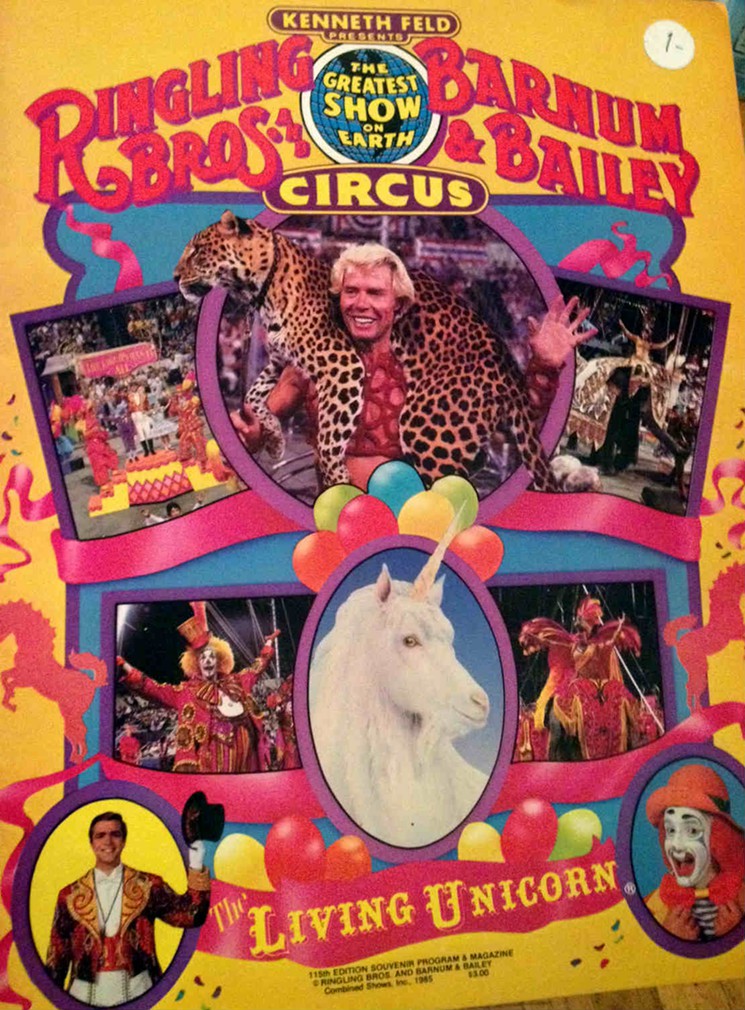
On this day in 1985, Lancelot the Unicorn who had been touring with the Ringling Brothers and Barnum and Bailey Circus — famous for outlandish attractions — was exposed as a fraud.  Audiences were appalled to learn that Lancelot wasn’t a real unicorn at all, just a goat with a horn surgically attached to its forehead.

IF IT HAD ONLY BEEN A NACHO

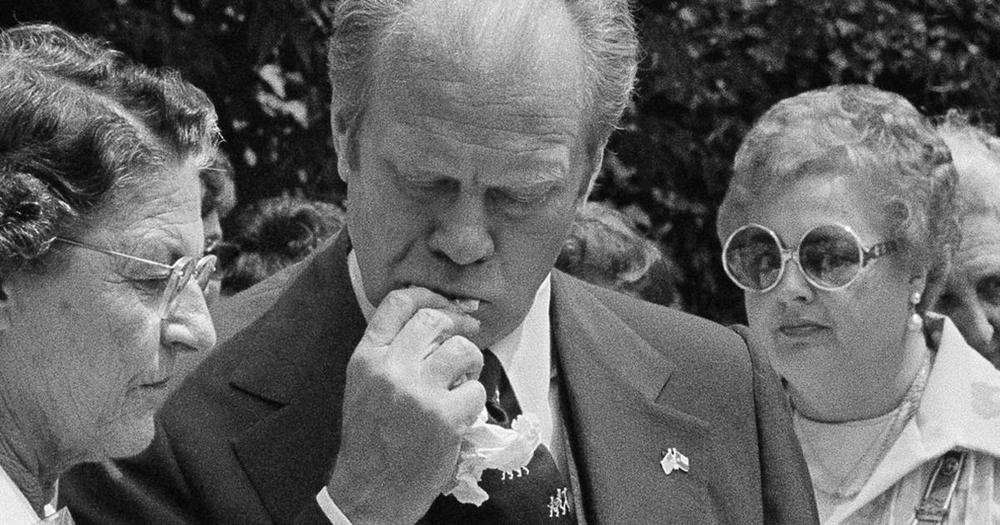
It would seem that in modern politics every president has been forced to deal with a scandal, big or small –vicuna coat, Watergate, Iran Contra, Stormy Daniels. Gerald Ford’s scandal would probably be trivial in comparison to most. But it may have cost him re-election. It was April 10, 1976, in San Antonio, Texas, at the Alamo, where a tiny faux pas morphed into the Great Tamale Incident as the President attempted to eat a tamale without removing the corn husk, playing into his reputation as a bit of a bumbler.

MARCH 23, 1925: MAKING A MONKEY OUT OF A MOLEHILL

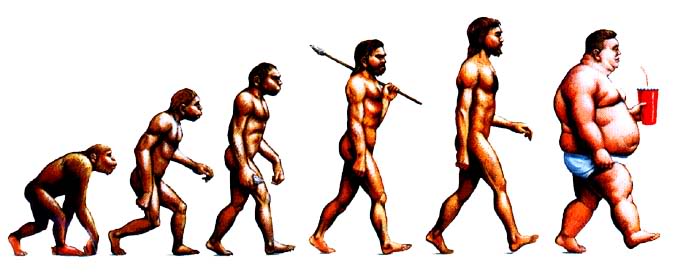
On this day in 1925 in the forward-looking State of Tennessee, it became a crime for a teacher in any public school or college to teach any theory that contradicted the Bible’s account of man’s creation. Wouldn’t you know it, within two months, a Dayton, Tennessee, high school science teacher and trouble-maker, John T. Scopes went right on ahead and taught his students that man descended from a lower order of animals, monkeys no less. This was, of course, the infamous theory of evolution.

Scopes was indicted, and later convicted, in what became known as the Monkey Trial. The trial, broadcast on radio, gained national attention, and brought together two of the biggest names in the nation, William Jennings Bryan for the prosecution and Clarence Darrow for the defense. Bryan chastised evolutionists for teaching children that humans were but one of precisely 35,000 species of mammals and that human beings were descended “not even from American monkeys, but from old world monkeys.” Darrow volunteered his services to the defense because he “realized there was no limit to the mischief that might be accomplished unless the country was aroused to the evil at hand.”

Scopes was fined $100, but the verdict was later overturned. Darrow called the case “the first of its kind since we stopped trying people for witchcraft.” This was almost a hundred years ago. Thank goodness we’ve gained a lot of insight since then.

My Kingdom for a Bic

Pedro I a 14th century king of Castile was one of the first monarchs who could write, and he had very nice penmanship. That didn’t prevent him from being stuck with the moniker Pedro the Cruel for various transgressions, real and imagined. His greatest sin seems to have been his hatred for the monks, a hatred which was returned in kind. When Pedro died by the dagger of his illegitimate brother on March 23, 1369, his place in history was left to those monks who could also write. And they proved that their pens were mightier than his scepter. Good penmanship can only take one so far.

The Game Show That Wouldn’t Die

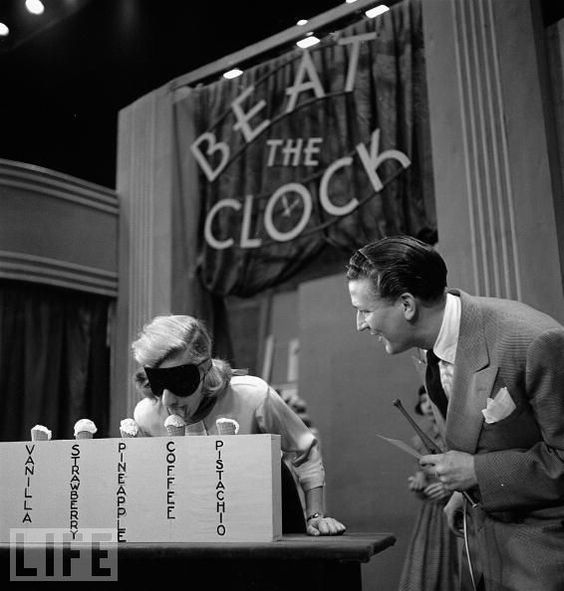
Beat the Clock made its CBS debut on March 23, 1950, hosted by Bud Collyer. It ran until 1961. It rose from the dead in 1969 as The New Beat the Clock, running until 1974. It reappeared in 1979 as The All-New Beat the Clock, and later as All-New All-Star Beat the Clock.

To win, contestants had to “solve problems” within a certain time limit which was counted down on a madly-ticking giant clock. If they succeeded, they “beat the clock”; if they didn’t, “the clock beat them.” And they died.


MARCH 20, 689: SOME FOLKS JUST WON’T STAY BURIED

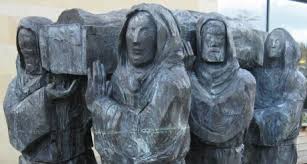
Back in the 7th century on an island in northern Britain, the very holy St. Cuthbert gave up the ghost. The exact date of his departure was March 20, 689. Not only was Cuthbert very holy, he was, you might say, holier than thou, or at least holier than all his peers. He devoted his entire life to converting the half-savage heathens (and there were quite a few half-savage heathens at the time) and praying — lots of praying. Such was his devotion that those about him often wondered if he were not a man but an angel.

Cuthbert was duly shrouded and buried, remaining at rest for some 11 years until some curious monks dug him up to have a peek. They found Cuthbert in perfect condition, which they accepted as miraculous proof of his saintly character. They placed him in a new coffin, leaving him above ground so he might perform miraculous cures.

Another 174 years passed and, with Britain facing an invasion by the Danes, the monks (different monks) carried Cuthbert’s still perfect body away and wandered with it from place to place for many years.

Finally in the 11th century, Cuthbert’s body found a permanent home where it was enshrined and enriched with offerings of gold and jewelry from the faithful (there were a lot more of them now). In 1104, the body was inspected again and found still fresh. Another 400 years and another inspection.

Three hundred years. It’s 1827 and Cuthbert is past due for inspection. This time, however, the inspectors were much more rigorous, and it was discovered that Cuthbert was an ordinary skeleton swaddled up to look whole, including plaster balls to plump out the eye holes. It would appear that some monks along the way had been quite naughty. St. Cuthbert himself serves as a fine example of a person who was far more interesting dead than alive.

Deciders Unite

The Whigs didn’t last long as as political party. Formed in the 1830s out of annoyance with Andrew Jackson, they gave us four presidents — William Henry Harrison, John Tyler, Zachary republicanTaylor and Millard Fillmore, commonly known by their shared nickname, Who? (not to be confused with the rock group of the same name). As is the case with many political parties, they had disagreements over tents, finding themselves unable to deal with the concept of big ones, and eventually tore themselves asunder with internal disagreements.

The semi-official date of the party’s actual death was March 20, 1854. On that date, a number of don’t wanna-be Whigs met in Ripon, Wisconsin, and the result of that meeting was the birth of the Republican party, which lasted until 2016.


December 11, 1969: The Naked Cold War

Relations between the United States and the Soviet Union were generally confrontational through most of the second half of the last century.  In the United States, Communist plots were everywhere, and the Soviet Union blamed American capitalists for most of the ills of the world. On December 11, 1969, a noted Russian author lashed out against western decadence in one of the more unusual cold war recriminations.

On December 11, 1969, Sergei Mikhailkov, secretary of the Moscow writer’s union, known for his books for children, weighed in against the production of “Oh! Calcutta!” that was currently an off-Broadway hit. Performers in their “birthday suits,” he fumed, were proof of the decadence and “bourgeois” thinking in Western culture.  American nudity was an assault on Soviet innocence.

Oddly enough, those Americans throughout the Midwest who didn’t think the play was about India were convinced it was a Communist plot.

More disturbing, Mikhailkov raged on, was the fact that this American abomination was affecting Russian youth. These vulgar exhibitions were “a general striptease that is one of the slogans of modern bourgeois art.” Soviet teens were more familiar with “the theater of the absurd and the novel without a hero and all kinds of modern bourgeois reactionary tendencies in the literature and art of the West” than with “the past and present of the literature of their fatherland.”

Mikhailkov’s outburst came at the end of a conference of Russian intellectuals, who applauded his remarks without visible enthusiasm before returning to their clandestine copies of Fanny Hill.


December 9, 1958: Taking Down the Names of Everybody Turning Left

Initially founded with only 11 lonely crackpots, the organization had by the early 1960s grown to nearly 100,000, each and every one of them searching nearby haystacks for concealed Communists.  Joseph McCarthy had gone away, but that didn’t mean his nemesis was gone. No fluorideindeed; the Red Menace was everywhere – Red Skelton, Red Buttons, Red Ryder – and Commie wanna-bes such as Rosie Clooney and Pinky Lee.   Only the witch-hunters of the John Birch Society stood between Evil and Armageddon.

The John Birch Society had its coming out party on December 9, 1958, under the tutelage of Robert H. W. Welch, Jr., a candy man who made caramel lollipops, marketed under the name Sugar Daddies. He also gave the world Sugar Babies, Junior Mints and Pom Poms before turning his attention to weightier matters.

The John Birch Society’s mission was the revival of the flagging spirit of McCarthyism; its tools, unsubstantiated accusations and innuendo; its cause celebré, the vast communist conspiracy existing within the U.S. government, particularly that nest of vipers at the State Department. (Fortunately, in our more enlightened times, we’re above such silly conspiracy theories.)

According to the John Birch credo, the American people consisted of four groups: “Communists, communist dupes or sympathizers (fellow travelers), the uninformed who have yet to be awakened to the communist danger, and the (hopelessly) ignorant.”

By this time, Americans had tired somewhat of McCarthyism and had moved on to the menace of rock and roll under its Pied Piper of Prurience, Elvis Presley. As a result, few of the society’s sensational charges were taken seriously by mainstream American society. Oh, a few people got worked up by the Communist plot to poison us with fluoride in our drinking water, but for the most part, it was ho-hum as usual.

November 2, 1886: Brother, Can You Spare a Vote

Robert Love Taylor, “Bob,” the Democratic candidate for governor of Tennessee, defeated his Republican opponent, Alfred Alexander Taylor, “Alf,” on November 2, 1886. One might guess that two candidates with the same last name would confuse voters at the polls, especially since they looked a lot alike, they both played the fiddle and they called the same two people mom and pop. Bob bested Alf, his older brother, 125,151 to 109, 837, in what would be called the “War of the Roses” because Bob’s fans all carried white roses and Alf’s carried red.  (Or was it the other way around?”) Their pappy, when asked to run as the Prohibition Party candidate, chose not to, evidently deciding that he would be one Taylor too many.

The brothers were born in Happy Valley, Tennessee, Alf in 1848, Bob in 1850. Their father, a Methodist minister, was a Whig; their mother, a gifted pianist was a Democrat. Bob and Alf both found their way into politics, lecturing and writing. They fiddled together, and collaborated on  a fairly successful play. Their gubernatorial campaign was nothing like the typical rough and tumble political contest. They campaigned together, lacing their political banter with humorous stories, then fiddling while their audiences danced.  It is rumored that a good portion of the electorate tossed coins to choose a candidate.

Bob served as governor from 1887 to 1891 and again from 1897 to 1899. He also served as U.S. senator from 1907 until his death in 1916. Alf was elected governor in the 1920’s. He died in 1931.

October 25, 1938: It Don’t Mean a Thing If It Ain’t Got That Swing

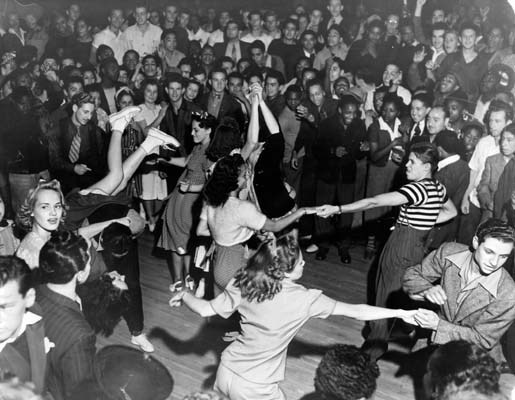
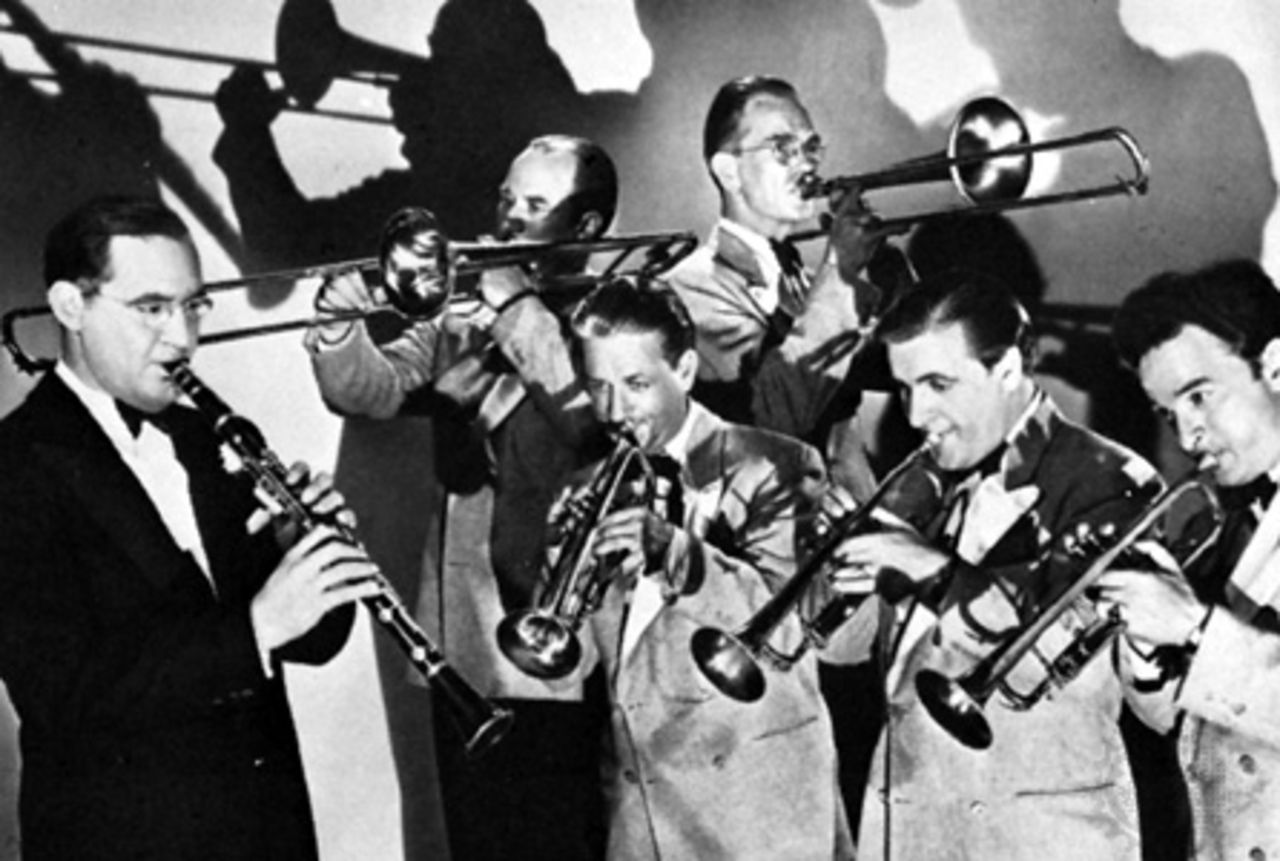
The swing era in American music had its roots in 1920s jazz as small improvisational groups gave way to larger ensembles using written arrangements.  A typical swing song features a strong rhythm section supporting loosely-tied wind and brass sections and in later years string and vocal sections.  It has a lively danceable beat and, well, it swings.

Although it might have seemed so, not everyone in 1930s America wanted to sing and sway and snap fingers to the music of the proliferating number of big bands.

igoodma001p1

Francis Beckman was ordained to the Catholic Ministry in 1902, and moved steadily up the theological ladder until finally becoming Archbishop of Dubuque in 1930, guiding his flock through both the Depression and World War II.  He undertook several crusades during his tenure, the least of which was most likely his campaign against swing music beginning in 1938.  His holy war came to national attention when on October 25, 1938, in a speech before  the National Council of Catholic Women, he denounced swing music in no uncertain terms.  It was, he said, “a degenerated musical system… turned loose to gnaw away the moral fiber of young people” which would lead one down the “primrose path to Hell.”  Perhaps, it’s just as well the Archbishop was  whistling heavenly tunes when rock and roll came around (having died in 1948).

The success of his campaign can no doubt be measured by how infrequently the name Francis Beckman rings a bell compared to Louis Armstrong, Cab Calloway, Benny Goodman, Duke Ellington, Glenn Miller, or Count Basie.


Politics as Unusual

Ross Perot suddenly dropped out of the 1992 presidential race in perotJuly amid swirling controversies after having suddenly dropped into it a few months earlier with an off-the-cuff announcement on Larry King’s television show.  Campaign managers were becoming increasingly disillusioned by his unwillingness to follow their advice to be more specific on issues, and his need to run the show on his own.  They bridled at such practices as forcing volunteers to sign loyalty oaths  and his nine-to-five style  of campaigning.  When he jumped back into the race in October, the campaign professionals were gone, replaced by amateurs of unquestioned loyalty.

In another bizarre turn, Perot went on 60 Minutes on October 25, claiming his July withdrawal from the race was the result of his hearing that President Bush’s campaign was planning to smear his daughter with a computer-altered photograph and to disrupt her wedding.   Perot offered no evidence, only quoting an unidentified “top Republican.” “I can’t prove any of it today,” he said.  “But it was a risk I did not have to take,” he added, “and a risk I would not take where my daughter is concerned.”
A spokesman for the President dismissed Mr. Perot’s assertions as “all loony.”

Maybe not so unusual these days.