December 11, 1969: The Naked Cold War

Relations between the United States and the Soviet Union were generally confrontational through most of the second half of the last century.  In the United States, Communist plots were everywhere, and the Soviet Union blamed American capitalists for most of the ills of the world. On December 11, 1969, a noted Russian author lashed out against western decadence in one of the more unusual cold war recriminations.

On December 11, 1969, Sergei Mikhailkov, secretary of the Moscow writer’s union, known for his books for children, weighed in against the production of “Oh! Calcutta!” that was currently an off-Broadway hit. Performers in their “birthday suits,” he fumed, were proof of the decadence and “bourgeois” thinking in Western culture.  American nudity was an assault on Soviet innocence.

Oddly enough, those Americans throughout the Midwest who didn’t think the play was about India were convinced it was a Communist plot.

More disturbing, Mikhailkov raged on, was the fact that this American abomination was affecting Russian youth. These vulgar exhibitions were “a general striptease that is one of the slogans of modern bourgeois art.” Soviet teens were more familiar with “the theater of the absurd and the novel without a hero and all kinds of modern bourgeois reactionary tendencies in the literature and art of the West” than with “the past and present of the literature of their fatherland.”

Mikhailkov’s outburst came at the end of a conference of Russian intellectuals, who applauded his remarks without visible enthusiasm before returning to their clandestine copies of Fanny Hill.

December 9, 1958: Taking Down the Names of Everybody Turning Left

Initially founded with only 11 lonely crackpots, the organization had by the early 1960s grown to nearly 100,000, each and every one of them searching nearby haystacks for concealed Communists.  Joseph McCarthy had gone away, but that didn’t mean his nemesis was gone. No fluorideindeed; the Red Menace was everywhere – Red Skelton, Red Buttons, Red Ryder – and Commie wanna-bes such as Rosie Clooney and Pinky Lee.   Only the witch-hunters of the John Birch Society stood between Evil and Armageddon.

The John Birch Society had its coming out party on December 9, 1958, under the tutelage of Robert H. W. Welch, Jr., a candy man who made caramel lollipops, marketed under the name Sugar Daddies. He also gave the world Sugar Babies, Junior Mints and Pom Poms before turning his attention to weightier matters.

The John Birch Society’s mission was the revival of the flagging spirit of McCarthyism; its tools, unsubstantiated accusations and innuendo; its cause celebré, the vast communist conspiracy existing within the U.S. government, particularly that nest of vipers at the State Department. According to its credo, the American people consisted of four groups: “Communists, communist dupes or sympathizers (fellow travelers), the uninformed who have yet to be awakened to the communist danger, and the (hopelessly) ignorant.”

Fortunately, by this time, Americans had tired somewhat of McCarthyism and had moved on to the menace of rock and roll under its Pied Piper of Prurience, Elvis Presley. As a result, few of the society’s sensational charges were taken seriously by mainstream American society. Oh, a few people got worked up by the Communist plot to poison us with fluoride in our drinking water, but for the most part, it was ho-hum as usual.


OCTOBER 23, 4004 BC: AND ON THE 29TH HE RESTED

Those who predict the imminent end of the world display a certain amount of chutzpah if not foolhardiness (such as Micheal Stifel, October 19 and William Miller, October 22).  It probably takes even more of those qualities to identify the exact date of the beginning of the world, but didn’t James Ussher (1581-1656) do just that.

As Archbishop of Armagh, Primate of All Ireland, and Vice-Chancellor of Trinity College in Dublin, Ussher was rather highly regarded in his day as both churchman and scholar. He was not your average man on the street (“Tell me sir, when did the world begin?”) making bold proclamations. And evidently he didn’t just pull important dates out of a hat. His declarations were based on an intricate correlation of Middle Eastern and Mediterranean histories and Holy writ, incorporated into an authorized 1701 version of the Bible, or so he explained. And they were accepted, regarded without question as if they were the Bible itself.

Through the aforementioned methods, Ussher established that the first day of creation was Sunday, October 23, 4004 BC. He didn’t give a time. On a roll, Ussher calculated the dates of other biblical events, concluding, for example, that Adam and Eve were driven from Paradise on Monday, November 10 of that same year BC. (It took them less than three weeks to get in trouble with God.) And Noah docked his ark on Mt Ararat on May 5, 2348 BC. That was a Wednesday if you were wondering.


Late-breaking news: Dr. John Lightfoot, of Cambridge, an Ussher contemporary, declared in a bold bid for oneupsmanship, that his most profound and exhaustive study of the Scriptures, showed that “heaven and earth, centre and circumference, were created all together, in the same instant, and clouds full of water,” and that “this work took place and man was created by the Trinity on October 23, 4004 B.C., at nine o’clock in the morning.”


Okay Lightfoot, Take This

Wretched Richard will jump out onto the proverbial limb and give you a few more dates you might be wondering about.

January 29, 3995 BC, 8 a.m. — God creates children.

March 12, 3906 BC, 5:00 p.m.  — Shouting something about his damn sheep, Cain slays Abel.

September 3, 3522 BC, 6:00 p.m. — God creates Facebook, then decides the world isn’t ready for it.

October 2, 2901 BC, 4:00 p.m.  God, having been in a bad mood all day, turns Lot’s wife into a pillar of salt.

June 7, 2549 BC 11:15 a.m.  God once again in a creative mood creates marijuana.

1:30 p.m. –Later that day, God, thoroughly annoyed with all his creations except his latest, instructs Noah to build an ark because he, God, is going to destroy the world.

August 14, 2371 BC,  5:30 a.m. — Methuselah finally turns his toes up after 969 years on this good earth.

July 7, 1425 BC, 8:30 p.m. — God gives Moses the Ten Commandments.

March 1, 2 AD, 10:15 a.m. — God creates an amusing diversion featuring Christians and lions.

July 2, 1854 AD, 11:45 p.m. — After a few too many martinis, God creates Republicans.

November 9, 2016, 2:45 a.m. — Feeling rather wicked, God makes Donald Trump president.

November 5, 2024, 10 a.m.  — A big grin spreads across God’s face . . .


October 20, 1928: And a Pot for Every Chicken

The political silly season is at its height, full of promises and a few threats.  A burning question: will some wag pull out the proverbial chicken in every pot to ridicule another candidate’s over-the-top tax cut (my tax cut’s bigger than yours). The chicken in the pot is, of course, an allusion to a much earlier presidential campaign in which Republicans running Herbert Hoover promised a chicken for every pot and a car in every garage. Although the statement has been hung like an albatross around poor Hoover’s neck, he never actually said it himself; it appeared in a Republican party flyer on October 20, 1928.

chickenpouleThe Republicans did not coin the phrase, however. That honor goes to King Henry the IV of France (Republicans quoting a Frenchman, my, my) who some 400 years earlier said: “Je veux qu’il ait si pauvere paysan en mon royaume qu’il n’ait tous les diamaches sa poule au pot.” Translation: “I wish that there would not be a peasant so poor in all my realm who would not have a chicken in his pot every Sunday.” A little wordy, but he was the king. Le bon roi Henri came to be known as le Roi de la poule au pot or King of the Chicken in the Pot. Much as the 1928 presidential candidate came to be known as the Hoover of the Chicken in the Pot. This was probably the result of his opponent Al Smith continually ridiculing the statement while holding up a rubber chicken (Okay, he actually held up a copy of the flyer, but a rubber chicken would have been better.)

As so often happens in campaigns, the statement got inflated to a chicken, a bunch of vegetables, two cars in every garage, a gasoline card and silk stockings.

Hoover’s actual campaign slogans were the rather uninspiring “Who but Hoover” and “Hoover and Happiness Or Smith And Soup Houses,” in spite of which he won the election. During his single term in office, the Great Depression got underway, an irony Hoover probably did not appreciate.

Hoover died on October 20, 1964, and was buried with a rubber chicken (actually that’s an unsubstantiated rumor).


lbj3

AUGUST 25, 1913: WE HAVE MET THE ENEMY

Starting his career as an anonymous young storyboard artist for Walt Disney Productions on Donald Duck cartoons and other shorts, the cartoonist who would later be compared to everyone from Lewis Carroll and James Joyce to Aesop and Uncle Remus moved to the animation department in 1939. There, during the next five years he contributed to such Disney classics as Pinocchio (Gepetto in the whale), Fantasia (a drunk Bacchus riding a donkey), and Dumbo (the crow sequence).  Walt Kelly was doing pretty well at $100 a week.

During the 40s, Kelly devoted himself more and more to comic book art at Dell. The little possum with whom he is now most closely associated came on the scene in 1943 in Dell’s Animal Comics. Pogo would go on to star in 16 issues of his own comic book and 26 years as a syndicated newspaper comic strip.  Along with Pogo, there were  Albert the Alligator, Churchy LaFemme (a turtle), Howland Owl, Beauregard (Houndog), Porkypine, and Miz Mamzelle Hepzibah (a skunk).

Kelly’s liberal political and social views were rarely disguised as he used the strip to champion the powerless and the oppressed and to satirize political dogmas and figures such as Senator Joseph McCarthy (Simple J. Malarkey, a gun-toting bobcat), Vice President Spiro Agnew, and FBI Director J. Edgar Hoover. Many newspapers dropped Pogo, and others moved it to the editorial page. Walt and Pogo were probably most remembered for their campaign on behalf of the environment and the battle cry: “We have met the enemy, and he is us.”

Walt Kelly died in 1973.

kelly

AUGUST 15, 1935: WILL POWER

Cowboy, vaudeville performer, humorist, social commentator and motion picture actor, Will Rogers was one of the world’s best-known celebrities in the 1920s and 1930s and adored by the Will-Rogers-StampAmerican people. Known as “Oklahoma’s Favorite Son,” Rogers was born in 1879 to a prominent Cherokee Nation family in Indian Territory (now part of Oklahoma). During his amazing career, he traveled around the world three times, wrote more than 4,000 nationally-syndicated newspaper columns, and starred in 71 movies (a majority of them silent ) and several Broadway productions. He was the top-paid Hollywood movie star at the time, and in 1934, was voted the most popular male actor in Hollywood.

     As a radio broadcaster and political commentator, he was the leading political wit of the Progressive Era.  He called politics “the best show in the world” and described Congress as the “national joke factory.”

     Rogers died on August 15, 1935, with aviator Wiley Post, when their small airplane crashed in Alaska.

Never miss a good chance to shut up.


wr


There are three kinds of men. The one that learns by reading. The few who learn by observation. The rest of them have to pee on the electric fence for themselves.


We can’t all be heroes because somebody has to sit on the curb and clap as they go by.


When I die, I want to die like my grandfather who died peacefully in his sleep. Not screaming like all the passengers in his car.


Will-Rogers-Quotes-1


Ten men in our country could buy the whole world and ten million can’t buy enough to eat.


The best way to make a fire with two sticks is to make sure one of them is a match.

AUGUST 14, 1619: THOU SHALT NOT

Those folks who think they have it pretty rough in Virginia these days should thank their reactionary stars things are not as they were back in 1619. The very first general assembly got together in Jamestown that year to pass laws that pretty much told everyone how they could and could not behave. The burgesses, as members of the assembly were called, were 30 old white men determined to dictate morality to everybody else, a tradition that hasn’t changed much over the years.

     Nor has the politics. The burgesses passed laws requiring all colonists to attend two religious services every Sunday and to bear arms (pieces, swords, powder and shot) while doing so – just in case religious fervor pushed someone over the edge.  Even those bearing arms were forbidden from gambling, drinking, idleness and “excesses in apparel,” (which probably didn’t mean too much clothing).  Not wishing to overlook any sin they hadn’t thought of, the burgesses also approved a stern enactment against immorality in general. In the eyes of the burgesses, one can imagine, that might cover a lot of territory (and the colonies had lots of territory). The planting of mulberry trees, grapes and hemp was also proscribed, for we all know that that seemingly innocuous flora is the first step on the road to degradation (spelled with a ‘d’ and that rhymes with ‘p’).

     The burgesses had only nice things to say about tobacco however. Colonists were urged to dedicate the times they were not in church to the growing of said crop. The colonists responded with enthusiasm, even to the point of growing tobacco in the streets of Jamestown – 20,000 pounds a year – despite His Royal Stick in the Mud King James calling it “dangerous to the lungs.”

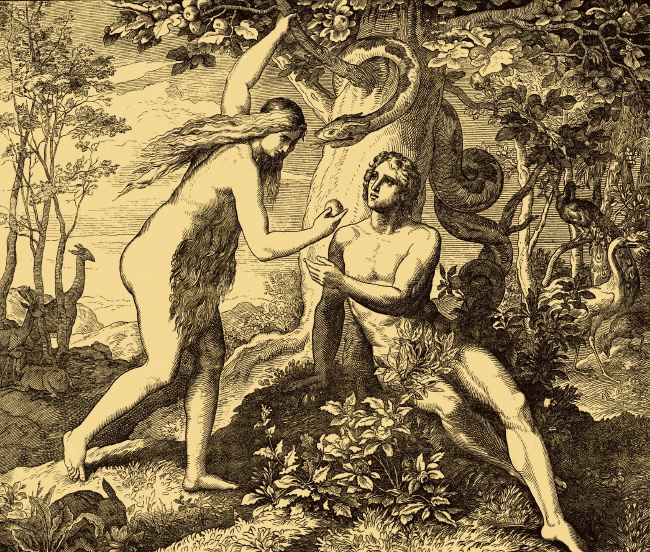
“Adam was but human—this explains it all. He did not want the apple for the apple’s sake, he wanted it only because it was forbidden. The mistake was in not forbidding the serpent; then he would have eaten the serpent.” ― Mark Twain

JULY 27, 1793: OFF WITH THEIR HEADS

On July 27, 1793, Maximilien Robespierre was elected to the Committee of Public Safety, whose function was to oversee the government of France and protect it against its enemies, foreign and domestic. Exactly one year later, he was removed from office. One day later, his head was removed.

During his year as committee member and president of the National Convention, he came to exercise virtual dictatorial control over the French government and proved himself a bit of a black hat. Faced with the threat of real or imagined civil war and foreign invasion, he inaugurated what was lovingly referred to as the Reign of Terror. He compiled himself a rather lengthy enemies list – some 300,000 suspected enemies made the list and were arrested. At least 10,000 died in prison. Robespierre proved himself mighty handy with a guillotine, executing 17,000 of them as “enemies of France”.

But just as he was getting the guillotine really smoking, the threat of a foreign invasion just up and disappeared, and those who still had their heads formed a coalition to oppose Robespierre and his followers.

And on July 27, 1794, Robespierre and his allies were placed under arrest by the National Assembly. When he received word that the National Convention had declared him an hors-la-loi, he shot himself in la tete but only succeeded in wounding his jaw. Nevertheless troops of the National Convention helped him finish the job the very next day – as French sages often say, live by the guillotine, die by the guillotine.


Another List Maker

Fast forward a couple of centuries: Richard M. Nixon had himself an enemies list, though not nearly as long as Robespierre’s.  And his Saturday Night massacre pales by comparison. But on July 27, 1974, didn’t they vote to impeach him anyway. At least, there was no guillotine.

JULY 14, 1789, 1973: BREAKING UP IS HARD TO DO

Every écolier and écolière knows that the breakup of France – Révolution française – began in 1789, its defining moment the storming of the Bastille on the morning of July 14. 1789. This medieval fortress in the center of Paris represented royal authority. That the Bastille housed only seven inmates – all with good reason to be there – was unimportant. It was a symbol of the abuses of the absolute monarchy, and the French had had it with monarchs, aristocrats, and pretty much anyone in power. Bring on liberté, égalité, fraternité.   King Louis XVI, exit stage right.

Bye Bye Don

Another momentous breakup took place on the evening of the same day, nearly 200 years later, in 1973, at Knott’s Berry Farm in California. (Knott’s Berry Farm was America’s first theme park and probably the only one devoted to grapes and strawberries and such things.) Every schoolgirl and schoolboy knows that the Everly Brothers were one of America’s most successful pop duos, lending their sibling harmony to such hits as “Bye Bye Love”, “All I Have To Do is Dream” and “Wake Up Little Susie”, a franchise that would seemingly go on forever. Well, forever is a long time, and brothers Don and Phil had, by the end of the 1960s, pretty much had it with liberté, égalité, fraternité and most definitely with each other.

The defining moment of their breakup came in the middle of their set when the stage manager told the audience that the rest of the show had been canceled because brother Don was “too emotional” to play.  In reality, Brother Don was too drunk to play. His skipped guitar notes and bungled lyrics sent brother Phil into a real snit. Phil smashed his guitar and stormed off stage into a solo career, promising he would “never get on stage with that man again.”

Phil and Don reached a sort of detente a decade later.  Louis XVI, on the other hand, was beheaded.

(Phil Everly died in January 2014).

I have no intention of sharing my authority. — King Louis XVI

JULY 12, 1960: MR. POTATOHEAD WAS NOT AMUSED

Two knobs in the lower corners on the front of a plastic cube-like structure, when rotated clockwise or counterclockwise, move a stylus that displaces a metallic powder on the back of a screen, leaving horizontal and vertical lineographic images – in layman’s terms, magic. In the Romneywords of the French inventor, L’ecran Magique. Or in the words of the marketers who made it one of the 100 most memorable and most creative toys of the 20th century, Etch-a-Sketch.

The mechanical drawing toy, which was inducted into the National Toy Hall of Fame in 1998, was first marketed on July 12, 1960, by the Ohio Art Company, timed perfectly to catch the big wave of the Baby Boom. In England, it was known as the DoodleMaster Magic Screen. (There was also the Magna Doodle and the Mystic Writing Pad.)

Although it remained popular throughout the fifty plus years of its existence, the Etch-A-Sketch reached a new notoriety in 2012, when it became a part of the demise of a presidential campaign. The simple plastic rectangular box may have contributed as much to the 2012 election – in influence –  as all the SuperPACs put together. It happened when candidate Mitt Romney’s campaign manager, asked if Romney was boxing himself into ultra-conservative opinions during the primary, answered: “I think you hit a reset button for the fall campaign. Everything changes. It’s almost like an Etch-A-Sketch. You can kind of shake it up, and we start all over again.”

Trying to contain the brouhaha, the Romney campaign only added to its woes by saying that since the mention of Etch-A-Sketch caused its maker’s stock price to triple, they would next mention Mr. Potatohead.