NOVEMBER 3, 1883: STAGECOACH POETICA

STAGECOACH POETICA

The California Gold Rush was in full swing by the latter half of the 19th century. Stagecoaches and Wells Fargo wagons were hauling gold out of California by the, well by the wagonload.  All this gold was just too much of a temptation for some folks, transplanted New Yorker Charles Boles being one such tempted soul.

In the summer of 1875, Boles donned a white linen duster, put a flour sack over his head and a black derby on top of that and set about robbing the gold from a stagecoach leaving the mining city of Copperopolis. Boles stepped out in front of the stage, aimed a shotgun at the driver, forcing him to stop and demanding him to “Throw down the box.” The driver was reluctant to comply until he saw several gun barrels aimed at them from nearby bushes. He calculated the odds, and turned over the strongbox. Boles whacked the strongbox with an ax until it disgorged its treasure, which Boles hauled off while the stagecoach driver remained a captive of Boles’ fellow conspirators. After this standoff had lasted a bit too long, he moved to retrieve the empty strongbox and found that the rifles pointing at him were nothing but sticks tied to branches of the bushes.

Boles was rather amazed at how easy this robbery business was and so, adopting the moniker Black Bart, he embarked on a life of crime. He became a bit of a legend due to his daring, the fact that he never rode a horse and leaving bits of verse “po8try” behind at each robbery:

I’ve labored long and hard for bread —

For honor and for riches —

But on my corns too long you’ve tred,

You fine-haired sons of bitches.

His victims also called him a gentleman. Once after ordering a stage drive to throw down the box, a frightened passenger tossed him her purse. Bart returned it to her, saying that he wanted only the strongbox and the mailbag.

Black Bart the Po8 robbed his last stagecoach on November 3, 1883 — that is, attempted to rob his last stage. Wells Fargo, not amused at having lost close to half a million to bandits, had secreted an extra guard on the stage. Bart escaped the trap but dropped his derby and left several other incriminating items behind a nearby rock. Within days, Black Bart had been apprehended.

During his eight years as a highwayman, Black Bart never shot anyone, nor did he ever rob an individual passenger. He stole a grand total of $18,000. Sentenced to six years in prison, he served four before receiving a pardon and disappearing into retirement.


AUGUST 27, 1938: POETS GONE WILD

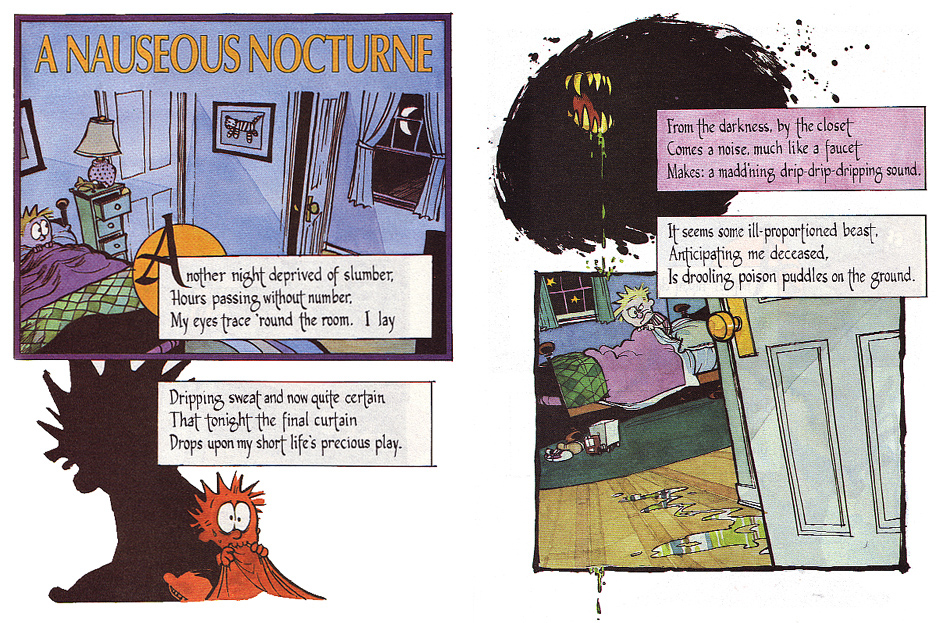
Some say the world will end in fire, / Some say in ice. / From what I’ve tasted of desire / I hold with those who favor fire.

     It is pretty well agreed that Robert Frost was among the best American poets of the twentieth century. Both popularly and critically acclaimed, he received four Pulitzer Prizes for Poetry. It’s also pretty much agreed that Frost was not a warm and fuzzy individual, that he leaned more toward nasty and tyrannical behavior. It was also said “that he tolerated rivals badly, that he was a prima donna who was never content to share the center of the stage.”

     Perhaps the incident of August 27, 1938, was just an accident or Frost’s mind was wrapped up in his poem, “Fire and Ice.” Nevertheless, his behavior – or misbehavior – looked a bit suspicious.  On this night, writer Archibald MacLeish visited the Breadloaf Writers Conference to read his poems and radio plays at a gathering in the hills above Middlebury, Vermont. Frost was among the attendees, sitting in the back. As MacLeish read from his poetry, Frost began heckling him. “Archie’s poems all have the same tune,” he said in a stage whisper. Then just as MacLeish read the single-sentence poem, “You, Andrew Marvell,” smoke filled the room. Frost had somehow set fire to some papers and was busily beating them out and waving away the smoke.

     Most people accepted Frost’s explanation that it was an accident, and the reading continued. MacLeish, still the center of attention, was asked to read from one of his plays. Frost was not finished. His wisecracks from the back of the room became steadily harsher and more barbed. He interrupted, he commented, he took exception. What may have been innocent literary give and take turned into a clear effort to frustrate and humiliate MacLeish, and the situation became increasingly painful to those in the room.  Finally, Bernard DeVoto, a scholar and friend of Frost, had had enough. He shouted: “For God’s sake, Robert, let him read!” Frost ignored him, but a few minutes later snarled savagely and stomped out of the room and down the road not taken.

Pausing for a moment to wish Linda a happy birthday.


AUGUST 19, 1902: PARSLEY IS GHARSLEY

Ogden Nash, an American poet known for his droll and playful verse, wrote over 500 pieces of comic verse, the best of which was published in 14 volumes between 1931 and his death in 1971. He frequently used surprising puns, made up words, and words deliberately misspelled for comic effect.

     His most famous rhyme was a twist on Joyce Kilmer’s poem “Trees” (1913): “I think that I shall never see / a billboard lovely as a tree.  Indeed, unless the billboards fall / I’ll never see a tree at all.”  When Nash wasn’t writing poems, he made guest appearances on comedy and radio shows and lectured at colleges and universities.

I am a conscientious man, when I throw rocks at seabirds I leave no tern
unstoned.


A mighty creature is the germ,
Though smaller than the pachyderm.
His customary dwelling place
Is deep within the human race.
His childish pride he often pleases
By giving people strange diseases.
Do you, my poppet, feel infirm?
You probably contain a germ.


Progress might have been alright once, but it has gone on too long.


The rhino is a homely beast,
For human eyes he’s not a feast.
Farewell, farewell, you old rhinoceros,
I’ll stare at something less prepoceros.


The Pig, if I am not mistaken,
Gives us ham and pork and Bacon.
Let others think his heart is big,
I think it stupid of the Pig.


There is only one way to achieve happiness on this terrestrial ball, and that is to have either a clear conscience or none at all.


Oh, what a tangled web do parents weave when they think that their children are naive.

MAY 12, 1812: POETRY WITHOUT NAUGHTY WORDS

Edward Lear, born in England in 1812, was a true dabbler — artist, illustrator, musician, author, poet. Starting off his career as an illustrator, he was employed to illustrate birds and animals first for the Zoological Society and then for Edward Stanley, the Earl of Derby, who had a private menagerie. He also made drawings during his journeys that later illustrated his travel books. and illustrations for the poetry of Alfred Lord Tennyson. As a musician, Lear played the accordion, flute, guitar, and piano (not simultaneously). He also composed music for a number of Romantic and Victorian poems, most notably those of Tennyson.

Lear is remembered chiefly for his work as a writer of literary nonsense. He might easily have been given the title Father of the Limerick for bringing the much maligned form into popularity (without the raunchiness that later found its way into the form). In 1846, he published A Book of Nonsense, a volume of limericks that went through three editions. In 1871 he published Nonsense Songs, Stories, Botany and Alphabets, which included his most famous nonsense song, The Owl and the Pussycat, which he wrote for the children of the Earl of Derby.

Lear’s nonsense books were successful during his lifetime, but he found himself fighting rumors that he was just a pseudonym and that the books were actually written by the Earl of Derby. Conspiracy theorists cited as evidence the facts that both men were named Edward, and that Lear is an anagram of Earl. A few even suggested he was born in Kenya, not England.

The Owl and the Pussy-cat went to sea
In a beautiful pea green boat,
They took some honey, and plenty of money,
Wrapped up in a five pound note.
The Owl looked up to the stars above,
And sang to a small guitar,
‘O lovely Pussy! O Pussy my love,
What a beautiful Pussy you are,
You are,
You are!
What a beautiful Pussy you are!’

Pussy said to the Owl, ‘You elegant fowl!
How charmingly sweet you sing!
O let us be married! too long we have tarried:
But what shall we do for a ring?’
They sailed away, for a year and a day,
To the land where the Bong-tree grows
And there in a wood a Piggy-wig stood
With a ring at the end of his nose,
His nose,
His nose,
With a ring at the end of his nose.

‘Dear pig, are you willing to sell for one shilling
Your ring?’ Said the Piggy, ‘I will.’
So they took it away, and were married next day
By the Turkey who lives on the hill.
They dined on mince, and slices of quince,
Which they ate with a runcible spoon;
And hand in hand, on the edge of the sand,
They danced by the light of the moon,
The moon,
The moon,
They danced by the light of the moon.

Naughty Words Without Poetry

Stand-up comedian, social critic, satirist, actor, writer/author George Carlin was born on May 12, 1937 (died 2008). Noted for his black humor as well as his thoughts on politics, the English language, psychology, religion, and various taboo subjects, he won five Grammy Awards for his comedy albums. Carlin and his classic “Seven Dirty Words” comedy routine were central to the 1978 U.S. Supreme Court case in which the justices affirmed the government’s power to regulate indecent material on the public airwaves.

In his own words:

george

Swimming is not a sport. Swimming is a way to keep from drowning. That’s just common sense!

Honesty may be the best policy, but it’s important to remember that apparently, by elimination, dishonesty is the second-best policy.

george-carlin2

The very existence of flamethrowers proves that sometime, somewhere, someone said to themselves, “You know, I want to set those people over there on fire, but I’m just not close enough to get the job done.”

Religion has convinced people that there’s an invisible man…living in the sky, who watches everything you do every minute of every day. And the invisible man has a list of ten specific things he doesn’t want you to do. And if you do any of these things, he will send you to a special place, of burning and fire and smoke and torture and anguish for you to live forever, and suffer and burn and scream until the end of time. But he loves you. He loves you and he needs money.

APRIL 18, 1968: IF YOU BELIEVE THIS, I’VE GOT A BRIDGE . . .

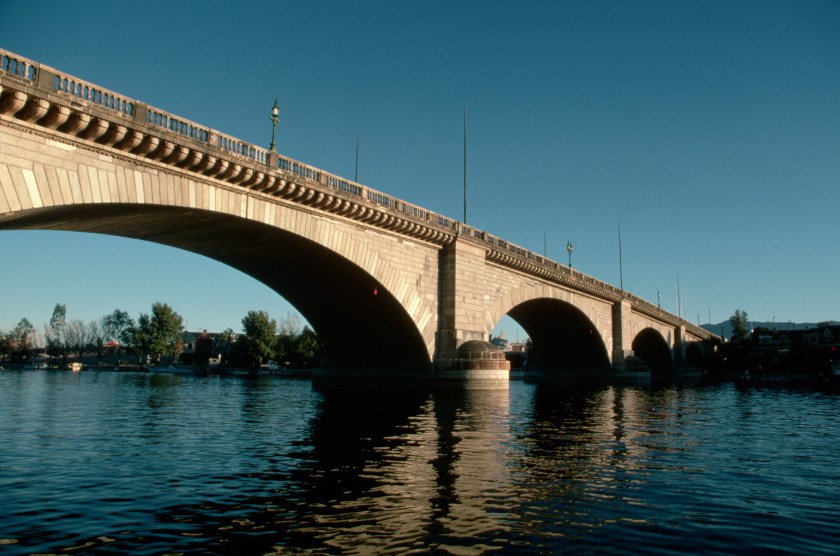
Famous real estate deals abound — the sale of Manhattan for beads, the Louisiana Purchase, Seward’s Folly. One of the more unusual is the April 18, 1968, sale of London Bridge for a mere $1 million (of course, as any schoolchild knows, the thing was falling down). American oil sphinx_magnate Robert McCullough was the buyer and he bought it as a large conversation piece for his Arizona real estate development in an out-of-the-way spot that had previously only been an inspiration for Roadrunner cartoons.  The bridge was disassembled in London, each piece numbered, then hauled to Lake Havasu City, Arizona, where it was reassembled.

McCullough had wanted to buy the Brooklyn Bridge for his project, but it had already been sold. Many times, actually. One George Parker had made his living selling the bridge to oil magnates and other naive visitors to New York, some of whom actually tried to erect toll booths.

The relocation of London Bridge inspired, in addition to a great deal of laughter, a forgettable 1985 made-for-television movie Bridge Across Time (aka Arizona Ripper or Terror at London Bridge) in which several murders are committed in Lake Havasu by the spirit of Jack the Ripper, whose soul is transported to the United States in one of the stones of the bridge (sorry you missed it, aren’t you).

Although the Sphinx may have been more architecturally appropriate to the location, McCullough wasn’t interested. “Something about the nose,” he said.

Legumes in Love

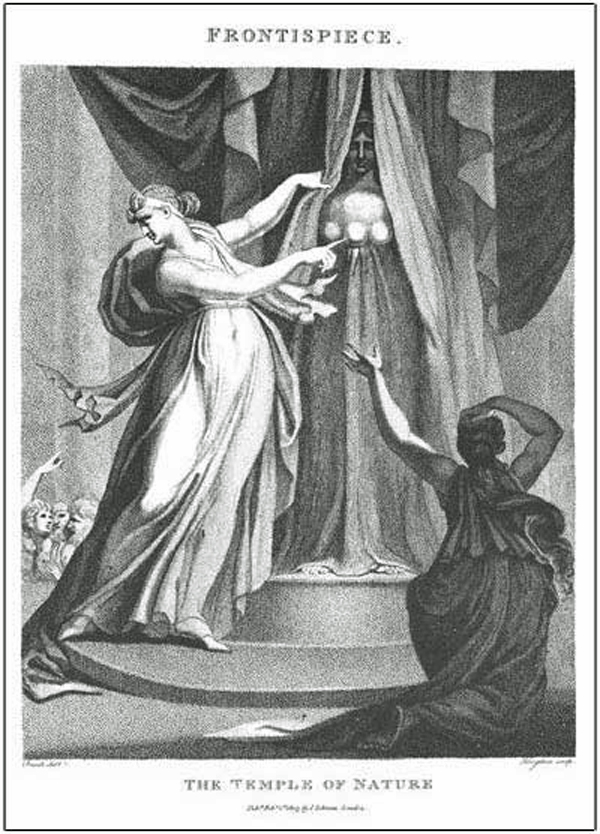
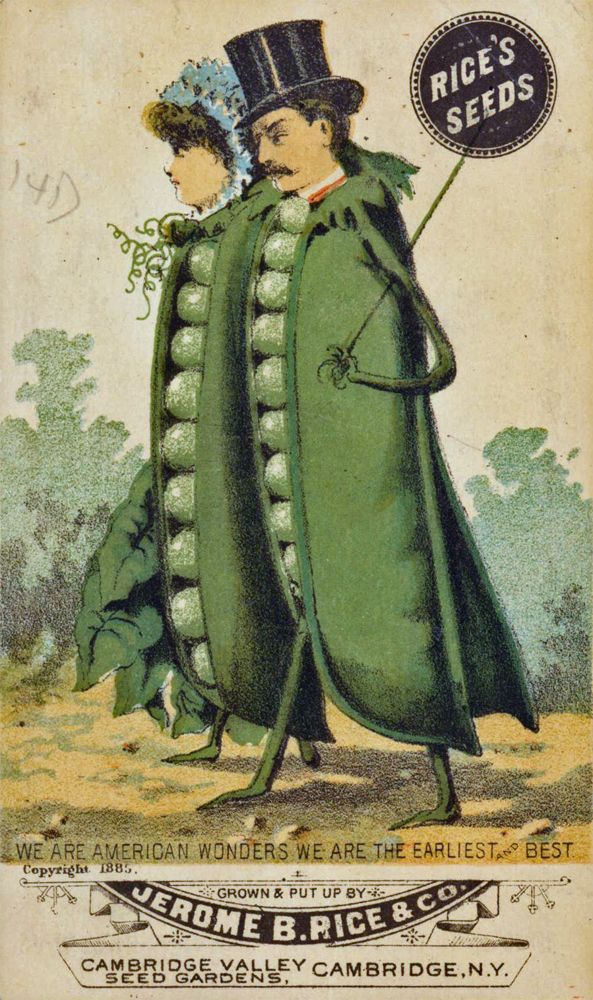
British poet and physician Erasmus Darwin died on April 18, 1802.  As a physician graduated from Cambridge, he didn’t really distinguish himself. When he is remembered at all, it is for his poetry, and one particular poem, The Loves of the Plants, part of a larger work called The Botanic Garden (the other part being The Economy of Vegetation), in which the physiology and classification of the vegetable world is presented in a rather lofty and lyrical manner. Although the subject was mundane and the technical accuracy questionable, the poetic frenzy reached amazing heights. Had Erasmus Darwin’s grandson Charles presented his discoveries in a more poetic fashion, perhaps they would have been more warmly received.

APRIL 15, 1250: PROSE AND KHANS

In 1250, the Mongol Great Council pronounced a fellow named Kublai the one and only Great Khan and set him on a a tear through Asia, conquering a Mongolia here, a Manchuria and Korea there and a bit of southern Siberia for good measure.  Kublai was a grandson of Genghis, another Khan known for being rather hard to get along with. Like his grandfather, Kublai was a holy terror right from infancy when he frequently seized power from fellow toddlers. Eventually, Kublai pushed the Mongol Empire to new heights, creating a unified, militarily powerful China and gaining international attention in the process.

Marco Polo, in the accounts of his travels, made Kublai well-known to western audiences, and Samuel Taylor Coleridge added a romantic aura in the early 19th century with his description of Kublai (Kubla to Coleridge) Khan’s summer cottage at Xanadu:

     In Xanadu did Kubla Khan

     A stately pleasure-dome decree:

     Where Alph, the sacred river, ran

     Through caverns measureless to man

     Down to a sunless sea.

     When the sacred river Alph plunged into that sunless sea it naturally created a great waterfall. In the rush of this waterfall, the voices of Kubla’s ancestors could be heard — that strident, discordant one being Genghis.

At Least Kublai Didn’t Cheat on His Taxes

In the United States, several hundred years later, April 15 became mostly thought of as the deadline for filing income taxes, so it is quite fitting that prisoner number 15113-054 entered the federal prison in Lexington, Kentucky, on April 15, 1992, having been convicted of one count of conspiracy to defraud the United States, three helmsleycounts of tax evasion, three counts of filing false personal tax returns, sixteen counts of assisting in the filing of false corporate and partnership tax returns, and ten counts of mail fraud. Her famous excuse for this bit of naughtiness was “We don’t pay taxes. Only the little people pay taxes.”

Known affectionately as the “Queen of Mean,” Leona Helmsley started her amazing career of acquiring everything she laid her eyes on back in the mid60’s, soon aided and abetted by Harry Helmsley, after they disposed of his wife in 1972. Their real estate empire included the Park Lane Hotel, the Empire State Building, Helmsley Palace and a collection of condos throughout Manhattan.

In 1983 the Helmsleys bought a 21-room mansion weekend retreat in Greenwich, Connecticut, for $11 million. Finding it a tad shabby for their tastes, they had it remodeled for another $8 million, adding among other homey touches a million-dollar dance floor and a mahogany card table. When they tried to stiff the contractors, they were sued for non-payment. The Helmsleys eventually paid up, but it was revealed that most of the work was illegally billed to their hotels as business expenses.

A federal criminal investigation followed, and they were indicted on several tax-related charges, as well as extortion. Harry called in sick, and Leona took the fall alone.

Sounds a lot like another notorious New York real estate nabob.  Leona didn’t pay hush money to any porn stars. Nor did she steal any classified government documents or incite an insurrection.  Nevertheless she went to jail.

March 7. 1766: Gentlemen Rhymesters Out on a Spree

A certain Miss Molly Mogg of the Rose Tavern in Wokingham, England, turned up her dainty toes on March 7, 1766, at the age of 66. Some 40 years earlier she had been the subject of an amusing ballad written by “two or three men of wit.” The ballad, perhaps to the surprise of its authors, became quite popular. Literary historians have determined that the “men of wit” were Alexander Pope, Jonathan Swift, and John Gay and that the three were probably quite drunk when they penned the tribute to the pretty Molly.

It begins:

The schoolboy delights in a play-day,

The schoolmaster’s delight is to flog;

The milkmaid’s delight is in May-day,

But mine is in sweet Molly Mogg.

and continues on for eleven verses each ending with “sweet Molly Mogg. This, of course required the three rhymesters to come up with 11 words to rhyme with Mogg. Which they did.  In addition to the aforementioned flog, there’s bog, cog, frog, clog, jog, fog, dog, log, eclogue and agog — bypassing hog and Prague.

Cogito Airgonaut

Jean-Pierre Blanchard, the noted 18th century “Airgonaut,” made his first successful balloon flight in Paris back  in 1784, in a hydrogen gas balloonballoon4 launched from the Champ de Mars. Blanchard’s flight nearly ended in disaster, when one spectator slashed at the balloon’s mooring ropes and oars with his sword after being refused a place on board. Observer Horace Walpole wrote of the flight that the Airgonauts were just like birds; they flew through the air, perched in the top of a tree, and some passengers climbed out of their nest to look around.

Nevertheless, these early balloon flights set off a public “balloonomania”, with clothing, hairstyles and various objects decorated with images of balloons or styled to resemble a balloon. In 1793, Blanchard scored another first — the first balloon flight in North America, ascending in Philadelphia and landing in New Jersey. Witnesses to the flight included President George Washington, and future presidents John Adams, Thomas Jefferson, James Madison, and James Monroe. Some say Washington threw a silver dollar at the balloon.

Now famous, our  Airgonaut  married Marie Madeleine-Sophie Armant in 1804. But his run of fame, fortune and good luck came to a sudden end four years later, when Blanchard had a heart attack while ballooning above the Hague. He fell from his balloon and died of his injuries on March 7, 1809. His widow Sophie inherited everything including the ballooning bug which would be her undoing as well: she continued to support herself with ballooning demonstrations until it also killed her.  In 1819, she became the first woman to be killed in an aviation accident when, during an exhibition in the Tivoli Gardens in Paris, she launched fireworks that ignited the gas in her balloon. Her balloon crashed on the roof of a house, and she fell to her death.  Don’t try ballooning at home.

January 29, 1845: And You Can Quoth Me on That

For most of his career during the 1830s and 1840s, Edgar Allan Poe was your typical struggling, hungry writer. His poetry and short stories were often published but rarely paid for. The lack of copyright laws meant that publishers could freely steal the work of British writers rather than pay their American counterparts.

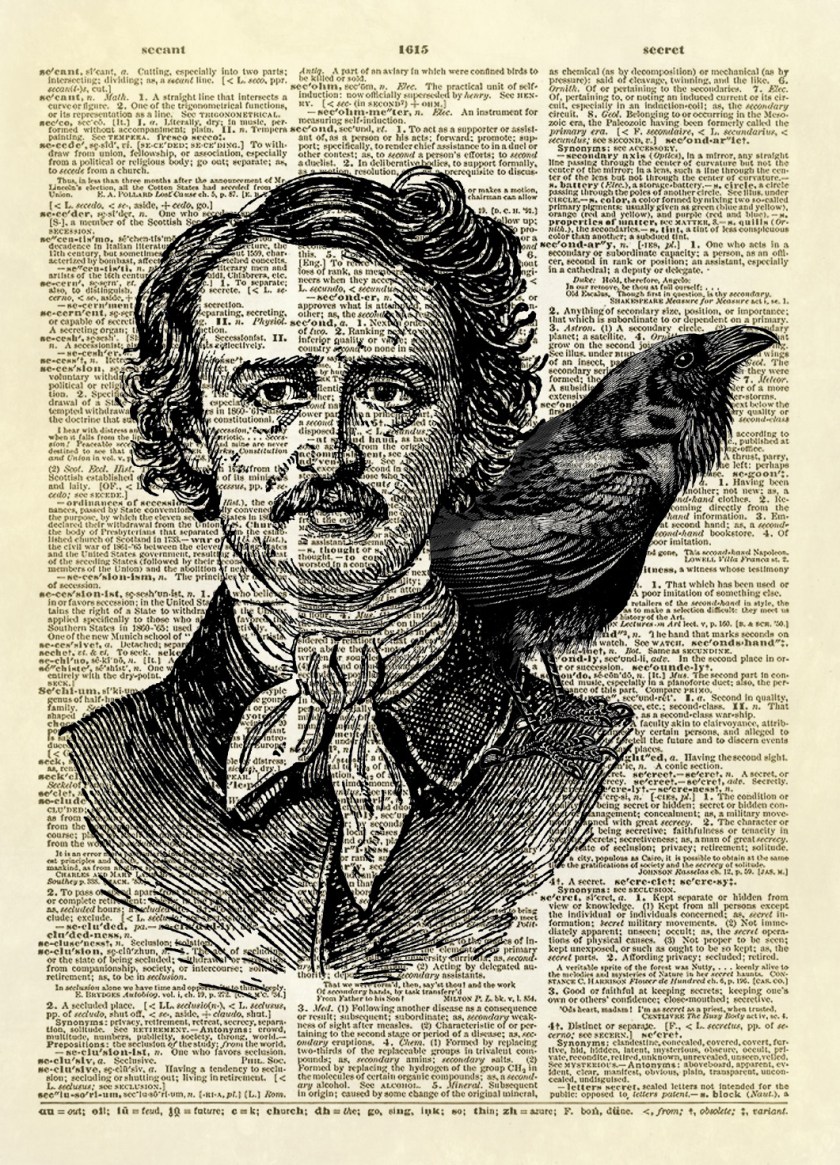
Poe’s life changed dramatically on January 29, 1845, when his atmospheric narrative poem The Raven appeared in the New York Evening Mirror and was attributed to him for the first time. Before you could say “nevermore,” it went viral and Poe became a literary celebrity, although still economically challenged.

The Raven takes place in Poe’s typical Gothic world, full of mystery and the macabre. It traces the descent of a distraught lover into madness. The guy’s pretty broken up over the loss of his love Lenore. He talks this over with a raven, but the raven doesn’t have much empathy or give much sympathy, offering only the heartless refrain “nevermore.”

For the poem itself it was evermore, although Poe had just a few year’s left to enjoy its success. Others have enjoyed its success , however, with a steady stream of reprints, analyses, films, parodies, and even comic books.

Once upon a midnight dreary, while I pondered, weak and weary,

Over many a quaint and curious volume of forgotten lore—

While I nodded, nearly napping, suddenly there came a tapping,

As of some one gently rapping, rapping at my chamber door.

“’Tis some visitor,” I muttered, “tapping at my chamber door—

Only this and nothing more.”

Always Carry a Small Snake

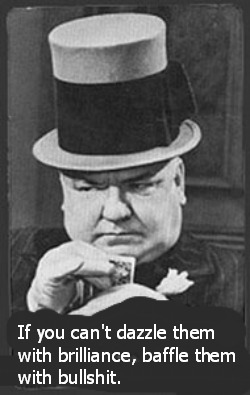
Born on January 28, 1880, as William Claude Dukenfield, W. C. Fields was an iconic American comedian, actor, misanthrope, egotist, drunkard, juggler, and writer who loudly declared his contempt for women, children and small animals. Americans adored him. The publicity departments at Paramount and Universal studios did their best to conceal the fact that he had a happy childhood, had been married, supported two sons, and doted on his grandchildren.

Fields got his start as a juggler in vaudeville and on Broadway. When he found that he could get laughs by adding dialogue to his routines, he developed the mumbling patter and sarcastic asides that became his trademarks. It was in the movies and on radio that he eventually found stardom. A handful of silent films in the 20s led to such classics as You Can’t Cheat an Honest Man, Never Give a Sucker an Even Break, The Bank Dick and My Little Chickadee with Mae West. He also became a popular guest on many radio shows, most notably perhaps Edgar Bergen’s Chase and Sanborn Hour, where he traded barbs with Charlie McCarthy, calling him among other things a woodpecker’s pin-up boy.

Fields always professed to hate Christmas, and to show his disdain for the holiday, he died on Christmas Day in 1946.

I always keep some whiskey handy in case I see a snake. . .which I also keep handy.

Everybody’s got to believe in something. I believe I’ll have another beer.

I never hold a grudge. As soon as I get even with the son-of-a bitch, I forget it.

Reminds me of my safari in Africa. Somebody forgot the corkscrew and for several days we had to live on nothing but food and water.

January 20, 1820: Dream a Little Dream of Me

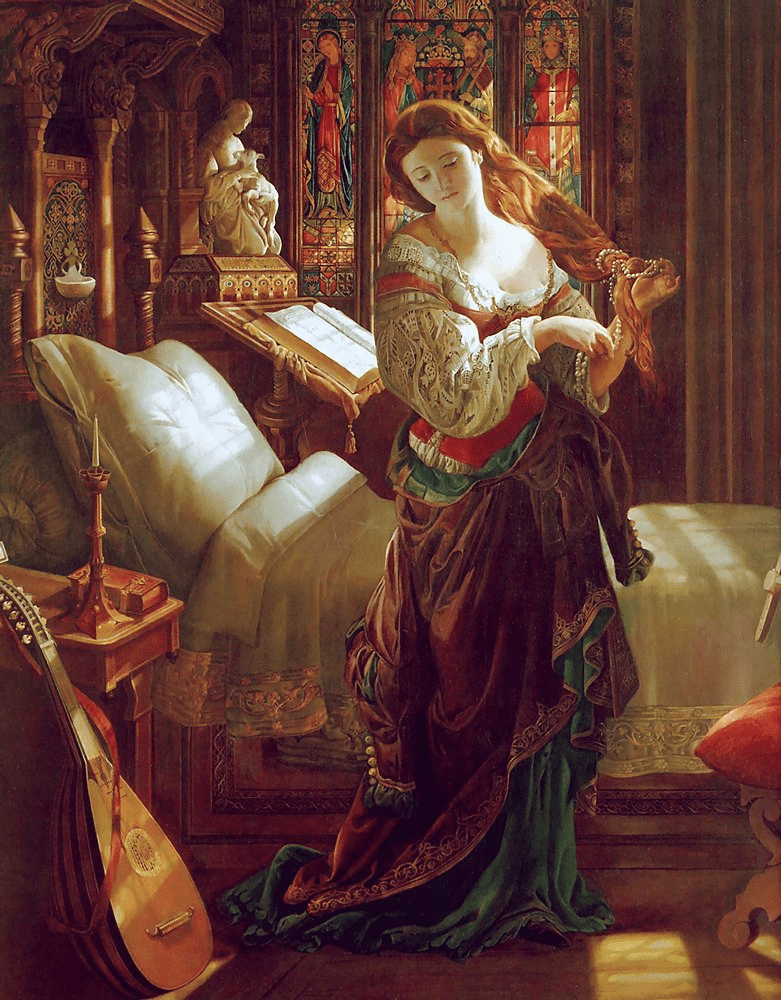
It’s a red letter day for fair young maidens everywhere, for in addition to being January 20, it is the Eve of St. Agnes, a night in which, if they play their cards right, they’ll gaze upon the countenance of their true love. Naturally there’s a ritual that must be performed to make this happen. First the maiden must go to bed without her supper, having got herself buck naked and having placed a sprig of rosemary and one of thyme (no parsley, no sage) in each of her shoes at the side of her bed. She then lies with her hands under her pillow and, staring upward, chants: “St. Agnes, that’s to lovers kind / Come ease the trouble of my mind” whereupon she falls asleep and conjures up the lucky fellow.

St. Agnes was a martyr who was born back in 291 and died in 304. She is celebrated for her virginity and is the patron saint of young women hoping to lose theirs.

The Eve of St. Agnes ritual was celebrated in an 1820 poem by John Keats titled, oddly enough, “The Eve of St. Agnes.” For 42 rather lyrical stanzas (read that steamy, no Grecian urns or nightingales here) Keats recounts the St. Agnes Eve adventures of Madeline and her paramour Porphyro. Keat’s publishers were uncomfortable with his lyricism and forced him to bring it down a few notches (to PG-13 lyricism).

Madeline’s family is all liquored up (another custom) so she scurries off to bed to perform the ritual, hoping to see Porphyro in her sleep. Porphyro hopes to see Madeline as well, but not in his sleep. He sneaks into her room and waits in the closet. From there, he watches her as she readies herself for bed and falls asleep, after which the naughty fellow creeps closer to get a better look. She awakes having been dreaming of him and sees him in the flesh. Naturally she assumes this is still a dream, so she welcomes him into her bed. When she is fully awake, she realizes her mistake and is a bit chagrined until he declares his love for her. They dash off together across the moors and we are left to wonder about their fate. (As anyone who’s ever read Hound of the Baskervilles knows, you don’t go out on the moors at night.)

Step Step Hop Hop

Born January 20, 1922, Ray Anthony became a successful band leader during the 1950s, despite composing “The Bunny Hop.”

Yes We Can

Naomi Parker Fraley died on January 29, 2018, at the age of 96.  She was a California waitress who, though unsung for most of her life, became far better known as Rosie the Riveter.  A photo of Fraley operating a lathe during World War II was the inspiration for J. Howard Miller’s poster, “We Can Do It!”

APRIL 18, 1968: IF YOU BELIEVE THIS, I’VE GOT A BRIDGE . . .

Famous real estate deals abound — the sale of Manhattan for beads, the Louisiana Purchase, Seward’s Folly. One of the more unusual is the April 18, 1968, sale of London Bridge for a mere $1 million (of course, as any schoolchild knows, the thing was falling down). American oil sphinx_magnate Robert McCullough was the buyer and he bought it as a large conversation piece for his Arizona real estate development in an out-of-the-way spot that had previously only been an inspiration for Roadrunner cartoons.  The bridge was disassembled in London, each piece numbered, then hauled to Lake Havasu City, Arizona, where it was reassembled.

McCullough had wanted to buy the Brooklyn Bridge for his project, but it had already been sold. Many times, actually. One George Parker had made his living selling the bridge to oil magnates and other naive visitors to New York, some of whom actually tried to erect toll booths.

The relocation of London Bridge inspired, in addition to a great deal of laughter, a forgettable 1985 made-for-television movie Bridge Across Time (aka Arizona Ripper or Terror at London Bridge) in which several murders are committed in Lake Havasu by the spirit of Jack the Ripper, whose soul is transported to the United States in one of the stones of the bridge (sorry you missed it, aren’t you).

Although the Sphinx may have been more architecturally appropriate to the location, McCullough wasn’t interested. “Something about the nose,” he said.

Legumes in Love

British poet and physician Erasmus Darwin died on April 18, 1802.  As a physician graduated from Cambridge, he didn’t really distinguish himself. When he is remembered at all, it is for his poetry, and one particular poem, The Loves of the Plants, part of a larger work called The Botanic Garden (the other part being The Economy of Vegetation), in which the physiology and classification of the vegetable world is presented in a rather lofty and lyrical manner. Although the subject was mundane and the technical accuracy questionable, the poetic frenzy reached amazing heights. Had Erasmus Darwin’s grandson Charles presented his discoveries in a more poetic fashion, perhaps they would have been more warmly received.