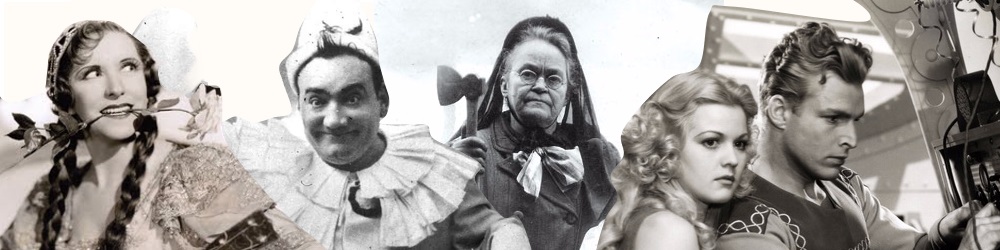

Opera patrons packed the Teatro Regio in Turin, Italy, on the evening of February 1, 1896, for the world premiere of Giacomo Puccini’s latest, La Boheme. Conducting the evening’s performance was a rising young star, Arturo Toscanini. Critics were divided over the opera, but audiences lapped it up, and it remains the world’s most popular opera. It is a timeless story of love among struggling young artists in Paris during the 1830s.
Our Bohemians– a poet, a painter, a musician and a philosopher — share a garret in the Latin Quarter as they try to eke out a living. It’s Christmas Eve; it’s cold. Rodolfo, the poet, and Marcello, the painter, are feeding a small fire with one of Rodolfo’s manuscripts. Their two companions arrive with food and fuel, one having had the good fortune to sell a bit of music. As they eat and drink, the landlord comes looking for their overdue rent. They distract him with wine and, pretending to be offended by his stories, throw him out. The rent money is divided for a night out in the Latin Quarter. Rodolfo stays behind as the other three leave, fortuitously, as a pretty neighbor comes looking for a light for her candle: “They call me merely Mimi.” Merely Mimi faints (she’s not well, folks), she and Rodolfo immediately fall in love, and they head off to the Latin Quarter, singing of their love.
 In Act 2, our Bohemians are making merry in the Latin Quarter. Marcello’s one-time sweetheart, Musetta, enters on the arm of the old but wealthy Alcindoro. Trying to get Marcello’s attention, she sings an aria about her own charms (Musetta’s Waltz, recorded as Don’t You Know by Della Reese in 1959). She sends Alcindoro off on a bogus errand and promptly leaps into Marcello’s arms. They all scurry off, stiffing the returning Alcindoro for the check.
Act 3 brings a series of flirtations, jealousies, lovers’ quarrels and, for Mimi, a lot of coughing. At this point, we’re pretty sure she’s not going to make it through Act 4.
Which she doesn’t. After a few attempts at being cheerful, the others leave Mimi and Rodolfo who recall their meeting and happy days together until Mimi is overtaken by violent coughing. The others return, Mimi drifts into unconsciousness and dies.
Enrico Caruso owned the role of Rodolfo during his life, as did Luciano Pavarotti. And Maria Callas was all over Mimi.
 Singin’ the Blus

Fast forward to another Italian who took the musical world by storm. His name was Domenico Mondugno and he wrote a happy little chanson about a man who paints his hands and face blue then flies around above his lover. It’s probably best left untranslated from the original Italian. Nel Blu Dipinto Di Blu was released on February 1 and soared to the top of the Billboard 100, finishing out the year as the number one song of 1958. Shortly thereafter, it picked up the Grammy for Record of the Year and Song of the Year. Every working singer had his or her own recording of it, usually under the title Volare, a word that was added as an afterthought to the chorus.
 Wretched Richard's Almanac