November 29, 1924: Don’t Shoot the Soprano

Giacomo Puccini, who died on November 29, 1924, was a giant in Italian opera, unrivaled in orchestration and a sense of theater. Passion, sensuality, tenderness, pathos and despair infused such operas as Manon Lescaut, La Bohème, Madama Butterfly, and Turandot.

Tosca was one of Puccini’s greatest operas, but it seems to have taken on a bit of a curse, like that Scottish play whose title shall not be uttered in the theater. More things have evidently gone awry in Tosca than in any other opera.  A few vivid examples:

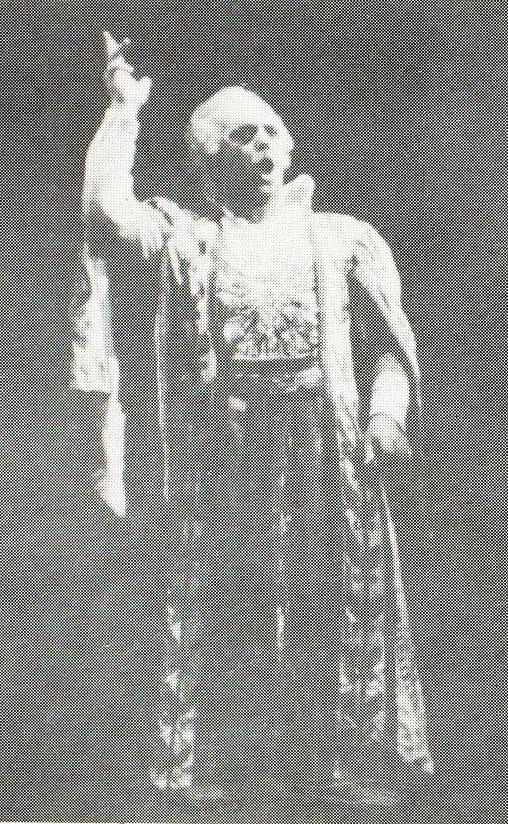
Exit Stage Left . . . Exit Damnit: In Act II of a performance of Tosca featuring Maria Callas in the title role, Tosca stabs her tormentor Scarpia, and then leaves the stage. After doing the deed, Callas who suffered from myopia but couldn’t wear contact lenses wandered the stage, unable to find her way out. Baritone Tito Gobbi, our Scarpia, while lying dead, tried to discreetly point out the exit, but started laughing so much that both his laughing and his pointing were obvious to the audience. The next morning, newspapers raved about his memorable portrayal of Scarpia’s death.

They Shoot Divas, Don’t They?: In another performance, a firing squad is called upon to execute Tosca’s lover Mario in the final act. The players were instructed to enter and shoot the person they found onstage, and then to exit with the principals. But when the players got onstage, they discovered two people and didn’t know which one to shoot. They aimed at one then the other as both principals said not to shoot them. They finally chose Tosca, but when they shot her, Mario keeled over dead. They stood there, further bewildered; they had been told to exit with the principals but neither of the principals were exiting. Mario remained lifeless while Tosca tried to shoo them away. Finally, when Tosca jumped to her death from the castle parapet, they seized the opportunity to exit with at least one principal, and they jumped after her, adding immeasurably to the tragedy.

Follow the Bouncing Diva: Tosca’s leap to her death  from the parapet of the Castel Sant’Angelo is the dramatic conclusion to the opera. Various methods have been employed to keep the jumping soprano safe; usually a mattress does the trick. In a Lyric Opera of Chicago performance,  stage hands replaced the usual mattress with a trampoline to provide added safety for a British soprano. They also added some unintended encores as Tosca bounced back into view several times.


AUGUST 31, 1928: LOOK OUT FOR LOTTE LENYA

With music by Kurt Weill and words by Bertolt Brecht, Die Dreigoschenoper premiered in Berlin in 1928. By 1933, when Brecht and Weill were forced to leave Germany, the musical comedy which offers a socialist view of a capitalist world had been translated into 18 languages and performed more than 10,000 times. We of course are more familiar with the English title, The Threepenny Opera.  And we’re mostly familiar with the opening song which has been sung by practically everyone, most notably, Frank Sinatra, Louis Armstrong, Ella Fitzgerald in a grammy-winning performance, and Bobby Darin who made it the top song of 1959 – “Die Moritat von Mackie Messer” (“The Ballad of Mack the Knife”). The song was added just before the premiere, when the actor playing Macheath threatened to quit if his character did not receive an introduction.


At the beginning of the play, we meet Jonathan Jeremiah Peachum, a London entrepreneur who runs the city’s begging operation, training the beggars and taking a nice chunk of their earnings. He is the perfect capitalist, a man who today would work for Goldman Sachs.

But Peachum has problems: his grown daughter Polly did not return home the previous night, and Peachum fears she has been misbehaving, and worse still, misbehaving with the ne’er-do-well Macheath.  Peachum does what any worried father would do – he determines to thwart this budding relationship by taking away her cell phone and having her paramour hanged.

Fade to Macheath who is preparing to marry Polly once his gang has stolen her trousseau. After the gang has stolen some food and a table, they all enjoy a wedding banquet. Polly entertains with a charming little song about a maid who becomes a pirate queen and executes her former bosses and customers. The Chief of Police, Tiger Brown, joins the party. It seems he had served with Macheath during the wars and had, over the years, exerted his influence to keep Macheath out of jail. He and Macheath sing. Polly returns home and lays the fact that she has married Macheath on her parents who are not amused. She sings a charming little song advising them to go fuck themselves, bringing the first act to a conclusion.

In Act Two, Polly warns Macheath that her father is gunning for British bear and that he must leave London. He agrees and leaves his gang in Polly’s hands. On his way out of town, Macheath stops at his favorite brothel, where he sees his ex-lover, Jenny. They sing a charming little song (“Pimp’s Ballad”) about their days together, but (the plot having thickened) Jenny has been bribed by Mrs Peachum to turn him in. Despite Brown’s apologies, he’s powerless and must drag Macheath away to jail. Macheath sings a charming little song about his life being over.   Another girlfriend, Lucy (Brown’s daughter) and Polly arrive at the same time from stage right and stage left, respectively.  A nasty argument ensues and together they sing a charming little duet about scratching each other’s eyes out. After Polly leaves, Lucy engineers Macheath’s escape, bringing the act to a tidy conclusion.

In Act Three, Jenny selfishly demands her money for the betrayal of Macheath, which Mrs Peachum refuses to pay.  Jenny nevertheless reveals that Macheath is at Suky Tawdry’s house, and he is once again arrested. Back in jail and scheduled to be executed, Macheath desperately tries to raise the bribe money to get out again, even as the gallows are being erected.  But no one comes to his aid, and Macheath prepares to die.  He laments his fate in a charming little song.  But what’s this? A deus ex machina enters stage left. Peachum announces that in this opera mercy will prevail over justice, and in a parody of a happy ending, a messenger from the Queen arrives to pardon Macheath and grant him a title, a castle and a pension. The play then ends with a plea that wrongdoing not be punished too harshly as life is harsh enough.

APRIL 25, 1926: HERE THE MAESTRO DIED

The world premier of Giacomo Puccini’s last opera “Turandot” was held at Milan’s La Scala on April 25, 1926, two years after his death. Arturo Toscanini conducted. Toward the end of the third act, Toscanini laid down his baton, turned to the audience and announced: “Here the Maestro died.”  Puccini had died before finishing the opera. Subsequent performances at La Scala and elsewhere included the last few minutes of music composed by Franco Alfano using Puccini’s notes.  A highlight of the opera is “Nessun Dorma,” probably the most famous aria in all of opera.

Down at the End of Lonely Street

Elvis Presley scored his first number one hit on the Billboard Pop 100 on this date in 1956.  Recorded and released as a single in January, “Heartbreak Hotel” marked Presley’s debut on the RCA Victor record label . It spent seven weeks at number one, became his first million-seller, and was the best-selling single of 1956. The song was based on a newspaper article about a lonely man who committed suicide by jumping from a hotel window.

APRIL 19, 1935: THE AWARD FOR BEST FEMALE CREATED BY A MAD SCIENTIST GOES TO . . .

The embers from the burning windmill were still glowing when Universal Pictures honchos  began planning a sequel to the 1931 Frankenstein.  Boris Karloff would return as the Monster, Clive Colin as the beleaguered Dr. Henry Frankenstein, and James Whale would once again direct.  Joining the cast as the mate that fate had the Monster created for was British actress Elsa Lanchester — the titular Bride of Frankenstein.  The film premiered on April 19, 1935.

The film also featured a despicable evil scientist, Frankenstein’s former mentor, Dr. Septimus Pretorius, played by Ernest Thesiger and an old blind hermit, Oliver Peter Heggie, who with Karloff perform one of the movie’s most enduring scenes.

A scene which was brilliantly parodied in Mel Brooks’ Young Frankenstein.

Where Are the Angry Villagers When You Need Them

The Vagabond King a 1925 operetta by Rudolf Frimi was already an American success when it opened in London on April 19, 1927.  It’s success in England was probably assured given its theme of foibles of the French.  Its hero is a braggart, thief and rabble-rouser who attempts to steal an aristocratic lady from the king himself.  Not only that, he openly mocks the king, boasting about what he would do if he were king.  The angry king gives him royal powers for 24 hours — king for a day — during which he must solve all France’s problems or go to the gallows (the guillotine had not yet been invented).  He succeeds, wins the lady’s hand and lives happily ever after in exile — probably in England.  The operetta was the inspiration for a couple of movies and, of course, the popular radio and television program “Queen for a Day.”

APRIL 1, 1903: THE TENOR NOSE

Fabrio Abruzzi was born in a village near Milan in 1883. The Abruzzi family was quite poor with Fabrio’s father cobbling together their existence as a shoemaker. Almost from the time Fabrio could walk, he was put to work pounding leather for his father. He was a nice boy (the villagers lovingly called him bambino brutto) and he was hard-working although his mind would wander and he frequently distracted himself by singing popular Italian folk songs.

As a child, he always had a pleasant singing voice and when, as a teenager, his voice changed, it became a magnificent tenor voice. Fate smiled on Fabrio. A LaScala impresario happened through the village and heard the young man sing as he pounded leather. He took Fabrio under his wings, coached him extensively and on April 1, 1903, scheduled his debut as the principal tenor in Puccini’s Euripedes et Copernica.

On the day of his performance, he prepared himself (as many leading singers of the day did) by forcing lumps of pancetta up each nostril of his nose to lubricate the nasal passages (he had a magnificent Roman nose). Unfortunately, the pancetta became wedged there and he was forced to go on stage with it still in place. Things looked bad. Fabrio did not sound like a magnificent tenor; his voice was stuffy and nasal. The audience was growing restless with the need to toss tomatoes (which Italians always brought with them to the opera). Fortunately, the famous aria ti amo mortadella comes early in the first act. It’s a robust piece and Fabrio gave it his all, thereby dislodging the pancetta and hurtling meaty projectiles through the air. One put a crack in the second violinist’s Stradavarius; another slammed into the conductor’s forehead, causing him to lead the orchestra off into an unrestrained allegro punctuated by several tomatoes to the back of his head.

But Fabrio was a success. He went on to have a short but illustrious career and was known throughout Italy as voce bellissima brutte facce.

Pancetta Projectiles in 3-D Perhaps

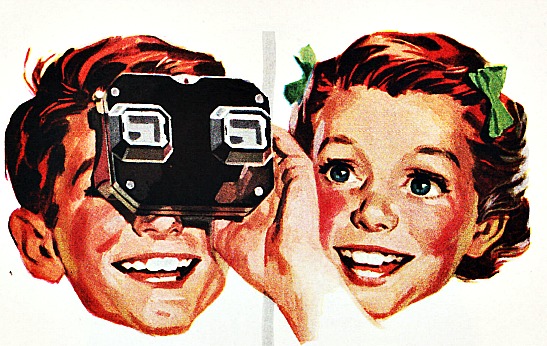
In a letter dated April 1, 1954, Edwin Eugene Mayer explained how he progressed from his early career as a pharmacist in Portland, Oregon, to head of the nation’s largest producer of photographic postcards. Somewhere along the way, Mayer had a eureka moment: updating the old-fashioned 3-D stereoscope. The result, introduced at the 1939 World’s Fair, was the View-Master (although Mayer disliked the name; he thought it sounded like some kind of kitchen appliance).

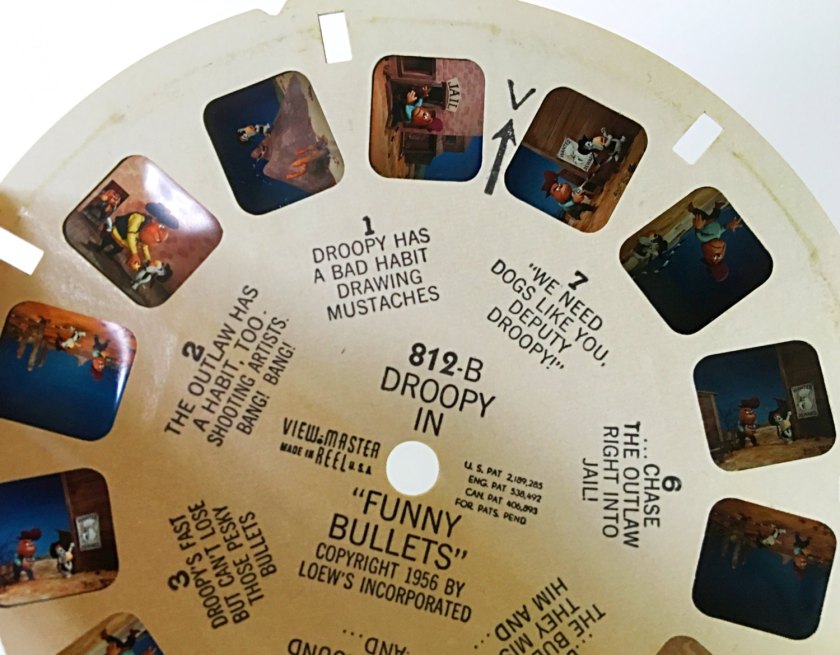
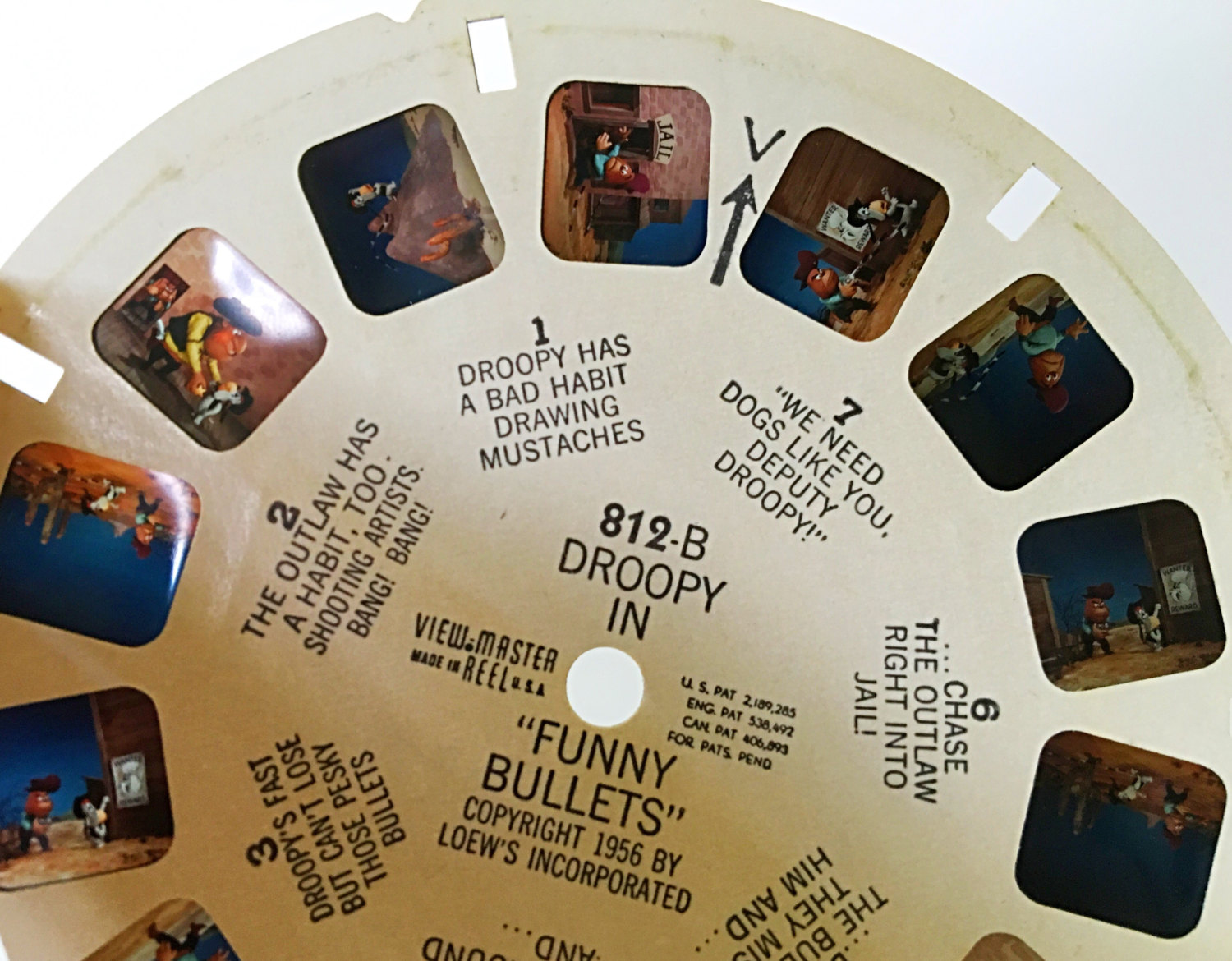
It must have been cumbersome at first, loading all those tiny people and objects into the viewer, sending the viewer back to the factory to be reloaded with new little people and objects once you got tired of the first bunch. But clever Mayer came up with a fix. Instead of loading actual little people and objects into the viewer, he developed a reel with pictures using the fancy new Kodachrome 16 mm film that had become available. The reel had seven pairs of transparencies, fooling the person looking into the viewer that he or she is seeing 3-D. The original reels were mainly scenic, but through the years, content expanded into adaptations of cartoons, movies and television. Since View-Masters introduction, there have been 25 different viewer models. The reels and the internal mechanisms have remain unchanged so that any of the more than a billion reels that have been produced will work in any viewer.

View-Master has been inducted into the National Toy Hall of Fame.

Still More 3-D

Somewhere between the stereoscope and the View-Master, another inventor was beguiled by the wonders of 3-D.  Mervin Ipod spent several years in an attempt to develop a working 3-D radio.  Unfortunately those years were spent in vain, although Mervin Ipod did go on to a bit more success with the invention that bears his name — the Mervinator.

February 1, 1896: Poor People of Paris

Opera patrons packed the Teatro Regio in Turin, Italy, on the evening of February 1, 1896, for the world premiere of Giacomo Puccini’s latest, La Boheme. Conducting the evening’s performance was a rising young star, Arturo Toscanini. Critics were divided over the opera, but audiences lapped it up, and it remains the world’s most popular opera. It is a timeless story of love among struggling young artists in Paris during the 1830s.

Our Bohemians– a poet, a painter, a musician and a philosopher — share a garret in the Latin Quarter as they try to eke out a living. It’s Christmas Eve; it’s cold. Rodolfo, the poet, and Marcello, the painter, are feeding a small fire with one of Rodolfo’s manuscripts. Their two companions arrive with food and fuel, one having had the good fortune to sell a bit of music. As they eat and drink, the landlord comes looking for their overdue rent. They distract him with wine and, pretending to be offended by his stories, throw him out. The rent money is divided for a night out in the Latin Quarter. Rodolfo stays behind as the other three leave, fortuitously, as a pretty neighbor comes looking for a light for her candle: “They call me merely Mimi.” Merely Mimi faints (she’s not well, folks), she and Rodolfo immediately fall in love, and they head off to the Latin Quarter, singing of their love.

In Act 2, our Bohemians are making merry in the Latin Quarter. Marcello’s one-time sweetheart, Musetta, enters on the arm of the old but wealthy Alcindoro. Trying to get Marcello’s attention, she sings an aria about her own charms (Musetta’s Waltz, recorded as Don’t You Know by Della Reese in 1959). She sends Alcindoro off on a bogus errand and promptly leaps into Marcello’s arms. They all scurry off, stiffing the returning Alcindoro for the check.

Act 3 brings a series of flirtations, jealousies, lovers’ quarrels and, for Mimi, a lot of coughing. At this point, we’re pretty sure she’s not going to make it through Act 4.

Which she doesn’t. After a few attempts at being cheerful, the others leave Mimi and Rodolfo who recall their meeting and happy days together until Mimi is overtaken by violent coughing. The others return, Mimi drifts into unconsciousness and dies.

Enrico Caruso owned the role of Rodolfo during his life, as did Luciano Pavarotti. And Maria Callas was all over Mimi.


Singin’ the Blus

Fast forward to another Italian who took the musical world by storm.  His name was Domenico Mondugno and he wrote a happy little chanson about a man who paints his hands and face blue then flies around above his lover.  It’s probably best left untranslated from the original Italian.  Nel Blu Dipinto Di Blu was released on February 1 and soared to the top of the Billboard 100, finishing out the year as the number one song of 1958. Shortly thereafter, it picked up the Grammy for Record of the Year and Song of the Year.  Every working singer had his or her own recording of it, usually under the title Volare, a word that was added as an afterthought to the chorus.

January 27, 1874: If It’s Godunov for Boris . . .

Russian composer Modest Mussorgsky (Pictures at an Exhibition, Night on Bald Mountain) wrote only one opera, Boris Godunov, but it is the most recorded Russian opera in history. It takes place during the 16th century era lovingly called the Time of Troubles. Ivan the Terrible has turned up his Tsarist toes. His son, Fyodor I, Too Feeble To Be Terrible, succeeds him but has precious little interest in Tsaring, leaving that to his brother-in-law Boris. Boris soon becomes Tsar in his own right, although his tsardom is contested by a guy named False Dimitriy (with a name like that know he’s got to be ba-a-ad.  All sorts of political intrigue ensues, with murderers, mercenaries, and great pretenders (sort of like our southern border). The opera premiered on January 27, 1874.

A counterpart to Boris Godunov appeared a few centuries later. Boris Badenov, a spy from Pottsylvania, and the self-described world’s greatest no-goodnik. This Boris takes orders from Fearless Leader and Mr. Big. He received a scoundrelship to USC, the University of Safe Cracking, graduating magna cum louse. Most of his nasty deeds and schemes are directed at his nemeses, Rocky and Bullwinkle.

Separated at Birth

Wolfgang Amadeus Mozart, born on January 27, 1756, remains the most enduring and popular of all classical performers. He started in early, becoming a competent musician on both the violin and keyboard, composing and performing, at the age of five. He lived only 35 years but created more than 600 works — symphonies, concertos, operas, chamber and choral music, and quite possibly the Mayberry theme.

Howard McNear was born on January 27, 1905. As an actor, he played a number of diverse roles in over a hundred radio, television and film features, beginning with the role of Doc Adams on radio’s Gunsmoke. As a barber on TV’s Leave It to Beaver, he gave Wally Cleaver his first shave. But it was when he took his tonsorial talents to a little town called Mayberry that he shined. As confused, chatty Floyd the Barber he created the role for which he is remembered. Pretty much forgotten is his role as Shere Khan in the Jungle Book.

And then there’s Sabu. Sabu, you say? Yes, born in 1924, Sabu was a star of stage, screen and jungles everywhere, appearing in such noteworthy films as Cobra Woman, Jungle Hell, White Savage, and Hello Elephant. His most famous role was, of course, Mowgli in the Jungle Book (not the cartoon version).

APRIL 25, 1926: HERE THE MAESTRO DIED

The world premier of Giacomo Puccini’s last opera “Turandot” was held at Milan’s La Scala on April 25, 1926, two years after his death. Arturo Toscanini conducted. Toward the end of the third act, Toscanini laid down his baton, turned to the audience and announced: “Here the Maestro died.”  Puccini had died before finishing the opera. Subsequent performances at La Scala and elsewhere included the last few minutes of music composed by Franco Alfano using Puccini’s notes.  A highlight of the opera is “Nessun Dorma,” probably the most famous aria in all of opera.

Down at the End of Lonely Street

Elvis Presley scored his first number one hit on the Billboard Pop 100 on this date in 1956.  Recorded and released as a single in January, “Heartbreak Hotel” marked Presley’s debut on the RCA Victor record label . It spent seven weeks at number one, became his first million-seller, and was the best-selling single of 1956. The song was based on a newspaper article about a lonely man who committed suicide by jumping from a hotel window.

APRIL 19, 1949: SEND IN THE CLOWNS

russian

With the threat of nuclear annihilation hanging over the world, cold war adversaries were nonetheless able to find glimmers of humor. At the opening night of the Moscow Circus, noted Russian clown, Konsantin Berman, demonstrated who had the upper hand in the clown cold war, launching barb after barb in the direction of the United States.

Tossing a boomerang, he likened it to the U.S. Marshall Plan that was pumping economic recovery aid into Western Europe. “American aid to Europe,” he said, “Here is the dollar.” as the boomerang returned to his hand, delighting the audience. Producing a radio that bellowed out the sound of barking dogs, he announced: “That’s the Voice of America.”

Meanwhile American clowns were dumping buckets of water on each other and slipping on banana peels.

Speaking of Banana Peels

The Vagabond King a 1925 operetta by Rudolf Frimi was already an American success when it opened in London on April 19, 1927.  It’s success in England was probably assured given its theme of foibles of the French.  Its hero is a braggart, thief and rabble-rouser who attempts to steal an aristocratic lady from the king himself.  Not only that, he openly mocks the king, boasting about what he would do if he were king.  The angry king gives him royal powers for 24 hours — king for a day — during which he must solve all France’s problems or go to the gallows (the guillotine had not yet been invented).  He succeeds, wins the lady’s hand and lives happily ever after in exile — probably in England.  The operetta was the inspiration for a couple of movies and, of course, the popular radio and television program “Queen for a Day.”


APRIL 1, 1903: THE TENOR NOSE

Fabrio Abruzzi was born in a village near Milan in 1883. The Abruzzi family was quite poor with Fabrio’s father cobbling together their existence as a shoemaker. Almost from the time Fabrio could walk, he was put to work pounding leather for his father. He was a nice boy (the villagers lovingly called him bambino brutto) and he was hard-working although his mind would wander and he frequently distracted himself by singing popular Italian folk songs.

As a child, he always had a pleasant singing voice and when, as a teenager, his voice changed, it became a magnificent tenor voice. Fate smiled on Fabrio. A LaScala impresario happened through the village and heard the young man sing as he pounded leather. He took Fabrio under his wings, coached him extensively and on April 1, 1903, scheduled his debut as the principal tenor in Puccini’s Euripedes et Copernica.

On the day of his performance, he prepared himself (as many leading singers of the day did) by forcing lumps of pancetta up each nostril of his nose to lubricate the nasal passages (he had a magnificent Roman nose). Unfortunately, the pancetta became wedged there and he was forced to go on stage with it still in place. Things looked bad. Fabrio did not sound like a magnificent tenor; his voice was stuffy and nasal. The audience was growing restless with the need to toss tomatoes (which Italians always brought with them to the opera). Fortunately, the famous aria ti amo mortadella comes early in the first act. It’s a robust piece and Fabrio gave it his all, thereby dislodging the pancetta and hurtling meaty projectiles through the air. One put a crack in the second violinist’s Stradavarius; the other slammed into the conductor’s forehead, causing him to lead the orchestra off into an unrestrained allegro punctuated by several tomatoes to the back of his head.

But Fabrio was a success. He went on to have a short but illustrious career and was known throughout Italy as voce bellissima brutte facce.

Pancetta Projectiles in 3-D Perhaps

In a letter dated April 1, 1954, Edwin Eugene Mayer explained how he progressed from his early career as a pharmacist in Portland, Oregon, to head of the nation’s largest producer of photographic postcards. Somewhere along the way, Mayer had a eureka moment: updating the old-fashioned 3-D stereoscope. The result, introduced at the 1939 World’s Fair, was the View-Master (although Mayer disliked the name; he thought it sounded like some kind of kitchen appliance).

It must have been cumbersome at first, loading all those tiny people and objects into the viewer, sending the viewer back to the factory to be reloaded with new little people and objects once you got tired of the first bunch. But clever Mayer came up with a fix. Instead of loading actual little people and objects into the viewer, he developed a reel with pictures using the fancy new Kodachrome 16 mm film that had become available. The reel had seven pairs of transparencies, fooling the person looking into the viewer that he or she is seeing 3-D. The original reels were mainly scenic, but through the years, content expanded into adaptations of cartoons, movies and television. Since View-Masters introduction, there have been 25 different viewer models. The reels and the internal mechanisms have remain unchanged so that any of the more than a billion reels that have been produced will work in any viewer.

View-Master has been inducted into the National Toy Hall of Fame.

Still More 3-D

Somewhere between the stereoscope and the View-Master, another inventor was beguiled by the wonders of 3-D.  Mervin Ipod spent several years in an attempt to develop a working 3-D radio.  Unfortunately those years were spent in vain, although Mervin Ipod did go on to a bit more success with the invention that bears his name — the Mervinator.