October 21, 2011: Was It Big and Slimy?

They lurk in the watery depths — fearsome creatures beyond imagination created by radioactivity from atomic bomb tests, scientific experimentation, or man’s inhumanity to man. Like the Creature from the Black Lagoon, Orca, orscreamw IT Came from beneath the Sea, most of us have only seen them in movies, but we know they’re down there and we know they wish us harm. Now after an October 21, 2011, discovery we can add to the list of terrors keeping us awake at night, Attack of the Giant Xenophyphores.

These guys are way down there — more than 6 miles in the depths of the Mariana Trench.  And they weren’t discovered by a couple of drunk fishermen or something. They were discovered by a crack team of scientists from the Scripps Institute of Oceanography in La Jolla, California.

They may not be gigantic in absolute terms, but for single-celled animals — think amoebas — these guys are mammoth at 20 cm. in diameter. There are thousands of them, lying about on the ocean floor, sucking in food from the mud around them, secreting slimy (and most likely deadly) goo all over the place and attaching bits of dead things to themselves (in fact their scientific name means “bearer of foreign bodies”).

Don’t go near the water.

Beware the Frubious Sea-Bishop

The Elizabethan era was a time of fertile travel, abounding in discoveries that required very little exaggeration to carry them into the realm of the marvelous. And, unlike today, folks would clamor to see anything that was strange, fantastic, beyond belief. This taste for the wonderful was catered to by adventurers returning from voyages with tales of bizarre creatures, monsters even.

sea-monkSure, many of the “monsters” would not seem at all unusual today – a shark or an octopus in the possession of a fast-talking charlatan could easily separate country folk from their money. In fact inland people who had never experienced the sea were thought capable of believing just about anything.

Narrations by sixteenth century authors each attempted to outdo each other describing the oddities taken from the sea. One account from 1632, described a creature that, although a fish, bore a striking resemblance to a bishop. And there were drawings to prove its existence. The author pointed out that this was meant to assure us that bishops were not confined to land alone, but that the sea also has the advantage of their blessed presence. This particular sea-bishop was taken before the king and after a conversation expressed his wish to be returned to his own element. The king so ordered and the sea-bishop was cast back into the sea.

No sooner had the creature disappeared than another author in the best tradition of oneupsmanship (and perhaps a bow to evolution) showed us that any sea that possessed a sea-bishop must certainly have a sea-monk!


OCTOBER 15, 1954: I HAVE PEOPLE TO FETCH MY STICKS

Long before he debuted in his own television show on October 15, 1954, Rin Tin Tin had become an international celebrity. It was as good a rags-to-riches story as Hollywood could churn out. He was rescued rin-tin-tin_from a World War I battlefield by an American soldier who trained him to be an actor upon returning home. He starred in several silent films, becoming an overnight sensation and going on to appear in another two dozen films before his death in 1932.

Rinty (as he was known to his friends) was responsible for a great surge in German Shepherds as pets. The popularity of his films helped make Warner Brothers a major studio and pushed a guy named Darryl F. Zanuck to success as a producer.

During the following years Rin Tin Tin Jr. and Rin Tin Tin III kept the Rin Tin Tin legacy alive in film and on the radio. Rin Tin Tin IV was slated to take the franchise to television in The Adventures of Rin Tin Tin, but he flunked his screen test and was shamefully replaced by an upstart poseur named Flame.

The TV series featured an orphan named Rusty who was being raised by soldiers at a cavalry post known as Fort Apache.  Rin Tin Tin was the kid’s dog. It was a low budget affair, filmed on sets used for other productions with actors frequently called upon to play several soldiers, Apaches, and desperadoes in a single episode. Although it was children’s programming, you might not guess that by the lofty literary titles of many episodes: Rin Tin Tin Meets Shakespeare, Rin Tin Tin and the Barber of Seville, Rin Tin Tin and the Ancient Mariner, Rin Tin Tin and the Connecticut Yankee.

Meanwhile, IV stayed at home on his ranch, fooling visitors into believing he was actually a TV star (and perhaps contemplating a run for President).

Rated P. G.

“Freddie experienced the sort of abysmal soul-sadness which afflicts one of Tolstoy’s Russian peasants when, after putting in a heavy day’s work strangling his father, beating his wife, and dropping the baby into the city’s reservoir, he turns to the cupboards, only to find the vodka bottle wodehouseempty.” One line from someone who had a great knack for them, which he displayed in over 300 stories, 90 books, 30 plays and musicals, and 20 film scripts. Comic novelist P.G. Wodehouse, creator of Jeeves the butler, was born on this day in 1881 in Surrey, England.

He had the look of one who had drunk the cup of life and found a dead beetle at the bottom.

Mike nodded. A sombre nod. The nod Napoleon might have given if somebody had met him in 1812 and said, “So, you’re back from Moscow, eh?”

I could see that, if not actually disgruntled, he was far from being gruntled.

She looked as if she had been poured into her clothes and had forgotten to say ‘when.’

The fascination of shooting as a sport depends almost wholly on whether you are at the right or wrong end of the gun.

Every author really wants to have letters printed in the papers. Unable to make the grade, he drops down a rung of the ladder and writes novels.

It was my Uncle George who discovered that alcohol was a food well in advance of modern medical thought.

And she’s got brains enough for two, which is the exact quantity the girl who marries you will need.

At the age of eleven or thereabouts women acquire a poise and an ability to handle difficult situations which a man, if he is lucky, manages to achieve somewhere in the later seventies.

October 12, 1940: The Suitcase of Death

According to his press agent, Tom Mix, the star of 291 full-length westerns was the real thing – a genuine, actual cowboy hero of the American Wild West; born under a sagebrush in Texas, veteran of Tom Mix BBBnot one but three wars (Spanish-American War, Boxer Rebellion and Boer War); a sheriff in Kansas, a marshal in Oklahoma, a Teddy Roosevelt Rough Rider and a Texas Ranger, to boot.

Seems, however, he was really born in Driftwood, Pennsylvania, deserted the Army in 1902; marched in a Rough Rider parade, and was not quite a lawman but a so-so drum major in the Oklahoma Territorial Cavalry before heading off to Hollywood in 1909. Nevertheless, Mix became one of the top silent-film stars, at one time the highest-paid actor in Hollywood. Unfortunately, like many silent film stars Mix had a difficult transition to talkies. His squeaky voice didn’t match his beefy cowboy image.

On October 12, 1940, having traded in his faithful horse Tony for a bright yellow Cord Phaeton sports car, Mix was speeding north from Tucson at 80 mph when he failed to notice a sign warning that a bridge was out on the road ahead. The Phaeton swung into a dry wash, and Mix was smacked in the back of the head by one of the heavy aluminum suitcases he was carrying in the convertible’s backseat. The impact killed him instantly.

Today, visitors to the site of the accident (now called the Tom Mix Wash) can see a rather diminutive (2-foot–tall) iron statue of a riderless horse with a rather wordy plaque that reads: “In memory of Tom Mix whose spirit left his body on this spot and whose characterization and portrayals in life served to better fix memories of the Old West in the minds of living men.” And if you visit the Tom Mix Museum in Dewey, Oklahoma, you can view the featured attraction – the dented “Suitcase of Death.”

OCTOBER 11, 1983: DON’T YANK THE CRANK

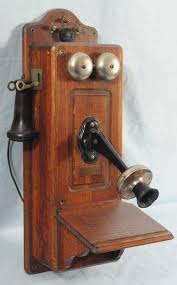
The title refers to a movement that took place in Maine back in 1981. Movement is probably a pretty strong word for laid-back Maine where crankdemonstrators tend not to get worked up into a chanting frenzy over things. And even less so in a sleepy little town like Woodstock whose population squeaked by 1,200 a couple of years ago.

Bryant Pond is Woodstock’s largest settlement and as much of an urban center as you’re likely to find. It captured its fifteen minutes of national fame and media attention during the mid1970s when its family-owned Bryant Pond Telephone Company became the last telephone exchange in the United States to use hand-cranked phones. Then in 1981, the two-position magneto switchboard in the living room of the owners was purchased by the Oxford County Telephone & Telegraph Company, a larger company in the Maine neighborhood. The Bryant Pond Telephone Company was swallowed like so many krill off the shores of Maine.

Two Bryant Pond residents started the “Don’t Yank The Crank” movement to save their crank telephones, financed by the sale of tee shirts – a valiant effort but nonetheless futile. At a meeting in the local school gymnasium warmed by a wood stove, townsfolk spoke out. “We have the oldest pay station in the United States,” said one resident, either complaining or bragging. “You put in a nickel and wind it up.” “You are a person instead of a number.” And did they mention no robocalls?

Alas, to no avail. The last “crank calls” took place on October 11, 1983, and the beloved telephones slipped into history like so much Americana.

Just Put Your Lips Together

Harry “Steve” Morgan and his alcoholic sidekick, Eddie, are a couple of ne’er-do-wells crewing a boat for hire on the island of Martinique. to_have_and_have_not_1944_film_posterLife is okay, but World War II is happening all around them, doing a number on the tourist trade and thus their livelihood. Howard Hawks’ film To Have and Have Not which premiered in New York on October 11, 1944, was notable for bringing together what would become one of Hollywood’s hottest couples, Humphrey Bogart and Lauren Bacall.

The film takes the title from the book by Ernest Hemingway but not much else. Hawks was a Hemingway fan but thought this particular book was a “bunch of junk.” Even so, Hemingway worked with Hawks on the screenplay, in which Bogart once again gives up his professed neutrality in the war to thwart the Nazis. The plot is well thickened by the stormy relationship between Bogart and Bacall who plays Slim, a saucy singer in the club where Morgan drinks away his days.

Another notable member of the cast is Hoagy Charmichael who appears as the club piano player, Cricket. He and Bacall perform several Charmichael songs: “How Little We Know,” “Hong Kong Blues,” and “The Rhumba Jumps.” Bacall does her own singing, even though persistent rumors would have a 14-year-old Andy Williams singing for her.

The most memorable take away from the film is one line of dialogue delivered seductively by Bacall: “You know how to whistle, don’t you, Steve? You just put your lips together and . . . blow . . .”

SEPTEMBER 28, 1951: SHOW A LITTLE RESPONSIBILITY, EARTHLINGS

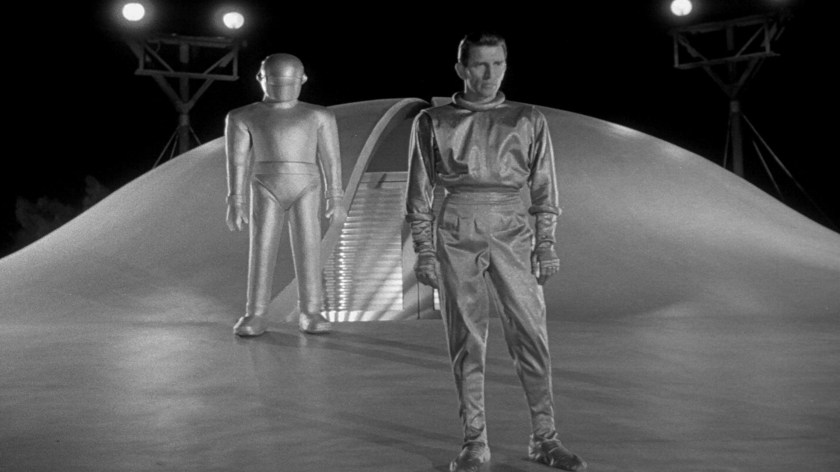
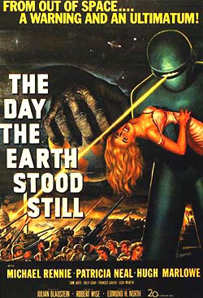
It’s a classic sci-fi scenario. A flying saucer lands in Washington D.C. (or substitute your favorite location). A very trigger happy Army battalion immediately surrounds the alien vehicle. A single individual emerges,day-the-earth-stood-still2 looking for all the world like one of us except for his shiny spacesuit. He claims to come in peace but the Army is having none of it. We need to build a wall, everyone agrees.  The space visitor who arrived in theaters everywhere on September 28, 1951, went by the name Klaatu (as in “Klaatu barada nikto”) and was played with alien sophistication by British actor Michael Rennie. The film, as any five-year-old space junkie can tell you, was The Day the Earth Stood Still.

Naturally, within minutes of declaring his peaceful intentions, Klaatu is shot by an over-zealous soldier. Klaatu’s very large, metallic sidekick emerges from the spaceship and quickly turns all the Army’s weapons into so much NRA dust. Klaatu is taken to the hospital where, when no one is looking, he heals himself. He then goes missing to move among the people in an attempt to discover just what makes earthlings tick. We quickly discover that he is wiser and more reasonable than all of us put together.

Klaatu takes a room at a boarding house, where he meets a widow and her son who become thoroughly entwined in the plot. He also meets an Einstein-like professor who is smart enough to converse with Klaatu on his level. Klaatu explains to the professor in a non-belligerent manner that, even though he has come in peace, that doesn’t mean’s not going to destroy the planet  (unlike the aliens in War of the Worlds who pulverized first and asked questions later). It seems that folks from elsewhere in the galaxy are a little concerned about our playing around with weapons of mass destruction.

Various sub-plots play themselves out as the movie hurtles toward a final showdown during which Klaatu politely tells all the world’s scientists that if they don’t play nice “this Earth of yours will be reduced to a burned-out cinder.”

Klaatu then bids them a fond farewell, and he and his metallic sidekick ride off into space, as one bystander asks another bystander: “Who was that masked man?”

SEPTEMBER 15, 1907: IT WAS BEAUTY KILLED THE BEAST

W.C. Fields cautioned against working with children or animals because they’re sure to steal the scene. You might say the same about a 50-foot gorilla. But scream queen Fay Wray had the big guy eating out of the palm of her hand (actually she spent quite a few scenes in the palm of faywrayhis hand). Born Vina Fay Wray on September 15, 1907, she became well-known for her roles in a series of horror movies, spanning the evolution from silent to talkie. But it was her role as the love of King Kong’s life that remained her primary claim to fame throughout a 57-year career in both movies and television.

In 2004, Peter Jackson approached her for a cameo in his remake of King Kong. She turned down the role, saying that the first Kong was the true King (Long live the King). Fay Wray died in her sleep that same year, before filming of the remake had begun.

Two days later, the Empire State Building went dark for 15 minutes in her memory.

King Kong had more than its share of “you’re going to regret saying that” lines, such as:

“Yeah, but what’s on the other side of that wall; that’s what I wanna find out.”

“He’s always been king of his world, but we’ll teach him fear.”

“Suppose it doesn’t like having its picture taken?”

Working the Little Gray Cells

In 1920, a new detective appeared upon the literary scene.– a former Belgian police officer with twirly “magnificent moustaches” and an egg-shaped head. Hercule Poirot debuted in The Mysterious Affair at Styles, the first novel by Dame Agatha Christie, “the Queen of Crime,”agatha born on September 15, 1890. It is one of 66 detective novels and 14 short story collections featuring the Belgian detective and several other characters, most notably Miss Marple.

Christie’s career was full of superlatives. She is the best-selling novelist of all time, over 2 billion copies of her books having been sold. Her books are the third most widely-published in the world, trailing only Shakespeare and the Bible. And Then There Were None is the best-selling mystery ever — 100albert_finney_plays_poirot million copies thus far. The Mousetrap is the longest running stage play with more than 25,000 performances and still running. The Murder of Roger Ackroyd was named the best crime novel ever by the 600-member Crime Writers’ Association.

Hercule Poirot appeared in half of Christie’s novel and in 54 short stories. By midway through her career, she was finding him “insufferable.” And by the 1960s she described him as an “egocentric creep.” Finally in the 1975 novel Curtain, she disposed of him (although the book was written many years earlier and stored in a bank vault for publication at the end of her life). Most of her books and stories have been adapted for television, radio and movies.

Agatha Christie died in 1976.


It is the brain, the little gray cells on which one must rely. One must seek the truth within–not without. ~ Hercule Poirot

October 28, 1993: Moon Over Bogota

National University in Bogota, Colombia, prided itself on its reputation for academic excellence. Like many institutions of higher learning, it also attracted its share of student radicals from across the political spectrum.

On October 28, 1993, University President Antanas Mockus was delivering a speech at the opening of a university art show and enduring frequent interruptions with catcalls from rowdies in the audience. Finally, Mockus stopped mid-sentence, turned around, bent over, dropped his drawers and mooned the audience into a stunned silence. Score one for the prez.

Unfortunately, an enterprising student caught the whole thing on videotape. Naturally, the videotape found its way to the media. The incident was shown over and over on national TV, and stills from the tape made it into print. Radio talk shows were abuzz with calls for his censure, his ouster, his head. He had damaged the image of higher education and of the country itself, according to some.

But there were others such as the columnist who wrote: “That he showed his pale buttocks to some disrespectful, bus-burning anarchists is a thing I understand.”

Mockus made a tearful mea culpa appearance on TV, placing his fate with the Colombian president. And he survived. Two year later he was elected Mayor of Bogota. But maybe mooning was in his blood. In 2018, now age 65 and a Congressman, Mockus mooned his fellow legislators who were interrupting the outgoing president’s farewell speech.

You May Not Kiss the Bride

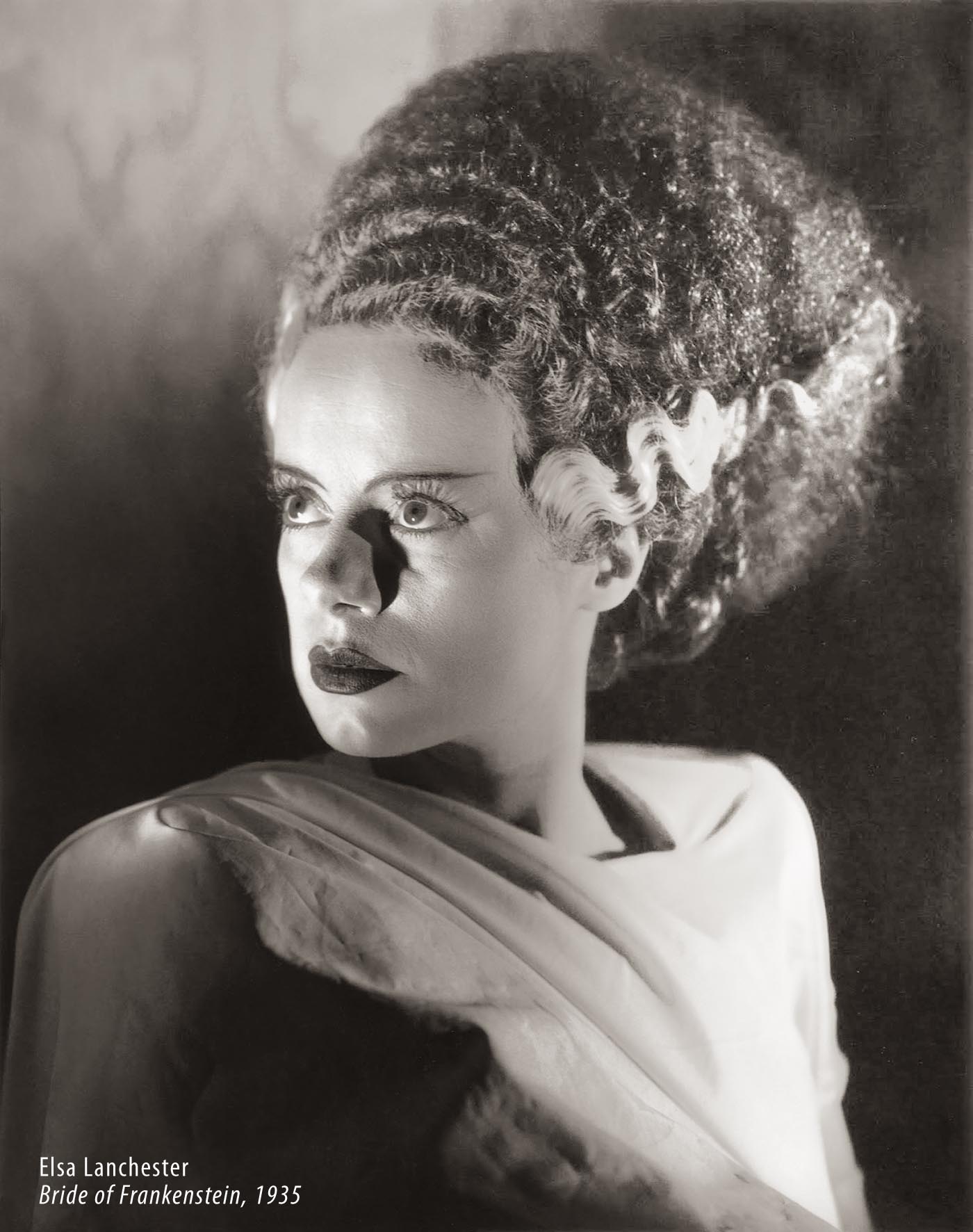
Elsa Lanchester, born in London on October 28, 1902, enjoyed a long show business career first in England then with her husband Charles Laughton in the United States. Her role as the title character in the 1935 film Bride of Frankenstein ( a good choice for a Halloween movie). She starred with Laughton in a dozen films before his death in 1962. She died in 1986.

SEPTEMBER 15, 1907: IT WAS BEAUTY KILLED THE BEAST

W.C. Fields cautioned against working with children or animals because they’re sure to steal the scene. You might say the same about a 50-foot gorilla. But scream queen Fay Wray had the big guy eating out of the palm of her hand (actually she spent quite a few scenes in the palm of faywrayhis hand). Born Vina Fay Wray on September 15, 1907, she became well-known for her roles in a series of horror movies, spanning the evolution from silent to talkie. But it was her role as the love of King Kong’s life that remained her primary claim to fame throughout a 57-year career in both movies and television.

In 2004, Peter Jackson approached her for a cameo in his remake of King Kong. She turned down the role, saying that the first Kong was the true King (Long live the King). Fay Wray died in her sleep that same year, before filming of the remake had begun.

Two days later, the Empire State Building went dark for 15 minutes in her memory.

King Kong had more than its share of “you’re going to regret saying that” lines, such as:

“Yeah, but what’s on the other side of that wall; that’s what I wanna find out.”

“He’s always been king of his world, but we’ll teach him fear.”

“Suppose it doesn’t like having its picture taken?”

Working the Little Gray Cells

In 1920, a new detective appeared upon the literary scene.– a former Belgian police officer with twirly “magnificent moustaches” and an egg-shaped head. Hercule Poirot debuted in The Mysterious Affair at Styles, the first novel by Dame Agatha Christie, “the Queen of Crime,”agatha born on September 15, 1890. It is one of 66 detective novels and 14 short story collections featuring the Belgian detective and several other characters, most notably Miss Marple.

Christie’s career was full of superlatives. She is the best-selling novelist of all time, over 2 billion copies of her books having been sold. Her books are the third most widely-published in the world, trailing only Shakespeare and the Bible. And Then There Were None is the best-selling mystery ever — 100albert_finney_plays_poirot million copies thus far. The Mousetrap is the longest running stage play with more than 25,000 performances and still running. The Murder of Roger Ackroyd was named the best crime novel ever by the 600-member Crime Writers’ Association.

Hercule Poirot appeared in half of Christie’s novel and in 54 short stories. By midway through her career, she was finding him “insufferable.” And by the 1960s she described him as an “egocentric creep.” Finally in the 1975 novel Curtain, she disposed of him (although the book was written many years earlier and stored in a bank vault for publication at the end of her life). Most of her books and stories have been adapted for television, radio and movies.

Agatha Christie died in 1976.


It is the brain, the little gray cells on which one must rely. One must seek the truth within–not without. ~ Hercule Poirot

Sept 5, 1786: Watch it with that Thing, You’ll Poke Someone’s Eye Out

Jonas Hanway who died on September 5, 1786, was well-know in several British spheres — a vice president of the Foundling Hospital, founder of Magdalen Hospital, revolutionizing London birth registration and in charge of “victuallizing” the Navy. On the other hand, he was also known for tirades against tipping and tea-drinking and his support for the concept of solitary confinement.

But what he is most remembered for is bringing the umbrella to Britain. Now the umbrella had been around for a long time. It was invented in China back in the 11th century B.C. It was popular in Greece and Egypt as a sunshade. It was also used in Rome, but when the empire declined and fell, so did use of the umbrella. It was finally reintroduced in the 15th century, and by the 17th century had become quite popular among sophisticated women in France and even some British women. But a man?

Hanway is credited with being the first male Londoner to carry an umbrella, much to the chagrin of hackney coachmen who thought it their proprietary right to protect Londoners from rainfall. For years, they jeered at him with vigor as being a feminine sissy and even worse, a French sissy. But by the time of his death, umbrellas were commonplace throughout London.

Brolliology is of course the study of umbrellas. Of course. Does anyone actually know a brolliologist? What inspires someone to become one? What are their conventions like? We will study the umbrella a little further on September 7, the date of another noted umbrella in history.

Taxi Dancers and Tango Pirates

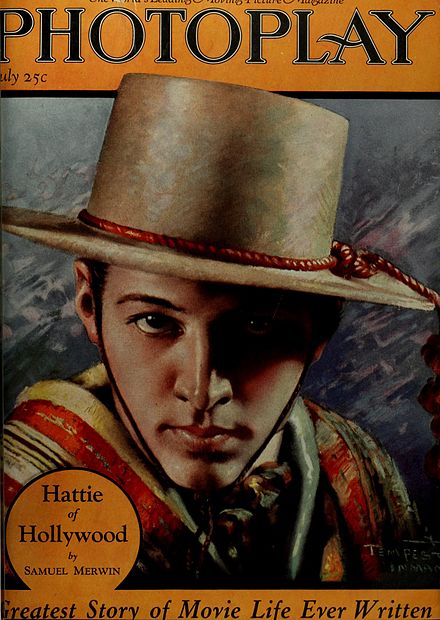
As America roared through the 20s, Hollywood’s fledgling film industry was itself roaring, the screen filled with stars such as Charlie Chaplin, Rudolph_ValentinoDouglas Fairbanks, Greta Garbo, and the roaring MGM lion. Come 1926, a new star would jump to the top of the heap, blazing a trail of sex and seduction. It almost didn’t happen.

Italian born Rodolfo Alfonso Rafaello Pierre Filibert Guglielmi di Valentina D’Antonguolla arrived at Ellis Island in 1913, at the age of 18. The young man who would eventually be known as the Latin Lover Rudolph Valentino took up residence in Central Park and on the streets of New York City. He found work as a taxi dancer (think “ten cents a dance”)at Maxim’s and became a”tango pirate,” a gigolo who sought out wealthy women at dances who were willing to pay for the company of handsome young men.

Valentino developed a relationship with a Chilean heiress who was unhappily married to a wealthy businessman. When she sued for divorce in 1915, Valentino testified that he had evidence of the husband’s having had multiple affairs. The ex-husband didn’t let bygones be bygones and on September 5, 1916, at his instigation, Valentino was arrested and charged with luring a young man into a whorehouse for white slavery. Valentino was jailed for several days before being cleared and released. A short time later the heiress shot her husband, and Valentino thought it wise to exit the scene. He headed to the opposite coast and began his meteoric rise to stardom.


Speaking of Tangoing Pirates

Another devilishly clever segue.

And it only takes one to tango here.

AUGUST 18, 1930: A DOG WALKS INTO A BAR

The world of Disney (as opposed to Disney World) is “peopled” by a group of cartoon animals who walk on two legs, talk intelligibly and dress stylishly. Mickey came first. Then Minnie. Add Donald plutoDuck, Daisy Duck, and Goofy, and you have five of the characters known as the Sensational Six — the superstars of the Disney universe. The sixth character joined the group on August 18, 1930, with the release of the cartoon short Chain Gang. But he was different from the other five. He walked on all fours, barked and was completely naked. He was an animal animal.

Pluto was nameless in his debut vehicle. It wasn’t until a month later and a second appearance in The Picnic that he acquired the clever name Rover. In the cartoon, Rover belongs to Minnie Mouse who brings him along on a picnic with Mickey. In a Mitt Romney moment, Mickey ties the dog to the back of the car before driving off and dragging him behind. But when the poor pooch spots a couple of frolicking rabbits, he ends up dragging the car and its mouse occupants on a merry chase.

The following year, Rover returned as Mickey’s pet with the new name Pluto the Pup. The origin of that name is the subject of argument. It was back in 1930 that the now ex-planet Pluto was discovered. Was this the source of his name? Or were both planet and dog named after the Roman god of the underworld? And then there’s that other great mystery: If Pluto’s a dog and Goofy’s a dog, why is the latter anthropomorphic and the former not?  Walt remained mum.