February 3, 1882: You’re a Big One, Aren’t Ya

A rather large sales transaction took place on February 3, 1882: Flamboyant showman and circus entrepreneur P.T. Barnum purchased his largest performer, a single-named star who stood ten feet at the shoulders, Jumbo. Jumbo of course was an elephant, a very big elephant. He was born in the Sudan and took a rather circuitous journey north to Germany, France and finally England and the London Zoo, where he resided for 17 years, becoming famous for giving rides to zoo visitors.

Londoners were not happy about the sale. The Zoological Society was up in arms. 100,000 schoolchildren petitioned Queen Victoria to halt the sale. A lawsuit was filed against the zoo. The zoo attempted to renege on the sale, but the court sided with Barnum.

The deal was a bonanza for Barnum. He exhibited Jumbo to huge crowds at Madison Square Garden, recovering the entire cost of his investment in three weeks. With Jumbo as its main attraction, the circus earned $1.75 million for the season.

Jumbo’s circus career would be short-lived, however. In 1885, he was struck by a train and died within minutes.

What’s in a Name

While jumbo as an adjective is used today to describe everything from CDs to shrimp, the word did not have that meaning when the London zookeeper association gave it to the big fellow. Its derivation could be Indian from jambu (pronouced jumboo) a tree that grows on a mythical island whose fruits were said to be as big as elephants or Swahili from jambo (hello) or jumbe (chief). It is safe to say it has no relation to jambalaya or gumbo.

Never Forget Elephants

Although Jumbo is arguably the most famous elephant, there are many, many others who might be in the running — circus elephants, movie elephants, rescue elephants, war elephants, zoo elephants, pet elephants (Charlemagne, Pope Leo X and Henry III all had one), gift elephants (Ronald Reagan and Jimmy Carter both received one),  and very naughty elephants.  Here’s a portrait gallery from which you may choose your own favorites.

From the top: Tusko (world’s meanest elephant), Babar, Thomas Nast’s GOP, Horton, Dumbo.

He-e-e-y Abbott

Radio’s Kate Smith Hour was a mainstay during the 30s and 40s. On February 3, 1938, the comedy duo of Bud Abbott and Lou Costello made their first radio outing on the program and became regular performers. They first performed their classic “Who’s on First?” the following month.

abbott-costelloThe former vaudevillians quickly became major stars in radio, followed by movies and television. They left the Kate Smith show after two years to star in their own radio program, as well as a Broadway revue, The Streets of Paris, and their first film, One Night in the Tropics, in which, although cast in supporting roles, they stole the show with several classic comedy routines and cemented their film careers.

Universal Pictures signed them to a long-term contract. Their second film, Buck Privates, made them box-office stars and in the process saved Universal from bankruptcy. In most of their films, the plot was not much more than a framework that allowed them to reintroduce comedy routines they had first performed on stage. Universal also added glitzy production numbers to capitalize on the popularity of musical films, featuring such performers as the Andrews Sisters, Ella Fitzgerald, Martha Raye, Dick Powell and Ted Lewis and his Orchestra. The Andrews Sisters hits “Boogie Woogie Bugle Boy” and “I’ll Be With You In Apple Blossom Time” were both introduced in Buck Privates.

During the following years, Abbott and Costello “met” many other movie legends – Frankenstein, Dracula, the Wolf Man, the Invisible Man, Captain Kidd, Dr. Jekyll and Mr. Hyde, the Mummy, the Killer (Boris Karloff).  And they traveled throughout the world (and beyond): in a Harem, in the Foreign Legion, Lost in Alaska, Mexican Hayride, Mars, and Africa Screams, which featured both Clyde Beatty and Frank Buck as themselves. They made a total of 36 films.

On television, they frequently hosted the Colgate Comedy Hour and had their own syndicated television program.


They dissolved their partnership in 1957, with Lou making sporadic appearances until his death in 1959.  Bud died in 1974.
January 26, 1893: And Doubleday Created Baseball

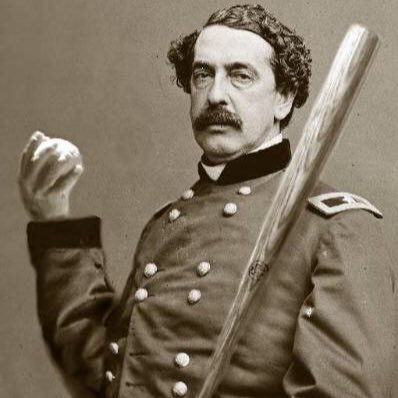
Abner Doubleday fired the first shot in the American Civil War, devised the San Francisco cable car railway, and posthumously invented the game of baseball. That’s our story and we’re sticking to it.

A brouhaha in the late 19th century on the origin of the game of baseball pitted the American faction supporting Doubleday as the true father of baseball against a British faction claiming the concept was stolen from the Brit game of rounders. Baseball fans on both sides got quite worked up. Doubleday was mum on the subject (he had been dead since January 26, 1893).

For the Americans, it was spelled out in a 1905 headline in the Beacon Journal, “Abner Doubleday Invented Base Ball.” Can’t be much more definitive than that. “Fake News,” cried the Brits. In 1908, an American commission declared Abner Doubleday to be the one true inventor of baseball (If the U.S. Post office believes this man to be Santa . . .). Doubleday could not be reached for comment.

Part of the proof offered up as evidence was a letter written by a fellow officer stating that he had seen Doubleday sketch a diagram of a baseball field way back in 1839. The diagram featured four bases and batters who attempted to bat tosses tossed by a tosser standing in a six-foot ring. Base players stood on each base. Who was on first, What was on second, I Don’t Know was on third.

And God Created Woman

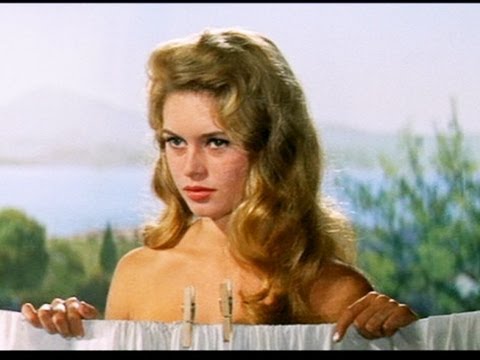
Born on January 26, 1928, Roger Vadim was a French director of lavish erotic films — most notably And God Created Woman, featuring his young bride, Brigitte Bardot, in the nude; Les Liaisons Dangereuses, featuring his young bride, Annette Stroyberg, in the nude; and Barbarella, featuring his young bride, Jane Fonda, in the nude.  All of which explains why we didn’t include a picture of Vadim.

January 24, 1940: From This Valley They Say You Are Leaving

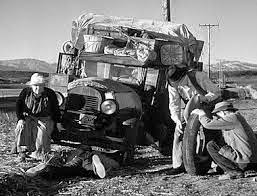
One of the greatest American films of all time, based on one of the greatest American novels of all time, premiered on January 24, 1940. John Ford’s The Grapes of Wrath based on the Pulitzer Prize novel, tells the story of the Joads who lose their Oklahoma farm during the 1930s Depression. They load everything they own into their 1926 Hudson and make a formidable journey across the United States in search of work.

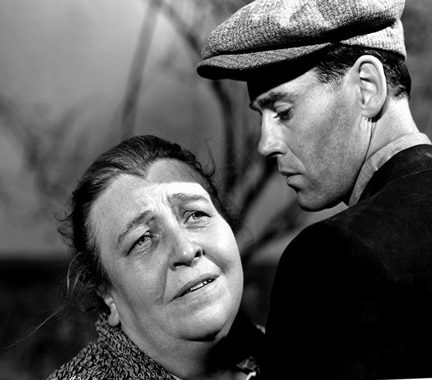
Memorable performances include Henry Fonda as Tom Joad, John Carradine as a preacher who’s “lost the spirit,” and the amazing Jane Darwell in an Oscar-winning portrayal of Ma Joad. It’s her words that conclude the film.

The book was written by John Steinbeck was born and grew up in Salinas, California, a part of the fertile region he would later call the Pastures of Heaven in a collection of short stories and the setting for many of his works. The Nobel-winning novelist was born in 1902.

steinbeckjohnHis first critical and commercial success was Tortilla Flat set in and around Monterey, California, and featuring a small band of ne’er-do-well paisanos living for wine and good times after World War I. The novel was a sort of rogue’s tale, full of rough and earthy humor. From here Steinbeck moved on to more serious portrayals of the economic problems facing the rural working class in the social novels for which he became known — In Dubious Battle in 1936, Of Mice and Men in 1937, and his most important work The Grapes of Wrath in 1939, the saga of America’s migrant workers.

Steinbeck’s California did not take kindly to his portrayal. His books were banned, and in his hometown, twice burned in public protests. In fact, his books were banned in schools and libraries throughout the country and continued to be well into this century. Steinbeck was one of the ten most banned authors from 1990 to 2004 (according to the American Library Association). The Grapes of Wrath and Of Mice and Men are both in the top ten banned books of all time.  They’re most likely being ripped from Florida bookshelves as we speak.  Along with Mickey Mouse

Later novels include Cannery Row, East of Eden, Travels with Charley,  and The Winter of Our Discontent. Steinbeck died in 1968.


January 23, 1919: Nothing in Moderation

He got his first job in television by showing up for an audition wearing apercydovetonsils barrel and shorts. From there his career took off during a ten-year period that carried him from obscurity to stardom, the ride getting steadily wilder and crazier. Although someone else held the title Mr. Television, Ernie Kovacs, born on January 23, 1919, certainly left his imprint on the medium, influencing such shows to come as Saturday Night Live, Sesame Street, Laugh-In, Captain Kangaroo, and the Today Show.

Often referred to as television’s surrealist, the cigar-smoking, poker-playing Hungarian-American comedian could be counted on for the unusual if not the bizarre in any of his many television outings.

One of his first shows, Three to Get Ready, was the first regularly scheduled early morning (7 a.m.) show in a major market, proving that people would watch TV at this unlikely hour. Although the program was billed as news and weather, Kovacs presented it in his own style. If rain was in the weather forecast, Kovacs would get on a ladder and pour water down on the person reading the report. He auditioned goats for a local theater performance, visited a downtown Philadelphia restaurant in a gorilla suit, wrestled a jaguar, and discovered a man who had come through the earth from China to emerge from a construction pit. The program ran for two years before being preempted by a network early morning offering, The Today Show.

Other shows included It’s Time for Ernie, his first network series; Ernie in Kovacsland, a summer replacement for Kukla, Fran and Ollie; and The Ernie Kovacs Show, featuring characters such as poet Percy Dovetonsils, bumbling magician Matzoh Heppelwhite, Frenchman Pierre Ragout, and the Nairobi Trio. He also hosted the Tonight Show twice a week and had a short stint as a celebrity panelist on What’s My Line?, where he strove more for humor than insight. (When Henry J. Kaiser, the founder of the automobile company, was the program’s mystery guest, and the panel had established that the mystery guest’s name was synonymous with an automobile brand, Kovacs asked, “Are you – and this is just a wild guess – but are you Abraham Lincoln?”

A movie career followed his move to California in 1957 with character roles in such films as Operation Mad Ball; Bell, Book and Candle; Wake Me When It’s Over; Sail a Crooked Ship; and Our Man in Havana.

Kovacs was at the peak of his career when he was killed in a late-night automobile accident on his way home from one of the many parties that had become part of his life in California. The inscription on his tombstone reads “Ernie Kovacs 1919 – 1962 — Nothing In Moderation.”


Ale, Ale, the Taster’s Here

It is noted in a dusty record book in the bowels of Oxford University that on January 23, 1617, a certain John Shurle was appointed to the position of ale taster for the university. Now we have your attention. Where can I get myself such an appointment, you’re thinking. Back in the 1600s in England you could easily have got yourself such an appointment; there were many ale-tasting positions throughout the country. Today not so easy; there are only four ale tasters in all of England.

The position of ale taster (also referred to variously as ale conner, ale kenner or ale founder) has been around for a good 700 years. The incumbent of the office was required to visit breweries on the days of their brewing to examine beer and ale (and bread as well) to make certain they were good and wholesome and fairly priced. Each brewery was to pay for this service with a gallon of strong ale and two gallons of beer.

You would have thought this would be a position folks fought for, but in reality it wasn’t that popular. The taste was not uniformly pleasant; bad batches were frequent. The ale taster was often required to fine brewers for irregularities and was therefore not the most popular person around.

And some ale tasters didn’t actually taste the stuff. They tested it by sitting in a puddle of it and judging its quality by how sticky it was when they stood up.

JANUARY 9, 1493: I HAVE HEARD THE MERMAIDS SINGING

Do mermaids exist? These creatures – half woman, half fish – have found their way into the lore of seafaring cultures at least as far back as ancient Greece. You’ve seen them depicted; a woman’s head and torso and the tail of a fish instead of legs. They’re most often quite attractive, gazing upon their own countenance in a mirror and combing their long flowing tresses (like Darryl Hannah in the movie Splash, for example).

But believe in them? One might just as well believe in sirens, the half-woman, half-bird creatures who dwell on islands from where they sing seductive songs to lure sailors to their deaths. Yet there have been some notable sightings. No one less than Italian explorer Christopher Columbus has written of an encounter. On January 9, 1493, the intrepid New World traveler spotted not one but three mermaids frolicking somewhere near the Nina, Pinta or the Santa Maria (or maybe one entertaining each ship?)

He described the sighting in his ship’s journal: “They were not as beautiful as they are painted, although to some extent they have a human appearance in the face.” Columbus’ account would give ammunition to conspiracy theorists who claim that most mermaid sightings are actually manatees —  sea cows, although they’re said to share a common ancestor with elephants. Manatees are slow-moving aquatic beasts, weighing a good thousand pounds with bulbous faces but Bette Davis eyes. Most moviegoers would not mistake them for Darryl Hannah.

Would you mistake this . . .

. . . for this?

Henry Hudson, a British and therefore more reliable explorer, also sighted a mermaid “come close to the ship’s side, looking earnestly on the men. A little while after, a sea came and over-turned her. From the navel upward her back and breast were like a woman’s . . .her body as big as one of ours; her skin very white, and long hair hanging down behind . . . In her going down they saw her tail, which was like the tail of a porpoise, and speckled like a mackerel.” Much better, except for the mackerel part.

A few years later, Captain John Smith, of Pocahontas fame, spotted a mermaid off the coast of Massachusetts. He wrote that the upper part of her body perfectly resembled that of a woman and that she swam about with style and grace. She had “large eyes,

rather too round, a finely shaped nose (a little too short), well-formed ears, rather too long. . .” And she probably thought Smith was a little too much of a jerk.

Naturally, there is a male counterpart for the mermaid: the merman.  Collectively we might call them merfolk.

The most famous of the mermen was the Greek god Triton, the messenger of the sea who played a conch shell as though it were a trumpet and he were Louis Armstrong.  He wasn’t.  Another notable was Ethel the Merman.

A Merman

Lights! Camera! Gesundheit!

A major motion picture debuted in 1894 and became the first copyrighted film in the United States on January 9. Filmed by the Thomas Edison Studio a few days earlier, it starred a gentleman named Fred Ott. This five-second epic was officially titled “Edison Kinetoscopic Record of a Sneeze,” but became more familiar as “Fred Ott’s Sneeze.” Next day on Fred Ott’s dressing room, they did not hang a star.


MAY 7, 1885: COMIN’ THROUGH THE TV, SHOOTIN’ UP THE LAND

An essential player in Hollywood westerns was the leadinggabby man’s sidekick, and many sidekicks became just as famous as their starring partners: Andy Devine was Jingles to Wild Bill Hickock, Pat Buttram and Smiley Burnette were both sidekicks to Gene Autry, Jay Silverheels was Tonto to the Lone Ranger, Leo Carillo was Pancho to the Cisco Kid. The top sidekick was, of course, Gabby Hayes, born May 7, 1885. Through the 1930s and 1940s, he was sidekick to Hopalong Cassidy in 18 films and to Roy Rogers in 41.

The third of seven children, George Francis Hayes was born in an upstate New York hotel owned by his father. As a young man, he worked in a circus and played semi-pro baseball while a teenager. He ran away from home at 17, and joined a touring stock company. He married Olive Ireland in 1914 and the duo enjoyed a successful vaudeville career. Although he had retired in his 40s, he lost money in the 1929 stock market crash, and he felt the need to work again.  He and his wife moved to California, and he began his movie career, taking various roles until finally settling into a Western career.

Hayes first gained fame as Hopalong Cassidy’s sidekick Windy Halliday in many films between 1936-39. He left the Cassidy films in a salary dispute and was legally prevented from using the name “Windy.”   So “Gabby” Hayes was born.  He gained fame as a sidekick to stars such as John Wayne, Randolph Scott, and, of course, Roy Rogers – beginning with Southward Ho in 1939 and ending with Heldorado in 1946.

Offstage Hayes was the complete opposite of his screen persona – an elegant bon vivant, man-about-town and connoisseur.  He died in 1969.  On the subject of his movies: “I hate ’em. Really can’t stand ’em. They always are the same. You have so few plots – the stagecoach holdup, the rustlers, the mortgage gag, the mine setting and the retired gunslinger.”

“You’re a good-looking boy: you’ve big, broad shoulders. But he’s a man. And it takes more than big, broad shoulders to make a man.” — High Noon

“There are only two things that are better than a gun: a Swiss watch and a woman from anywhere. Ever had a good… Swiss watch?” — Red River

“A gun is a tool, Marian; no better or no worse than any other tool: an ax, a shovel or anything. A gun is as good or as bad as the man using it. Remember that.” –Shane

“You don’t look like the noble defender of poor defenseless widows. But then again, I don’t look like a poor defenseless widow.” –Once Upon a Time in the West

APRIL 28, 2004: IT WAS SHEAR PLEASURE

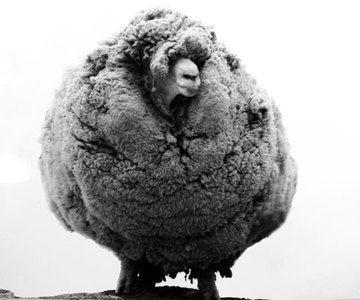
Some folks will go to great lengths to avoid sitting in a barber’s chair. So it seems will some animals. A New Zealand Merino sheep named Shrek — not to be confused with the bald green guy of the same name — really didn’t want to be shorn. So he went on the lam in the late 90’s, living as a fugitive, hiding in caves, always looking back over his shoulder.  He avoided capture for six years but alas someone finally fingered him and he was apprehended in April 2004. And on April 28, the now incredibly woolly Shrek went under the shears. It took a mere 20 minutes to denude him, and the entire indignity was nationally televised. The suddenly svelte Shrek gave up 60 pounds of wool, enough to suit 20 New Zealanders.

Now famous, he took tea with the Prime Minister on his tenth birthday and was allowed to spurn the shears for another 30 months before being shorn on an iceberg off the New Zealand coast (certainly a jumping the shark event). Shrek bought the sheep farm in 2011.

Sardine in Honorable Tin Can

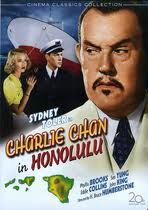
Following the death of Warner Oland, who had successfully brought the character of Charlie Chan to the screen in 16 films, Twentieth Century Fox began the search for a new Chan. Sidney Toler, who was born in Warrensburg, Missouri, on April 28, 1874, was chosen to play the detective, and filming began less then a week later on Charlie Chan in Honolulu. Through four years and eleven films, Toler played Charlie Chan for Twentieth Century Fox. Fox terminated the series in 1942, following the completion of Castle in the Desert. Sidney Toler went on to star in eleven more Charlie Chan films for Monogram Pictures. Very ill during the filming of his last two Chan pictures in 1946, Toler died in 1947.

The character of Charlie Chan was created for the novel The House Without a Key in 1925 by Earl Derr Biggers. Biggers loosely based Chan on a real-life Honolulu detective named Chang Apana. He conceived of the heroic Chan as an alternative to the many stereotypical villains such as Fu Manchu that typified the so-called Yellow Peril, a prevailing vision of the menace of Asia. Sounding like a turn-of-the-century Donald Trump, Horace Greeley, editor of the New York Tribune intoned: “The Chinese are uncivilized, unclean, and filthy beyond all conception without any of the higher domestic or social relations; lustful and sensual in their dispositions; every female is a prostitute of the basest order.” Luckily, Greeley is remember more for urging young men to go west.

Over four dozen films featuring Charlie Chan were made, beginning in 1926. Movie-goers took to Chan, but in later years critics found that in spite of his good qualities he too was an Asian stereotype. Many also objected to the fact that he was played by Caucasian actors in yellowface (although Keye Luke who played Chan’s number one son in 7 films was a bona fide Chinese-American actor).

In addition to his great detection, Charlie Chan was noted for the aphorisms sprinkled liberally throughout the films. A handful of the very many:

Accidents can happen, if planned that way. (Dark Alibi)

Action speak louder than French. (Charlie Chan at Monte Carlo)

Bad alibi like dead fish – cannot stand test of time. (Charlie Chan in Panama)

Detective without curiosity is like glass eye at keyhole – no good. (Charlie Chan in the Secret Service)

Even wise fly sometimes mistake spider web for old man’s whiskers. (Charlie Chan’s Chance)


chan


APRIL 23, 1983: SATURDAY MORNING SUPERSTAR

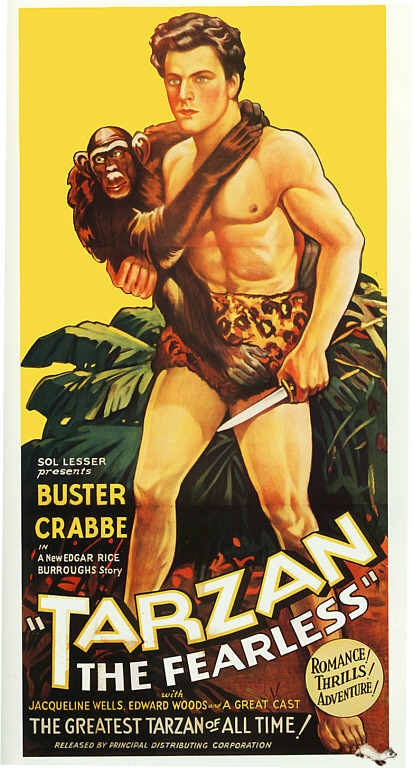
Athlete turned actor, Buster Crabbe (Clarence Linden Crabbe II), looking back over his career, could easily have said “been there, done that.” After winning Olympic gold in 1932 for freestyle swimming, Crabbe dived into the movies, eventually starring in over a hundred movies, first taking a turn as the jungle hero in Tarzan the Fearless in the 1933 serial and a variety of jungle men in movies such as King of the Jungle that same year,  Jungle Man in 1941, and the 1952 serial King of the Congo.
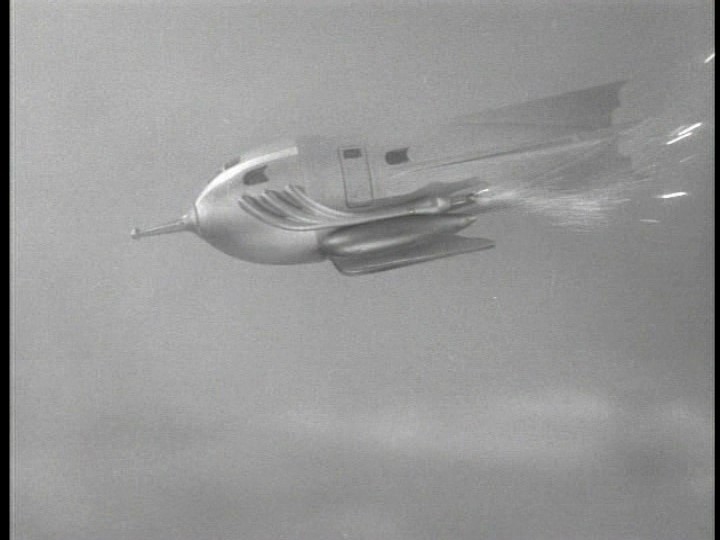
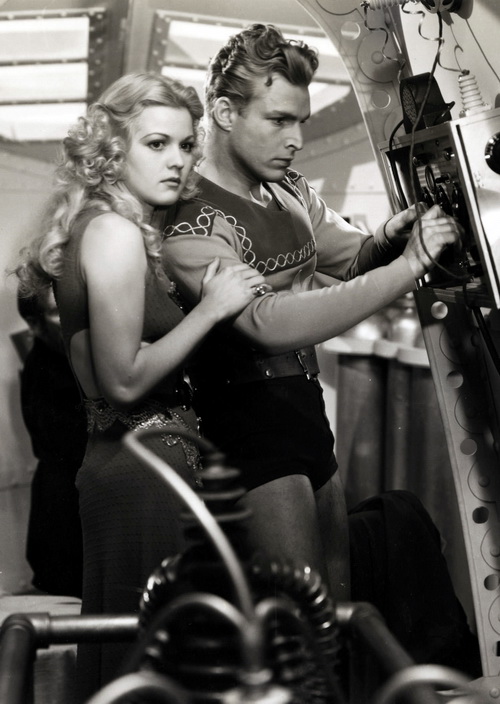
Leaving the jungle for the far reaches of space, he played both Buck Rogers and Flash Gordon. His three Flash Gordon serials were Saturday morning staples in the 30s and 40s. The serials were also compiled into full-length movies. They appeared extensively on American television in the 1950s and 60s, and eventually were edited for release on home video. Later on television, Crabbe also found his way into the French Foreign Legion. As his acting career wound down, he became a spokesman for his own line of swimming pools. He died on April 23, 1983.

Don’t Try This at Home

According to the National Rifle Association, guns don’t kill people, people kill people.  On the other hand, if you were to make a fist with your index finger pointing at your intended victim, and shout Bang, bang, you’re dead, chances are the only injury inflicted would be to your pride as you endured the derisive laughter all around you.

On yet another hand, take the case of William Lawlis Pace. Nine-year-old Billy was accidently shot in the head by his older brother. Pace died on April 23, 2012.  In his sleep.  At a California nursing home – 94 and a half years after the incident. The bullet was still in his head.

Doctors in Texas where the shooting took place left the .22 caliber bullet in his head because – well, because that’s what they do in Texas.

In 2006, Pace was crowned the Guinness world record holder in the category of “unwanted cranial ammunition acquisition.” A proud moment indeed, and Wayne LaPierre did not attend the ceremony.

Thank God, the Second Amendment still protects a citizen’s right to walk around for 94 years with a bullet in his head.

APRIL 10, 1953: COMIN’ AT YA

The poobahs at Hollywood’s major film studios watched with amazement and envy as the independently produced 3-D movie Bwana Devil wowed audiences in late 1952.  Columbia Pictures quickly threw together a black- and-white thriller that for an hour hurled practically every prop on the set at the beleaguered audience. It was just as quickly forgotten.  Then on April 10, 1953, Warner Brothers released its entry — in color and stereophonic sound — House of Wax, a horror film starring Vincent Price as a sculptor who kills folks, covers them with wax, dresses them up as famous historical figures, and displays them in his wax museum. Audiences loved it, making it one of the biggest hits of the year. Even critics gave it a go. And although it took a while, the Library of Congress selected it in 2014 for inclusion in the National Film Registry, deeming it “culturally, historically, or aesthetically significant.”

The film revived Vincent Price’s career, positioning him as the go-to guy when you needed a mad scientist or fiendish psychopath.  Although House of Wax had a couple of classic 3-D effects (the pitchman with a paddleball and a character who seemingly stands up in the audience and runs into the screen), it was not loaded down with them. This might have been because the director was blind in one eye and couldn’t understand what all the fuss was about.

And What Do We Suppose Jumbo the Elephant Really Was

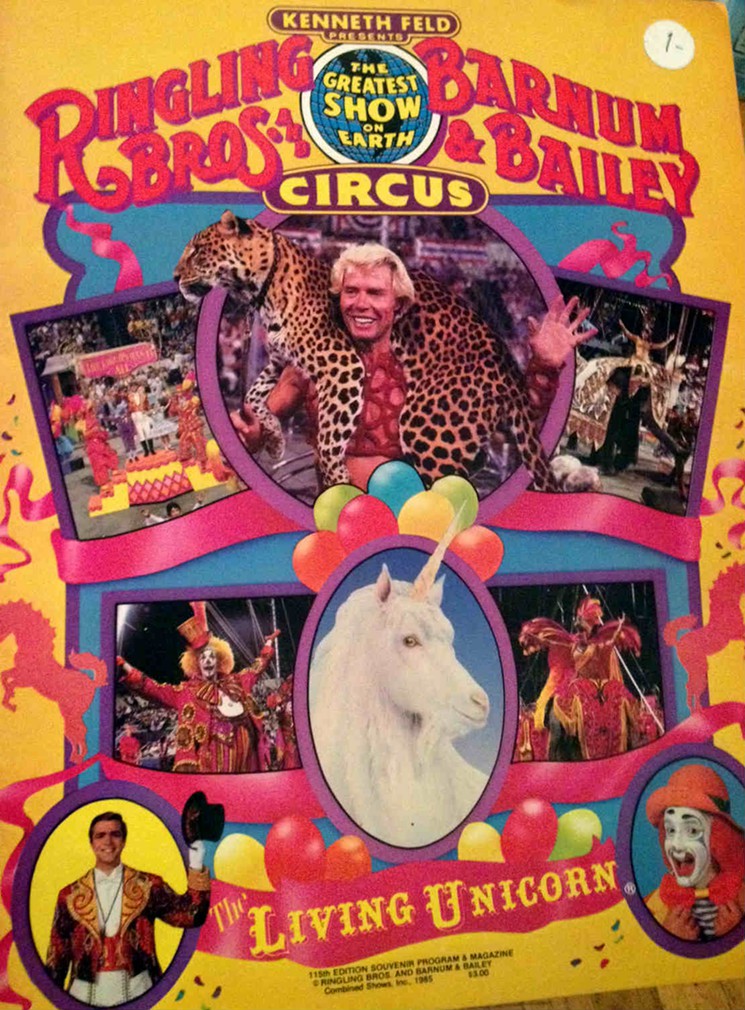
On this day in 1985, Lancelot the Unicorn who had been touring with the Ringling Brothers and Barnum and Bailey Circus — famous for outlandish attractions — was exposed as a fraud.  Audiences were appalled to learn that Lancelot wasn’t a real unicorn at all, just a goat with a horn surgically attached to its forehead.

IF IT HAD ONLY BEEN A NACHO

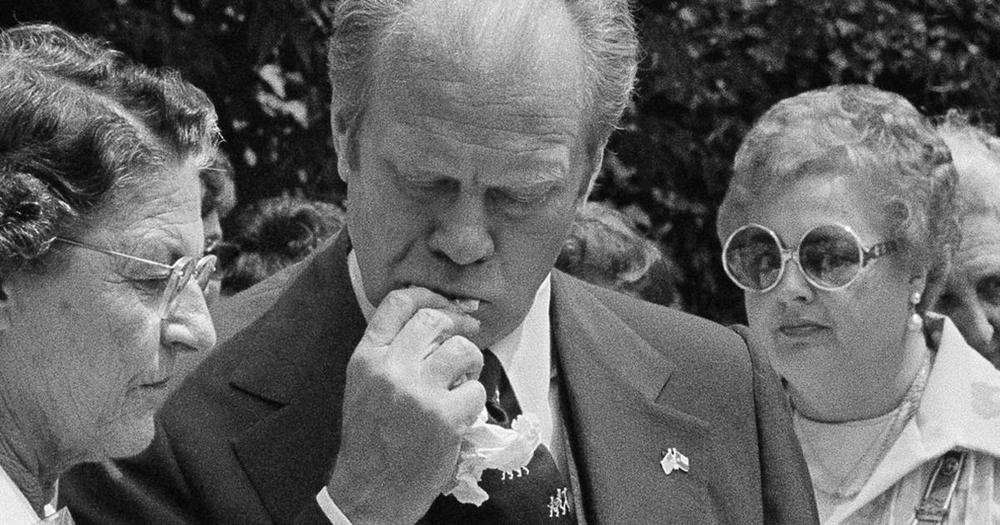
It would seem that in modern politics every president has been forced to deal with a scandal, big or small –vicuna coat, Watergate, Iran Contra, Stormy Daniels. Gerald Ford’s scandal would probably be trivial in comparison to most. But it may have cost him re-election. It was April 10, 1976, in San Antonio, Texas, at the Alamo, where a tiny faux pas morphed into the Great Tamale Incident as the President attempted to eat a tamale without removing the corn husk, playing into his reputation as a bit of a bumbler.

APRIL 4, 1914: TO BE CONTINUED

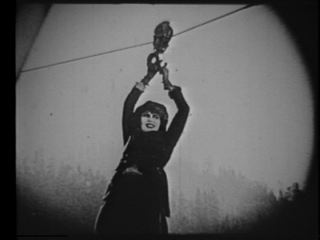
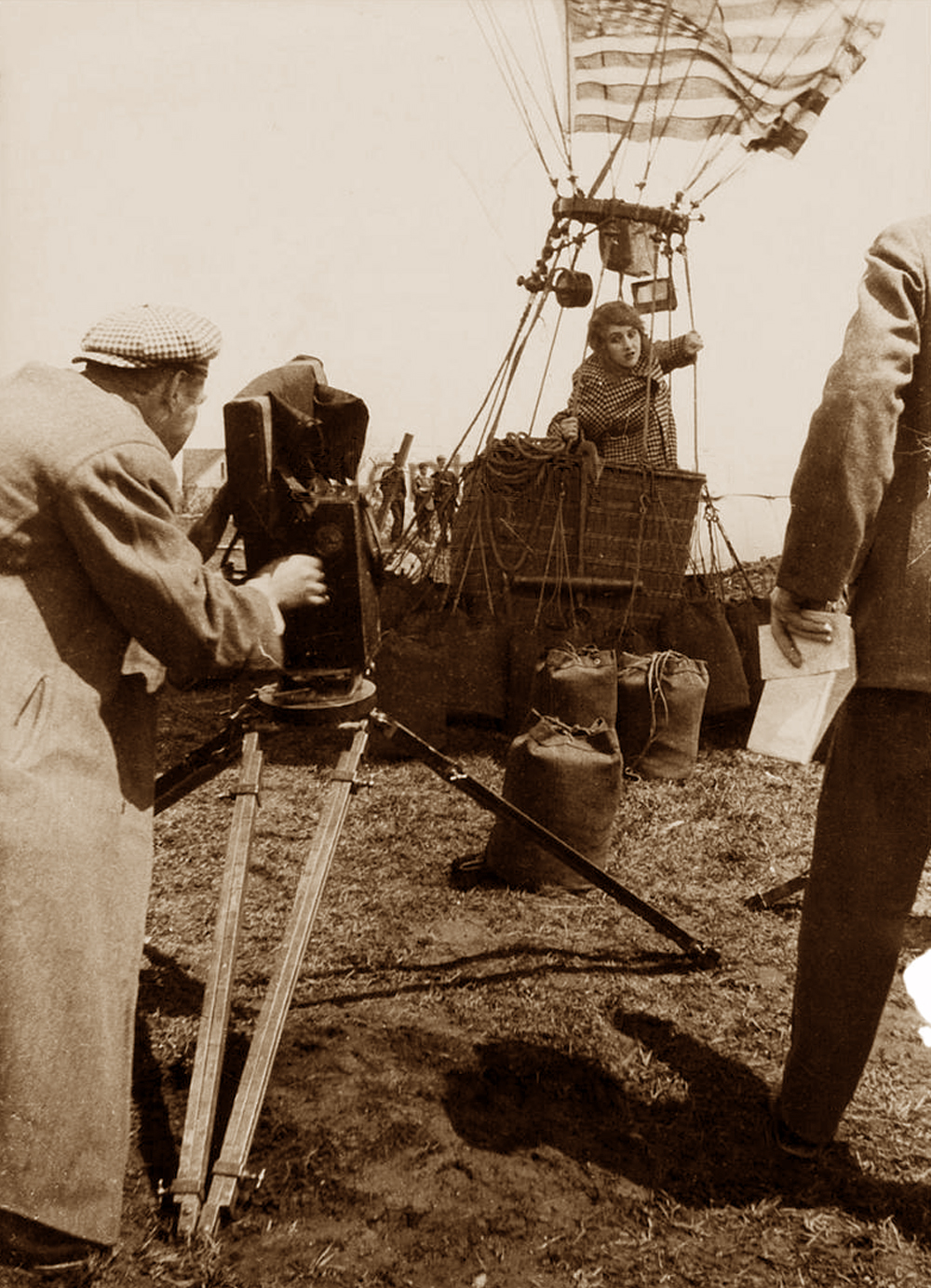
The Perils of Pauline, one of the earliest American movie serials and a classic example of the damsel in distress genre, premiered in Los Angeles on April 4, 1914. Every week for twenty weeks, actress Pearl White faced imminent danger and sure death at the hands of pirates, hostile Indians, gypsies and various mustachioed villains, escaping at the last possible second through her own ingenuity, resourcefulness and pluck. Her adventures in Pauline and the follow-up Exploits of Elaine were popular movie fare through the 1920s. Neither serial was a true “cliffhanger” in which episodes end with an unresolved danger to be resolved at the beginning of the next installment.  Instead White jumped in and out of the jaws of death in each installment.

Like many other silent film stars, Pearl White performed her own stunts for the serial, at considerable risk. During one scene, the hot-air balloon she was piloting escaped and carried her across the Hudson River into a storm, before landing miles away. In another incident, she permanently injured her back in a fall.

And of course White was more than once tied to railroad tracks by a mustache-twirling villain. One such scene was filmed on a curved trestle in New Hope, Pennsylvania on the Reading Company’s New Hope Branch. Now referred to as “Pauline’s Trestle,” it is a tourist attraction offering rides from New Hope to Lahaska, Pennsylvania, across the original trestle.

Wretched Richard’s Little Literary Lessons — No. 6

cliff-hanger

[klif-hang-er]

noun

1. a melodramatic adventure serial in which each installment ends in suspense in order to interest the reader or viewer in the next installment.

2. a situation or contest of which the outcome is suspensefully uncertain up to the very last moment:

Stopping for a moment, she convinced herself that she had to have a good lead over her pursuers, if they were even following her. She had to find Paul. Looking around, however, she realized that not only didn’t she know where Paul was, she didn’t know where she was. She decided to work her way back in the same general direction from which she thought she had come, keeping herself hidden. If they were chasing her, they would not be stealthy. She’d hear them before they saw her. And try to find Paul. Or someone else to help. But who?

Her foot caught the bottom of her sarong, and she fell to the ground. “This damn outfit,” she said aloud as she tried to untangle herself. “I might as well be wearing a strait jacket.”

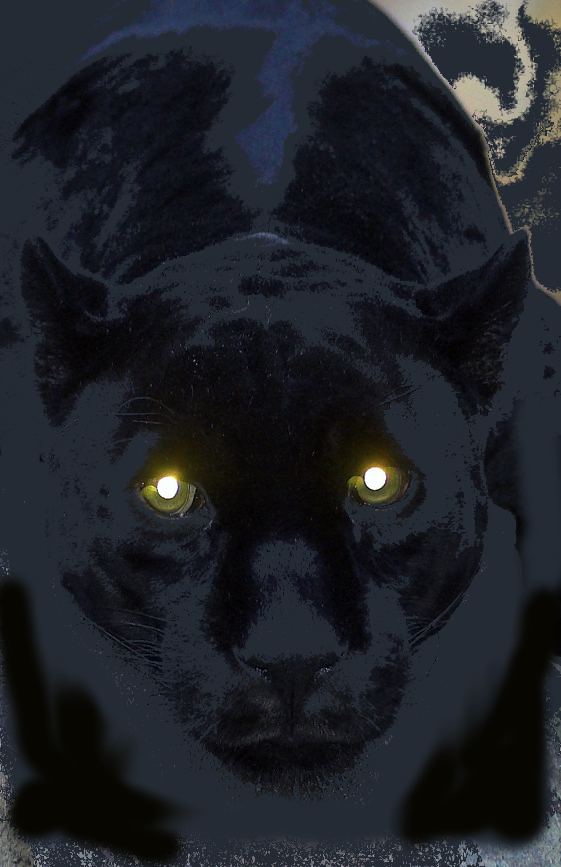
She pulled herself up to her hands and knees and looked around. There just a few feet ahead of her, two golden eyes blazed in the dark. At first they were disembodied, hovering in the air, but as they stared at her, she began to discern an outline of whatever it was that possessed the eyes. It was big, really big, and as black as the night around it. It was a cat, at least four feet at its shoulders. And it wasn’t purring.

Get me off this cliff.