OCTOBER 17, 1814: THIS ROUND’S ON ME

An unfortunate incident involving beer – aged porter to be precise – occurred in London back in 1814.

The central London parish of St Giles was, as slums go, one of the slummiest.  Although it has since been rather gentrified with theaters, Covent Garden and the British Museum nearby, it was then mostly squalid housing where immigrants crowded into its ramshackle buildings, often more than one family to a room. Near one end of the parish stood the massive Meux and Company Horse Shoe Brewery, its giant vats filled with thousands of gallons of aging porter.

One particular vat which held over 135,000 gallons had seen better days. Like the shanties surrounding the brewery, it suffered from age, and on October 17 it succumbed, bursting and letting loose enough precious liquid to give all of St. Giles and then some a pretty good buzz, although the fury with which it was released made tippling difficult. Like giant shaken cans of beer, nearby vats ruptured and joined the game of dominoes.

Within minutes the brick structure that was the Meux and Company Horse Shoe Brewery was breached, and the deluge roared down Tottenham Court Road, flinging aside or burying in debris anyone or anything in its path.

Homes caved in. A busy pub crumbled, burying a buxom barmaid and her ogling patrons for several hours.  All in all, nine people were killed by drink that day. Those who didn’t lose their lives lost everything they owned to evil alcohol. Soon after the suds subsided, survivors rushed in to save what they could of the precious brew, collecting one or more for the road in pots and cans.

St. Giles smelled like the morning after a particular robust party for weeks. The brewery was later taken to court over the accident, but they pleaded an “Act of God,” and the judge and jury bought it, leaving them blameless. The brewery even received reparations from the government.  God, it would seem, has a soft spot for brewers.

I am a firm believer in the people. If given the truth, they can be depended upon to meet any national crisis. The great point is to bring them the real facts, and beer. ~ Abraham Lincoln
 

September 12, 1878: Threading Cleo

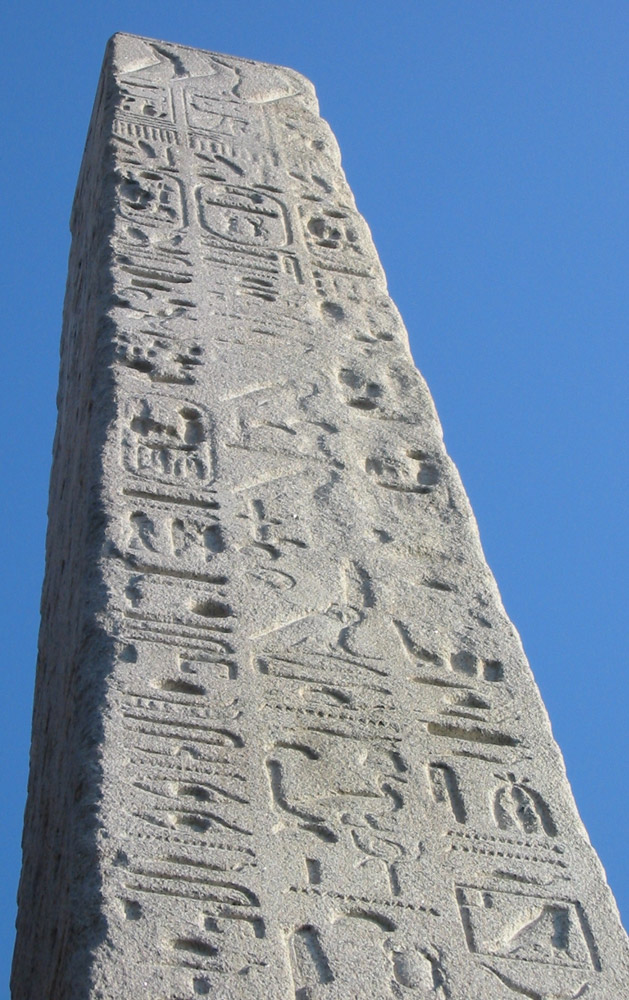
Cleopatra’s needle is not really a needle. Nor did it belong to Cleopatra. It is actually an obelisk, which at some 70 feet is a lot longer than most needles. This tall hunk of granite was first erected by Egypt’s Thutmose III in 1450 BC, give or take a few years. It was erected once again in London on September 12, 1878, after a rather curious 3,000-year history.

The obelisk was moved from its first site at Heliopolis to Alexandria during the reign of Augustus Caesar. It was toppled several years later by persons unknown and left face down in the shifting, whispering sands. After the obelisk lay there, collecting dust for 2,000 years, the Egyptian ruler Muhammad Ali came up with a great idea — they’d give it to the British in commemoration of some battle or another. And so they did, in1819.

The Brits were tickled, of course, but they let the big gift lie there for another 58 years, not quite tickled enough to foot the bill for a trip to England. Finally a private citizen agreed to pay for its transportation in a specially built ship named coincidentally, the Cleopatra, towed by another ship, the Olga. A storm at sea almost put a disastrous end to the venture, as the Cleopatra began rocking violently. Six men were killed trying to bring the her under control, and she was finally reported “abandoned and sinking.”

But Cleo didn’t sink. She was found drifting four days later by Spanish trawlers, then towed to Spain by a Glasgow steamer. Several months later, after repairs, she was finally towed to England where the was erected on the Victoria Embankment, flanked by two faux sphinxes.

Voila!, He Barked

On a beautiful afternoon in 1940, un chien Francaise named Robot was out for a walk in the Dordogne region of southwestern France, sans leash. Monsieur Dog, skipping away from his handler, 18-year-old

Marcel, found himself a big beautiful hole in the ground. Naturally, he bounded right in, not giving a moment’s thought to the enormity of the hole and the possible enormity of the creature who might have dug it.

Robot returned from the depths of the hole, uneaten, and Marcel sought the aid of some fellow teenagers to explore the hole. The four boys entered the hole, not giving a moment’s thought to the possibility that the creature found Robot too small a snack to be bothered with.

The hole stretched for 65 feet, qualifying itself as a cave, with not a single creature in it. These boys discovered that some other naughtier boys appeared to have painted graffiti all over the walls. Being good boys, and wondering if they should somehow wash down the walls, they sought adult guidance.

Well, didn’t the graffiti turn out to be 17,000 to 20,000 years, some 2,000 images of animals and strange prehistoric symbols that became famous as the Lascaux cave paintings But not one dog in the whole bunch. Robot remained unimpressed.

Sept 5, 1786: Watch it with that Thing, You’ll Poke Someone’s Eye Out

Jonas Hanway who died on September 5, 1786, was well-know in several British spheres — a vice president of the Foundling Hospital, founder of Magdalen Hospital, revolutionizing London birth registration and in charge of “victuallizing” the Navy. On the other hand, he was also known for tirades against tipping and tea-drinking and his support for the concept of solitary confinement.

But what he is most remembered for is bringing the umbrella to Britain. Now the umbrella had been around for a long time. It was invented in China back in the 11th century B.C. It was popular in Greece and Egypt as a sunshade. It was also used in Rome, but when the empire declined and fell, so did use of the umbrella. It was finally reintroduced in the 15th century, and by the 17th century had become quite popular among sophisticated women in France and even some British women. But a man?

Hanway is credited with being the first male Londoner to carry an umbrella, much to the chagrin of hackney coachmen who thought it their proprietary right to protect Londoners from rainfall. For years, they jeered at him with vigor as being a feminine sissy and even worse, a French sissy. But by the time of his death, umbrellas were commonplace throughout London.

Brolliology is of course the study of umbrellas. Of course. Does anyone actually know a brolliologist? What inspires someone to become one? What are their conventions like? We will study the umbrella a little further on September 7, the date of another noted umbrella in history.

Taxi Dancers and Tango Pirates

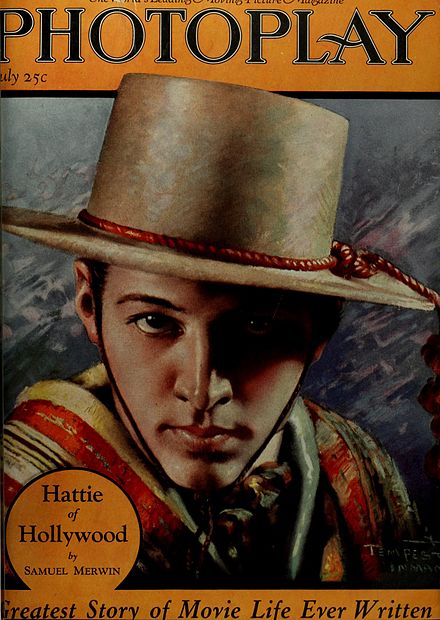
As America roared through the 20s, Hollywood’s fledgling film industry was itself roaring, the screen filled with stars such as Charlie Chaplin, Rudolph_ValentinoDouglas Fairbanks, Greta Garbo, and the roaring MGM lion. Come 1926, a new star would jump to the top of the heap, blazing a trail of sex and seduction. It almost didn’t happen.

Italian born Rodolfo Alfonso Rafaello Pierre Filibert Guglielmi di Valentina D’Antonguolla arrived at Ellis Island in 1913, at the age of 18. The young man who would eventually be known as the Latin Lover Rudolph Valentino took up residence in Central Park and on the streets of New York City. He found work as a taxi dancer (think “ten cents a dance”)at Maxim’s and became a”tango pirate,” a gigolo who sought out wealthy women at dances who were willing to pay for the company of handsome young men.

Valentino developed a relationship with a Chilean heiress who was unhappily married to a wealthy businessman. When she sued for divorce in 1915, Valentino testified that he had evidence of the husband’s having had multiple affairs. The ex-husband didn’t let bygones be bygones and on September 5, 1916, at his instigation, Valentino was arrested and charged with luring a young man into a whorehouse for white slavery. Valentino was jailed for several days before being cleared and released. A short time later the heiress shot her husband, and Valentino thought it wise to exit the scene. He headed to the opposite coast and began his meteoric rise to stardom.


Speaking of Tangoing Pirates

Another devilishly clever segue.

And it only takes one to tango here.

AUGUST 24, 1850: MEET ME AT THE FAIR

London’s Bartholomew Fair, a wild celebration on the eponymous saint’s anniversary, died not with bartha bang but a whimper after enduring for more than seven centuries, Although originally established for legitimate business purposes, the fair had become all eating, drinking and amusement (for shame!) and a bit of a public nuisance with rowdiness and mischief.

Serious pursuits, uplifting exhibits, and dramatic entertainments had given way to shows and exhibits catering to the lowest common denominator of British fair-goers tastes – conjurers, wild beasts, monsters, learned pigs, dwarfs, giants. A prodigious monster with one head and two distinct bodies, a woman with three breasts, a child with three legs. A mermaid with a monkey’s head and the tail of a fish. Puppet shows, pantomimes, and coarse melodramas. A pig-faced lady and a potato that looked like King Henry VIII.

Eventually the fair grew less curiouser and curiouser, and on August 24, 1850, when the mayor went as usual to proclaim the opening of the fair, he found nothing to make it worth the trouble. No mayor went after that, and in 1855 the fair rolled over and expired.

I went to the animal fair,

The Birds and the Beasts were there.
The big baboon, by the light of the moon,
Was combing his auburn hair.
The monkey, he got drunk,
And sat on the elephant’s trunk.
The elephant sneezed and fell on his knees,
And what became of the monk, the monk?
The monk, the monk, the monk.

— Minstrel Song

JULY 28, 1948: THOSE MAGNIFICENT MEN WITH NO FLYING MACHINES

A fog had settled over London on July 28, 1948.  All was quiet and seemingly normal. But of course it wasn’t. Visualize if you will a large shipment of gold bullion awaiting transport at London Airport. A gang of evildoers determined to make off with it.  And an elite throng of intrepid crimestoppers known as the Metropolitan Police Flying Squad. You have all the ingredients in place for the adventure known as the “Battle of London Airport.”  Talk about fodder for a summer blockbuster action-adventure movie or at least a page turner to take to the beach.


You’d certainly be forgiven for picturing a major confrontation with flying aces swooping in for a pitched battle with the bad guys.  But this is England. 1948. More likely a bevy of bobbies pedaling in on their bicycles or on foot, with nightsticks drawn, like so many Keystone Cops.

In fact, The Metropolitan Police Flying Squad didn’t have a flying machine to its name. Formed back at a time when the Wright Brothers and other dreamers were still tinkering with air travel, the Squad — known at the time the Mobile Patrol Experiment consisted of a dozen members of Scotland Yard. Their original mission was to chase down pickpockets by hiding in a horse-drawn carriage with peep holes cut in the canvas top.


During the 1920s, the squad expanded to forty officers, under the command of a Detective Superintendent and was authorized to carry out duties anywhere in London without observing the normal policing divisions, thus earning the name “Flying Squad.” It was also given the nickname “the Sweeney” (as in Sweeney Todd) for reasons that remain obscure.


The 1948 Battle of London Airport was the Squad’s crowning achievement, thwarting the attempted theft of £15 million in gold and jewelry.  During the 70s and 80s, however, the Squad came under fire for its close ties with the criminal world (always part of its operating strategy). Bribery and corruption scandals surfaced, and the squad’s commander was jailed for eight years. Twelve other officers were also convicted and many more resigned.

The Flying Squad had lost its wings.

A flying squad without wings is as lost as pirates without a ship.  Speaking of pirates, Terry and the Pirate is available all over the place in both paperback and electronic versions. Check it out at Amazon, Barnes and Noble, Apple.