

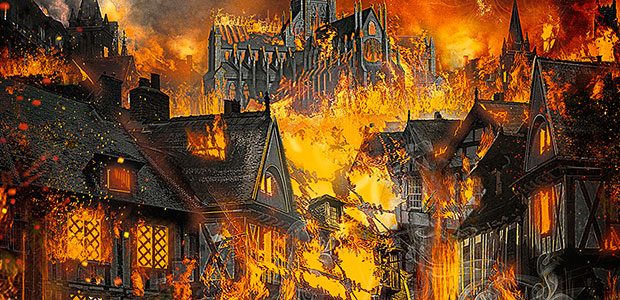
When the ashes settled after the great Chicago Fire, folks looked to assign blame and pointed their fingers at a cow. The English were also looking to fix blame for a fire some two centuries earlier. In early September 1666, a major fire broke out in Pudding Lane in the City of London and within days had destroyed 80 percent of the old city. Accusations were flying in all directions — strangers, the Spanish, Dutch, Irish and most particularly the French, Catholics, even King Charles II.
Enter one Robert Hubert. Hubert was a simple watchmaker who wasn’t quite wound up — and he was a French Catholic. He obligingly confessed to being the culprit, telling authorities he deliberately started the fire in Westminster. He was arrested, but one little problem cropped up: the fire hadn’t even reached Westminster, let alone started there.
When confronted with the fact that the fire originated in a Pudding Lane bakery. Hubert adjusted his story, saying that he had actually started the fire there, tossing a fire grenade through an open window. What’s more, he did it because he was a French spy in service of the Pope.
Hubert was hauled before the court. His story turned out to be riddled with problems. The bakery had no windows, and Hubert was judged to be so crippled that he could not have thrown the grenade. An even bigger problem: he was not in England when the fire started, according to the testimony of the captain of a Swedish ship who had landed him on English soil two days after the outbreak of the fire.
Nevertheless, the court found Hubert guilty, and on October 27, 1666, he was hanged at Tyburn, London. A year later, the cause of the fire was quietly changed to ‘the hand of God, a great wind and a very dry season.’ Or maybe a cow.
Don’t You Be a Meanie
 Oh, Mr. Paganini
Please play my rhapsody
And if you cannot play it won’t you sing it?
And if you can’t sing you simply have to . . .
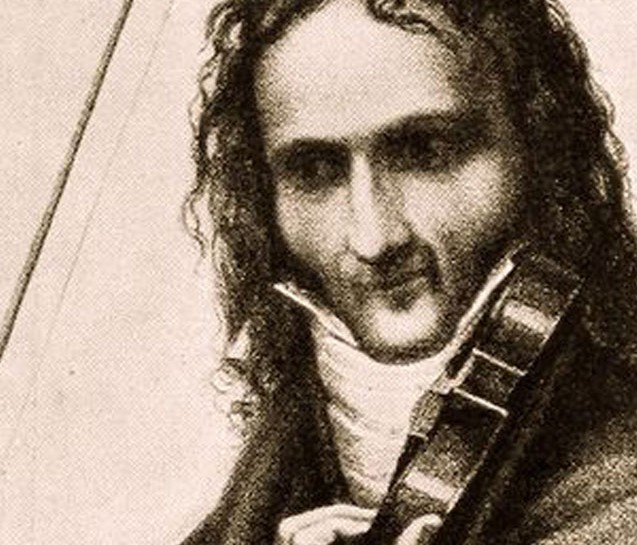
Mr. Paganini, aka (If You Can’t Sing It) You’ll Have to Swing It became a fixture in Ella Fitzgerald’s repertoire back in the 1930s. The Mr. Paganini to whom she refers is composer and violin virtuoso Niccolo Paganini who was born on October 27, 1782. During the height of his career, the legendary “devil violinist” set all of nineteenth-century Europe into a frenzy. He was a headliner in every major European city. His technical ability was legend, and so was his willingness to flaunt it. His fame as a violinist was equaled by his reputation as a gambler and womanizer.
Alas, his grueling schedule and extravagant lifestyle took their toll, and he suffered from ever increasing health problems. He died in 1840.





 Wretched Richard's Almanac