

Back in the eighth century, simple Polynesian voyagers in their handmade sailing vessels arrived on the islands of Hawaii, not known then as the Hawaiian Islands or even the Sandwich Islands. They led an idyllic existence – hula dancing, surfing, exchanging leis, trading banter: “Kulikuli, Ku’uipo” or “Hau‘oli Makahiki Hou” and occasionally chanting.
For nearly a thousand years, Hawaiians lived like this (not the same ones, but many generations), and then came the European explorers and – the Americans. American traders came to Hawaii for the islands’ sandalwood, which they sold to China. Then came the sugar industry followed naturally by missionaries. They moved right in and immediately upended Hawaiian political, cultural, economic, and religious life. In 1840, the monarchy, which had given us such notables as Kamehameha and Kamehameha II and Kamehameha III, became constitutional and lost much of its grandeur.
Four years later, a man name of Sanford B. Dole was born in Honolulu to American parents.
During the next four decades, Hawaii’s ties to the United States grew closer thanks to a number of treaties, and in 1887, a U.S. naval base was established at Pearl Harbor as part of a new Hawaiian constitution. Sugar exports to the United States grew, and U.S. investors and American sugar planters broadened their dominion over Hawaiian affairs. Queen Lydia Kamehameha Liliuokalani, who ascended to the throne in 1891, wanted none of this and said hele along with a Hawaiian gesture involving a ukulele.
The Americans were above trading unpleasantries. Instead on January 17, 1893, a revolutionary “Committee of Safety,” organized by the aforementioned Sanford B. Dole, staged a coup against the aforementioned Queen Liliuokalani. The United States turned a blind eye to the Hawaiian troubles, but 300 Marines who just happened to be in the neighborhood watched from offshore.
Shortly afterward, the US annexed Hawaii and Sanford B. Dole, a name that lives on in infamy and pineapples, became president.
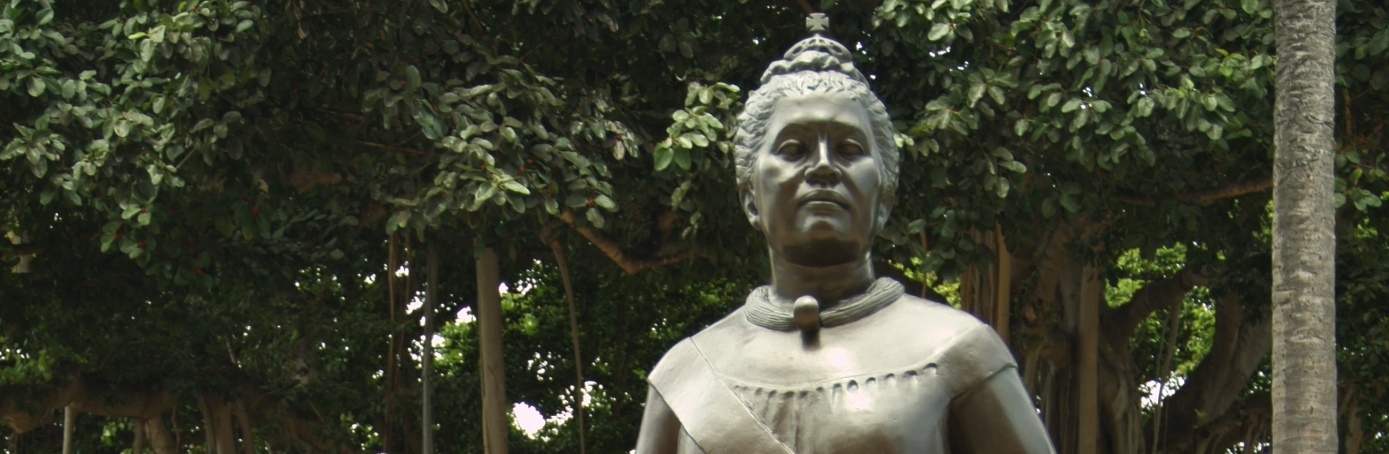
Liliuo — we’ll just call her Lydia — petitioned President Grover Cleveland who said the coup was probably illegal and certainly not very nice. But Dole just thumbed his nose at the pronouncement. Eventually, after an attempted uprising for which she was blamed, Lydia was placed under house arrest. During her confinement, she penned Hawaii’s most famous song, “Aloha Oe” (other than Don Ho’s “Tiny Bubbles” perhaps).
Lydia Kamehameha Liliuokalani was pardoned in 1896 and died in 1917 at the age of 79.
Italian Explorer for Hire
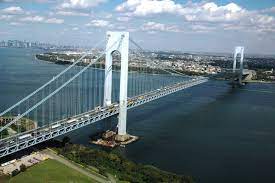
Just as Christopher Columbus was an Italian explorer in the service of Spain, Giovanni da Verrazzano was an Italian explorer in the service of France. It seemed nobody served Italy. Verrazzano set sail on January 17, 1524, in search of that ever elusive passage to China. Like Columbus before him, he discovered the New World instead. And it’s fortunate that Columbus was before him. Just think District of Verrazzano, Verrazzano OH, Verrazzano Day. Verrazzano had his own accomplishments, being the first European to explore the Atlantic coast of North America, where, in New York, he bought himself a bridge.
 Wretched Richard's Almanac