December 14, 1977: You Are the Dancing King

He was just another juvenile delinquent in a television sit-com, before he became a superstar playing a nobody by day who blossoms at night on the dance floor.  John Travolta strutted his stuff as Tony Manero, a paint-store clerk who dons a dashing white suit to ride the disco craze out of his dead-end existence in Saturday Night Fever. The film premiered on December 14, 1977, already guaranteed success thanks to its soundtrack, released months before the movie.

The disco songs recorded by the Bee Gees (including “Stayin’ Alive”) were all over the pop charts, sparking intense interest in the film before its release, with the film then popularizing the entire soundtrack after its release – the first (but certainly not the last) use of cross-media marketing.

Travolta plays Tony Manero, a Brooklyn paint-store clerk who’d give anything to break out of his humdrum life. The movie follows his foray, along with his partner Stephanie, into the Manhattan world of flashing lights and sweaty bodies. Disco and the culture of the disco era also star in the movie – the symphonic orchestration over a steady beat and disciplined choreography, the high style in clothing, and the sexuality of it all.

“Travolta on the dance floor is like a peacock on amphetamines,” said movie critic Gene Siskel, who bought Travolta’s famous white suit at a charity auction. “He struts like crazy.”

The film had an R-rating when it was originally released in 1978. Several years later it was edited down to PG with naughty bits removed to make it more “family-friendly” and suitable for television.

Some critics complain that the film was regressive, refashioning disco, which began as an underground social scene for gays, blacks and Latinos, as a vehicle for white masculinity and the heterosexual hunt for a willing partner. Picky, picky, picky.

February 18, 1953: Leaping from a Screen Near You

An exciting new kind of movie opened in New York City on February 18, 1953, and quickly took the entire nation by storm. It promised each and every theater patron the cinematic excitement of a lion in his or her lap. It was the latest attempt by desperate movie studios to pry people away from those insidious television sets that had popped up in living rooms everywhere, to get them back into theaters.  In a frenzy they had tried to beat the little box with Cinerama, Cinemascope and a host of other Deadly Cins.

The new kind of movie was of course 3-D, complete with those funny little glasses (sadly lacking a big nose and mustache), and this first film was called Bwana Devil. Not only did audiences have to sit through a newsreel and a featurette about folk dancing in a remote Himalayan village to get to the good stuff, they also had to endure an opening lecture on just how this modern marvel worked. A very serious scientist in a lab coat delivered this lecture. He described the 3-D process in numbing detail while the antsier members of the audience chewed Necco wafers and stared at him through those special glasses, wondering why he remained flat as a pancake in a lab coat.

Bwana Devil was a jungle flick (in case you wondered), obviously chosen so that it could feature lions and tigers and elephants and giraffes leaping from the screen onto the unsuspecting audience, causing most of the ten-year-olds to pee their pants. “Let’s see your 15 inch, black and white TV do that,” Messieurs Metro, Goldwyn and Mayer snickered.

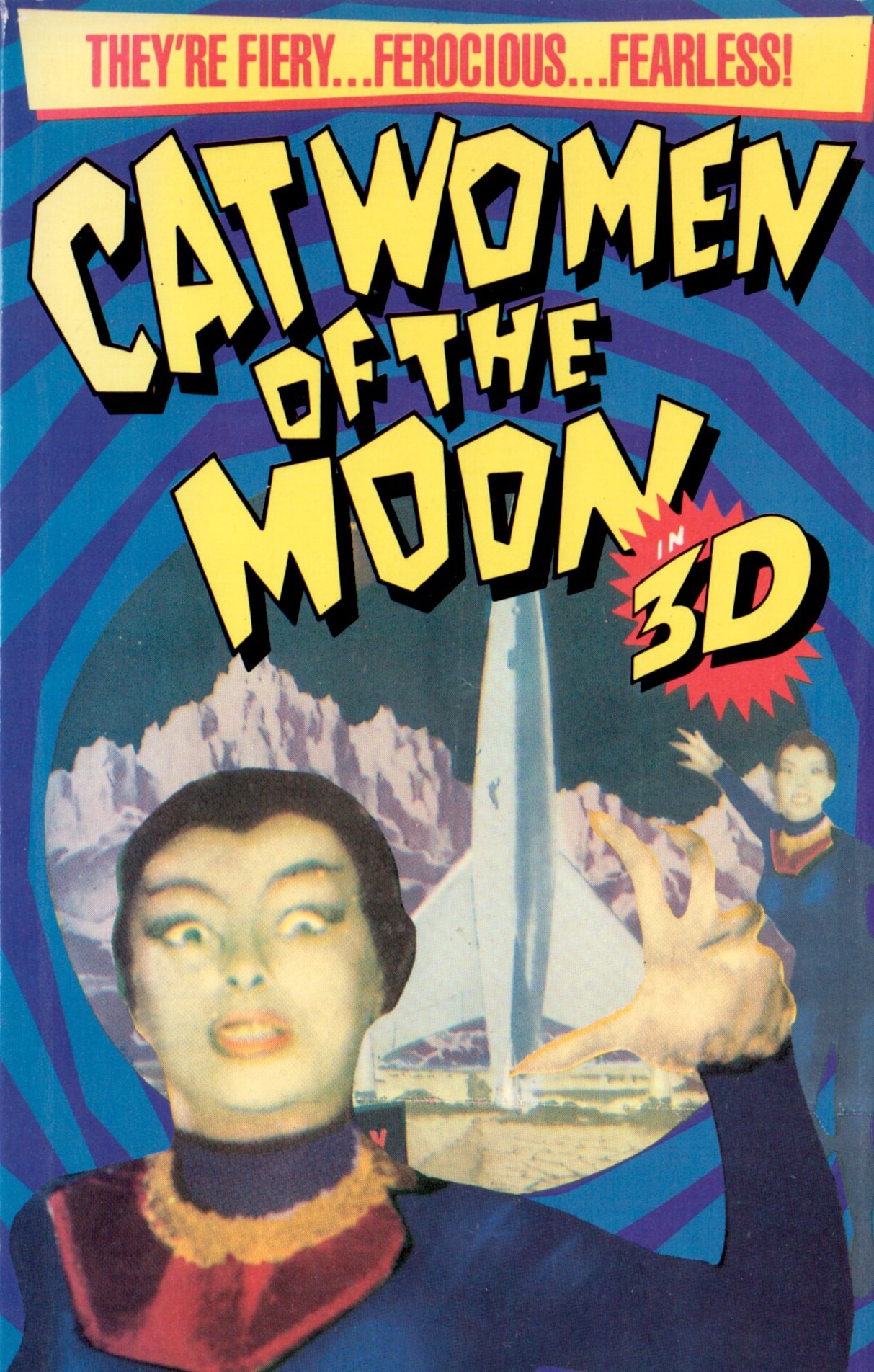
And they continued to do that, with westerns, in which Indians would shoot flaming arrows indiscriminately into the audience – one of them right into the forehead of a kid sitting in the third row. Or creepy horror films in which a mad scientist reached into the audience plucking a comely teenager by the throat, pulling her out of her seat, sucking her into the screen never to be seen again.  And Cat-Women on the Moon — sexy moon maidens in black tights leaping into the aisles and luring ogling men into the lobby for who knows what? Hollywood had struck back.

To experience the sheer terror of 3-D, tape red cellophane over your left eye and blue cellophane over your right eye.  Then look at the picture below and Omigod! Look out for the tiger!.

tiger-large

Naming Rights

Born on this day in 1745, Italian physicist Alessandro Volta, inventor of the electric battery, for whom the volt was named (not to be confused with the Volta Boatman).  There’s also Georg Ohm  and Andre-Marie Ampere, but they weren’t born on February 18.  Ernst Mach was, in 1838.  He was the Austrian physicist who gave his name to a unit of speed.  And way back in 1516, the daughter of Henry VIII,  Mary Tudor, who gave her name to the popular cocktail, the Bloody Tudor.

December 14, 1977: You Are the Dancing King

He was just another juvenile delinquent in a television sit-com, before he became a superstar playing a nobody by day who blossoms at night on the dance floor.  John Travolta strutted his stuff as Tony Manero, a paint-store clerk who dons a dashing white suit to ride the disco craze out of his dead-end existence in Saturday Night Fever. The film premiered on December 14, 1977, already guaranteed success thanks to its soundtrack, released months before the movie.

The disco songs recorded by the Bee Gees (including “Stayin’ Alive”) were all over the pop charts, sparking intense interest in the film before its release, with the film then popularizing the entire soundtrack after its release – the first (and certainly not the last) use of cross-media marketing.

 The movie follows Tony’s foray into the Manhattan world of flashing lights and sweaty bodies. Disco and the culture of the disco era also star in the movie – the symphonic orchestration over a steady beat and disciplined choreography, the high style in clothing, and the sexuality of it all.

“Travolta on the dance floor is like a peacock on amphetamines,” said movie critic Gene Siskel, who bought Travolta’s famous white suit at a charity auction. “He struts like crazy.”

The film had an R-rating when it was originally released in 1978. Several years later it was edited down to PG  to make it more “family-friendly” and suitable for television.

A Practical Gift Idea

Just trying to help. This one’s about sticking pins in little dolls to get what you want.