

Louis Phillippe, King of the French (as opposed to King of France) from 1830 to 1848, created an elite military force on March 9, 1831, to bolster the regular French army. The French Foreign Legion or Légion étrangère was unique in that it was open to foreigners wising to join the French armed forces which normally allowed only French citizens to serve. Legionnaires could apply for French citizenship after three years’ service or immediately after being wounded in battle — “Français par le sang versé” (“French by spilled blood”). Known for its exceptional military skills and its strong esprit de corps, it became gained a reputation as a top mercenary corps.
 The Legion also became legendary in pop culture. It has played a part in hundreds of books and movies, probably the most famous of which is the 1924 novel Beau Geste, about three brothers joining the Legion. It was made into a movie five
  times, and parodied even more. Buster Crabbe joined the Legion as Captain Gallant. Abbott and Costello, Laurel and Hardy, and the Three Stooges all did time. As did Bugs Bunny, Porky Pig, Donald Duck, Mickey Mouse, Goofy, Pepé Le Pew, Heckle and Jeckle, and Snoopy. Edith Piaf and Frank Sinatra have both sung about the Legion.
In 1977, Marty Feldman wrote and starred in The Last Remake of Beau Geste. It  probably won’t be.
The Japanese Foreign Legion?
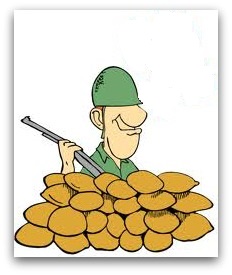
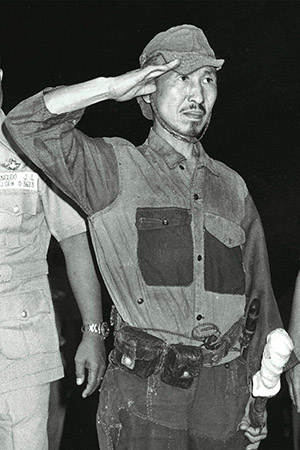
Lt. Hiroo Onoda, a soldier in the Japanese army, was sent to the remote Philippine island of Lubang in 1944 to conduct guerrilla warfare. Onoda was supposed to blow up the pier at the harbor and destroy the Lubang airfield. Unfortunately, his commanders, who were worried about other matters, decided not to help Onoda on his mission and soon the island was overrun by the Allies. Time passed, the war ended, but nobody officially told Onoda; so for 29 years, Onoda remained a dedicated soldier, living in the jungle, eating coconuts and bananas and deftly evading searching parties. Hiding out in the dense jungles, Onoda ignored the leaflets, newspapers, photographs and letters from relatives dropped by planes during the years; he was convinced they were all part of an Allied plot.
 In 1974, a college dropout named Norio Suzuki traveled to the Philippines, telling his friends he was out to find a panda, the Abominable Snowman and Lt. Onoda. Where others had failed, Suzuki succeeded. He found Lt. Onoda and tried to convince him that the war was over. However, Onoda refused to leave the island until his commander ordered him to do so. Suzuki traveled back to Japan and found Onoda’s former commander, who had become a bookseller. On March 9, 1974, Suzuki and the commander/bookseller met Onoda and delivered orders that all combat activity was to be ceased, and Onoda laid down his arms.


 Wretched Richard's Almanac