December 25, 1914: Over There

Just after midnight on December 25, 1914, British, French and Russian troops at European battle fronts were stunned as German joyeauxtroops ceased firing and began to sing Christmas carols — in some cases, even backed up by oompah bands.

World War I had begun five months earlier and would continue for another devastating four years. This spontaneous Christmas truce continued through the night and into daylight when many of the German soldiers emerged from their trenches and called out “Merry Christmas” in their enemies’ native tongues. Finally, Allied soldiers, seeing that the Germans were unarmed, climbed out of their trenches as well. Men from both sides ventured through the so-called No Man’s Land to shake hands with the enemy. The men exchanged small presents and sang carols and songs. In one case, soldiers played an international soccer game.

It was, of course, short-lived as both sides went back to their business of killing each other.  (This true story is told in the 2005 French film Joyeux Noel.)

On Christmas Day in 1941 Bing Crosby introduced a new Christmas song on his weekly NBC radio program. The song, written by Jewish composer and lyricist Irving Berlin, went on to become the gold standard of Christmas music — the top-selling Christmas single ever and the top-selling single of any kind for another 55 years.

The success of “White Christmas” came as no surprise to Berlin, who was already a musical legend. He modestly called it “the best song I ever wrote…the best song anybody ever wrote.” Although Berlin did not celebrate Christmas, it was a day that did hold special meaning to him: his infant son died on December 25, 1928. That perhaps explains some of the ambiguous emotional strength of the song.


MAY 11, 1888: THE LEADER OF THE BAND

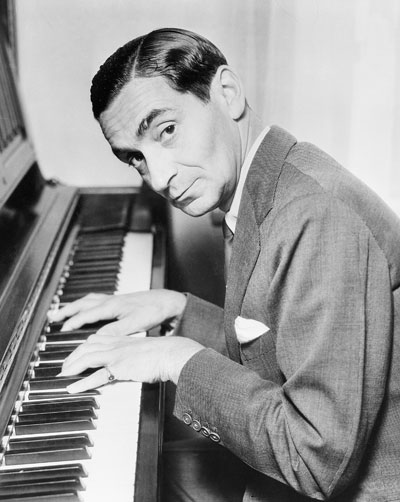
Israel Beilin was born on this day in 1888 in a small village in Belarus.  His father, a cantor in a synagogue, with the intimidating name of Moses, uprooted his family in the face of the anti-Jewish pogroms of the late 19th century, emigrating to the United States, where theyalex settled into a cold-water basement flat with no windows in New York City.  At the age of fourteen, Izzy, as he was called, realized that he contributed less to the family than his siblings and decided to leave home. With few survival skills and little education, he found no real employment. His only ability was acquired from his father’s vocation: singing. He joined with a few other youngsters, singing in Bowery saloons popular ballads for whatever customers would give them. Beilin began to recognize the kind of songs that appealed to audiences. In his free time he taught himself to play the piano, picking out tunes when the bar had closed for the night.


His first attempt at songwriting was a song called “Marie From Sunny Italy,” written in collaboration with the bar’s pianist. The sheet music to this song is important primarily because of a printer’s error.  The name printed on the cover was misspelled as: ‘I. Berlin.’


His meteoric rise as a songwriter came soon after with a song that would become world-famous. “Alexander’s Ragtime Band” firmly established Irving Berlin as an instant celebrity and one of America’s foremost musical wonders. He went on to write an estimated 1,500 songs, many becoming major hits, during his 60-year career, including the scores for 19 Broadway shows and 18 Hollywood films.  His songs were nominated eight times for Academy Awards. A list of noted songs might begin with “A Couple of Swells” and end with “You’re Just in Love,” with a whole lot in between.  Here’s a more complete list.


George Gershwin called him “the greatest songwriter that has ever lived” and composer Jerome Kern concluded that “Irving Berlin has no place in American music—he is American music.”

Meanwhile in Romania

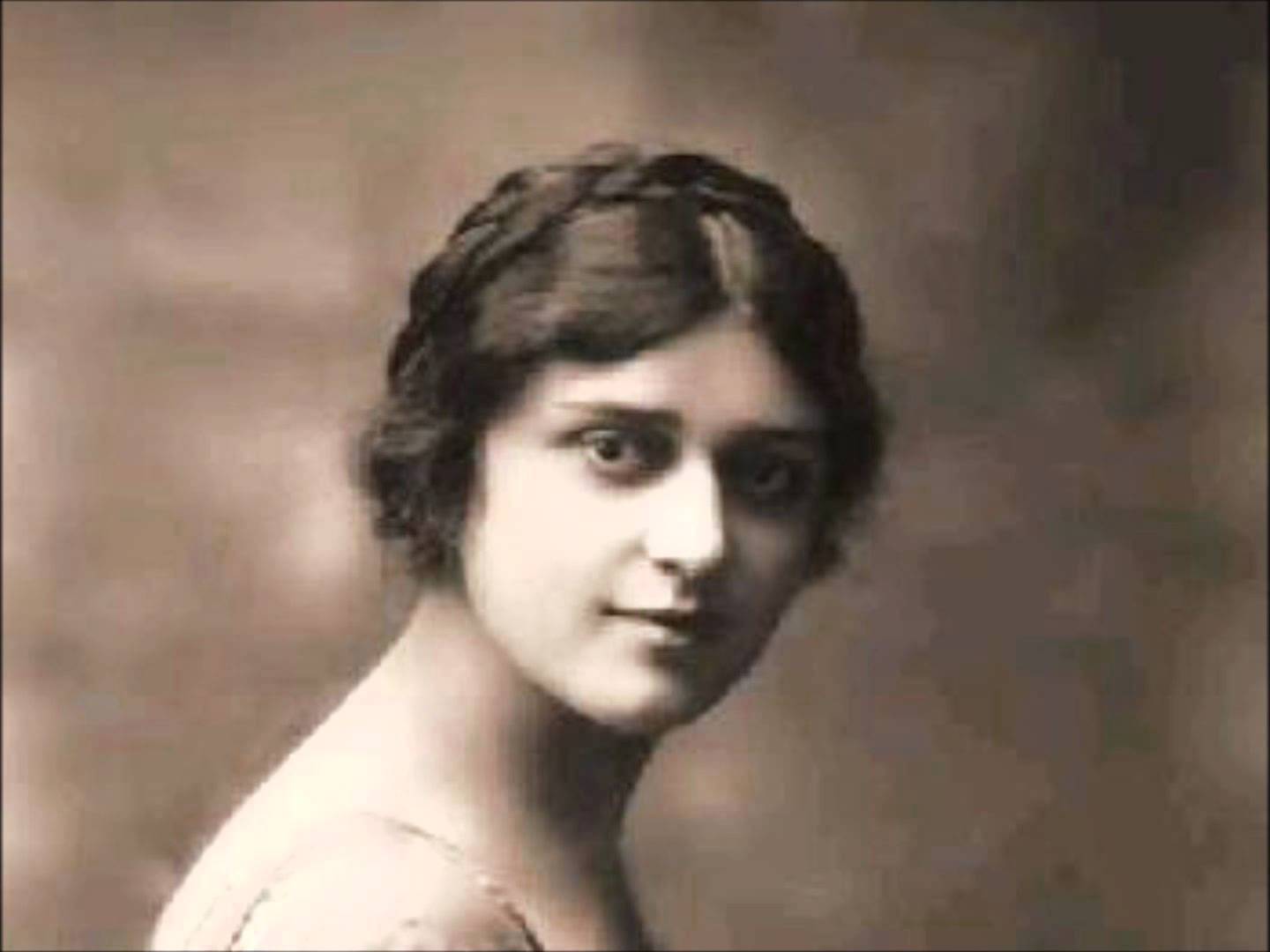
On this same date a few years earlier, in 1884, another musical talent was born in Romania.  Like Irving Berlin she emigrated to America at a young age.  Alma Gluck did not have his lasting fame, but she became a successful performer at  the Metropolitan Opera as well as in concerts throughout the country.  She was an early recording pioneer, and her recording of “Carry Me Back to Old Virginny” sold over a million copies, earning her a gold record, only the seventh to be awarded.


December 25: Tis the Season

Today is of course Christmas Day in much of the world.  To some folks who pack a lot into their ’tis the season, it is the beginning of Christmastide or Twelvetide, the first of a dozen days of Christmas.  This is infamously celebrated by the carol in which on this day, the first day of Christmas, someone’s True Love bestows upon him or her a gift of a partridge in a pear tree.  While we might point out that a crock pot or a circular saw would be a bit more practical, we won’t quibble with the sentiment.

It would also seem that Charles Dickens missed the boat.  Imagine the twelve ghosts of Christmas:  The first ghost of Christmas shows Ebenezer Scrooge how happy his parents were before he was born.  Stay tuned, Ebenezer; there’s more to come.

Over There

Just after midnight on December 25, 1914, British, French and Russian troops at European battle fronts were stunned as German joyeauxtroops ceased firing and began to sing Christmas carols — in some cases, even backed up by oompah bands.

World War I had begun five months earlier and would continue for another devastating four years. This spontaneous Christmas truce continued through the night and into daylight when many of the German soldiers emerged from their trenches and called out “Merry Christmas” in their enemies’ native tongues. Finally, Allied soldiers, seeing that the Germans were unarmed, climbed out of their trenches as well. Men from both sides ventured through the so-called No Man’s Land to shake hands with the enemy. The men exchanged small presents and sang carols and songs. In one case, soldiers played an international soccer game.

It was, of course, short-lived as both sides went back to their business of killing each other.  (This true story is told in the 2005 French film Joyeux Noel.)

On Christmas Day in 1941 Bing Crosby introduced a new Christmas song on his weekly NBC radio program. The song, written by composer and lyricist Irving Berlin, went on to become the gold standard of Christmas music — the top-selling Christmas single ever and the top-selling single of any kind for another 55 years.

The success of “White Christmas” came as no surprise to Berlin, who was already a musical legend. He modestly called it “the best song I ever wrote . . . the best song anybody ever wrote.” And written by a man who did not celebrate Christmas.