November 10, 1903: Cold, Cold, Cold Was the Trolley

It was a typically nasty winter day — wet and cold — in New York City at the dawn of the 20th century, when Mary Anderson, an out-of-towner took a typical tourist trolley ride. There wasn’t a whole lot to see with sleet clinging to the windows. In fact, Mary observed that the driver of the streetcar himself could barely see through the front windshield. The trolley’s front window had supposedly been designed for bad-weather visibility: it was made up of individual panes that could be opened when covered by rain or snow, allowing the driver to peer out through the opening. Hardly high tech. Not only did it do little to improve the driver’s ability to see where he was going, it left him with an ice-encrusted face, and chilled the passengers as well.

Right there, while sitting in the cold trolley, Mary began to sketch a mechanical device that would wipe the trolley’s windshield. Her invention had arms made of wood and rubber that were attached to a lever near the steering wheel of the drivers’ side. By pulling the lever, the driver could drag the spring-loaded arm across the window and back again, wiping away raindrops, snowflakes, sleet, dead birds, what-have-you. The wipers could easily be removed when meteorologists prophesied sunny skies.

Mary returned home to Birmingham, Alabama, and applied for a patent. On November 10, 1903, she received U.S. Patent No. 743,801 for her “window cleaning device for electric cars and other vehicles to remove snow, ice or sleet from the window.” Alas, she was an inventor ahead of her time. She made not a penny for her cleverness. And yet within ten years windshield wipers were standard issue in passenger cars everywhere.

In 1917, another woman, Charlotte Bridgewood, patented the “Electric Storm Windshield Cleaner,” an automatic wiper system that used rollers instead of blades. (Her daughter had already invented the turn signal.) But like Mary Anderson, Charlotte Bridgewood never made any money from her invention. Another type of automatic windshield wiper came onto the scene in 1921. Called “Folberths,” after their inventors, these wipers were powered by a device connected by a tube to the inlet pipe of the car’s motor.

The male Folberths profited from their invention, which may lead some to believe that wiping devices were at work on glass ceilings as well as windshields.


AUGUST 2, 1922: YOUR CALL IS IMPORTANT TO US

phone1Alexander Graham Bell was one of those curious inventive sort of kids, the kind that love to experiment and blow up the garage with their chemistry set when they’re eight. Although he was normally quiet (except for the explosions), he loved mimicry and ventriloquism, throwing his voice here and there to baffle guests and leave his family carrying on conversations with the dog and the cat and plants.

     Troubled by his mother’s near deafness, he developed a technique of speaking directly into her forehead instead of her ears which for some reason enabled her to hear him. That evidently awakened a dream within him: If he could speak to his mother’s forehead and she could hear, he must be able to speak to a forehead in China or some other faraway place and be heard.

     This of course led to his study of acoustics, and his greatest invention. By 1876, he had developed a theory of forehead to forehead long distance transmission, and just days after receiving a patent, Bell succeeded in getting his invention to work.  He held the device to his forehead and spoke the now famous sentence: “Mr Watson – Come here – I want to see you.” In an adjoining room, Watson, listening at the receiving end (he held it to his ear but probably never told Bell), heard the words clearly.  He shouted to Bell the equally famous words: “Not now.  I’m on the phone.”

Oddly enough, Bell considered his most famous invention an annoyance and refused to have a telephone in his study.

     Bell died on August 2, 1922 before he could invent many improvements to his telephone, leaving it for others to come up with such refinements as the busy signal, call waiting, “Do you have Prince Albert in a can?”, cell phones and smart phones, obnoxious ringtones during concerts, and robocalls from Wayne LaPierre.   As another famous inventor put it: “What hath God wrought?”


JULY 7, 1104: IT’S OUR PLEASURE, YOUR BACON

England is not without its share of quaint ceremonies, many dating back to medieval times. One of the more unusual of these is the Dunmow Flitch which had its inception in Little Dunmow, Essex, during the 13th century and gravitated from there to Great Dunmow (a larger venue perhaps). The custom was a celebration of marital bliss in which a lucky couple who could satisfy judges of their own would be rewarded with a flitch of bacon, basically half a pig.

To win the flitch, the couple must prove that they had lived for a full year in a state of wedded euphoria, never uttering a harsh or quarrelsome word, nor shooting even a nasty glance in the other’s direction. No negative thought or a hint of regret could enter their minds. And if they had the opportunity to do it all over — well, you get the drift. If the judges were convinced:

“A whole gammon of bacon you shall receive,
And bear it hence with love and good leave:
For this is our custom at Dunmow well known,
Tho’ the pleasure be ours, the bacon’s your own.”

The happy couple were then paraded around town with their flitch of bacon and a lot of ballyhoo.

Were you to think this a very difficult way to procure a flitch of bacon, you’d be spot on. From the 13th century until the 18th century when the custom died out, there were, strangely enough, only six recorded winners. And according to an unreliable source, one of the early winning couples was a ship’s captain and his wife who hadn’t actually laid eyes on each other for the year after their wedding. Another couple, successful at first, had the flitch taken away from them after they began to argue about how it should be dressed. Yet another couple failed when the husband, who took part reluctantly, had his ears boxed by his wife during the questioning.

The custom has been reintroduced sporadically over the years. It is currently held every four years, coincidentally in the same years as American presidential elections.  Perhaps we could learn from it.

Maybe If They Hadn’t Had To Slice Their Own Bread

“The greatest thing since sliced bread” is high praise indeed, denoting the ultimate in ingenuity, a hallmark of good old American know-how, a real “Wonder,” if you will. Sliced bread? Really? How important can sliced bread be?

White bread, we just can’t quit you.

Well, for example, in 1943, U.S. officials imposed a ban on sliced bread as a wartime conservation measure for reasons known primarily to U.S. officials. Why not just cut off everyone’s right arm? A letter from a frantic housewife to The New York Times was typical of the reaction:

I should like to let you know how important sliced bread is to the morale and saneness of a household. My husband and four children are all in a rush during and after breakfast.  Without ready-sliced bread, I must do the slicing for toast—two pieces for each one—that’s ten. For their lunches I must cut by hand at least twenty slices, for two sandwiches apiece. Afterward I make my own toast. Twenty-two slices of bread to be cut in a hurry!

Sliced bread, specifically a loaf of bread pre-sliced by a machine and packaged for consumer convenience, made its debut on July 7, 1928, and was hailed as “the greatest forward step in the baking industry since bread was wrapped” (they couldn’t really call it the greatest thing since sliced bread). It was produced by the Chillicothe Baking Company of Chillicothe, Missouri, as “Kleen Maid Sliced Bread.”

Kleen Maid was followed by the Holsum Bread brand, used by various independent bakers around the country. And in 1930, Wonder Bread started marketing sliced bread (or a plastic replica of it) nationwide, and the rest, as they say in the bread world, is history.

APRIL 16, 1850: CALL ME MADAME

Madame (Marie) Tussaud is arguably the world’s most famous wax sculptor. Born in France in 1761, she began her artistic career during the French Revolution, searching through corpses to find the heads of noted guillotine victims from which she made death masks. She herself was imprisoned for three months awaiting execution, but an influential friend intervened and she was released. She and her waxwork friends toured throughout Europe for 33 years before settling into a permanent exhibition in 1835 on Baker Street in London. There she gained prosperity and fame, managing her wax museum until her death on April 16, 1850.
Throughout Madame Tussaud’s long existence, its most popular feature has been the Chamber of Horrors (as pictured here).

Where’s the Remote?

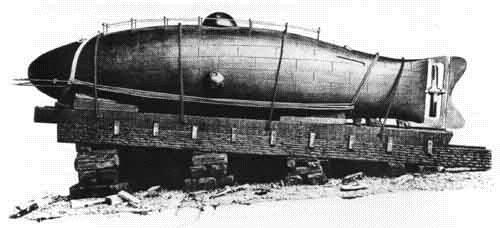
Inventor Walter Pichler is the genius behind the amazing TV helmet of 1967. This device allows a user to leave the outside world and slip into his or her own little world of information and entertainment. The user simply inserts his or her head into a capsule that resembles a small submarine and hopes that he or she doesn’t bump into something while enjoying the “virtual world” of Gilligan’s Island.

Pearl Among . . .

minnie

“How-w-w-Dee-e-e-e! I’m jes’ so proud to be here!” “Here” might have been the National Comedy Hall of Fame into which, on April 16, 1994, Minnie Pearl became the first woman inducted. But more often it was on the stage of the Grand Ole Opry in Nashville, Tennessee, where Minnie held sway as the resident Southern hillbilly for over 50 years.

Her comedy was a good-natured satire of rural Southern culture. She appeared in her trademark hat, purchased at the Surasky Bros. Department Store in Aiken, South Carolina, for $1.98 before her first stage performance in 1939, along with styleless “down home” dresses.  Her self-deprecating humor was usually about her unsuccessful attempts to get “a feller” and her ne’er-do-well relatives. She also sang novelty songs and danced with Grandpa Jones. From the opening How-w-w Dee-e-e-e to her closing “I love you so much it hurts!”, she had the Opry audience in the palm of her hand.

The Little Tramp

Sir Charles Spencer Chaplin, known to millions of film buffs as “Charlie,” was born April 16, 1889.  His working life in entertainment began as a child performer in British music halls and spanned 75 years until his death in 1977 at the age of 88.   In the United States, he became one of the most important creative personalities of the silent-film era — acting in, directing, scripting, producing and composing the music for his own films.


APRIL 9, 1940: YOUR SHOPPING CART IS EMPTY

Sylvan Goldman was an idea man. One of his more persistent ideas led to his choice of careers. Actually, it was more than an idea — a concept, an eternal truth perhaps. “The wonderful thing about food is that everyone uses it — and uses it only once.”

Born in the Oklahoma Territory, he and his brother went into wholesale produce only to be wiped out by plunging oil prices.  After studying all the latest methods for retailing groceries, they bounced back with a chain of self-service stores featuring woven baskets for  carrying groceries. The stores were a big success, and they were bought out by the Safeway chain. Once again hard luck hit; their Safeway stock tanked during the Depression. And once again they bounced back; by the mid-30s they were half owners of the Piggly Wiggly chain.

Goldman continued to dream about customers moving more and more groceries. And one night in 1936 he had a eureka moment — inspired by a wooden folding chair. Put wheels on the legs and a big basket on the seat and you have a shopping cart.

Goldman and a mechanic friend began tinkering. They devised a metal cart with not one but two wire baskets. For efficient storage, the carts could be folded and the baskets nested. Goldman called his invention a folding basket carrier, receiving a patent on April 9, 1940.

When the carriers were introduced to the public, Goldman encountered one tiny problem. Customers didn’t want to use them. Men thought they would look like sissies pushing a cart. Women felt like they were pushing a baby carriage.  And older shoppers thought it made them look helpless. Goldman was always ready with another idea. He hired attractive models, both men and women, to push the carts around, as well as charming greeters urging customers to take one for a spin.

By the 1940s, the carts had become so much a part of the American shopping experience that the Saturday Evening Post devoted its cover to them. And they got bigger and bigger until they got tiny as little icons on websites everywhere.

Goldman’s Folding Carrier Basket Company is still in business today. Goldman isn’t. He died in 1984.

APRIL 3, 1667: THE LIONS ARE COMING, THE LIONS ARE COMING

In addition to being a member of the British peerage, Edward, Marquis of Worcester, who died on April 3, 1667, was a bit of a dabbler, a sort of ersatz inventor, and author of an odd little book witn the catchy title A Century of the names and scantlings of such inventions as at present I can call to mind to have tried and perfected. The book, written some ten years earlier, describes, as the title suggests, a hundred speculative projects, none of them, however, detailed enough to allow a reader to actually put them into practice: secret writing with peculiar inks, explosive devices that would sink any ship, ships that would resist any explosive devices, floating gardens, a method to prevent sands from shifting, automatic assault pistols and cannons, a timer for lighting candles at any time during the night, a hundred-foot pocket ladder, flying machines.

Although many of his ideas foreshadowed later inventions, it is unclear whether he had thought through the methods by which they would work. One idea was put to work with success although unusually so. As the owner of Raglan Castle, he had constructed some hydraulic engines and wheels for bringing water from the moat to the top of the castle tower.  During the Civil War, Roundheads (supporters of Oliver Cromwell with bad haircuts) had approached the castle with not the best of intentions. The Marquis had his waterworks put into play. “There was such a roaring,” he later wrote, “that the unwelcome visitors stood transfixed, not knowing what to make of it.” On cue, one of the Marquis’ men came running toward them shouting that the lions were loose. The intruders tumbled over one another down the stairs in an effort to escape, never looking back until the castle was out sight.

Edward suggested that when he died, a model of his engine should be buried with him: “I call this a Semi Omnipotent Engine, and do intend that a model thereof be buried with me.”[

Fast Forward Four Hundred Years

And another ersatz inventor with a bad haircut.  Dean Kamen was mostly a master of hype. Among his contributions to society are an all-terrain electric wheelchair and a device that uses compressed air to launch SWAT teams to the roofs of tall buildings in a single bound.  Interestingly enough, Kamen’s father was an illustrator for Mad and Weird Science.

The most famous of his inventions by far was a closely guarded secret that he claimed would change the world when made public. Unveiled in 2001 to major drumrolls, the Segway is an electric, self-balancing human transporter. It landed pretty much with a thud.  Adding insult, Time Magazine included the Segway at the top of its list of the 50 worst inventions.

British entrepreneur Jimi Heseleden begged to differ. He bought the Segway company in 2010. Unfortunately, he died that same year when he fell off a cliff while riding his Segway.

Listen Up Roundheads

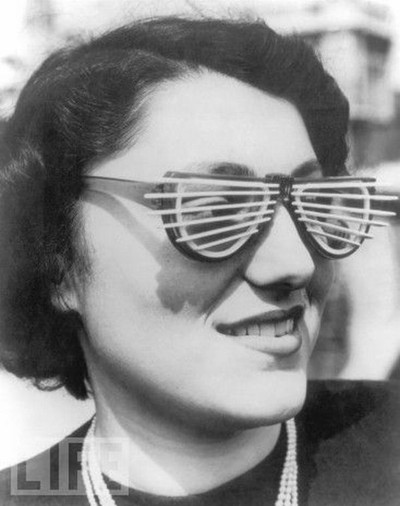
The aforementioned Time list of the worst inventions included such sure-fire ideas as Hair in a Can (you spray it on, guys), Tanning Beds,  Smell-o-Vision, Hula Chair and Venetian-Blind Sunglasses. The Almanac has visited some of these in the past and will visit others in the future.

March 13, 1923: Rock-a-bye, Baby On the Treetop

In 1906, Eleanor Roosevelt, then a young mother living in New York City, bought a cage made of chicken wire and hung it outside the window of her townhouse. The cage was for her daughter Anna to nap in and enjoy the fresh outside air. Her neighbors threatened to call in the authorities. Young Eleanor wasn’t really a wicked mother; she was just a few years ahead of her time. Fast forward to the 1930s; baby cages are a booming business, particularly in London.

In between, Emma Read of Spokane, Washington, had the foresight to apply for a patent for “an article of manufacture for babies and young children, to be suspended upon the exterior of a building adjacent to an open window, wherein the baby or young child may be placed.” She envisioned a cage with removable curtains and an overlapping slanted roof to protect the suspended tyke from rain and snow — And from rattles and other toys maliciously thrown by the rotten little kid in the cage on the floor above.  Her patent was granted on March 13, 1923.

Interest peaked and petered out in the 1950s, and the baby cage disappeared into history despite the fascinating concept of children being caged.


Gonna Find Me a Planet

An advanced civilization inhabited Mars, but the times were desperate. The planet was becoming arid, and the Martians had constructed a series of canals and oases in an attempt to tap the polar ice caps. This was the theory espoused by Percival Lowell based on studies from his observatory in Flagstaff, Arizona, during the early 20th century. Lowell was born on March 13, 1855, and after many years traveling in and studying the Far East, he turned his attention to the far reaches of space. He was all over Mars, writing three books on the red planet that captured the public imagination and helped give rise to the notion of men from Mars.

The existence of canals was later disproved by more powerful telescopes and space flights, but Lowell would make a more important contribution to planetary studies during the last years of his life. Turning from Mars to Neptune and Uranus, Lowell became convinced that their positions were affected by a hypothetical Planet X. Lowell began searching for the mystery planet in 1906. Dying in 1916, Lowell himself did not witness the discovery, but the Lowell Observatory announced on what would have been his 75th birthday — March 13, 1930 — that they had discovered the planet Pluto.

Sadly, after nearly a century as our ninth planet, Pluto was cruelly downgraded to the status of dwarf planet in 2006.  And the name Pluto will become more associated with the Disney hound dog of that name.

Of Which You Ain’t Nothing But a

Mike Stoller (right), born March 13, 1933, working with his partner Jerry Leiber, helped shape rock leiberand roll with an amazing list of hit songs beginning with Hound Dog in 1952. Elvis Presley , the Beatles, the Rolling Stones, the Beach Boys, John Lennon, Otis Redding, Jimi Hendrix, and Frank Sinatra top the list of the many artists who have recorded their songs. More than three dozen of their hits were featured in the Broadway production Smokey Joe’s Cafe including the title tune, Young Blood, Dance With Me, Searchin’, Kansas City, Poison Ivy, On Broadway, Yakety Yak, Charlie Brown, Loving You, Jailhouse Rock, Spanish Harlem and Stand by Me.

In an interview, Stoller was asked to compare Elvis Presley’s 1956 version of Hound Dog with the original recorded by Big Mama Thornton. “It sounded kind of stiff and a bit too fast, a little nervous,” he answered. “It didn’t have that insinuating groove like on Big Mama’s record.”

Eventually, he grew to like the Presley version.   After it sold seven million copies it began to sound better.”


March 10, 1876: It’s a Telephone, My Dear Watson

Who would have thought back on March 10, 1876, that in a hundred or so years practically every other human on the face of the earth would have a phone pressed against the side of his or her head at any given moment. Certainly not Alexander Graham Bell, as he was in the process of making the very first phone call. It wasn’t much of a call, certainly not long distance. Bell called his assistant Thomas A. Watson who was in the next room. The phones they used weren’t much to behold; they looked more like tin cans connected by a long string than today’s sleek models. But nevertheless they made history.

The moment of truth in Bell’s own words: “I then shouted . . . the following sentence: Mr. Watson come here — I want to see you. To my delight he came and declared that he had heard and understood what I said.”

Enter the quibblers. Why didn’t Watson answer Bell using that brand new telephone, they ask. And if Bell shouted his words and Watson were in the very next room, he’d very likely hear them without the phone, they suggest.

Watson’s diary says Bell’s words were actually “Mr. Watson, come here, I want you. ” a minor difference but just chock full of innuendo, they say, eyebrows raised. And some even suggest that the incident is all fabrication, that Bell actually stole the idea for the telephone from another inventor, Elisha Gray.

History does not record Bell’s disappointment when he tried to duplicate the experiment and was put on hold.

The Milkman Cometh

New Mexico State University’s first ever graduation was to have taken place on this date in milkman1893 but was abruptly canceled when Sam Steel, the lone graduating senior, was shot and killed while delivering milk the day before graduation.

Said the local paper: “The hearts of the whole community were stricken with sadness when it was learned that Samuel Steel, the most brilliant student of our College, had been foully and wil(l)fully murdered on Thursday evening, March 9th. We do not consider it in place to refer to the details of this ghastly deed, which are known to most of our readers; we only feel assured that it was perpetrated in sheer cold-bloodedness, and, knowing the victim as well as we have done, without the slightest provocation.”

Knowing what we do today about the reputation of milkmen, one might speculate that there could have been a slight provocation.

February 21, 1937: It Was a One-eyed, One-horned Flying Purple Studebaker

Like so many youngsters of his age, Waldo Waterman looked up at the heavens and wanted to fly. The Wright brothers had already done their thing, and the skies were becoming littered with aviators. In 1909, at the age of 15, Waldo built himself a glider, a year later a powered flying machine. Not quite enough power it turned out; it seems Waldo was mostly adept at crashing things.

But Waldo soldiered on. He studied aeronautical engineering and turned to teaching the theory of flight. Theory was one thing, but Waldo still had the driving desire to build flying machines. In 1932, he introduced his Waterman Whatsit, a flying wing with a cockpit on top and a tricycle undercarriage. It crashed a lot. A few years of tinkering led to an improved flying wing he called the Arrowplane that actually stayed in the air from Santa Monica, California, to Washington DC as part of a government competition to produce a flying machine that would cost under $700 to build.

Nobody could get the cost down that far, but attempts by Henry Ford got Waldo to thinking flying car, and the result was his Arrowbile. The cockpit was now below the wing. It had a radiator grille, a single headlight, automobile type doors and a single Studebaker automobile engine. Its successful maiden flight took place on February 21, 1937, when the Arrowbile, lifted off, landed safely and drove off into the sunset.

Unfortunately, the story kind of peters out here. Only five were ever produced, the five that were bought by Studebaker.

Penance and Pancakes

Shrove Tuesday is a day to reflect upon past indiscretions and seek pancakepenance in preparation for Lent which can be counted on to follow one day later. Shrove Tuesday is also Mardi Gras or Fat Tuesday, a day on which some folks, far from reflecting on past indiscretions, seek to find new ones in a wild last blast before Lent. In a few places it’s also International Pancake Day, a day to run through the streets flipping pancakes. It remains to be seen whether this is penance or a wild last blast.

Since February 21, 1950, the International Pancake Day Race has been a rock solid institution in Liberal, Kansas. How this town in oh-so-conservative western Kansas (the last liberal was spotted in 1964) got its name is anyone ‘s guess. Liberal’s pancake race was modeled after the pancake race in Olney, England. The Olney tradition dates back more than 500 years to 1445, when the last liberal was spotted there. She was using up cooking fats (forbidden during Lent) by making pancakes. Hearing the church bells ring, calling everyone to the shriving service, she grabbed her head scarf and ran to the church, forgetting that she was still carrying her skillet and a pancake. This so amused the townspeople that they made it an annual event, women bearing skillets of pancakes racing to see who could get to the church first. (There wasn’t a whole lot happening in England at the time.) The fastest would win a kiss from the church bellringer. The contest, which continues today in both Olney and Liberal, requires runners to wear a traditional apron and scarf and carry a frying pan in which they toss a pancake at the beginning and ending of the race.

Evidently there isn’t a whole lot happening in Kansas either.

February 4, 1912: It’s a Bird, It’s a Plane, It’s the Flying Tailor

Born in Austria, Franz Reichelt moved to Paris in 1898 at the age of 19. There he went into business as a tailor, creating fashionable dresses for the many Austrians who visited Paris. He was quite successful at his chosen trade, but he yearned for something more. He had the mind of an inventor, and we all know what troubles that can get a person into.

As with many such dreamers in the early 20th century, he looked to the skies, which were now filled with magnificent men in their flying machines. Reichelt became obsessed with the idea of a tailor-made suit that would convert to a parachute should a hapless aviator leave his or her flying machine for some reason. Parachutes had been around for ages, but his would be sartorial as well as utilitarian.

He developed his garment and tested it on dummies dropped from his fifth floor apartment. (“Mon Dieu, here comes another falling dummy,” a Parisian pedestrian might be heard to remark.) These experiments were less than successful. What he needed was a higher perch from which to launch his dummies. A lesser man might have moved to a tenth floor apartment, but Reichelt saw the Eiffel Tower gleaming in the distance, a steel siren calling to him.

Reichelt somehow wheedled the Parisian Prefecture of Police to grant him permission to conduct a test from the tower. However, when he arrived at the tower on February 4, 1912, he was not accompanied by a dummy. It quickly became clear that he had duped them, that Reichelt himself would be the dummy. Despite all attempts to dissuade him, Reichelt, about to become known as the flying tailor, jumped from the tower platform, down to the icy ground below and into the history books. Charles Darwin strikes again.

Other Than the Previous One, That Is

In 1789, George Washington was elected president receiving 100% of the vote, the only president to ever do so.

Unfriended

On this day in 2004, Mark Zuckerberg and fellow Harvard students launched Facebook.  It was limited to Harvard students only.  Alas, it did not remain that way.