March 4, 1925: Swain Song

On this date in 1925, the United States annexed Swain’s Island. If your history or geography course somehow skipped over this event, here’s practically everything you need to know (and then some).  Swain’s Island is a 461-acre atoll in the Pacific (and not to be confused with Newfoundland’s Swain’s Island). A Portuguese navigator was the first European explorer to southvisit Swain’s Island, arriving in 1606, although it was not called Swain’s Island then. It wasn’t called anything then, so he named it Isla de la Gente Hermosa, which in Spanish means “island of the beautiful people” (and some would say, a much nicer name than Swain’s Island).

Years later, Fakaofoan invaders (folks from a nearby island — no need to memorize their name) killed or enslaved all the gente hermosas. It was a Pyrrhic victory, however, since the island became infertile thanks to a curse placed on it by the chief of the gente hermosas (who evidently had a mean streak under all that beauty). Everyone died, and the island remained uninhabited until an American, Eli Hutchinson Jennings, founded a community with his Samoan wife, Malia, claiming to have received title to the atoll from a British Captain Turnbull for fifteen shillings per acre and a bottle of gin. The curse had expired, and the Jennings developed a thriving copra (coconuts, not snakes) business.

In 1907, Britain claimed ownership of Swain’s Island, demanding payment of a tax of $85. Jennings paid the tax, but he complained to the U.S. State Department, and his money was ultimately refunded. The British government also conceded that Swain’s Island was an American possession, and it officially became part of American Samoa on March 4, 1925.

Because it is in the middle of nowhere, Swain’s Island is considered an amateur radio “entity” and has become a mecca for ham operators, straining the hospitality of the island’s 17 permanent residents, none of whom would be called gente hermosas.

.


March 3, 1605: And a Decaf Peppermint Almond Latte

Ippolito Aldobrandini was born into a prominent Florentine family in 1536. As a child he was told that any little boy could grow up to be Pope. And didn’t he just do it, becoming a noted canon lawyer, a Cardinal Priest, and in 1592, Pope Clement VIII. He led the church until March 3, 1605. VIII’s enduring papal legacy for most of the world is not his bringing France back into the Catholic fold or leading the opposition to the Ottoman Empire, but rather his blessing of a certain beverage.

“The grain or berry called coffee groweth upon little trees only in the deserts of Arabia,” an early handbill proclaimed. “It is a simple, innocent thing, composed into a drink, by being dried in an oven, and ground to powder, and boiled up with spring water . . . and to be taken as hot as possibly can be endured.”

sheepCoffee had been around for centuries from the time when shepherds noticed that the beans when eaten by their sheep caused those sheep to become rather frisky. Naturally, the shepherds were anxious to try it themselves. Eventually, after a lot of broken teeth, they learned to roast it, grind it and brew it.

It didn’t take long for coffee to become wildly popular throughout the Muslim world. Not so in Europe however; no civilized Christian could share the drink of those infidels they had been battling practically forever.  The beverage came to be known as “Satan’s drink.” and Christians pleaded with Pope Clement to ban the evil liquid and declare that anyone who drank it would be destined to burn in Hell or some other nasty spot.

Clement considered this request, but being reasonable as well as infallible, would not condemn the drink without a fair trial. Thus a steaming cup of coffee was placed before him. He took a sip, and immediately became as frisky as those Muslim sheep.. “This devil’s drink is delicious.” he declared. “We should cheat the devil by baptizing it.”

And then came Starbucks.

Note: The popular folk song that came much later was not named for Clement VIII. It was “Oh My Darling Clement IX.”

March 2, 1978: Grave Intrigue in Heidiland

graveSwiss auto mechanics turned thieves,Roman Wardas and Gantscho Ganev, had a great idea for a heist. They executed their bold plan with daring and cunning in the wee hours of March 2, 1978. Their target: a 300-pound oak coffin in the village of Corsier, Switzerland. Inside the coffin, was the body of the Little Tramp, Charlie Chaplin, who had died on Christmas day of the previous year. The graverobbers phoned Chaplin’s widow Oona with their demand for £400,000 a few days later.

Oona was having none of it. “Charlie would have thought it rather ridiculous,” she said, refusing to pay. A cat and mouse game between police and the robbers ensued as the police set up phony payoff meetings. The robbers got cold feet, however, and contact was never made, although police and robbers continued to communicate in an effort to achieve their disparate goals.

So dogged were the Swiss police that they put 200 phone booths under surveillance. The robbers again called Oona, whose phone had been tapped. The call was traced, and the hapless thieves were arrested. The men led police to a cornfield where they had buried the body. Chaplin was buried once again in the same burial plot, surrounded by a thick layer of concrete where he has since rested in peace.

Other robbers have made attempts to steal notable remains, Elvis Presley for a supposed ransom of $10 million and Abraham Lincoln for a mere $200,000. Neither attempt got very far, but as a result the bodies of Presley and his mother were moved from a Memphis cemetery to Graceland and 24-hour security monitoring. The 16th President now rests in a steel cage ten feet below ground, covered by concrete.

Captain Courageous

Captain America was the beefier alter ego of Steve Rogers, a typical captain90-pound weakling who realized every 90-pound weakling’s dream of being enhanced to the peak of human perfection by an experimental magic potion, so that he could employ his super abilities in the American war effort. He wore a rather gaudy American flag costume, a lot like those seen at Republican national conventions today.

In the first issue of Captain America Comics (March 1941), Captain America faced the Red Skull, a bellhop recruited by the Fuhrer himself to become a super villain for the Third Reich (and someone you wouldn’t want to forget to tip).

The incredibly patriotic Captain America fought the Nazis throughout World War II, and was one of the most popular comic characters during the war. After the war ended, his popularity waned and he was whisked off to the superheros’ retirement home in the 1950s, but made a super comeback during the 60s.

March 1, 1504: The Curious Case of Christopher Columbus and the Disappearing Moon

Christopher Columbus was not particularly known for his genius. After all, he thought a manatee was a mermaid (January 9) and the Bahamas were India. But in the wee hours of March 1, 1504, he showed himself to be a bit of a clever fellow and quite the showman to boot. Having stopped in Jamaica to make ship repairs during his fourth voyage (chances are, he had finally figured out that this was not India) he befriended the local natives (whom he referred to as the Pakistanis). However, Columbus’ crew was a surly lot and they soon wore out their welcome.

“When are you guys leaving?” the natives asked subtly. Then, when the Europeans refused to leave, the Jamaicans cut off their food and ganja.

The Europeans wanted to slaughter their rude hosts, but Columbus had a plan. He invited the Jamaican leaders to a late night pow wow. After a few rums and tokes, Columbus told his guests that his god was quite annoyed at their behavior and he was going to do something really nasty like smite them all dead. The Jamaicans were quite amused. Columbus then relented on the smiting part, but as punishment he said he would take away their moon. They were still quite amused, but when the moon began to disappear they changed their tune in a hurry, begging Columbus to please return their moon. Columbus said he would return their moon in exchange for all their papayas and all their pot.

It is lost to history how or if Columbus knew the moon would disappear that night. Perhaps it was just a lucky guess. Nevertheless, smug after his performance, Columbus warned the Jamaicans that they’d best behave or he’d send them packing back to India.

February 29, 1948: Hey Kids, What Time Is It?

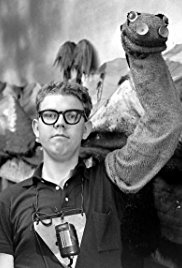
Okay, you could be forgiven for answering “It’s Howdy Doody Time.”  Howdy was certainly a pop star of the puppet world. As were Kukla, Fran and Ollie.  But let’s talk importance.  Albert Einstein.  You’ve probably heard of him.  Which puppet show did he watch?  Not only did Einstein watch Time for Beany, he once excused himself from a conference of Nobel prize winners, telling them it was time for Beany.

Time for Beany arrived on the television scene on February 29, 1948, a couple of years after Howdy and Kukla.  The show’s  creator Bob Clampett pointed out that these shows featured puppets as puppets, appearing alongside humans.  He wanted to create a fantasy world that would let audiences lose themselves in the illusion that Beany and his friends were full-sized people and that Cecil the Seasick Sea Serpent was ten feet tall.

In daily 15-minute episodes, Beany, Cecil and Uncle Captain Horatio Huffenpuff sailed the world aboard their ship Leakin’ Lena in search of adventure. A wild array of supporting characters included Carmen Dragon, Mouth Full of Teeth Keith, Hopalong Wong, Tear-along the Dotted Lion, Dinah Saur and the Red Skeleton.  Dishonest John and Dudley Nightshade provided villainy.  Stan Freberg and Daws Butler were the principal puppeteers and voices.

Time for Beany aired until 1955. An animated version, Beany and Cecil, followed during the 60s. https://youtu.be/VfXQs9OUTtk


February 28, 1844: Love Story with Cannons

Cruising down the Potomac on a pleasant day in late winter could serve as the backdrop for romance, despite the fact that your vessel is not a gondola or a sailboat but a U.S. Navy steam frigate, and despite the fact that practically every dignitary in Washington is along for the ride.

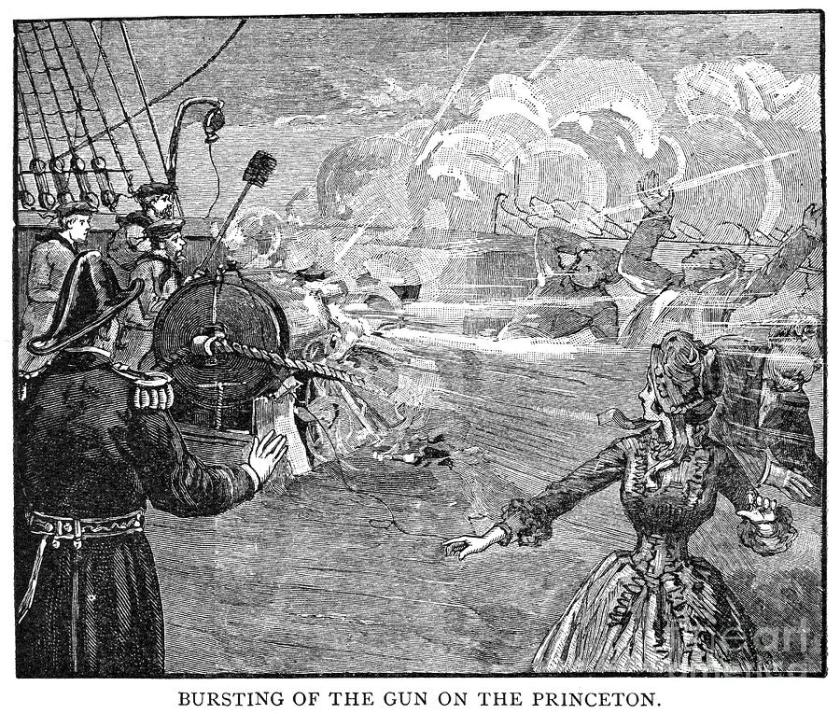
Okay, not so romantic, but if you’re the President of the United States, recently widowed, and you’ve just proposed marriage to an enchanting 20-year-old, it may be the best you can do. And so it was, that President John Tyler (Tyler Too of Tippecanoe-And fame), was on board the USS Princeton on February 28, 1844, for a demonstration of a fancy new 27,000-pound cannon lovingly called the Peacemaker. Julia Gardiner, whose yes vote the President was seeking, was there with her sister and father David, a wealthy New Yorker. The co-designer of the cannon, John Ericsson, was on board; so was the Secretary of War, other cabinet members, congressmen, political and business dignitaries, reporters and other various hangers on. An intimate little gathering. One can imagine 400 breaths being held in anticipation of Julia’s answer.

But first we must fire that cannon. Designer Ericsson tried to persuade, pleaded with, the ship’s captain not to actually fire the weapon before such a crowd, fearing it had not been adequately tested. The captain, however, was having none of it; he had a big audience and a big gun, and he was going to have a big bang. The Peacemaker was fired, and it made a jolly big noise, much to the delight of the audience who cheered and applauded and yelled for more (perhaps this is how wars are started). Once more, the cannon was fired and once more the giddy observers whooped, then they all headed below for toasts and libations.

The Secretary of War (being the Secretary of War) was too enthused to settle for just two shots (of either kind). He insisted that the cannon be fired once more in the direction of Mount Vernon, as a tribute to George Washington.  The cannon was fired, and the third time was not a charm. Mount Vernon was left standing, but the cannon itself exploded into the worst peacetime disaster in the nation’s short history, killing several on board including a couple of cabinet members and the father of the would-be bride. While others counted the dead left by the explosion, oddsmakers recalculated the President’s chances of getting the desired answer out of Julia.

The ship docked, and in a brilliant display of presidential heroics, Tyler carried Julia off to safety. Her answer was delayed a bit, but it was an affirmative, and later that year, Julia became Mrs. Tippecanoe and Tyler Too.

chan9


February 25, 1797: We Have Met the Enemy, and He’s . . .

In February  1797, a French invasion force, La Légion Noire (“The Black Legion”), under the leadership of Colonel William Tate sailed into Fishguard Bay in Wales.  The somewhat less than elite fighting force of 1400 men, formed partly by emptying French jails, landed on a beach near the small village of Llanwnda.  Men, arms and gunpowder were unloaded, and the ships headed back to France.  The last invasion of England had begun.

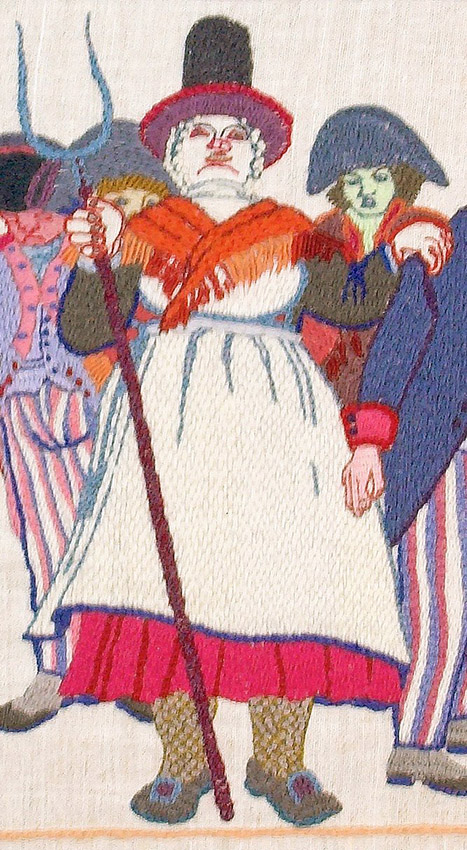
Preparations for a battle got underway.  Unfortunately,  the invasion force, having endured years of prison food, prepared by  liberating food and wine from a grounded Portuguese ship, eating and drinking well into the wee hours.  By dawn, the invaders were too drunk to fight.  The wife of a Fishguard cobbler, Jemima Nicholas (who would become known as Jemima the Great), armed with a pitchfork, marched into the enemy camp, captured a dozen Frenchmen, marched them back to the local jail, and went back to find some more.  And the Frenchmen saw British troops, following her, advancing toward them, seemingly numbering in the thousands.  And on February 25, they surrendered.  Turns out, however, that there were no British troops.  The advancing army was actually a few hundred Welsh women dressed in traditional red outfits with tall black felt hats who had come to watch the battle.
Jemima died at the age of 82. in 1832. Her grave in Fishguard was marked with a plaque in 1897, during the invasion’s centennial.

Monkey See . . .

In what would prove to be an endless parade, the first performance by a trained monkey in the United States was said to have been in New York City on February 25. 1751. Folks paid a shilling to watch the little creature dance, cavort, walk a tightrope and generally make a human of himself. Through the years such acts have gotten steadily bigger and better — think Clyde Beatty’s trained lions, dancing elephants, King Kong.

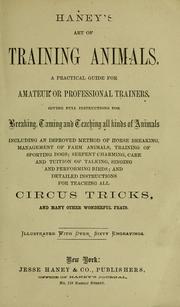
Monkeys have always been a favorite of course. As Haney’s Art of Training Animals pointed out back in 1869, monkeys have an ingrained passion for mimicking human beings (monkey see, monkey do) and they cut a fine figure in fine clothes. “Dressed in male or female apparel, the monkey’s naturally comical appearance is greatly heightened. Thus, one might be dressed to represent a lady of fashion, while another personates her footman, who, dressed in gorgeous livery supports her train. This is elaborated into quite a little scene at some exhibitions. A little barouche, drawn by a team of dogs, is driven on the stage, a monkey driving while a monkey footman sits solemn and erect on his perch behind. A monkey lady and gentleman are seated inside, she with a fan and parasol, he with a stovepipe hat. . . . Each performer is taught what he is to do, the most intelligent monkey being generally assigned the footman’s character.”

Now that’s entertainment.

February 24, 1942: The Bombs Bursting in Air

It had been less than three months since the Japanese attack on Pearl Harbor brought the United States into World War II, and tensions were running high.  And then on the evening of February 24, 1942, in Los Angeles, it appeared that we were being attacked once again.  The United States Navy responded with an anti-aircraft artillery barrage.  The resulting brouhaha lasted through the night with 1,400 shells fired until the Secretary of the Navy announced the end of the air raid.  He also admitted that the entire incident had been a false alarm, a case of “war nerves.”

The attacking force, it seems, was an errant weather balloon, and “once the firing started, imagination created all kinds of targets in the sky and everyone joined in.”  The incident was later derisively dubbed the “Battle of Los Angeles” or the “Great Los Angeles Air Raid.”

A Midsummer Night’s Prayer Meeting

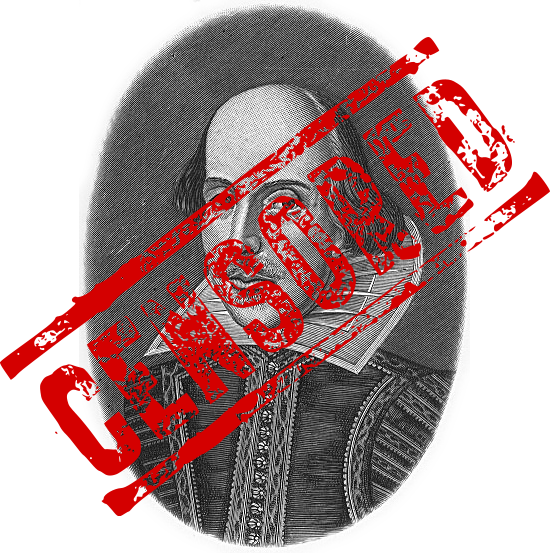
“The Family Shakespeare — in which nothing is added to the original text,censored-shakespeare but those words and expressions are omitted which cannot with propriety be read aloud in a family. My great objects in this undertaking are to remove from the writings of Shakespeare some defects which diminish their value.”

Thus read an introduction for the 1807 edition of Shakespeare’s works, finally made suitable for general audiences by Thomas Bowdler some 200 years after the Bard was safely buried. Certainly Shakespeare, were he alive, could not have objected to having the defects which diminished their value removed from his works. Shakespeare and family values — together at last.

Bowdler undertook this project, along with his sister Henrietta, thanks to childhood memories in which his father had entertained his family with readings from Shakespeare. Only later as an adult did Bowdler realize that his father had been leaving out some of the naughty parts of the plays, anything he felt unsuitable for the ears of his wife and children. Realizing that not all fathers were clever enough to censor on the spot, Bowdler decided it would be worthwhile to publish an edition which came already sanitized.

Shakespeare no doubt would have thanked Thomas Bowdler who joined him in the hereafter on February 24, 1827.


February 23, 1930: Bye Bye Miss American Pie

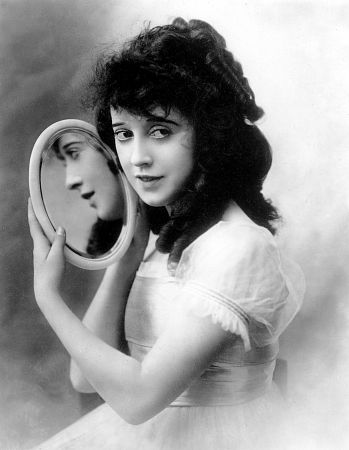
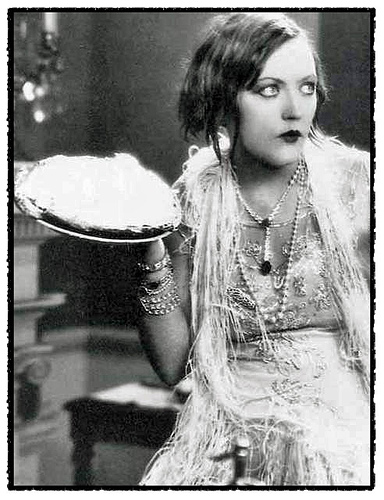
Silent film star Mabel Normand died on February 23, 1930, after a short but stellar career as an actress, screenwriter, director and producer. She collaborated with Mack Sennett and appeared with Charlie Chaplin in a dozen films and Fatty Arbuckle in another 17. It was in one of those films,  that she made cinematic history, in a scene that she became associated with for the rest of her career, when she received a pie in the face from Fatty Arbuckle.  This bit of slapstick became a staple in comic films from then on, and it is the rare comedian who has not received at least one pie in the face.

Pie throwing reached something of a peak in 1965 in the film The Great Race.  In a technicolor pie fight scene  that took five days and cost over $200,000 to film, a total 4,000 pies were hurled in just over four minutes.


Hanging Around in England

In November 1884, Ellen Keyse was found dead in the pantry of her hangingExeter, England, home. She had been beaten and her throat had been cut. John Lee, who worked for the wealthy victim was charged with the crime. The 19-year-old was found guilty and was sentenced to be hanged on February 23, 1885.  On the day of his comeuppance, Lee was led to the gallows, where his executioners placed a noose around his neck. They pulled the lever that would release the floor under him and drop him to his death. The big oops: John Lee was not dispatched — red faces all around. The apparatus had been thoroughly tested the previous day and had been in fine working order. They tried once again. Nothing. And again. Still a no-go. Flabbergasted, they returned Lee to his prison cell, while they pondered the situation.

The authorities remained mystified, so they did what authorities often do when mystified. They attributed the malfunction to an act of God, and rather than risk God’s anger, they commuted his sentence and removed him from death row. He spent 22 years in prison, and upon being released, promptly set sail for America.

February 22, 1934: Come Back Little Sheba

Long before Google, searching was a bit more physical, involving explorers, globetrotters and other adventurous types, out to find the Holy Grail, Atlantis, the Northwest Passage, the seven cities of gold, Jimmy Hoffa, Elvis.

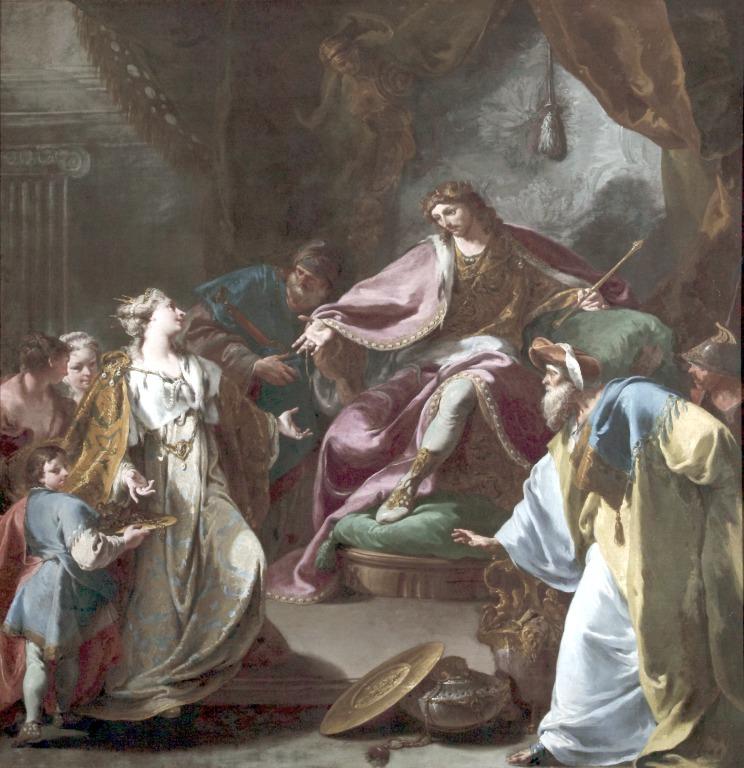
On 22 February 1934, adventurous type, French novelist André Malraux set off on a quest to find the lost capital of the Queen of Sheba mentioned in the Old Testament and other religious texts.  His expedition took him to remote deserts of war-torn Saudi Arabia and Yemen, the countries in which scholars deemed it most likely to be located.  As the story goes the Queen of Sheba had heard about wise King Solomon of Israel, and she decided to pay him a visit.  She hopped on her camel and made for Jerusalem, bearing hostess gifts of frankincense*, myrrh and a few precious baubles, the ancient counterpart of flowers and a bottle of wine.  As a guest, she peppered him with questions and riddles testing his wisdom.  In return, he impregnated her.

After several weeks of searching Malraux returned to France and announced that some nondescript Yemeni ruins were indeed the lost city, but no one really believed him.  And they didn’t believe he had spotted Elvis either.

* Just what is this frankincense that was so popular as a gift?  Frankincense is a gummy substance extracted from the trunk of the Boswellia tree.  Its oil when rubbed on evidently makes one healthy, wealthy and wise**.

**And smell good too. (A footnote on a footnote.  How about that?) ***.

***Just for fun, you could create your own footnote.

Not Your Typical Barbarian

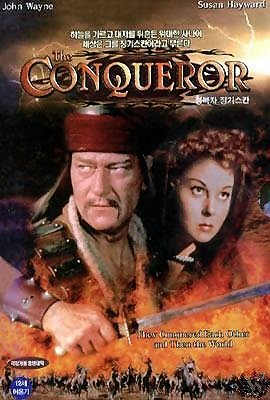
You can pretty much be certain you’ve got a turkey on your hands when you’ve got actors such as Susan Hayward, Agnes Moorehead , and John Wayne playing Mongolians, when the entire film is shot in one location in a desert in southern Utah (haven’t we seen that rock before?) and when you have such dialogue as:

“Joint by joint from the toe and fingertip upward shall you be cut to pieces, and each carrion piece, hour by hour and day by day, shall be cast to the dogs before your very eyes until they too shall be plucked out as morsels for the vultures . . . pilgrim.”

The Conqueror, released on February 22, 1956, was the epic story of a 12thconqueror century Mongol warlord who worked his way up the barbarian ladder to become the infamous Genghis Khan. Produced by Howard Hughes, it was meant to be his crowning cinematic masterpiece. The film cost $6 million to film in Cinemascope and Technicolor and is frequently ridiculed in the same breath as Plan 9 from Outer Space, another 50s flop which cost about $2.99 to make. Hughes spent another $12 million to buy back every single print of the film after its disastrous release.

The Conqueror not only destroyed RKO, the studio that made it, but wiped out a good number of the cast and crew. The shooting location turned out to be downwind from Yucca Flats, Nevada, where the government was merrily testing atomic bombs, and the cast and crew received far more than the recommended daily allowance of radioactive fallout. Nearly half of them, including Wayne, were later diagnosed with cancer (although Wayne also smoked six packs a day).