March 27, 1958: They Say Goofy Is a Fellow Traveler

     Nikita Khrushchev was elevated to top commie in the Soviet Union on March 27, 1958. His Cold War relationship with President Eisenhower and the United States was a complex one, certainly more so than the Ego War between the current Russian leader and his previous U.S. bro-hug counterpart.

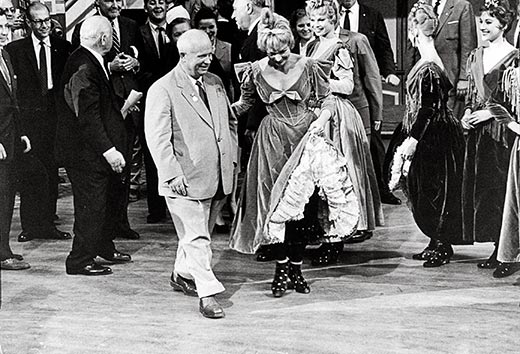
     The following year Khrushchev was in the U.S. for a summit meeting with Eisenhower.   At the Soviet leader’s request, a visit to Hollywood was arranged.  Khrushchev and his wife arrived in Los Angeles, where the day started with a tour of the Twentieth Century Fox Studios in Hollywood and a visit to the sound stage of  Can-Can. Meeting stars Shirley MacLaine and Juliet Prowse pleased the roly-poly dictator even though he had to nyet a chance to dance with MacLaine (probably something to do with the Siberian stare coming from Mrs. K)   A lunch hosted by Frank Sinatra was also a big success even though Sinatra didn’t sing “That Old Bolshevik Magic,” as Nikita requested.

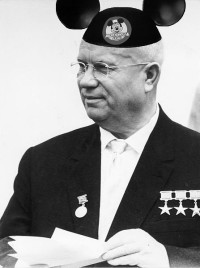
     The day headed downhill when Twentieth Century Fox President Spyros P. Skouras, who wore his anticommunism on his sleeve, got into a bit of a who-will-bury-whom brouhaha with the Russian leader who was known for his temper tantrums.  Shortly afterward, it began to look as though a nuclear exchange were imminent. Meeting Frank Sinatra was nice, but who Nikita really wanted to meet was Mickey Mouse.  His American hosts told him it couldn’t happen.  Security concerns.   Perhaps he’d like to see Cape Canaveral, the White House War Room, the Strategic Air Command. But no Disneyland.  Nicky exploded. “And I say, I would very much like to go and see Disneyland. But then, we cannot guarantee your security, they say. Then what must I do? Commit suicide? What is it? Is there an epidemic of cholera there or something? Or have gangsters taken hold of the place that can destroy me?”

Khrushchev left Los Angeles the next morning, and the Cold War returned to deep freeze.

Put a Cork in It

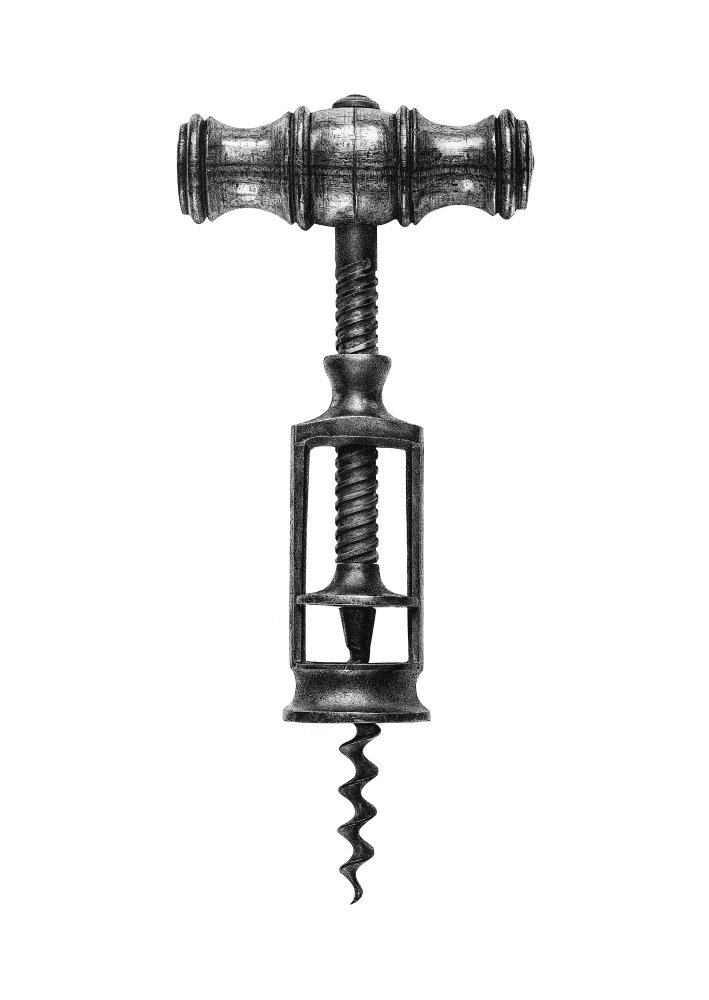
Back through the centuries wine lovers never aged their wines; they consumed it quickly before it went bad.  Then in the 18th century, British glassblowers began to make bottles with narrow necks for wine that made airtight storage possible. Corks were used to seal the bottles. This quickly led to the invention of one of the dandiest little gizmos ever devised — the corkscrew. The design was based on a similar device used to clean muskets. The first corkscrews were T-shaped devices that twisted into the cork and after a certain amount of pulling extracted the cork. Corkscrews were first patented in England and France, then on March 27, 1860, M. L. Byrn of New York City received an American patent.

Since then, hundreds of corkscrews have been designed of every shape, size and mechanics you can imagine — single-lever, double-winged, air pump, electric, mounted. Naturally there are corkscrew books, corkscrew clubs, and corkscrew collectors, helixophiles.

MARCH 26, 47 BC: WITH A LITTLE BIT OF LUCK

Ptolemy XIII was Pharaoh of Egypt from 51 to 47 BC (remember we’re counting backwards here), his reign pretty much demonstrating the bad luck associated with the number thirteen (in fact he could have been nicknamed Ptolemy the Unlucky or Friday the XIII).

Ptolemy XIII succeeded his father Ptolemy XII, becoming co-ruler by marrying Cleopatra who was his older sister at the time. She was Cleopatra VII, but she was the Cleopatra we all know about — the one of Antony and Caesar and the asp and all that. Since XIII was only 11 at the time, he had a regent — and should you be thinking about the regent’s duties vis-à-vis Cleopatra, we’ll point out that the regent’s name was Pothinus the Eunuch.

Still with us?

Cleopatra, it turns out, was a bit of a grandstander, strutting about as Queen, putting her image on coins, and generally hogging the Egyptian spotlight. Thus in 48 BC, XIII and his eunuch tried to depose her, but she ran off to Syria and raised herself an army.

Enter Roman general Pompey, seeking sanctuary from Julius Caesar.  XIII pretended to welcome Pompey but had him murdered instead.  When Caesar arrived, XIII gave him Pompey’s head as a little welcoming gift. Caesar was unimpressed and took Cleopatra as his welcoming gift instead, giving XIII a cold Roman shoulder and killing his eunuch for good measure.

While Caesar and Cleopatra kept busy trysting the night away, XIII in cahoots with another sister (it’s great to be able to toss in another sibling when things are beginning to slow down) tried again to dump Cleopatra.

XIII and his other sister were no match for Caesar and Cleopatra and in the ensuing Battle of the Nile, XIII was forced to flee. Unfortunately, Ptolemy the Unlucky was drowned as he attempted to cross the Nile.


MARCH 25, 2024: WAITER, THERE’S A LOBSTER ON MY WAFFLE

Today is International Waffle Day, a tradition that is celebrated worldwide but mostly in Sweden. It’s a day to enjoy – guess what? – eating waffles. The day may have arisen out of confusion. Waffle Day in Swedish, Våffeldagen, sounds a lot like Our Lady’s Day,Vårfrudagen, (you really have to be on a street in Stockholm to get the full effect), a Christian holiday also known as Annunciation (the third Thursday after Pronunciation), when the Archangel Gabriel told the Virgin Mary she was pregnant. Mary was understandably upset and did what any virgin would do upon being told she was pregnant – stuffed herself with waffles. Waffle Day also coincides with the beginning of Spring, another traditional day for eating waffles in Sweden. Therefore, if you see a Swede eating waffles today, you don’t know if it’s religious or secular or just hunger.

More interesting facts:

Waffles were made with cheese and herbs in ancient Greece.

The familiar grid pattern of today’s waffles originated in the Middle Ages. Some waffles had fancier designs such as coats of arms,  landscapes and portraits of Middle Age people.

Waffles were so popular that they were even sold from street carts (by strange looking men who eventually switched to selling chestnuts and large pretzels).

In the late 1800’s, Thomas Jefferson returned from France with a waffle iron.  It’s unclear how he got it through security.

Many folks in Britain celebrate International Waffle Day by eating rutabagas which are known there as Swedes.  There is no International Rutabaga Day.

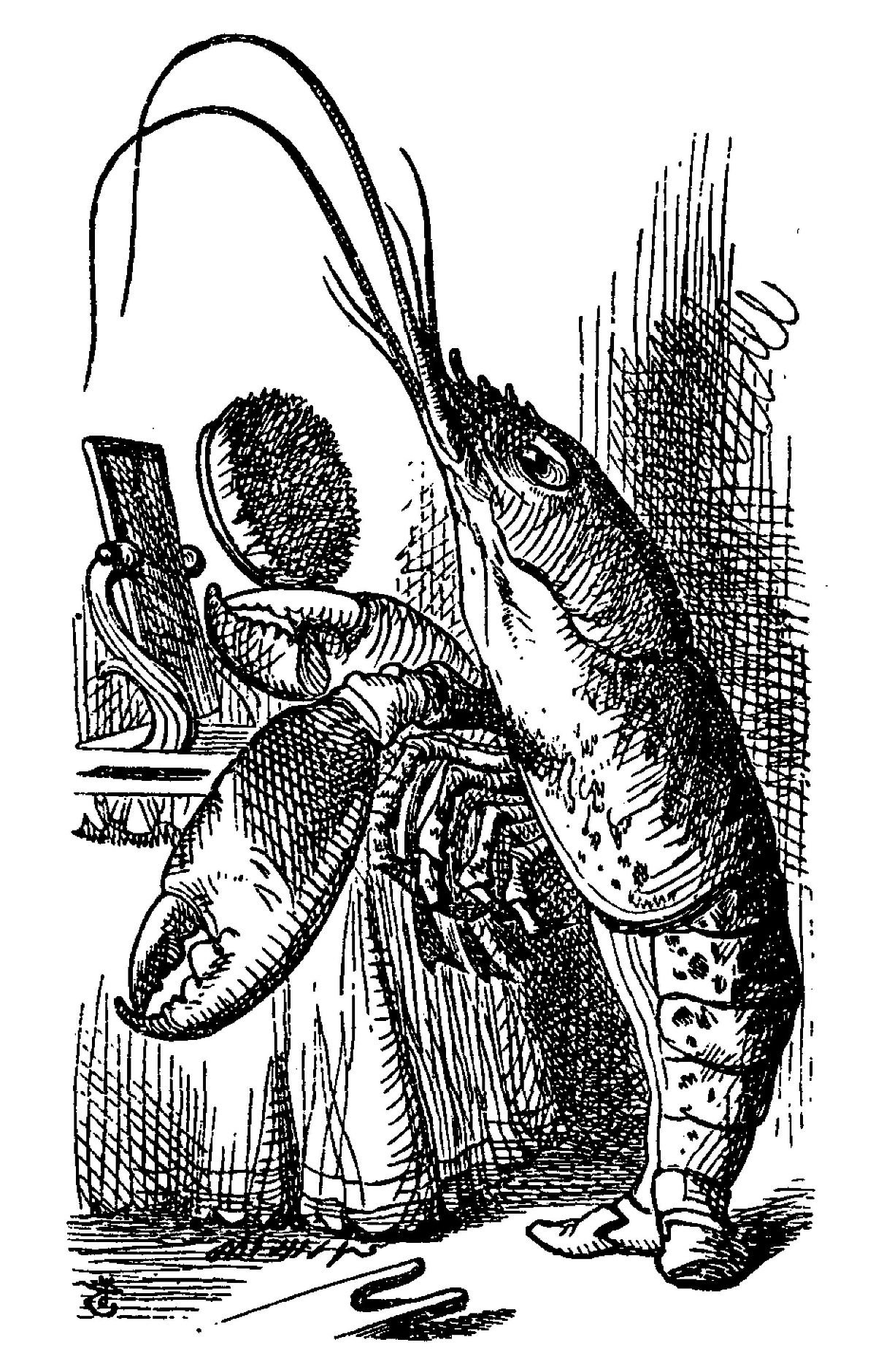
There is, however, a Lobster Newburg Day – and it’s today!

Lobster Newburg, lobster with a sherry and cognac infused, egg-thickened cream sauce, was first served at New York’s Delmonico’s in the 1870s. Delmonico’s was not only the first formal dining restaurant in the United States, it was the first to serve hamburger, the creator of Baked Alaska, the creator of Eggs Benedict, and of course the creator of Lobster Newburg.  A waffle topped with Lobster Newburg, anyone?

The Lobster Quadrille (from Alice in Wonderland)

“Will you walk a little faster?”
Said a whiting to a snail,
“There’s a porpoise close behind us,
Treading on my tail. ”
See how eagerly the lobsters
And the turtles all advance!
They are waiting on the shingle –
Will you come and join the dance?
So, will you, won’t you, won’t you,
Will you, won’t you join the dance?
Will you, won’t you, will you,
Won’t you, won’t you join the dance?

“You can really have no notion
How delightful it will be
When they take us up and throw us,
With the lobsters, out to sea! ”
But the snail replied, “Too far, too far!”
And gave a look askance –
Said he thanked the whiting kindly,
But he would not join the dance.
So, would not, could not, would not,
Could not, would not join the dance.
Would not, could not, would not,
Could not, could not join the dance.

“What matters it how far we go?”
His scaly friend replied,
“There is another shore, you know,
Upon the other side.
The further off from England
The nearer is to France –
Then turn not pale, beloved snail,
But come and join the dance.

Will you, won’t you, will you,
Won’t you, will you join the dance?
Will you, won’t you, won’t you,
Will you, won’t you join the dance?

Will you, won’t you, will you,
Won’t you, won’t you join the dance?
Will you, won’t you, will you,
Won’t you, won’t you join the dance?

MARCH 23, 1857: Mr. Otis Has No Regrets

 American inventor Elisha Otis had planned to join the California gold rush to find his fortune. As it turned out, he found his fortune closer to home, in the ups and downs of the business world — literally. Otis had devised a “hoist machine,” a fairly simple affair that would prevent a rising platform from falling if the ropes that held it broke.

Otis opened his small business in Yonkers, New York, which barely sputtered along until he came up with a plan to have P. T. Barnum publicly demonstrate his device at America’s first world’s fair in New York City in 1854.  An open elevator platform was installed at the center of the Crystal Palace exposition hall upon which Otis hoisted himself to the ceiling by means of a rope.  There to the oohs and aahs of the crowd below, he produced a sword and cut the rope. The platform plummeted downward, but Otis’ safety brake engaged and brought the elevator to a dramatic stop. “All safe, gentlemen, all safe,” Otis declared triumphantly.

On March 23, 1857, he installed the first commercial elevator, in a department store in New York City, and the elevator industry was launched. Then came passenger elevators which in turn allowed buildings to rise higher and higher, from five or six stories max to a hundred or more.

The ten-story Home Insurance Company Building in Chicago, serviced by four passenger elevators, was followed in 1913 by the Woolworth Building with 26 elevators and the Empire State Building in 1931 with 58.  Automatic self-service elevators came to Dallas, Texas, in 1950. Twenty years later, elevators in Chicago’s John Hancock Center barreled between floors at 1,800 feet per minute. Before its destruction in 2001, New York’s 110-story World Trade Center operated 252 elevators and 71 escalators, all manufactured by Otis.

My Kingdom for a Bic

Pedro I a 14th century king of Castile was one of the first monarchs who could write, and he had very nice penmanship. That didn’t prevent him from being stuck with the moniker Pedro the Cruel for various transgressions, real and imagined. His greatest sin seems to have been his hatred for the monks, a hatred which was returned in kind. When Pedro died by the dagger of his illegitimate brother on March 23, 1369, his place in history was left to be determined by — Guess who?  His sworn enemies, the monks.  It seems they too could write. And they went right to work proving that their pens were mightier than his scepter. Good penmanship can only take one so far.

The Game Show That Wouldn’t Die

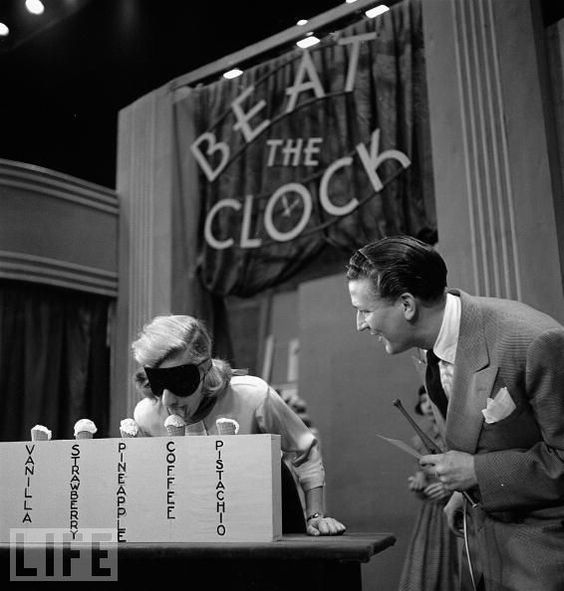
Beat the Clock made its CBS debut on March 23, 1950, hosted by Bud Collyer. It ran until 1961. It rose from the dead in 1969 as The New Beat the Clock, running until 1974. It reappeared in 1979 as The All-New Beat the Clock, and later as All-New All-Star Beat the Clock.

To win, contestants had to “solve problems” within a certain time limit which was counted down on a madly-ticking giant clock. If they succeeded, they “beat the clock”; if they didn’t, “the clock beat them.” And they died.

MARCH 22, 238: GORDIAN ANGELS

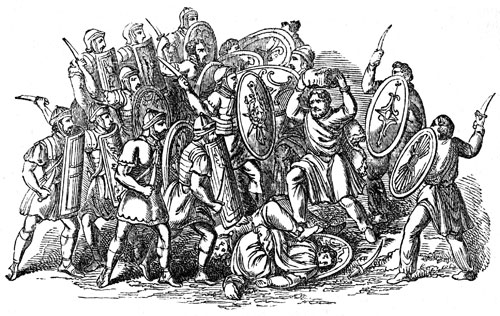
Romans got two emperors for the price of one, when in 238, Gordian I and II became father-and-son tag-team Caesars after an insurrection against Maximinus Thrax, a rather unpopular emperor who had come to the position by the popular tradition of assassinating his predecessor.  Gordian I was a bit long in the tooth so the younger Gordian was attached to the imperial throne and acclaimed Augustus too – sort of like if Poppa Bush and W had been presidents together, mano e mano so to speak.

Some supporters of Maximinus Thrax who were not happy with this turn of events staged a rebellion in Africa. Gordian II fought against them in the Battle of Carthage but lost and was killed for good measure. Hearing the bad news, Gordian I took his own life.  All of this happened within a month. Fortunately, there was no dearth of Gordians in Rome, and Gordian II’s 13-year-old nephew Gordian III soon became emperor. During his six-year reign, the teenage ruler endured pimples, the fickleness of teenage girls, and Persians until he was done in by the latter in yet another battle. He was succeeded by Philip the Arab (son of Ahab) sometimes referred to as the Gordian Not.

Slow and steady wins the race

Back in 1767, Lord Robert Clive of the East India Company was given a gift of four Aldabra tortoises from the Seychelle Islands. Three soon died, but the fourth, a gent named Addwaita “the one and only,” prospered.  He was transferred to a Calcutta zoo in 1875.

Addwaita was a bit of a loner, content to pass the decades in his zoo cubicle, munching on carrots, lettuce, chick peas, bran, bread and grass, growing to a stately 550 pounds and living  to the ripe old age of 250, give or take a year or two.

Alas, Addwaita bought the reptilian ranch on March 22, 2006. Foul play was not suspected.


MARCH 20, 689: SOME FOLKS JUST WON’T STAY BURIED

Back in the 7th century on an island in northern Britain, the very holy St. Cuthbert gave up the ghost. The exact date of his departure was March 20, 689. Not only was Cuthbert very holy, he was, you might say, holier than thou, or at least holier than all his peers. He devoted his entire life to converting the half-savage heathens (and there were quite a few half-savage heathens at the time) and praying — lots of praying. Such was his devotion that those about him often wondered if he were not a man but an angel.

Cuthbert was duly shrouded and buried, remaining at rest for some 11 years until some curious monks dug him up to have a peek. They found Cuthbert in perfect condition, which they accepted as miraculous proof of his saintly character. They placed him in a new coffin, leaving him above ground so he might perform miraculous cures.

Another 174 years passed and, with Britain facing an invasion by the Danes, the monks (different monks) carried Cuthbert’s still perfect body away and wandered with it from place to place for many years.

Finally in the 11th century, Cuthbert’s body found a permanent home where it was enshrined and enriched with offerings of gold and jewelry from the faithful (there were a lot more of them by the 11th century). In 1104, the body was inspected again and found still fresh. Another 400 years and another inspection.

Three hundred years. It’s 1827 and Cuthbert is past due for inspection. This time, however, the inspectors were much more rigorous, and it was discovered that Cuthbert was an ordinary skeleton swaddled up to look whole, including plaster balls to plump out the eye holes. It would appear that some monks along the way had been quite naughty. St. Cuthbert himself serves as a fine example of a person who was far more interesting dead than alive.

Deciders Unite

The Whigs didn’t last long as as political party. Formed in the 1830s out of annoyance with Andrew Jackson, they gave us four presidents — William Henry Harrison, John Tyler, Zachary republicanTaylor and Millard Fillmore, commonly known by their shared nickname, Who? (not to be confused with the rock group of the same name). As is the case with many political parties, they had disagreements over tents, finding themselves unable to deal with the concept of big ones, and eventually tore themselves asunder with internal disagreements.

The semi-official date of the party’s actual death was March 20, 1854. On that date, a number of don’t wanna-be Whigs met in Ripon, Wisconsin, and the result of that meeting was the birth of the Republican party, which lasted until 2016.


MARCH 19, 2009: Bye Bye Birdie

When the swallows come back to Capistrano/ That’s the day I pray that you’ll come back  to me.

And the day is today, St. Josephs Day, although St. Joseph has nothing to do with swallows. But more of that later.

Like feathered clockwork, cliff swallows year after year migrated from Goya, Argentina, to the Mission San Juan Capistrano in southern California. Every year the good townsfolk of San Juan Capistrano welcomed them back with an annual Swallows’ Day Parade with balloons and food trucks, politicians kissing babies and other festive events. And flocks of tourists would come and everybody was happy.

Was happy. For in 2009, the fabled swallows were no shows. A swallowless decade followed, during which folks at the mission tried unsuccessfully to lure their fickle feathered friends  back.

In 2016, swallow experts created faux nests attached to a large temporary wall in hopes that the birds would move in and eventually spill over and start using the actual mission structures. A couple of years ago, two real nests were discovered at the mission and several swallows were spotted in flight.  Swallow lovers hopes were riding high.

Hold your breath no longer.  They’re back!  And the villagers are happy once again, dancing round and round and singing “When the swallows come back to Capistrano . . .”

About That St. Josephs Day

Joseph was mostly known for being the father of Jesus  Not the actual father of course, but kind of a placeholder for someone else.  And the real father that Joseph was standing in for was, we are told, the big guy himself.  Or as some would say the one and only god. So Joseph, a carpenter and all around nice guy schmuck married the pregnant Mary to save her rep when the big guy asked him to.  Of course refusing an ask by the big guy might just be inviting a smiting.

When the Pigeons Come Back to China

Racing pigeons — win, place, show, poop on the judge’s car.
Known for their remarkable speed and  sense of direction,. They can fly up to 70 miles per hour and never have to stop and ask for directions.
Enter Armando.  Yes, a pigeon with a first name.  And a reputation.  Armando is the fastest pigeon in the world.  And people would welcome him back in a heartbeat.  As a matter of fact — take note you eagles and ospreys — an anonymous gentleman in China wanted him enough to pony up $1.4 million in an auction.  No more racing for Armando.  He’s going to be busy fathering hundreds of Armando Jrs.  And pooping wherever he wants.

The Swallows’ Retort

“When the Swallows Come Back to Capistrano” was written by Leon René and first recorded by The Ink Spots in 1940, reaching #4 on the charts.  It has been recorded by Glenn Miller, Xavier Cugat, Gene Krupa, Fred Waring, Guy Lombardo, Billy May, the Five Satins, Elvis Presley, and Pat Boone to name just a few.  How many people have recorded
“When the Pigeons Come Back to China”?

MARCH 18, 1662: The Bus Is Leaving

As ideas go, it seemed like a pretty good one.  And it was thought up by Blaise Pascal, noted French inventor, mathematician, physicist, philosopher, author and all around heavy thinker.  He shopped the idea around to various French nobles who jumped on the band wagon, so to speak.  He even went right up to King Louis XIV who gave him a royal monopoly.  Those who tried to compete could lose their horses, their carriages and possibly even their heads.  The guillotine was a popular diversion at the time.

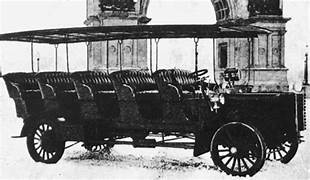
The Carosses à Cinq Sous, or Five-Penny Coaches, debuted on March 18, 1662 — the world’s first bus service.  With a fleet of seven horse-drawn carriages running along three separate routes, each carrying up to eight passengers, it proved a popular but fleeting phenomenon.  It carried only nobles; peasants were pedestrians, relegated to being run down Sadly, the novelty quickly wore off, the nobles not being known for their attention span.  Ennui set in.  By 1675, the carriages no longer cruised the rues.  They were gone, not to reappear until the 19th century when every London, Boston, and New York had them.

C’est la vie.


Don’t Sit Next to Him on the Bus

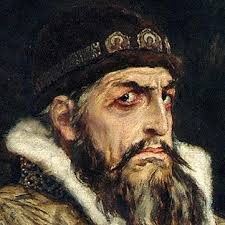
Ivan IV Vasileyevich, known to his friends as Ivan the Terrible, died in 1584 while engaged in a particularly wicked game of chess. He rose to prominence, and some might say infamy, as the Grand Prince of Moscow, a position he held from 1533 to 1547, when he declared himself the first ever Tsar of All the Russias, a title he held until his death. He was succeeded by his son, Feodor the Not So Terrible.

Historians disagree on the exact nature of Ivan’s enigmatic personality. He was described as intelligent and devout, yet paranoid and given to rages, episodic outbreaks of mental instability, and late-night Truth Social rants.


MARCH 17, 461: IS THAT A SHILLELAGH IN YOUR POCKET?

Today is St. Patrick’s Day, a major holiday for the Irish and for non-Irish hangers on who just want to drink green beer. There is precious little celebration of jolly old St. Patrick himself who died on March 17, 461, which is a pity for he was an interesting guy, turning Druids into Christians with a wave of his shillelagh, hurling blarney stones and sham rocks at unrepentant heathens, and playing his pipe to drive all the snakes out of Ireland.

He was, however, a bit of an enigma. Some believe there were actually two Patricks. That might explain some of the contradictions – a good Patrick and a bad Patrick. The good Patrick worked among the poor, feeding them corned beef and cabbage, encouraging them to be chaste and follow a righteous path. The bad Patrick worked among young women, pinching them if they weren’t wearing green, encouraging them to be unchaste and look at his shillelagh. It was the good Patrick who drove the snakes out of Ireland; the bad Patrick, who when he didn’t get enough recompense, stole all the Irish children to feed to the English.

How high’s the water, mama?

Some medieval calendars suggest that St. Patrick shares his day with a Biblical superstar name of Noah.  They have him boarding his ark on March 17 and disembarking on April 29.  And in religious plays of the time, they give Noah and his wife rather more down-to-earth personalities than depicted in the original source book — particularly the wife who is painted as somewhat of a shrew (which would make three shrews aboard the ark).

In one such play, when Noah brings her the news that God has recruited him as a sailor, she sneers at him, calls him a gullible fool, and complains that he never takes her anywhere, let alone on a cruise with a bunch of animals.  Noah tells her to hold her tongue, she refuses, and they come to blows.  He sulks away to build his ark.  She changes her tune when the waters start to rise, jumping aboard at the last minute, only to start complaining about the ambiance.  They continue their fighting ways — frequently beating each other around their heads with their shillelaghs — for forty days and forty nights.

Shaking His Shillelagh at Prairie Dogs

Legendary mountain man Jim Bridger was born on this day in 1804. He was not Irish. Bridger explored and trapped throughout the West during the mid-1800s which is what mountain men do. Were they on beaches instead of in mountains they would be beachcombers or, worse still, ho-dads. Bridger was one of the first white men to see the geysers of the Yellowstone region and the first European American to see the Great Salt Lake which he misnamed the Pacific Ocean. Most everything else he discovered he named after himself. He was a bit irascible, shaking his shillelagh at prairie dogs and playing his pipe to drive the Mormons out of Utah.

MARCH 16, 1963: PUFF YOUR OWN MAGIC DRAGON

Peter, Paul and Mary released the single, “Puff The Magic Dragon” in 1963. It became a big hit for the folk trio, peaking at number two on the pop charts in spite of its being banned by several radio stations whose management  figured that the song was about the illicit joys of smoking marijuana. The group denied this, saying: “It’s about a magic dragon named Puff.” “Puff” was followed by “Blowin’ in the Wind,” a song about trying to smoke pot on a stormy day, and “Leaving on a Jet Plane,” which is obviously a poorly disguised reference to getting high on the substance of your choice.

Davy, Davy Crockett

On this day eight years earlier, in 1955, “The Ballad of Davy Crockett,” by Bill Hayes, reached the number one spot on the pop music charts and stayed there for five weeks. The smash hit sold more than seven million records by several different artists. Coonskin caps were everywhere, and the words “born on a mountain top in Tennessee” on everyone’s lips – even though the next line “puffed a magic dragon when he was only three” was always bleeped.

Speaking of Substance Abuse:

Giving Up Smoking with Madame Zorene

I stood watching them — laughing young lovers, sitting on the bench, knees touching, talking conspiratorially.  Around them, lilacs and apple blossoms had burst into color, thanks to the fledgling warmth of spring.  As they puffed at long, sleek cigarettes, the exhaled smoke billowed lazily toward the blue sky.  There, sitting in the park, they created a richly satisfying tableau vivant, and I stood mesmerized as I contemplated descending upon them, ripping the cigarettes from their quivering lips and wildly puffing until my heart and lungs cried out in a tobacco-induced orgasm.  Instead, I popped a tiny square of nicotine gum into my mouth — it makes you burp and hallucinate yellow-toothed Doublemint twins — and stormed off.

People were meant to smoke, of course.  Why else tobacco?  A cigarette is tangible; a smoke-free environment hypothetical at best.  And cold turkey is just a dead bird defrosting for Thanksgiving.  Thus I reasoned, when I reached the store and demanded a pack of cigarettes, any brand, with or without filters, from the cowering clerk.  Back to the park, where I hastily lit a cigarette and let its mellowness caress my lungs.  I then smoked the entire pack, one cigarette after another.  It took me less than an hour.

Remorse naturally followed.  I cried out in anguish, bemoaned my weakness, condemned my cowardice — and I began to realize the hopelessness of my situation.  If I were ever to succeed in this quest –and doubts enveloped me — I needed a hired gun.

That evening, I let my fingers do the hobbling through the hypnosis section of the yellow pages.  The trusty phone book paraded before my anxious eyes a plethora of Ph.D.’s, licensed psychologists and certified hypnotherapists, any one of which, I found when phoning the following morning, would be happy to see me two weeks from now, three weeks from now, a month from now.  I had been decisive coming this far, and decisiveness is a fragile, short-lived thing.  I didn’t have that kind of time.

Then I found her.  She was neither psychologist nor hypnotherapist, but Madame Zorene would see me that evening.  I had my moments of doubt when she asked if I wanted her to put a curse on someone, but when I explained that I wanted to quit smoking through hypnosis, she seemed pleased.  “That’s good, too,” she said.

I chain-smoked on the way to my appointment with Madame Zorene, wondering if each cigarette might perhaps be my last.  Her office was tucked away in the back corner of a modern office complex.  I had feared that I would find her in an old shack in the middle of a bayou, although I was pretty certain there wasn’t a bayou within a thousand miles of here.  Upon opening the door, I faced her receptionist, and my fears returned.  A gaunt, colorless woman with stringy hair and sunken eyes, she had a vocabulary of three words:  “You pay first.”

But Madame Zorene herself was a pleasant surprise; a cheerful, chubby woman in her sixties, she smiled reassuringly and greeted me with a hearty handshake.  “Madame Zorene welcomes you,” she said as she opened a door and led me into her office.  “You are a brave man to attempt the smoking cessation.  Smoking is not good for your teeth or your lungs.  You will be happy when you quit.”  It sounded vaguely like a threat.

“Have a seat and relax yourself,” Madame Zorene continued.  “You must be relaxed.”

I settled into a comfortable chair facing her and tried my best to relax, but it wasn’t easy.  Staring at me over Madame Zorene’s left shoulder from the shelves at the other side of the small room was a human skull.  Several smaller skulls stood in a row next to it, each one staring.  On another shelf there were various jars in which dead toads and lizards were suspended in murky water.  There were no medical books, stethoscopes or sphygmomanometers, although there were masks, feathers and various powders.

“Are you a doctor or anything like that?” I asked.

“No, no.  Of course not.”

“What is your background?”

She saw that I was staring past her at her shelves.  “Ah, my little things, they upset you.  No need for you to worry.  I am a much experienced bokor.”

“A bokor?”

“Yes.  A bokor is a sorcerer in the voudun religion.”

“Voudun?”  I asked, growing steadily more anxious.  “Is that voodoo?”

Her eyes lit up and she grinned.  “Yes, yes.”

“And you do curses and things as well as smoking cessation?”

“Of course,” said Madame Zorene.  “But curses are not why we are here, are they?  Why don’t we start?  First I am going to give to you the great sleep.  Then I will lift from your body your ti bon ange.  That is one of your spirits.  I will talk to your ti bon ange, tell it that you no longer want to smoke.  Then when it returns to your body, it will guide you, so that you will no longer smoke.  Now you must relax.”

Madame Zorene stared at me, looked commandingly into my eyes, and began to speak softly in a language I didn’t recognize.  I wanted to turn away from her gaze, which was intimidating, not relaxing, to close my eyes, to stand, to run.  But I couldn’t move and I found myself growing drowsy,  the nagging worry that I would wake up a zombie growing steadily more distant.  I felt as though I were floating through a void.  I could hear Madame Zorene as she continued to talk, and someone answered her.  Was it me, my ti bon ange?

Then I was awake, and Madame Zorene was smiling at me, that same reassuring smile she had first greeted me with.  “Would you like a cigarette?” she asked, and in her smile I now saw the self-satisfaction.

“No, I don’t think so,” I answered truthfully.  I didn’t want one, and I don’t want one now.   I feel good, have no problems.  Well, I do have one problem — it’s odd, really.  The cat stares at me all the time, an evil, possessed stare.  I think it wants a cigarette.