JUNE 29, 1861: PRETTY WOMAN, THE KIND I’D LIKE TO MEET

In 1861, sixty people boarded the St. Nicholas, a steamer that carried passengers between Baltimore and points along the Potomac – among them a Madame LaForte, a stylish young lady who spoke very little English with a strong French accent. She was accompanied by her brother. She had a number of large trunks with her because she wanted to set up a millinery business in Washington.  A beguiled purser assigned her a large stateroom, and dutiful deckhands hauled her trunks to her cabin.

When the St. Nicholas departed, Madame LaForte emerged from her stateroom and began to flirt shamelessly with the male passengers and ship’s officers, overwhelming all who attended her, including the captain, with a stream of coquettish French. Another passenger, George Watts, was worried. He had been searching the decks, looking for a Colonel Zarvona, the man who had recruited him and several others for a dangerous mission. Had the colonel missed the boat?  Would Watts be arrested as a rebel spy and hanged?

At midnight, the brother of the French lady tapped him on the shoulder and said he was wanted in a nearby cabin. As Watts recounted: “I hurried to the cabin and found all our boys gathered around that frisky French lady. She looked at me when I came in, and Lord, I knew those eyes! It was the Colonel. The French lady then shed her bonnet, wig and dress and stepped forth clad in a brilliant new Zouave uniform. In a jiffy the ‘French lady’s’ three trunks were dragged out and opened. One was filled with cutlasses, another with Colt revolvers and the third with carbines. Each man buckled on a sword and pistol and grabbed a gun, and then the Colonel told us what to do.”

Zarvona and two others confronted the boat’s captain, who, when told that 30 armed men were aboard, quickly surrendered command. The Confederates who had boarded in Baltimore as well as their compatriots who had come aboard later seized the steamer, which in addition to carrying passengers, carried supplies to the Union gunboat, the USS Pawnee. Their plan was to seize that ship as well. In the early morning of June 29, the St. Nicholas docked and took aboard 30 Confederate soldiers. The passengers from Baltimore were permitted to leave with all their possessions.

Then came the bad news: the gunboat had returned to Washington. Determined to make his seizure of the St. Nicholas worthwhile, Zarvona began a raiding expedition that would give them the Monticello, a brig laden with 35,000 bags of coffee, the Mary Pierce, with a load of ice, and the schooner Margaret with a cargo of coal. Zarvona and his crew returned to Fredericksburg where they received an enthusiastic welcome. At a ball given in their honor, Colonel Zarvona delighted those present by appearing in the hoops and skirts of the lady milliner from France in celebration of his new-found fame as the Confederacy’s first cross-dressing soldier of fortune.

Cozying Up to the Second Amendment

In the space of time between my Republican innocence and my liberal decadence, I did my mandated military time.  Since I was a Republican and Republicans love guns, I naturally opted for service that dealt with guns.  I joined the artillery because they had big guns, guns they didn’t have to carry over their shoulders.

After my six mouths of basic gun toting, I became a typical weekend warrior spending some miserable hungover Sunday mornings doing my thing for my country.  And every summer I did my two weeks duty, even as I was fast becoming a liberal.   Being an artillery sort of guy, we got into big guns, really big guns during our summer mission.  This really big sucker of a gun we toted was called an Honest John, and I guess it was technically a rocket not a gun.  One summer we got to fire the thing.  Actually we didn’t get to pull a trigger or anything; we just stood around while it was fired.  It was a holy shit moment when that thing took off, like a launch at Cape Canaveral only lots faster.

During the rest of the two weeks, we got to tote the sucker around the woods of Washington, pretending we were in pitched battle with an unseen enemy (probably Mexican rapists and murderers).  For me, the high point of the exercise was the day we camouflaged Honest John so well we couldn’t find it for several hours.

Our Honest John rocket, hidden

Yes, you can see it happening: I was morphing into nasty liberalism, and liberals like nothing better than to hide guns from conservatives.   Sad but true.  I don’t really like guns any more, little or big, or rockets. As Johnny Cash sang:  “Don’t take your rockets to town son, leave your rockets at home, Bill.  Don’t take your rockets to town.”

Or perhaps as Waylon Jennings sang: “Mamas, don’t let your babies grow up to be liberals.”

JUNE 28, 1926: IT’S GOOD TO BE THE KING

“Humor keeps the elderly rolling along, singing a song. When you laugh, its an involuntary explosion of the lungs. The lungs need to replenish themselves with oxygen. So you laugh, you breathe, the blood runs, and everything is circulating. If you don’t laugh, you’ll die.”

     Mel Brooks, born June 28, 1926, has kept the world rolling along since he broke into the entertainment business in early TV. Director, screenwriter, composer, lyricist, comedian, actor 01f/26/arve/g2659/024and producer, he is best known for his comic film farces and parodies.

     He began his career as a stand-up comic and writer for Sid Caesar’s Your Show of Shows then teamed up with fellow writer Carl Reiner, as The 2000 Year Old Man. In the 70s he became one of the most successful film directors, producing such comedy classics as Blazing Saddles, The Producers, Young Frankenstein (numbers 6, 11 and 13 on the American Film Institute’s list of the top 100 comedy films of all-time), The Twelve Chairs, Silent Movie, High Anxiety, History of the World, Part I, Spaceballs and Robin Hood: Men in Tights. The musical adaptation of his first film, The Producers, became a smash hit on Broadway. Brooks is one of the few entertainers with the distinction of having won an Emmy, a Grammy, an Oscar and a Tony award.

A true funny man, no joke was ever beneath him.

mel2

mel3


mel4

TRUE CONFESSIONS: MY DARK DAYS AS A REPUBLICAN

I used to be a Republican.  There, it’s out in the open.  It was a long time ago, and I was too young to see the error of my ways.  At the time, our family was pretty much all Republican – not avid table thumping Republicans, but Republicans all the same.  Truman was a swear word, and we all liked Ike.  Ike was like a grandfather, and my grandmother loved him.

As long as I’m confessing, I might as well admit that I probably would have voted for Nixon over Kennedy.  Fortunately, I was not old enough to vote.  It was a couple of years later  in college that I began to change.  See, the conservatives are right.  Colleges take our respectable fresh-faced Republican youths and teach them unsavory liberal things like literature and philosophy and science.

It happened to me, and I never saw it coming.  For a few days, I was just an independent.  But it’s a slippery slope indeed, and the leftward lurch was inevitable.  And by the time I graduated from the halls of propaganda, my mind had been molded into the liberal quagmire it is today.

Tomorrow: I cozy up to the Second Amendment.


June 27, 1893: Pardon Me Boy, Is That the Chadron Choo Choo?

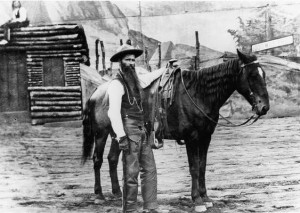
The streets of Chadron, Nebraska, were filled with people on a bright June morning. Spectators climbed atop roofs; they hung out of second-floor windows. Jester’s Freak Band, a cornet group, provided lively music. The prize was $1500 and a fancy saddle; the challenge, a 1,000-mile race from Chadron, Nebraska, to Chicago, Illinois, and Buffalo Bill Cody’s Wild West Show near the site of the 1893 World’s Fair. Ten riders took the challenge.

The rules were fairly simple. Each rider was allowed to begin the race with two horses; he was required to stop at various checkpoints along the way; and he must finish the race riding one of the original horses.

The competitors were a questionable lot – various drifters and ne’er-do-wells, such as “Rattlesnake Jim” Stephens and “Doc” Middleton, a “reformed” horse thief. Rules were broken; animals were injured. A newspaper from along the route reported that “ladies are pulling hairs from the manes and tails of the horses as mementos, and if they have a hair left when they reach Chicago it will be surprising.”

Only six of the original ten riders finished the race. The first-place finisher was a railroader named Berry who, riding a horse named Poison, rode triumphantly into Buffalo Bill’s Wild West arena on the morning of June 27 where he was greeted by a crowd of 10,000 people including Buffalo Bill himself.  In a lavish ceremony, Berry was awarded the saddle.

But the winner never received his cash prize. Race promoters discovered that shortly after the beginning of the race, he and his horses had secretly traveled the first 100 miles of the race aboard an eastbound train.

Horse sense is the thing a horse has which keeps it from betting on people. — W C Fields


JUNE 26, 1927: LOOK MA, NO HANDS

In 1927, thrill-seekers plunked down their quarters to take a ride on the Cyclone, a new attraction at Brooklyn’s Coney Island. Noting the success of the Thunderbolt in 1925 and the Tornado in 1926, Jack and Irving Rosenthal jumped into the roller coaster business to the tune of about $175,000, and the Cyclone was built.   It would take only 700,000 riders to recoup their investment. The Cyclone was built on the site of America’s first roller coaster, known as Switchback Railway, which had opened in 1884.

The Cyclone remained extremely popular through the years and has accumulated its share of legends. One is from 1948, when a coal miner with aphonia, the loss of speaking ability, took a ride. He had not spoken in years, but screamed as the Cyclone plummeted down the first drop, and said “I feel sick” as his train returned to the station, whereupon he fainted.

Statistics were never kept to tell us how many other people got sick on the Cyclone or how many threw up.  And of course there were more serious incidents. Two men were killed in separate incidents during the 1980s, both Darwin Award contenders who felt the need to stand up during the ride. One fell out and the other was whacked by a crossbeam.

The Cyclone began to deteriorate during the 1960s and was shut down in 1969. Two years later, the city of New York bought it for one million dollars. It was condemned a short time later and, in 1972, it was nearly destroyed to make way for an expansion of the New York Aquarium. A “Save the Cyclone” campaign did just that, and it was refurbished and reopened in 1975. The Cyclone was declared a city landmark in 1988 and a National Historic Landmark in 1991.

That quarter ticket now costs nine dollars.


JUNE 25, 1987: RONALD REAGAN NEVER NOODLED

In addition to his significant and far-reaching designation of ketchup as a vegetable, President Ronald Reagan had another major food moment on June 25, 1987, when he issued the Presidential Proclamation (number 5672, if you’re keeping track) calling for the celebration of National Catfish Day, a day to recognize the value of farm-raised catfish – not the ordinary bottom-feeding catfish found in any catfish hole, but those fine-finned fellows raised on pristine family farms.

More and more Americans, said the Prez, are discovering this uniquely American food delicacy. “They thrive” – the catfish, not the Americans – “in clean freshwater ponds on many American farms, where they are surface-fed soybean meal, corn, fish meal, vitamins, and minerals. Farm-raised catfish not only furnish American consumers with a tasty delicacy but also provide a nutritious, low-calorie source of protein that is also low in cholesterol.”

Top with a dollop of ketchup and you’re on your way to seafood Shangri-la.

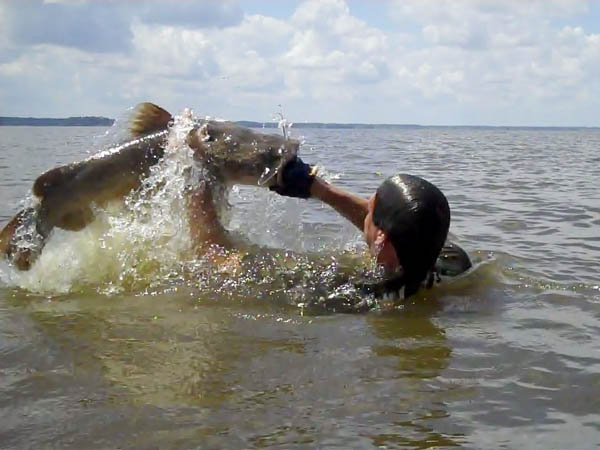
Noodling is fishing for catfish using only bare hands, practiced primarily in the southern United States. The noodler places his hand inside a discovered catfish hole.  And hopes for the best, one would presume.

JUNE 24, 1947: BAD DREAM AT 9,000 FEET

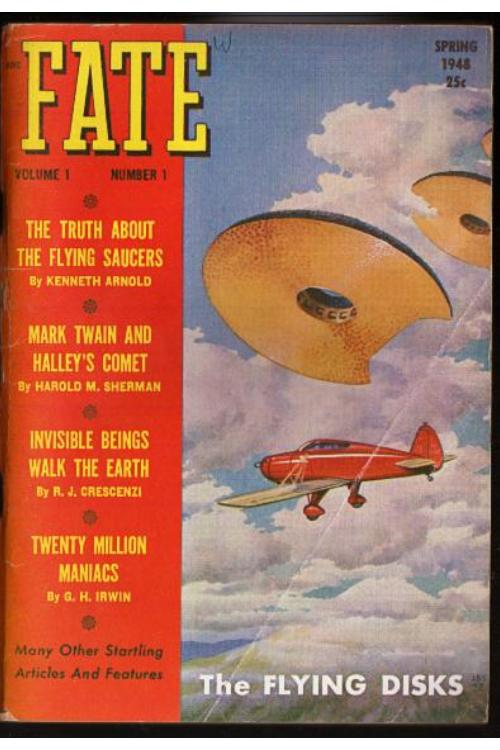
At about three in the afternoon on June 24, 1947, Kenneth Arnold, a recreational private pilot, was heading toward Yakima, Washington. Flying at 9,000 feet, Arnold saw nine objects flying in formation out of the side window of his airplane. He watched them bob, weave, and dart about – showing off at an incredible speed. These strange craft were not your traditional flying machine shape; they had no nose or tail, but rather were perfectly round, metallic and highly polished.  Arnold radioed in his sighting. It must have been a slow news day for when he landed at the Pendleton Field in Oregon, he found a full news conference waiting for him. It was there that Arnold used the words that found legs with scary space phenomena enthusiasts everywhere. He said that these strange flying objects looked like saucers skipping across water.

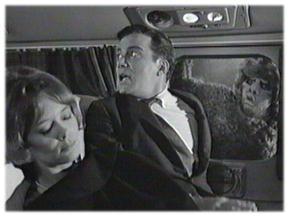
In addition to being the first use of the term ‘flying saucers,’ it is generally considered to be the first widely reported UFO sighting in the United States. There was a corroborative sighting ten days later.  A United Airlines crew also spotted five to nine disk-like objects over Idaho that paced their plane for 10 to 15 minutes before suddenly disappearing. (This may have been the very flight on which William Shatner saw one of the actual aliens chewing on the wing – but that’s an allusion for another day.)

The United States Air Force officially classified Arnold’s sighting as a mirage.

And some ufologists (yes, ufologists) began to express doubts about the psychology of the man when he reported several other UFO sightings in the years that followed, particularly his report of two living transparent UFOs that he characterized as space animals with the ability to change their density.  And a fondness for chewing on the wings of airplanes.


JUNE 23, 1626: ANOTHER FISH STORY

A codfish was brought to market in Cambridge, England, on this day in 1626. Codfish were probably brought to market every day in 1626 – and in 1627 and throughout the centuries, but this was a rather unusual fish. Upon being opened, it was found to have a book in its stomach.  There are plenty of  fish in books, but how many books in fish are there?

The book had seen better days, but it remained readable. It had been written by one John Frith and included several essays on religious subjects evidently written by Frith when in prison. Oddly enough, he had been confined in a fish cellar where many of his fellow prisoners died from smelling too much salt cod. Frith got past the salt cod but was eventually taken to the Tower, and in 1533 was burned at the stake for unacceptable religious beliefs.  How he got his essays – which were no doubt inflammatory – into that cod is still a mystery.

The folks at Cambridge reprinted the work, which had been totally forgotten for a hundred years until it turned up inside the fish.  The reprint was called Vox Piscis, which would translate to “voice of the fish.”  There’s definitely a morale booster for writers here:  When Random House says no, go find yourself a big fish.

JUNE 22, 1774: RUN SILENT, RUN DEEP

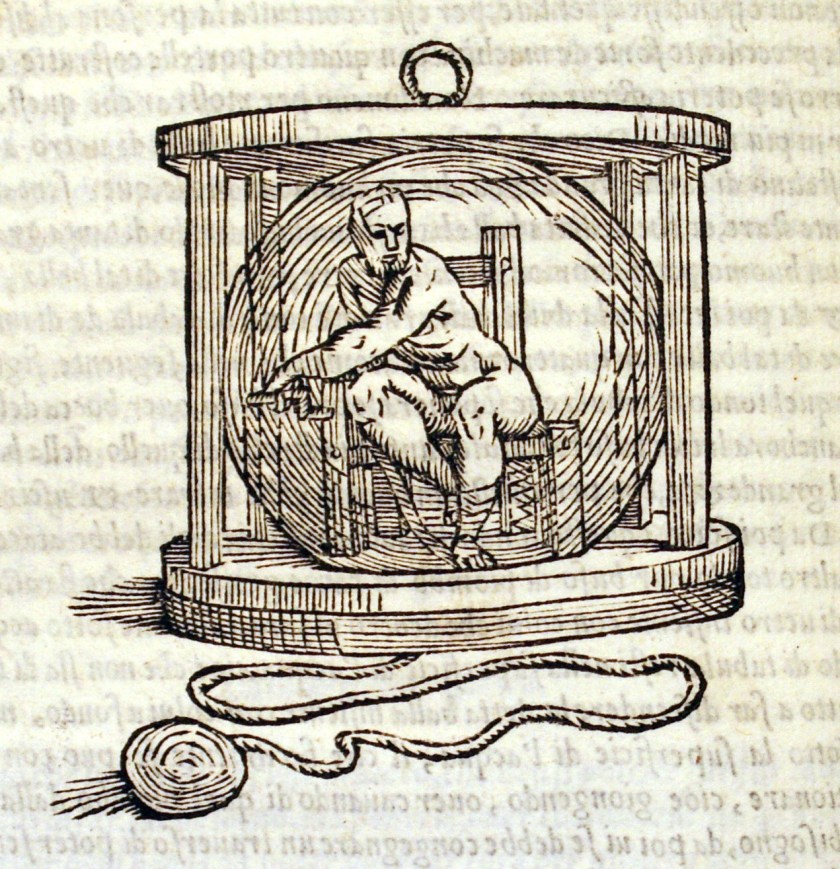
In 1774, John Day, an ignorant but ingenious English millwright, fancied that he had devised a plan by which he could remain completely underwater at any depth for at least 24 hours. The contraption he had devised for this feat would afford him a degree of comfort until, at his leisure, he returned to the surface.  Day could think of no useful purpose for his invention other than making money by wagering on his feat. He therefore contacted a local gambler who agreed to furnish funds for the construction of Day’s diving machine for a lion’s share of all the bets gained by it.

If nothing else, Day’s plan had the virtue of simplicity. His machine was merely a watertight box attached to a weight by means of screws. After entering the box and sealing the entrance, the vessel would be sunk and would remain underwater until, at the designated time, Day would remove the screws and he and the box would rise to the surface.

The machine was finished, bets were taken, and everyone convened at a designated spot on Plymouth Sound where the water was 132 feet deep. Day entered the compartment with a comfortable chair, a watch, some biscuits, a bottle of water and a candle.  Perhaps had he taken a basic science book with him — it may have enlightened him (if he read fast enough) but at that point it wouldn’t have helped.   The box was tightly closed and sunk 132 feet to the bottom from where neither it nor the unfortunate John Day ever arose.


JUNE 21, 1947: PLAN 10 FROM OUTER SPACE

In 1947, shortly after noon, Harold A. Dahl, who had spent the day scavenging for drifting logs in Puget Sound, near Tacoma, Washington, saw something. It wasn’t a drifting log.  Actually it was four or five somethings. They were shaped like doughnuts (he had already eaten, so it wasn’t his stomach’s imagination, and none of the objects were glazed or chocolate-covered).  They were overhead.  And they were flying in formation.

Dahl described these curiosities in detail. He said he could see blue sky through the holes in the center of the discs, and that there were portholes lining the inside of the ring. One of the craft appeared to be having engine trouble (if indeed it had an engine). A second doughnut came alongside, then retreated. At this point, things began being tossed out through the inner portholes of the troubled doughnut. Stuff began raining on and hitting the little boat, damaging its windshield, the wheel house and a light fixture, wounding Dahl’s son and killing his dog Shep.

The next morning, even though Dahl had not publicly described the incident, a mysterious man in black visited Dahl. He was driving a new black 1947 Buick and had the air of a government official. “I know a great deal more about this experience of yours than you will want to believe,” the man said cryptically (and rather dramatically). He also made not-so-subtle threats that Dahl’s family might be in danger. As a result, Dahl later claimed the UFO sighting was a hoax, but even later suggested he had claimed it was a hoax to avoid bringing harm to his family. His son, however, claimed not to have been on the boat.  And Dahl’s dog wasn’t really named Shep.

None of this is fooling conspiracy theorists who have suggested one great big cover-up which they follow directly to the executive boardroom of none other than Dunkin’ Donuts.


JUNE 20, 1890: PAINTING OUTSIDE THE LINES

Oscar Wilde’s only published novel, The Picture of Dorian Gray, appeared as the lead story in Lippincott’s Monthly Magazine in the July 1890 issue, released on June 20.

In the novel, the title character is the subject of a painting by artist Basil Hallward. Basil is impressed by Dorian’s beauty and becomes infatuated with him. Dorian is also infatuated by Dorian’s beauty, especially the beauty in the painting, and more than annoyed that the man in the painting will remain the same, while Dorian himself will get old and wrinkled and forget people’s names and so forth. Obviously the only answer is to put his soul on the market, which he does, with the purchaser (you know who) promising that the painting will age while Dorian himself stays the same.

In an apparent effort to make the painting age as quickly as possible, Dorian embarks on a life of debauchery, and each sin takes its toll on the portrait.

The book had about the same effect on British critics as Dorian’s naughtiness had on the painting. “Vulgar”, “unclean”, “poisonous” and “discreditable” were a few of their nicer comments. “A tale spawned from the leprous literature of the French Decadents – a poisonous book, the atmosphere of which is heavy with the mephitic odours of moral and spiritual putrefaction,” said the Daily Chronicle.   And this was after Wilde’s editor had already deleted a lot of “objectionable” text before it made its first appearance in Lippincott’s, eliminating titillating bits of debauchery and elements of homosexuality.

Deciding that the novel contained things that might upset an innocent woman, the editor cut further, removing many more decadent passages before the book was published in 1891.

MAN THE TOMATOES, FULL SPEED AHEAD

It’s a battlefield out there. Each morning I prepare my weaponry and fortify myself to better face the enemy.  Then it’s out into the morning mist, bellying my way through the trenches, my trusty trowel at my right, my insecticidal soap at my left. Half a league, half a league, half a league onward, into the valley of Death – mine not to reason why, mine but to do or die.  “Huzzah, huzzah,” I shout,  “Be valiant, stout and bold.”

With scant warning, they attack!  Tufts of crabgrass pop up behind every rock, aphids to the right of me, weevils to the left of me. A slug squadron advances relentlessly head on.   Japanese beetles at four o’clock.  The battle is joined.  Almost at once, I’m ambushed by an elite corps of exotic man-eating weeds, snapping at my ankles and calves, while trash-talking thistles peek out from between tomatoes, taunting me with Donald Trump slogans.

But I’ll not be intimidated.

“Forward,” I shout and storm into the mouth of Hell. I manage to free a tiny pepper plant being held prisoner by a half dozen stinging nettle goons.  Moments after I make a clearing to let the cucumbers once again see sunlight, the neighbor’s cat claims it for his own and begins his morning toilette.  He glowers at me, unflinching, as I try to encourage him to move on, his eyes saying I may not be big but I can bring down a gazelle and I can bring down you.  Enjoying the moment, knotweeds laugh merrily and loudly insult my gardenerhood.

I jump in with both feet, hacking and pulling and spraying.  When I’m done, a pile of green debris lies all around me shattered and sundered.  The day is mine.  The tomatoes, cucumbers and beans all nod in appreciation as I holster my trowel and spray bottle and ride off into cocktail time.

Later, exhausted, I’ll sleep, perchance to dream – of late potato blight.