To burnish his environmental creds, President Reagan visited the salt marshes and crabbing grounds of the Chesapeake Bay. There he claimed credit for cleanup efforts in the area, provoking a hue and cry among critics who found his environmental policies wanting.
In a bit of derring-do, the President climbed to the top of a 50-foot observation tower at the Blackwater National Wildlife Refuge and made eye contact with two wild bald eagles.
Lunching with a group of Republican Chesapeake Bay fishermen at a Tilghman Island fishing village, Reagan asserted that his efforts to protect the environment were ”one of the best-kept secrets” of his Administration, which indeed they were, since no one had been able to find them. The grateful fishermen donated two bushels of crabs to his re-election campaign.
When a reporter asked the President where former EPA head Anne Burford who had resigned amid charges of mismanagement fit into his secret record, press secretary Larry Speakes ordered the lights turned off. Reagan, who was used to being in the dark was unfazed. “My guardian says I can’t talk,” he quipped. Thus, his environmental record remained a closely guarded secret.
Millard Fillmore ominously assumed the presidency as number 13 when President Zachary Taylor, “Old Rough and Ready,” was ready to push up presidential daisies in 1850. As the Last of the Red Hot Whigs to hold the office of president, Fillmore had a rather lackluster four years in office before receiving the boot from his own party. He is consistently a cellar dweller in historical POTUS rankings (although not last; we all know who that is).
Fillmore’s most lasting legacy, trumpeted in a 1917 article, was the installation of a bathtub, a mahogany model, in the White House, giving the device an imprimatur that paved its way for wider distribution in the United States. This bit of sudsy statesmanship is frequently cited in reference to the Fillmore presidency. The whole story was of course a hoax, fabricated by one of the nation’s less reliable historians, H. L. Mencken. Even though the article was blatantly false and “a tissue of somewhat heavy absurdities,” it was widely quoted as fact for years.
“My motive,” Mencken later explained, “was simply to have some harmless fun in war days. It never occurred to me that it would be taken seriously.”
“Soon I began to encounter my preposterous “facts” in the writings of other men…. The chiropractors and other such quacks collared them for use as evidence of the stupidity of medical men. They were cited by medical men as proof of the progress of public hygiene. They got into learned journals and the transactions of learned societies. They were alluded to on the floor of Congress. The editorial writers of the land, borrowing them in toto and without mentioning my begetting of them, began to labor them in their dull, indignant way. They crossed the dreadful wastes of the North Atlantic, and were discussed horribly by English uplifters and German professors. Finally, they got into the standard works of reference, and began to be taught to the young.”
Moravia, New York, near Fillmore’s birthplace and where he was married, hosts an annual Fillmore Days celebration in July. One of the main events is a bathtub race down Main Street. Never mention the bathtub hoax in Moravia.
Soapy Smith, “king of the frontier con men” died in a gunfight celebrated as the Shootout on Juneau Wharf on the evening of July 8, 1898. His last words, while not particularly memorable and certainly not effective, were nevertheless appropriate to the situation: “My God, don’t shoot!”
Soapy’s career began soon after the death of his mother in Fort Worth, Texas. He formed a highly disciplined cadre of ne’er-do-wells to work for him, and rose rapidly to criminal super stardom. He built three major evil empires: in Denver, Colorado, from 1886 to 1895; Creede, Colorado in 1892; and Skagway, Alaska, from 1897 to 1898. It was in Skagway that he finally made his dramatic exit.
Starting off with small-time cons such as three-card monte and shell games, he eventually employed the big con that gave him his nickname. On a busy street corner, Smith would go into an ordinary sales pitch extolling the wonders of his soap cakes. But he proceeded to wrap money around the cakes of soap – ones, tens, a hundred dollar bill. He then wrapped plain paper around them to hide the money.
He mixed the money-wrapped packages with bars containing no money and began selling the soap for a dollar a cake. Immediately, one of his shills would buy a bar, tear it open, and begin waving around the money he had supposedly won. People began buying soap, usually several bars. Every few minutes, someone would shout that he had won, always a confederate. Eventually, Smith would announce that the hundred-dollar bill remained unpurchased and began auctioning off the remaining soap bars to the highest bidders. Naturally, the only money was “won” by members of the gang.
Smith used this swindle successfully for twenty years. The proceeds from this scam and others gave him the money to pay graft to police, judges, and politicians, and live as a somewhat shady swell until his comeuppance on the Juneau Wharf at the hand of a man he had cheated.
England is not without its share of quaint ceremonies, many dating back to medieval times. One of the more unusual of these is the Dunmow Flitch which had its inception in Little Dunmow, Essex, during the 13th century and gravitated from there to Great Dunmow (a larger venue perhaps). The custom was a celebration of marital bliss in which a lucky couple who could satisfy judges of their own would be rewarded with a flitch of bacon, basically half a pig.
To win the flitch, the couple must prove that they had lived for a full year in a state of wedded euphoria, never uttering a harsh or quarrelsome word, nor shooting even a nasty glance in the other’s direction. No negative thought or a hint of regret could enter their minds. And if they had the opportunity to do it all over — well, you get the drift. If the judges were convinced:
“A whole gammon of bacon you shall receive,
And bear it hence with love and good leave:
For this is our custom at Dunmow well known,
Tho’ the pleasure be ours, the bacon’s your own.”
The happy couple were then paraded around town with their flitch of bacon and a lot of ballyhoo.
Were you to think this a very difficult way to procure a flitch of bacon, you’d be spot on. From the 13th century until the 18th century when the custom died out, there were, strangely enough, only six recorded winners. And according to an unreliable source, one of the early winning couples was a ship’s captain and his wife who hadn’t actually laid eyes on each other for the year after their wedding. Another couple, successful at first, had the flitch taken away from them after they began to argue about how it should be dressed. Yet another couple failed when the husband, who took part reluctantly, had his ears boxed by his wife during the questioning.
The custom has been reintroduced sporadically over the years. It is currently held every four years, coincidentally in the same years as American presidential elections. Perhaps we could learn from it.
Maybe If They Hadn’t Had To Slice Their Own Bread
“The greatest thing since sliced bread” is high praise indeed, denoting the ultimate in ingenuity, a hallmark of good old American know-how, a real “Wonder,” if you will. Sliced bread? Really? How important can sliced bread be?
White bread, we just can’t quit you.
Well, for example, in 1943, U.S. officials imposed a ban on sliced bread as a wartime conservation measure for reasons known primarily to U.S. officials. Why not just cut off everyone’s right arm? A letter from a frantic housewife to The New York Times was typical of the reaction:
I should like to let you know how important sliced bread is to the morale and saneness of a household. My husband and four children are all in a rush during and after breakfast. Without ready-sliced bread, I must do the slicing for toast—two pieces for each one—that’s ten. For their lunches I must cut by hand at least twenty slices, for two sandwiches apiece. Afterward I make my own toast. Twenty-two slices of bread to be cut in a hurry!
Sliced bread, specifically a loaf of bread pre-sliced by a machine and packaged for consumer convenience, made its debut on July 7, 1928, and was hailed as “the greatest forward step in the baking industry since bread was wrapped” (they couldn’t really call it the greatest thing since sliced bread). It was produced by the Chillicothe Baking Company of Chillicothe, Missouri, as “Kleen Maid Sliced Bread.”
Kleen Maid was followed by the Holsum Bread brand, used by various independent bakers around the country. And in 1930, Wonder Bread started marketing sliced bread (or a plastic replica of it) nationwide, and the rest, as they say in the bread world, is history.
Known as Cœur de Lion or the Lionheart because of his reputation as a great military leader and warrior, Richard I became King of England on July 6, 1189, and ruled until his death ten years later. He was the stuff of which legends were made, particularly in the story of Robin Hood, although he’s strictly an offstage presence, being held prisoner in a far-off land until the very end and his triumphant return. Robin, you will remember, battled the evil Prince John who was doing his best to usurp Richard’s throne in his absence. Eventually, Richard returns triumphantly to England, but in a bit of a slap in the face to Robin, he forgives John and names him his heir to the throne. Robin is abandoned to Sherwood Forest and his “merry men” (see Robin Hood – Men in Tights).
In reality, Richard, it seems, was a rather lackluster king, spending only six months of his ten-year reign in England (“hates London, it’s cold and it’s damp”) preferring to spend his time on crusades, battling Saladin, and waging wars throughout the world (“who would Jesus invade?”).
He died as a result of an arrow wound (live by the arrow, die by the arrow). According to a 13th century bishop, Richard was required to spend 33 years in purgatory atoning for his many sins before finally being allowed into heaven in March 1232.
Richard III also began his reign on July 6, nearly 300 years later in 1483. He took the crown shortly after having his nephew 12-year-old King Edward V declared a bastard and sent to the Tower. His only accomplishment as king seems to have been the murder of his two nephews (and a number of scholars would take that away from him too). Bishops have not said how many years he had to spend in purgatory before joining his ancestors up above, but we can guess it was quite a few.
Chopped pork shoulder meat, with ham meat added, salt, water, modified potato starch just for fun, and sodium nitrite to give it chemical balance – who in 1937 would have thought such ingredients might add up to one of the most ubiquitous meat products known to the world. In 2007, the seven billionth serving was sold. Sure, McDonald’s has sold more burgers, but they don’t come in a can. Spam do.
Known in some circles as a precooked luncheon meat product and in others as mystery meat, Spam has probably been the butt of more food jokes than any other product. Its pervasiveness led to the lending of its name to junk email.
World War II saw a huge increase in the use of Spam. Replacing fresh meat, it was served for breakfast, lunch, and dinner and called “ham that didn’t pass its physical” or “meatloaf without basic training.” After the war, a troupe of former servicewomen, the Hormel Girls, toured the country promoting the eating of Spam as being downright patriotic. The show went on to become a radio program all about selling Spam. Hawaiians eat the most Spam per capita in the United States. It’s even sold at Burger King and McDonald’s. Hawaii holds an annual Spam Jam in Waikiki during the last week of April.
In 1963, Spam was introduced to schools in South Florida as cheap food and was even used for art sculptures. It was so successful that Hormel Foods introduced Spam in school colors, the first being a blue and green variety that is still used today.
The North American home of Spam is Austin, Minnesota – “Spam Town USA.” It’s home to the Spam Museum, celebrating the history of the Hormel company, the origin of Spam and its place in world culture. Austin is also the location of final judging in the national Spam recipe competition. Competing recipes are collected from winning submissions at the top forty state fairs in the nation. And there’s a restaurant with a menu devoted exclusively to Spam – Johnny’s SPAMarama.
Don’t you want to run right out and buy a can?
We’d be remiss if, after the foregoing adulation, we didn’t give you a Spam recipe. Here’s a nice easy one:
Hawaiian Spamburger
1 (12-ounce) can Spam cut into 8 slices
1 (8-ounce) can pineapple rings, drained
4 hamburger buns, split and toasted
4 slices American cheese
Brown the Spam slices in a skillet.
Place 2 slices on each bottom half of a hamburger bun.
He is probably the patron saint of inventors everywhere – or at least their idol – for his uncanny ability to devise an incredibly convoluted method to carry out the simplest tasks. In fact the Merriam-Webster dictionary adopted his name as an adjective in 1931 meaning just that, to accomplish something simple through complex means.
Reuben Garrett Lucius (Rube) Goldberg was born on July 4, 1883. He died in 1970, at the age of 87, leaving a legacy for inventors and cartoonists alike. He was a founding member and first president of the National Cartoonists Society and is the namesake of its Reuben Award for Cartoonist of the Year. In 1948, he won his own Pulitzer Prize for his political cartooning. And he is the inspiration for many competitions challenging would-be inventors to create machines using his scientific principles.
Professor Butts and the Self-Operating Napkin offers a typical scenario for a Rube Goldberg invention: A soup spoon (A) is raised to the mouth, pulling string (B) and thereby jerking a ladle (C), which throws cracker (D) past parrot (E). Parrot jumps after cracker and perch (F) tilts, upsetting seeds (G) into pail (H). Extra weight in pail pulls cord (I), which opens and lights automatic lighter (J), setting off skyrocket (K), which causes sickle (L) to cut string (M) and allow the pendulum with the attached napkin to swing back and forth, wiping the user’s chin.
THE DAY WE MOVED OUT
On July 4, 1776, the Continental Congress adopted the Declaration of Independence stating that the thirteen American colonies regarded themselves as a new nation, the United States of America, and were no longer part of the British Empire.
“When in the Course of human events, it becomes necessary for one people to dissolve the political bands which have connected them with another, and to assume among the powers of the earth, the separate and equal station to which the Laws of Nature and of Nature’s God entitle them, a decent respect to the opinions of mankind requires that they should declare the causes which impel them to the separation.
We hold these truths to be self-evident, that all men are created equal, that they are endowed by their Creator with certain unalienable Rights, that among these are Life, Liberty and the pursuit of Happiness. . .”
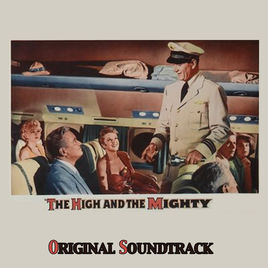
In 1954, a gaggle of Hollywood VIPs boarded a DC-4 airliner headed from Hawaii to California. Their troubled flight made a bit of film history — in Cinemascope, no less. The High and the Mighty premiered on July 3, 1954, with a roster of stars that included Claire Trevor, Robert Stack, Laraine Day, Phil Harris, and shepherding them through the sky, John Wayne.
Introducing the scenario that would be used so successfully by the Airport movies of the 1970s as well as countless other disaster movies, the film details the lives and interactions of the passengers and crew when calamity strikes the flight. Calamity comes in the form of a ‘whoops there goes the first prop’ moment and another, followed by a nasty engine fire. Co-pilot Wayne leaps to the fore and (spoiler alert) guides the plane to its destination. And what happened to the pilot, you ask. The pilot, played by Robert Stack goes all squishy and useless (probably because Wayne produced the film and Stack didn’t).
Stack, incidently, showed up in a 1980 film that brought the air disaster genre to its illogical conclusion. In Airplane he stays on terra firma trying to talk an experienced pilot through a landing: “Striker, listen, and you listen close: flying a plane is no different than riding a bicycle, just a lot harder to put baseball cards in the spokes”.
Composer Dimitri Tiomkin won an Academy Award for his original score of The High and the Mighty. The title song was nominated for an award but did not win.
MIAMI WIT
Dave Barry, born July 3, 1947, is a Pulitzer Prize-winning columnist and humorist who wrote a nationally syndicated column for The Miami Herald from 1983 to 2005. He has also written numerous books of humor.
• The word user is the word used by the computer professional when they mean idiot.
• If you were to open up a baby’s head – and I am not for a moment suggesting that you should – you would find nothing but an enormous drool gland.
• Although golf was originally restricted to wealthy, overweight Protestants, today it’s open to anybody who owns hideous clothing.
• Gravity is a contributing factor in nearly 73 percent of all accidents involving falling objects.
• Dogs feel very strongly that they should always go with you in the car, in case the need should arise for them to bark violently at nothing right in your ear.
• The simple truth is that balding African-American men look cool when they shave their heads, whereas balding white men look like giant thumbs.
• Thus the metric system did not really catch on in the States, unless you count the increasing popularity of the nine-millimeter bullet.
Delving into the musical history of July 1 during the 20th century can be instructional for trendspotters if not for music lovers. On this day in 1935, Benny Goodman and his band recorded the “King Porter Stomp.” Elvis Presley appeared on “The Steve Allen Show” on July 1, 1956, wearing tails and singing “Hound Dog” to a basset hound. And in 1963, the Beatles recorded “She Loves You.” So far so good.
Fast forward to the ’80s and a few melodies you no doubt whistled while on a pleasant walk through the park — all making their appearance on July 1. In 1987, the English grindcore band Napalm Death released its first recording “Scum.” Side A of the album was recorded at the Rich Bitch studio; it was planned as part of a split release with the English crossover thrash band Atavistic on Manic Ear. It was released as a single album through Earache. The song “You Suffer” was listed in the Guinness Book of Records as the world’s shortest song at 1.316 seconds (at last, a redeeming quality).
There’s more: The first pressing of the CD included the From Enslavement To Obliteration album and four bonus tracks (hooray!). The album cover was designed by a member of the band Carcass.
Butchered at Birth by American death metal band Cannibal Corpse was released in 1991 through Metal Blade Records. It included the lyrical “Rancid Amputation.” We can be sure that if Benny Goodman were still performing (instead of turning over in his grave), he’d jump right on a cover version of that one.
When the Canadian government announced in 1986 that a new dollar coin would be launched the following year and the dollar bill phased out, they had planned to continue using the voyageur theme of its predecessor, and the master dies for the coin were sent from Ottawa to the Mint in Winnipeg. Somehow they were lost in transit.
An investigation found that there were no specific procedures for transporting master dies and that they had been shipped using a local courier in order to save $43.50. The investigation also found it to be the third time that the Mint had lost master dies within five years. Fingers started pointing. An internal review by the Royal Canadian Mint found that an existing policy did require the two sides of the dies to be shipped separately. The new coins dies were indeed packaged separately but they were part of a single shipment. The Royal Canadian Mounted Police contended that the dies were simply lost in transit. But the Mint said the dies were stolen. They were never recovered.
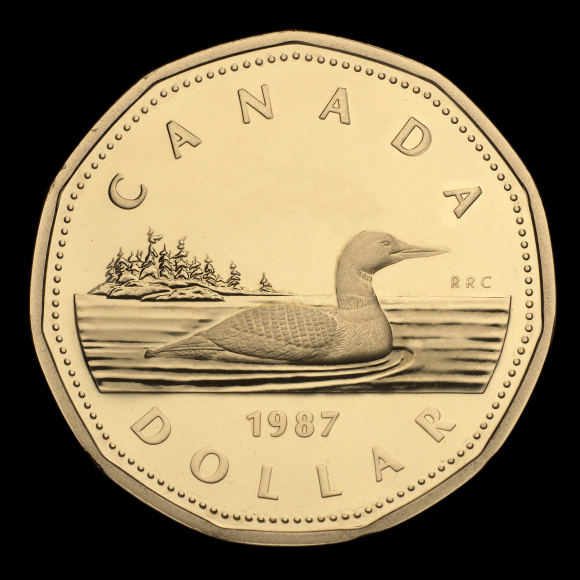
Fearing possible counterfeiting, the government approved a new design for the reverse side of the coin, replacing the voyageur with an engraving of a common loon floating in water. The coin was immediately christened the “loonie” throughout English Canada (“huard” in Quebec) when 40 million coins went into circulation on June 30, 1987.
The final dollar bills were printed two years later on June 30, 1989. And in 1996, Canadians got a two-dollar coin, the “toonie.”
It was one of the dullest speeches I ever heard. The Agee woman told us for three quarters of an hour how she came to write her beastly book, when a simple apology was all that was required. ― P.G. Wodehouse




 Wretched Richard's Almanac