JULY 20, 1969: I SEE THE MOON, THE MOON SEES ME

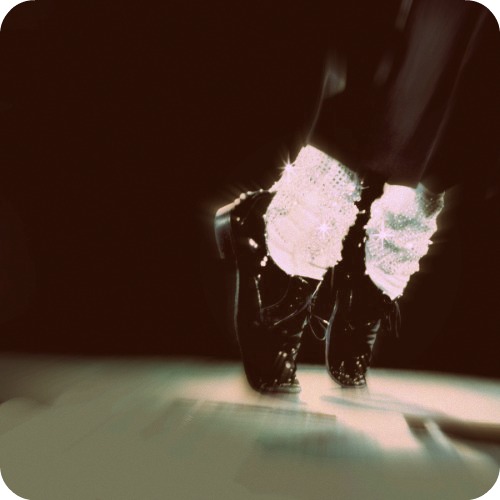
Mention the moonwalk, and Neil Armstrong and Buzz Aldrin naturally spring to mind. You know, “one small step for man, one giant leap for mankind.”   That is unless you’re Google. To Google, that magical searching apparatus, the moonwalk is a dance step popularized by Michael Jackson. That’s it, nothing else. If you’re an astronaut, you might just as well have done the cakewalk or the Lindy back there on July 20, 1969, with the whole world watching.

See the thread holding up the fake New York Times?

     Folks other than Google did watch the moonwalk as performed by the astronauts. It was the real thing not some abstract space adventure you might read about. It was there before our eyes, an “As Seen on TV” moment. Conspiracy theorists, along with Google, have different ideas of course – that the astronauts were actually doing Michael Jackson imitations on a secret sound stage somewhere out in the desert.  And they are joined by such notable sources of knowledge as Fox News and the Flat Earth Society. At any given moment over the past years, up to 20% of Americans have believed that the manned landings and moonwalks were faked. Many of these Americans are, of course, the same ones who believe that evolution is a communist plot, that Barak Obama was born in Kenya, and that Donald Trump is . . . well, the Almanac won’t go there.  They’ve even worked out all the little details. NASA, it seems, faked the landings to win the Space Race. The make-believe landings were staged by Hollywood under the aegis of Walt Disney, based on a script by Arthur C. Clarke and directed by Stanley Kubrick.

     A number of these skeptics even believe that the moon itself is a fake. If you’re not convinced, try Googling it.
JULY 19, 1918: MANANA IS GOOD ENOUGH FOR ME

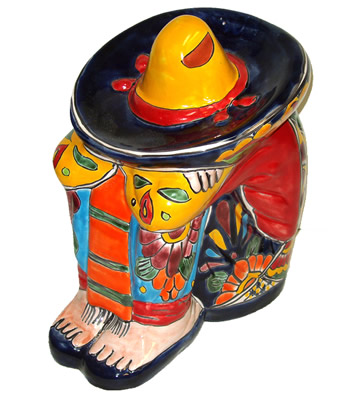
The nations at war had already soldiered on for more than four years, and the war would end in another few months, but Honduras President Francisco Bertrand awakened from a siesta and jumped into the fray by declaring war on Germany, taking the dubious honor of becoming the last nation in the world to declare war as part of World War I.

     One can imagine the reaction in the German War Room when word arrived that Honduras had gone to the other side. The German command couldn’t have been too surprised since Britain, Serbia, Montenegro, Japan, Italy, Australia, Canada, India, New Zealand, United States, Panama, Greece, Guatemala, Nicaragua and Haiti had all declared war on Germany. And for its part, Germany had declared war against France, Russia, Belgium, and Portugal. (Practically everybody declared war on Bulgaria and the Ottoman Empire.)  But Honduras!

     The Honduran president was all set to commit troops to the worldwide effort before realizing that Germany was halfway around the world and had no rum. And the war declaration was really more a matter of sucking up to the United States by showing sympathy for its position than any actual hostility toward Germany. In fact, there were a large number of Germans living in Honduras, and they were not pleased.  A year later they retaliated by supporting Bertrand’s political enemies in overthrowing him.


JULY 18, 64: ROME WASN’T BURNED IN A DAY

Just whose fault was it anyway? Was it a cow kicking over a lantern, that strange new sect known as Christians, or the Emperor himself whom rumor would have wailing on a fiddle during the conflagration? It started in the central slums, spread rapidly through the market area and neroeventually engulfed most of the city. When the flames finally died out more than a week later, nearly two-thirds of Rome had been destroyed.

History likes to blame Emperor Nero, suggesting that he not only started the fire because he did not find the city architecturally pleasing, but staged his one-man concert as the flames surrounded him. History does not recall the name of the tune or tunes he played. History is funny that way. He did use the fire as an opportunity to rebuild Rome in a more orderly Greek style. And he did blame the curious Christian cult for the fire, responding with what became the popular Roman pastime of feeding them to the lions and other pagan parlor games.

Unfortunately for conspiracy theorists, Nero was 35 miles away when the fire started, couldn’t play a lick on the fiddle (which hadn’t been invented anyway), and let his palace be used as a homeless shelter (no Christians need apply, of course).

Actually, Nero wasn’t musically inept. He could play a mean lyre, an ancient Greek stringed instrument sort of like a zither but sort of not. This is probably why conspiracy theorists determined to blame him for the fire, chanted “Lyre, lyre, pants on fire.”


THIS, ON THE OTHER HAND, IS ALL TRUE


JULY 17, 1717: CHAMBERMAIDS GONE WILD

The King was on the poop deck counting out his money; the Queen was in the fo’c’sle eating bread and honey.

     A bevy of aristocrats, including King George I himself, boarded the royal barge at Whitehall Palace for a nautical jaunt up the Thames toward Chelsea.  Anne V was there, as was the Duchess Sailing to Musicof Bolton, the Duchess of Newcastle, the Countess of Darlington, the Countess of Godolphin, Madam Kilmarnock, and the Earl of Orkney, to drop just a few names. The rising tide propelled the barge upstream without any necessity of rowing. The evening’s dinner consisted of four and twenty naughty boys, baked in a pie.*

     Another barge provided by the City of London contained His Majesty’s secret service, the press corps, and fifty musicians who performed music written for the occasion by composer and conductor George Frideric Handel. The music opened with a melodic French overture and skittered through minuets and bourrées, with enthusiastic hornpipers hornpiping throughout.

     Many freeloaders also took to the river to hear the free concert. According to a London newspaper, the whole River was covered with rubbernecking boats and barges.  On arriving at Chelsea, the king left his barge, then returned to it at about 11 p.m. for the return trip. No one knows exactly what he did during his bit of shore leave, but rumor has it a chambermaid was involved. (The Queen was in the fo’c’sle eating bread and honey; the King was in the Chambermaid and she was in the money, goes the unauthorized verse.) The king was so pleased with the evening’s music that he yelled “more, more” every time the orchestra attempted to take a break, forcing them to play until well after midnight.  The moonlight, the lapping of the water against the barge, and the chambermaid are all lost to history, but Handel’s Water Music lives on.

* Sing a Song of Sixpence,
   A bag full of Rye,
   Four and twenty Naughty Boys,
   Baked in a Pye.


JULY 16, 1935: I PUT MY NICKEL IN BUT DIDN’T GET NO MUSIC

It didn’t take long after the first automobiles were sold at the turn of the century for traffic congestion to become a problem. By the 1930s, America was fender-deep in automobiles – Fords, Packards and Nashes; Hudsons, Bentleys and DoSotos. And folks weren’t happy just driving these vehicles around; they wanted to park them!

Parking was becoming a big problem, particularly in cities. Downtown merchants were up in arms because their businesses suffered when parking spots were hogged by the same cars all day long. Carl Magee, an Oklahoma newspaperman, came up with an idea: allow vehicles to park for a specific time period, using some kind of timer – a great solution but he didn’t have the least idea how to make such a thing work. He shared his idea with two professors at Oklahoma State University who came up with an operating model of a coin-operated parking meter.

Magee founded the Dual Parking Meter Company – “Dual” because the meters served two purposes, controlling parking and generating revenue. Oklahoma City purchased 150 of the mechanical marvels at $23 each, installing them downtown under the cover of darkness on July 16, 1935.

The meters charged a nickel an hour. There were not a great many satisfied customers. In fact, citizens were outraged. Paying for parking was unAmerican. The brouhaha attracted national attention, but the meters stayed in Oklahoma City, and quickly spread throughout the land. By the early 50s, one million were in operation.

Today’s motorists would be tickled pink to pay but a nickel for an hour of parking – particularly in Manhattan where meters collect $7.50 an hour.

JULY 15, 971: JUST LYING IN THE RAIN

‘St. Swithin’s day if thou dost rain
For forty days it will remain
St. Swithin’s day if thou be fair
For forty days ’twill rain nae mair.’

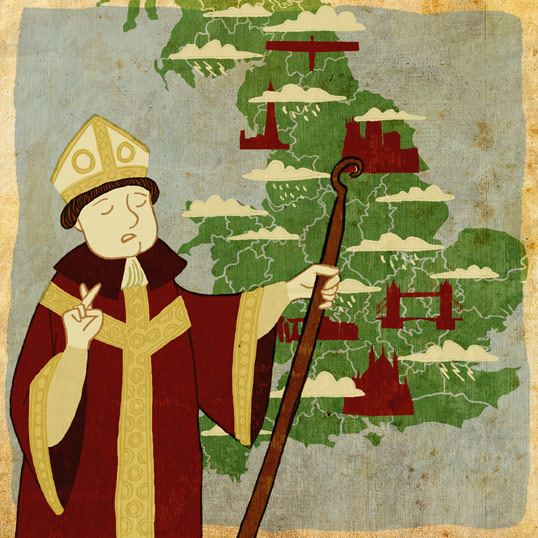
     St. Swithin is the British counterpart to America’s Puxatawney Phil, except that the former is a ninth century bishop and the latter is a ground hog.  And just how did the good St. Swithin get his meterological stripes?  Here’s how:

ST-SWITHIN-DUDLEY-MAXIMS     St. Swithin was noted for his great humility, a quality that some may say he carried to excess. On his deathbed, he asked to be buried, not in the church or in some shrine, but outside where his corpse might be watered by rain from the church eaves and his grave stomped on by passers-by. Folks rolled their eyes a bit but complied with his request.

     And his remains lay wet and walked on for a good hundred years, until a more modern generation of clergy (those 10th century radicals!) took umbrage at one of their own resting in such a lowly spot. They decided at once to relocate Swithin, who could not object, to a great cathedral.  However, on July 15, 971,  just as a ceremony with great pomp and circumstance was about to begin, as if on cue, a heavy rain burst forth and continued with nary a break for 40 days (40 days is a popular duration for great rainfalls).

     The monks interpreted this tempest as a not-so-subtle warning from on high that their nasty little undertaking was a bit of blasphemy.  They immediately abandoned the project. And even without the help of modern social media, word spread throughout the land, and a tradition was born: if it rained on St. Swithin’s Day, it would rain for 40 days.

    St. Swithin also planted apple trees (like Johnny Appleseed, who never predicted weather) leading to the popular description of rain: “St Swithin is christening the apples

JULY 14, 1789, 1973: BREAKING UP IS HARD TO DO

Every écolier and écolière knows that the breakup of France – Révolution française – began in 1789, its defining moment the storming of the Bastille on the morning of July 14. 1789. This medieval fortress in the center of Paris represented royal authority. That the Bastille housed only seven inmates – all with good reason to be there – was unimportant. It was a symbol of the abuses of the absolute monarchy, and the French had had it with monarchs, aristocrats, and pretty much anyone in power. Bring on liberté, égalité, fraternité.   King Louis XVI, exit stage right.

Bye Bye Don

Another momentous breakup took place on the evening of the same day, nearly 200 years later, in 1973, at Knott’s Berry Farm in California. (Knott’s Berry Farm was America’s first theme park and probably the only one devoted to grapes and strawberries and such things.) Every schoolgirl and schoolboy knows that the Everly Brothers were one of America’s most successful pop duos, lending their sibling harmony to such hits as “Bye Bye Love”, “All I Have To Do is Dream” and “Wake Up Little Susie”, a franchise that would seemingly go on forever. Well, forever is a long time, and brothers Don and Phil had, by the end of the 1960s, pretty much had it with liberté, égalité, fraternité and most definitely with each other.

The defining moment of their breakup came in the middle of their set when the stage manager told the audience that the rest of the show had been canceled because brother Don was “too emotional” to play.  In reality, Brother Don was too drunk to play. His skipped guitar notes and bungled lyrics sent brother Phil into a real snit. Phil smashed his guitar and stormed off stage into a solo career, promising he would “never get on stage with that man again.”

Phil and Don reached a sort of detente a decade later.  Louis XVI, on the other hand, was beheaded.

(Phil Everly died in January 2014).

I have no intention of sharing my authority. — King Louis XVI

JULY 13, 1865: GAY GUINEA PIGS AND MIDDLE-AGED, SCHEMING MONKEYS

Boston, Philadelphia, Baltimore, New Orleans, and some western cities have buildings called museums, opined The New York Times, but they are mere theatrical attractions compared to Barnum’s American Museum in New York City.  Make that Barnum’s former museum, since the occasion for the Time‘s ode, was the destruction by fire of the amazing structure at the corner of Broadway and Ann.  Forget that the Times also talked of its “ever patent humbuggery with which (it) coddled and cajoled a credulous people,” it was still an honorable institution.

The always staid Times ran the story of the fire under the following headline:

DISASTROUS FIRE.

Total Destruction of Barnum’s American Museum.

Nine Other Buildings Burned to the Ground.

LOSS ESTIMATED AT $1,000,000.

A History of the Museum and Brief Sketch of its Curiosities.

Scenes Exciting, Serious, and Comic at the Fire.

The Police Prompt and Vigilant—The Firemen Earnest and Active.

GREAT EXCITEMENT IN THE CITY.

Thirty Thousand People in the Streets

Pickpockets in the Crowd

Accidents and Incidents.

THE AQUARIA.

THIRD FLOOR FAMOUS PETRIFICATION, THREE MEN OF EGYPT,

THE FOURTH FLOOR, THE HAPPY FAMILY, ORIGIN OF THE FIRE.

SCENE WITHIN THE MUSEUM, COMIC INCIDENTS, A FEARFUL PANIC.

PROGRESS OF THE CONFLAGRATION.

ARRIVAL OF THE METROPOLITAN POLICE.

THE FLAMES EXTENDING. CLOSING OF SHOPS.

THE FIRE CHECKED.

INCIDENTS.

THIEVES ARRESTED. ACCIDENTS.

LOSS OF CURIOSITIES.

THE SUFFERERS AND THE LOSSES.

DISASTROUS FIRE.

Leave the sensationalism to the Daily News and the Post.

From the Times Article:

On the floor above was a collection of “sassy” monkeys, subdued dogs, meek rats, fat cats, plump pigeons, sleepy owls, prickly porcupines, gay guinea pigs, crowing cocks, hungry hounds, big monkeys, little monkeys, monkeys of every degree of tail, old, grave, gray monkeys, young, rascally, mischievous monkeys, middle-aged, scheming monkeys, and a great many miserable, mangy monkeys. Those animals and other creatures may have been happy, but they didn’t smell nicely; they doubtless lived respectable, but their anti(c)s were not pleasant to look at, and, to tell the truth, they frequently fought fiercely, and were badly beaten for it. However, they are gone; all burned to death, roasted whole, with stuffing au naturel, and in view of their lamentable end we may well say, “Peace to their ashes.”

JULY 12, 1960: MR. POTATOHEAD WAS NOT AMUSED

Two knobs in the lower corners on the front of a plastic cube-like structure, when rotated clockwise or counterclockwise, move a stylus that displaces a metallic powder on the back of a screen, leaving horizontal and vertical lineographic images – in layman’s terms, magic. In the Romneywords of the French inventor, L’ecran Magique. Or in the words of the marketers who made it one of the 100 most memorable and most creative toys of the 20th century, Etch-a-Sketch.

The mechanical drawing toy, which was inducted into the National Toy Hall of Fame in 1998, was first marketed on July 12, 1960, by the Ohio Art Company, timed perfectly to catch the big wave of the Baby Boom. In England, it was known as the DoodleMaster Magic Screen. (There was also the Magna Doodle and the Mystic Writing Pad.)

Although it remained popular throughout the fifty plus years of its existence, the Etch-A-Sketch reached a new notoriety in 2012, when it became a part of the demise of a presidential campaign. The simple plastic rectangular box may have contributed as much to the 2012 election – in influence –  as all the SuperPACs put together. It happened when candidate Mitt Romney’s campaign manager, asked if Romney was boxing himself into ultra-conservative opinions during the primary, answered: “I think you hit a reset button for the fall campaign. Everything changes. It’s almost like an Etch-A-Sketch. You can kind of shake it up, and we start all over again.”

Trying to contain the brouhaha, the Romney campaign only added to its woes by saying that since the mention of Etch-A-Sketch caused its maker’s stock price to triple, they would next mention Mr. Potatohead.


JULY 11, 1921: BATHTUBS OF THE PRESIDENTS II — SPLISH SPLASH, I WAS STUCK IN THE BATH

Former President William Howard Taft became the tenth Chief Justice of the Supreme Court on July 11, 1921,  serving until his death in 1930. He was the only person to ever hold both positions. His long career also included stints as Secretary of War, Solicitor General, Governor of Cuba and Appellate Judge. The Almanac will, however, ignore all that stuff to concentrate on the burning question: Did Taft really get stuck in the White House bathtub?


Taft was a heavy-set fellow, weighing in at 340 pounds. Occasionally, chairs challenged his girth. He did have the White House bathtub super-sized during his presidency. That tub remained in taftthe White House until removed during renovation by a narrower president.  And, in an interesting coincidence (?), the Taft Justice Department was involved in breaking up the Bathtub Trust (aka the Loo League), a cartel of porcelain makers who were playing price-fixing games with bathtubs and toilets. Jump on that, conspiracy theorists. Then there’s that telling photograph of four men sitting in the Taft Tub. White House plumbers, perhaps. Precursors of the Nixon gang?

Some stories have the entire Joint Chiefs of Staff extricating Taft from the tub. Others talk of lots and lots of butter. But is it true? Or was it a political dirty trick? Or a clever hoax?  H.L. Mencken maintains his innocence.

For further enlightenment see Part I of our  Bathtubs of the Presidents series.  And watch for Bathtubs of the Presidents III in which we will reveal who recently shared the White House bathtub with whom.