AUGUST 22, 1893: HAVE TONGUE, WILL TRAVEL

Alien encounters of a different sort used to take place at the Round Table of the Algonquin Hotel in New York City where its literary members gathered for lunch – humorist Robert Benchley, playwright Robert E. Sherwood, newspaper columnists Franklin Pierce Adams and Alexander Woollcott, and Dorothy Parker. Born August 22, 1893, Parker was a poet, short story writer, screenwriter, critic and satirist, best known for her caustic wit and wisecracks.

Through the re-printing of her lunchtime remarks and short verses, Parker gained a national reputation. One of her most famous comments was made when the group was informed that former parker2president Calvin Coolidge had died; Parker remarked, “How could they tell?”


If all the girls attending [the Yale prom] were laid end to end, I wouldn’t be at all surprised.


And there was that poor sucker Flaubert rolling around on his floor for three days looking for the right word.


You can lead a horticulture, but you can’t make her think.


This is not a novel to be tossed aside lightly. It should be thrown with great force.


Every year, back comes Spring, with nasty little birds yapping their fool heads off and the ground all mucked up with plants.


Beauty is only skin deep, but ugly goes clean to the bone.


It serves me right for putting all my eggs in one bastard.


parker 1


If you have any young friends who aspire to become writers, the second greatest favor you can do them is to present them with copies of The Elements of Style. The first greatest, of course, is to shoot them now, while they’re happy.

AUGUST 21, 1955: NIGHT OF THE LITTLE GREEN MEN

Twenty years before the Allagash Maine Incident (August 20), some Kentuckians had their own alien encounter. This was a legitimate red state encounter, no crazy New England liberals here.  Just salt of the earth, alien-fearing folk living in a farmhouse near Hopkinsville in Christian County.

     Seven good Christian County residents claimed to have been terrorized by a gang of green creatures – gremlins or goblins or maybe leprechauns – whatever they were, they were foreigners. The infidels were three feet tall, with upright pointed ears, thin wobbly limbs , long arms and claw-like hands or talons. Although the creatures remained outside the farmhouse, they raised a real ruckus, popping up at windows and doorways like whack-a-moles, waking up the children and whipping them into a frenzy.

     The good but shaken farmfolk abandoned the house and hied to the local police station. Returning to the farmhouse with the sheriff and twenty officers of the law, they found it and the surrounding grounds in shambles and could still see strange lights and hear unworldly noises and eerie music. The police finished investigating around two a.m. and departed.  Wouldn’t you know it, as soon as the fuzz was gone, the diminutive devils returned and continued to harass the weary farm folk until nearly dawn. Although they were not hauled aboard a spaceship or subjected to impertinent physical examinations (as far as we know!), they were mightily inconvenienced.

     One more unsolved mystery in the spooky world of extraterrestrial mischief, but sadly there was no television program of that name to give it the As Seen on TV kiss of credence.


AUGUST 20, 1976: DROP YOUR PANTS AND SAY AH

The Allagash incident was the Big Daddy of alien abductions, celebrated not only by UFO groupies but on television’s Unsolved Mysteries (and we all know As Seen on TV is the ultimate bona fides).

The Allagash Waterway is a scenic 65-mile long river flowing through the North Woods of Maine, celebrated by Henry David Thoreau.  It was August on the Allagash (that’s got to be a song, composers), and four young men, students of the Massachusetts School of Art, were in Maine to do a little canoeing and fishing. There were Jim and Jack who were twin brothers and their friends Chuck and Charlie who were not. They had paddled to a remote lake where they intended to spend the night. The fishing was lousy during the day, and they were low on food (being artists they didn’t trouble themselves with proper provisions), so they determined to try some night fishing. They built a huge campfire to guide them back to shore, then headed out in their canoe.

After a time on the lake, the four suddenly saw a light, a luminous sphere too big to be a star, too far above the trees to be their campfire. The sphere moved toward them, changing colors as it approached.

As it came closer, they saw that this flying sucker was over 80 feet in diameter, and they began to worry about its intentions. A brief debate on what to do next resulted in frantic paddling toward shore. The sphere was having none of it; it sent out a shaft of light beckoning them into its ghostly glow. When they didn’t respond, it just gobbled them right up.

The next thing Jim/Jack, Chuck and Charlie knew, they were standing on shore, staring at the sphere, as it gave them a goodbye wave of its beam, and disappeared with a Cheshire Cat grin into the nighttime sky. All this within a matter of minutes. But wait, their once roaring fire was now nothing but ashes, and the light of dawn was erasing the darkness. How could this be?

They evidently chalked it up to the beer or perhaps the pot, because each man went back to his own normal world. But then came the nightmares. Strange beings with long necks, large heads, and lidless metallic eyes that glowed performed inappropriate physical examinations, their insect-like hands with four fingers poking here, there and I beg your pardon! Each dreamer, Jim/Jack, Chuck or Charlie, had the same dream, and each being an artist, rendered a depiction of the encounter, though each presumably in his own medium.

Psychiatric examinations showed Jim/Jack, Chuck and Charlie to be mentally stable (as stable as an artist can be), and they all passed lie-detector tests. Did something from “out there” come down here on August 20, 1976? Will we ever know? And what about that night a few years later when Jim (or Jack) was parking with his girl friend in the Allagash woods and the next morning discovered a hook caught in the door handle of his car?


I believe alien life is quite common in the universe, although intelligent life is less so. Some say it has yet to appear on planet Earth.  – Stephen Hawking


So That’s What They Were Drinking

For folks in Maine who occasionally like to partake of a brew, Allagash is not so much an “incident” as it is a brewery in Portland featuring such selections as Allagash White, Tripel, Curieux, Barrel & Bean, and the oh-so-appropriate Allagash River Trip.  You can visit them at https://www.allagash.com/beer/.  Tell them Wretched Richard sent you and maybe I’ll get a free beer out of it.


AUGUST 19, 1902: PARSLEY IS GHARSLEY

Ogden Nash, an American poet known for his droll and playful verse, wrote over 500 pieces of comic verse, the best of which was published in 14 volumes between 1931 and his death in 1971. He frequently used surprising puns, made up words, and words deliberately misspelled for comic effect.

     His most famous rhyme was a twist on Joyce Kilmer’s poem “Trees” (1913): “I think that I shall never see / a billboard lovely as a tree.  Indeed, unless the billboards fall / I’ll never see a tree at all.”  When Nash wasn’t writing poems, he made guest appearances on comedy and radio shows and lectured at colleges and universities.

I am a conscientious man, when I throw rocks at seabirds I leave no tern
unstoned.


A mighty creature is the germ,
Though smaller than the pachyderm.
His customary dwelling place
Is deep within the human race.
His childish pride he often pleases
By giving people strange diseases.
Do you, my poppet, feel infirm?
You probably contain a germ.


Progress might have been alright once, but it has gone on too long.


The rhino is a homely beast,
For human eyes he’s not a feast.
Farewell, farewell, you old rhinoceros,
I’ll stare at something less prepoceros.


The Pig, if I am not mistaken,
Gives us ham and pork and Bacon.
Let others think his heart is big,
I think it stupid of the Pig.


There is only one way to achieve happiness on this terrestrial ball, and that is to have either a clear conscience or none at all.


Oh, what a tangled web do parents weave when they think that their children are naive.

AUGUST 17, 1978: GIVE ‘EM HELIUM

Three Americans from New Mexico completed the first transatlantic balloon flight, landing in a barley field 60 miles from Paris, 138 hours and six minutes after lifting off from Presque Isle, Maine. The helium-filled Double Eagle II covered 3,233 miles in its six-day journey.

Almanac devotees will remember (having most certainly taken notes) that Frenchman Jean-Pierre Blanchard crossed the English Channel to great fanfare some two hundred years earlier.

Balloonists began attempting the Atlantic crossing in the mid-1800s, with 17 unsuccessful flights, resulting in the deaths of at least seven balloonists. Two of our three balloonists gave it their first shot in September 1977, aboard the Double Eagle I, but were blown off course, landing off Iceland after 66 hours.  After recovering from bruises, embarrassment and frostbite, they were ready to foolishly rush in again.  A third pilot was brought in to spread the pain.

The Eagle Junior was a big balloon – 11-stories of helium.  It made good progress after blastoff, but during mid-trip, plunged from 20,000 feet to a hair-raising 4,000 feet, forcing them to jettison ballast material and many of their inflight amenities.  Among the items chucked overboard was evidently all of their finer cuisine, for they were forced to finish the trip dining only on hot dogs and sardines. Toward the end of the trip, one balloonist was heard to remark somewhat testily: “Skip the bun; just grease up my hot dog with mustard real good and I’ll shove it in my ear.”

Panic set in when the balloonists couldn’t find the Eiffel Tower.  Blown off course, they touched down just before dusk on August 17, 1978, near the hamlet of Miserey, missing the wine and ticker-tape parade in Paris. Parisians, not wanting to give up a celebratory occasion, amused themselves in honor of the storming of the Bastille.


AUGUST 16, 1896: THERE’S BACON IN THEM THAR HILLS

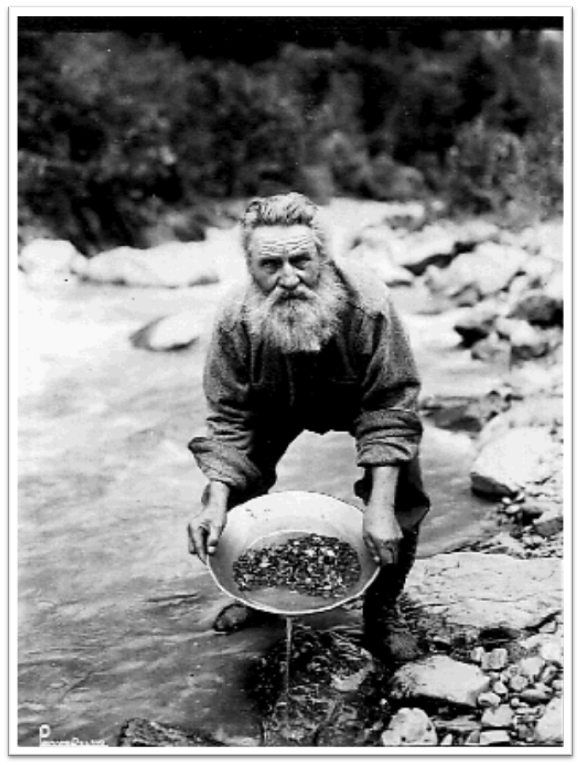
Tagish-Tlingit Packer Keish (Lone Wolf), commonly known as Jim, carried equipment and supplies for early prospectors over the mountain passes from the Alaskan seacoast to the headwaters of the klondike.previewYukon River. He earned the nickname “Skookum” (Chinook for big and strong) for his feat of carrying 156 pounds of bacon over Chilkoot Pass in a single trip. (You don’t pull the mask off the old Lone Ranger, And you don’t mess around with Jim.)

Eventually, tired of slogging other folk’s bacon, Skookum Jim formed a partnership with his sister Shaaw Tlaa (Kate), his cousin Dawson Charlie (Tagish Charlie), and Kate’s husband George Carmack (no nickname) to go look for the Big G.

On August 16, 1896, the Skookum party discovered rich gold deposits in Bonanza (Rabbit) Creek, Yukon.  Although Skookum Jim is believed to have made the actual discovery, George Carmack was officially credited for the gold discovery because the actual claim was staked in his name. The group agreed to this because they felt that an Indian’s claim would not be recognized because of the rampant racism of the time.

Well, you can just imagine what happened when word of their discovery got out. The Klondike was suddenly a “destination” for every would-be prospector who ever dreamed of the Big G. The exodus known as the Klondike Gold Rush (Yukon Gold Rush) (Alaskan Gold Rush) (The Gold Rush to End All Gold Rushes) was on.

Together our heroes worked what would become known as Discovery Claim (Look What We Found) and collectively earned nearly a million dollars. Skookum Jim built a home for his wife (the little woman) and daughter (junior) in the Yukon Territory (Tagish First Nation) where he spent the winters trapping, hunting and eating lots of bacon hauled in by others. George and Kate moved to California where he deserted her for another woman. You can’t trust anyone without a nickname.

AUGUST 15, 1935: WILL POWER

Cowboy, vaudeville performer, humorist, social commentator and motion picture actor, Will Rogers was one of the world’s best-known celebrities in the 1920s and 1930s and adored by the Will-Rogers-StampAmerican people. Known as “Oklahoma’s Favorite Son,” Rogers was born in 1879 to a prominent Cherokee Nation family in Indian Territory (now part of Oklahoma). During his amazing career, he traveled around the world three times, wrote more than 4,000 nationally-syndicated newspaper columns, and starred in 71 movies (a majority of them silent ) and several Broadway productions. He was the top-paid Hollywood movie star at the time, and in 1934, was voted the most popular male actor in Hollywood.

     As a radio broadcaster and political commentator, he was the leading political wit of the Progressive Era.  He called politics “the best show in the world” and described Congress as the “national joke factory.”

     Rogers died on August 15, 1935, with aviator Wiley Post, when their small airplane crashed in Alaska.

Never miss a good chance to shut up.


wr


There are three kinds of men. The one that learns by reading. The few who learn by observation. The rest of them have to pee on the electric fence for themselves.


We can’t all be heroes because somebody has to sit on the curb and clap as they go by.


When I die, I want to die like my grandfather who died peacefully in his sleep. Not screaming like all the passengers in his car.


Will-Rogers-Quotes-1


Ten men in our country could buy the whole world and ten million can’t buy enough to eat.


The best way to make a fire with two sticks is to make sure one of them is a match.

AUGUST 14, 1619: THOU SHALT NOT

Those folks who think they have it pretty rough in Virginia these days should thank their reactionary stars things are not as they were back in 1619. The very first general assembly got together in Jamestown that year to pass laws that pretty much told everyone how they could and could not behave. The burgesses, as members of the assembly were called, were 30 old white men determined to dictate morality to everybody else, a tradition that hasn’t changed much over the years.

     Nor has the politics. The burgesses passed laws requiring all colonists to attend two religious services every Sunday and to bear arms (pieces, swords, powder and shot) while doing so – just in case religious fervor pushed someone over the edge.  Even those bearing arms were forbidden from gambling, drinking, idleness and “excesses in apparel,” (which probably didn’t mean too much clothing).  Not wishing to overlook any sin they hadn’t thought of, the burgesses also approved a stern enactment against immorality in general. In the eyes of the burgesses, one can imagine, that might cover a lot of territory (and the colonies had lots of territory). The planting of mulberry trees, grapes and hemp was also proscribed, for we all know that that seemingly innocuous flora is the first step on the road to degradation (spelled with a ‘d’ and that rhymes with ‘p’).

     The burgesses had only nice things to say about tobacco however. Colonists were urged to dedicate the times they were not in church to the growing of said crop. The colonists responded with enthusiasm, even to the point of growing tobacco in the streets of Jamestown – 20,000 pounds a year – despite His Royal Stick in the Mud King James calling it “dangerous to the lungs.”

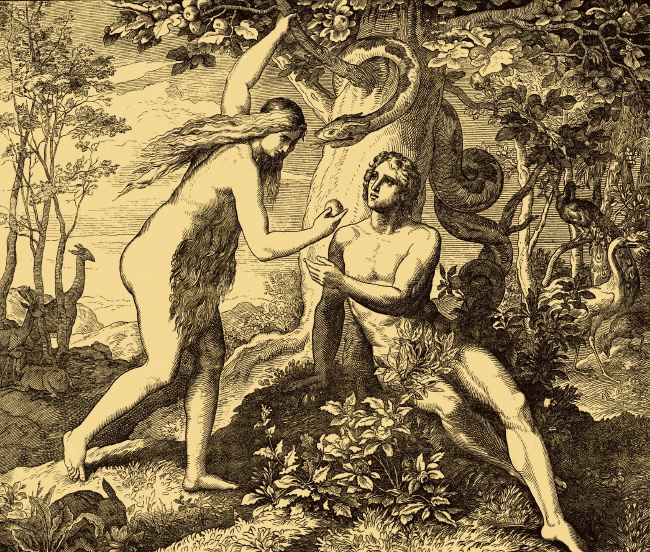
“Adam was but human—this explains it all. He did not want the apple for the apple’s sake, he wanted it only because it was forbidden. The mistake was in not forbidding the serpent; then he would have eaten the serpent.” ― Mark Twain

AUGUST 13, 1942: DEAD, A DEER, A FEMALE DEER

At some point, practically everybody on the planet has laughed and cried with Flower the Skunk, Thumper the Rabbit, the Great Prince of the forest and his unnamed mate, and Bambi, the title character in the Walt Disney classic first released on this date in 1942. It has become a favorite of generation after generation of kids and critics alike and ranks third in the American Film Institute’s all-time best animation features, “…the crowning achievement of Walt Disney’s animation studio.”

     It wasn’t a big success out of the gate. The New York Times said: “In the search for perfection, Mr. Disney has come perilously close to tossing away his whole world of cartoon fantasy.” Another critic called it “entirely unpleasant.” Hunters called it “an insult to American sportsmen.” Even Disney’s daughter complained, saying that Bambi’s mother shouldn’t have died. When Walt said he was just following the book, she protested, saying that he had taken other liberties before, and that Walt Disney could do whatever he wanted.

     As it was, we didn’t see Bambi’s mother die on-screen. They decided it was emotional enough without showing it. And there was much more we didn’t see. We didn’t see the six bunnies modeled after the Seven Dwarfs. They became five generic rabbits and Thumper. The squirrel and chipmunk comedy team didn’t make the final cut, nor did the two falling autumn leaves conversing like an old married couple. The civilization that Bambi destroyed by stepping on an ant hill and a family of squabbling grasshoppers didn’t pass the “What’s this got to do with Bambi?” test.  And Walt was talked out of showing a man burned to death by the fire that he inadvertently started.

     Oddly enough, Bambi is also listed in the Top 25 Horror Movies of all Time by Time magazine, because it “has a primal shock that still haunts oldsters who saw it 40, 50, 65 years ago.” Which brings us back to the question, did Bambi’s mother really have to die?


AUGUST 11, 1894: POPARAZZI

Sometimes great ideas just come falling from out of nowhere, like that apple that beaned Isaac Newton while he sat under a tree daydreaming. Such was the case with Frank Epperson, born on August 11, 1894. Frank wasn’t a scientist or an inventor or any such thing. In fact, he was only 11 years old when he had his Eureka! moment.

Little Frank, who lived in Oakland, California, loved a soda concoction made by dissolving a flavored powder in water. One day as he was mixing his drink, he was distracted by something or other and left the drink with his stirring stick on the porch, completely forgetting about it.

Well, didn’t the Oakland temperatures plummet that night to a record low. The next morning Frank discovered his drink, completely frozen, the stirring stick standing straight up. You guessed it — the very first Popsicle. Only Frank called them Epsicles when, a few years later, he began to sell them to the public at Neptune Beach and later when he applied for a patent for his “frozen confectionary.”

Somewhere along the way, he changed the name to Popsicle, and in 1925 he sold the rights to the Joe Lowe Company of New York. The Popsicle eventually acquired some cousins — Fudgsicle, Creamsicle and Dreamsicle — and in 1989 it was swallowed up by Good Humor, a subsidiary of corporate giant Unilever.

Along Came Popsicle Pete

In 1939, Popsicle Pete became the official spokesman for Popsicle products. He was introduced on the Buck Rogers radio program, urging listeners to send in wrappers and win neat prizes. Popsicle Pete was . . . well, make your own characterization:


And Interstellar Dan

On this day in 1989 , Vice President Dan Quayle uttered these memorable words:  “Mars is essentially in the same orbit. Mars is somewhat the same distance from the sun, which is very important. We have seen pictures where there are canals, we believe, and water. If there is water, that means there is oxygen, that means we can breathe.”

A team of linguists continues to study the meaning of the quote.