JANUARY 9, 1493: I HAVE HEARD THE MERMAIDS SINGING

Do mermaids exist? These creatures – half woman, half fish – have found their way into the lore of seafaring cultures at least as far back as ancient Greece. You’ve seen them depicted; a woman’s head and torso and the tail of a fish instead of legs. They’re most often quite attractive, gazing upon their own countenance in a mirror and combing their long flowing tresses (like Darryl Hannah in the movie Splash, for example).

But believe in them? One might just as well believe in sirens, the half-woman, half-bird creatures who dwell on islands from where they sing seductive songs to lure sailors to their deaths. Yet there have been some notable sightings. No one less than Italian explorer Christopher Columbus has written of an encounter. On January 9, 1493, the intrepid New World traveler spotted not one but three mermaids frolicking somewhere near the Nina, Pinta or the Santa Maria (or maybe one entertaining each ship?)

He described the sighting in his ship’s journal: “They were not as beautiful as they are painted, although to some extent they have a human appearance in the face.” Columbus’ account would give ammunition to conspiracy theorists who claim that most mermaid sightings are actually manatees —  sea cows, although they’re said to share a common ancestor with elephants. Manatees are slow-moving aquatic beasts, weighing a good thousand pounds with bulbous faces but Bette Davis eyes. Most moviegoers would not mistake them for Darryl Hannah.

Would you mistake this . . .
. . . for this?

Henry Hudson, a British and therefore more reliable explorer, also sighted a mermaid “come close to the ship’s side, looking earnestly on the men. A little while after, a sea came and over-turned her. From the navel upward her back and breast were like a woman’s . . .her body as big as one of ours; her skin very white, and long hair hanging down behind . . . In her going down they saw her tail, which was like the tail of a porpoise, and speckled like a mackerel.” Much better, except for the mackerel part.

A few years later, Captain John Smith, of Pocahontas fame, spotted a mermaid off the coast of Massachusetts. He wrote that the upper part of her body perfectly resembled that of a woman and that she swam about with style and grace. She had “large eyes,

rather too round, a finely shaped nose (a little too short), well-formed ears, rather too long. . .” And she probably thought Smith was a little too much of a jerk.

Naturally, there is a male counterpart for the mermaid: the merman.  Collectively we might call them merfolk.

The most famous of the mermen was the Greek god Triton, the messenger of the sea who played a conch shell as though it were a trumpet and he were Louis Armstrong.  He wasn’t.  Another notable was Ethel the Merman.

A Merman

Lights! Camera! Gesundheit!

A major motion picture debuted in 1894 and became the first copyrighted film in the United States on January 9. Filmed by the Thomas Edison Studio a few days earlier, it starred a gentleman named Fred Ott. This five-second epic was officially titled “Edison Kinetoscopic Record of a Sneeze,” but became more familiar as “Fred Ott’s Sneeze.” Next day on Fred Ott’s dressing room, they did not hang a star.

 

January 8, 1310: How Cold Was It?

In England, this stretch of January  is considered the coldest of the year, probably because of the great frost that began on January 8 in 1310 with such cold that the Thames froze over so thickly bonfires could be lit on it.  Snow and piles of ice lasted through March.  In many subsequent years, folks would hold festivals with thousands of them stomping around on the frozen Thames.

How cold was it?   It was so cold that

. . . pickpockets were sticking their hands in strangers’ pockets just to keep them warm.

. . .  politicians had their hands in their own pockets.

. . . the squirrels in the park were throwing themselves at an electric fence.

. . . when I turned on the shower I got hail.

. . . mice were playing hockey in the toilet bowl.

Ode to Snow

Warning – the following is quite lyrical.

O glorious snow surrounding me with immense drifty mounds!

What do thy mounds conceal?  How many cocker spaniels, small children, miniCoopers have you swallowed, not to be seen again until May.  I am quite conscious of those mounds surrounding me, looming, as I go to fetch the mail, keeping close to the shoveled path lest I too be lost in the mounds ‘til May.

But the path is icy (for that’s what winter is about – snow and ice, ice and snow) and my feet, which have been more accustomed to soft earth, grassy carpeting, fly out from neath me.

I fall to the cruel ice.

And here I am in a place from which I never thought I’d be needing to shout:  “Help me.  I’ve fallen and I can’t get up.”  But I’m not going to shout, for it seems my mouth is frozen to the icy path.  O glorious ice!  Ice that holds me close to its vast but damn cold bosom.

I wait, hoping that someone will come along – a girl scout  peddling cookies, a hot dog vendor, or the UPS man delivering a package of lip warmers.  Or have they too been swallowed by the shifting, whispering mounds of snow?

I tell myself it could be worse; I could be in Chicago.  It doesn’t help.

Now my life flashes before me, especially the part where I’m on a beach in the Caribbean.   But what’s this?  My face is stuck in the sand.  Children frolic nearby, pointing and laughing.  “Hey, mon, why’s your face in the sand?”  Tanned beauties stroll by at a safe distance whispering about senility and too many pina coladas.    A sand crab sidles up and pinches my nose, and I’m suddenly back in frozen Vermont.

But help seems to be at hand.

Two Jehovah’s Witnesses approach.   They look down at me and ask,  “Are you ready to be saved?”  “Doesn’t it look like I’m ready to be saved?” I shout, but no words come out.   They chip me free from the ice with their Watchtowers.  I thank them, accept an armload of their publications, and they ask me if I’m ready for the end of the world.

You betcha.


JANUARY 7, 1784: sultan of squash

In 1780, David Landreth and his family sailed from England to Montreal, Canada, with the intention of starting a seed company. Finding Canada a little too cold for their liking, the Landreths moved south to Philadelphia in 1783, where on January 7, 1784, they opened the first seed company in the United States. D. Landreth & Sons numbered among their clients gardening enthusiasts such as George Washington and Thomas Jefferson.

During the following years, Landreth, in addition to selling seeds, applied adventurous horticultural tinkering to  such exotic new flowers and vegetables as tomatoes, zinnias and spinach.  He developed a potato that was white and an extra early pea.  The latter would surely have given Gregor Mendel goosebumps as he did his own pea tinkering  many years later (as celebrated in yesterday’s entry).

Landreth minded his peas and cukes and became one of the most influential forces in American horticulture — a sultan of squash, a watermelon wizard, a parsley poobah. His company, now headquartered in Shelburne, Vermont, continues to be a purveyor of seeds and remains the oldest seed company in the United States.

Dorothy Parker was once asked to use the word horticulture in a sentence.  “You can lead a horticulture,” she replied, “but you can’t make her think.”

Tiny Tomato Killer Strikes Again

It is better to light a candle than curse the darkness, or so says some annoying pundit.  Likewise, I suppose, it is better to do something positive than curse the mounds of snow still encircling us.  I’ve always been of the curse the darkness ilk, but occasionally I do try and rise above the winter of my discontent and light a candle in the snow.  One of the better remedies for my malaise is the old seed catalog – tiptoeing through the tulips, tomatoes and zinnias almost brings warmth to my icy heart.

If you ever order anything from a seed catalog, you will never have to worry about being without one again.  They will arrive every January just as reliably as freezing rain.  There’s Seed City, Happy Seeds, Seeds R Us and many more.  Funny thing is they all come from the same little town in the Midwest.  One could develop a dandy conspiracy theory about this: a single little old lady – Granny Burpee – taking seeds out of great big jars and putting them in little envelopes with all those different names so that every spring every one of us plants the same seeds in every garden everywhere.  Are we really planting radishes and marigolds?

Nevertheless I jump in full seed ahead.  Seven tomato varieties, a couple of cucumbers, greens, beans, okra.  Snapdragons, sweet peas, exotic species I’ve never heard of.  “And there’s no such thing as too many sunflowers,” I’m reminded.

There is such a thing as too many seeds, however.  Granny Burpee doesn’t hold back – a hundred seeds here, two hundred there, a thousand.  I’d like to order six tomato seeds, please.  I really only need two cucumber seeds.  The theory seems to be that you must over plant, just in case some of them don’t sprout.

But they all sprout.

I wanted a couple of tomatoes.  I planted a plastic seed-starting tray, two or three seeds in each of its six cubicles.  Twenty tomato plants emerge.  Just thin out the extra plants, the catalogs advise, leaving one healthy tomato plant in each cubicle.  That’s theory again.  From over my shoulder, as I carefully pull out the runts of the seedlings:  “You’re not going to murder those little plants, are you?”

Come June, I have twenty tomato plants, a dozen cucumbers, a dozen nasturtium, I don’t know how many dozen sunflowers, a sea of seedlings that I forgot to label, and six zucchini.   With six zucchini plants, I’ll be able to place a giant zucchini on the back seat of every unlocked car in Vermont.

Maybe I’ll curse the darkness for a while.


MAY 9, 1671: STALKING THE CROWN JEWELS

In the movie The Adventures of Sherlock Holmes, Holmes’ nemesis Professor Moriarty is out to steal the crown jewels. His  battle of wits with Holmes over England’s great treasure lasts about an hour.  Earlier, an Irishman, Colonel Thomas Blood, attempted the same feat with a much more elaborate plan.

Colonel Blood set the plan in motion in April with a visit to the Tower of London. Dressed as a parson and accompanied by a woman pretending to be his wife, Blood made the acquaintance of Talbot Edwards, an aged but trustworthy keeper of the jewels. During this time, the jewels could be viewed by the payment of a fee. After viewing the regalia, Blood’s “wife” pretended to be taken ill, upon which they were conducted to Edward’s lodgings where he gave her a cordial and treated her with great kindness. Blood and his accomplice thanked the Edwardses and left.

Blood returned a few days later with a half dozen gloves as a present to Mrs. Edwards as a gesture of thanks. As Blood became ingratiated with the family, he made an offer for a fictitious nephew of his to marry the Edwardses’ daughter, whom he alleged would be eligible upon their marriage to an income of several hundred pounds. It was agreed that Blood would bring his nephew to meet the young lady on May 9, 1671.  At the appointed time, Blood arrived with his supposed nephew, and two of his friends, and while they waited for the young lady’s appearance, they requested to view the jewels. Edwards accommodated the men but as he was doing so, they threw a cloak over him and struck him with a mallet, knocking him to the floor and rendering him senseless.

Blood and his men went to work. Using the mallet, Blood flattened out the crown so that he could hide it beneath his clerical coat. Another filed the sceptre in two to fit in a bag, while the third stuffed the sovereign’s orb down his trousers.

The three ruffians would probably have succeeded in their theft but for the opportune arrival of Edwards’ son and a companion, Captain Beckman. The elder Edwards regained his senses and raised the alarm shouting, “Treason! Murder! The crown is stolen!” His son and Beckman gave pursuit.

As Blood and his gang fled to their horses waiting at St. Catherine’s Gate, they dropped the sceptre and fired on the guards who attempted to stop them. As they ran along the Tower wharf, they were chased down by Captain Beckman. Although Blood shot at him, he missed and was captured before reaching the Iron Gate.  The crown, having fallen from his cloak, was found while Blood struggled with his captors, declaring, “It was a gallant attempt, however unsuccessful, for it was for a crown!” — a rather eloquent comeuppance speech which today would be something more along the lines of “Oh fuck!”

MAY 2, 1843: THE TOWN THAT CRIED WOLF

     Chances are you’ve never heard of Champoeg — unless maybe you’re from Oregon which is where it is, or was. Champoeg had the historical significance of being the first American government on the West Coast, having been established by representatives of Willamette Valley settlers on May 2, 1843, by a vote of 52-50. These representatives had held a series of meetings starting back in February to entertain measures to deal with the threat of wolves. During these so-called “Wolf Meetings,” the conferees established a series of civil codes (although its doubtful the wolves paid much attention to them).

     When the Oregon Territory was created in 1848, Champoeg was cold-shouldered as upstart Oregon City became its capital. This despite the fact that Champoeg had become rather a bustling little metropolis with a steamboat landing, a ferry across the Willamette River, a stagecoach office, a granary and a warehouse. Ten streets ran north to south, crossed by six east-west thoroughfares.

     Champoeg chugged along through the years as Oregon grew and gained statehood. Then in 1861, the Willamette River reared its ugly head, rising 55 feet above its normal stage, flooding the town and destroying every structure in it with the exception of two saloons (there’s a lesson here somewhere). Champoeg was never rebuilt after the flood; all that remains is a small monument describing its place in history and a stake marking a street corner (probably the one where a saloon stood).

“Well!”

     Although he was first heard on radio as a guest of Ed Sullivan, Jack Benny debuted his own radio show for NBC on May 2, 1932. After six months he moved to CBS and then in 1933 back to NBC. Although he continued to jump back and forth on networks, his radio program lasted until 1955, some five years after his television program appeared.

     Benny was a fixture on radio and TV for three decades, and is still considered one of the best. He was a master of comic timing, creating laughter with pregnant pauses or a single expression, such as his signature “Well!

     Appearing with him over the years were Eddie “Rochester” Anderson, Don Wilson, Dennis Day, Mary Livingston, Phil Harris, Mel Blanc and Sheldon Leonard. Leonard helped Benny produce what was said to be the longest laugh in radio history. Leonard as a holdup man approached Benny and demanded “your money or your life.” Benny remained silent. Finally, Leonard said “Well!?” and Benny answered “I’m thinking it over!”

APRIL 30, 1803: AND FOR ONE TULIP MORE, GALVESTON

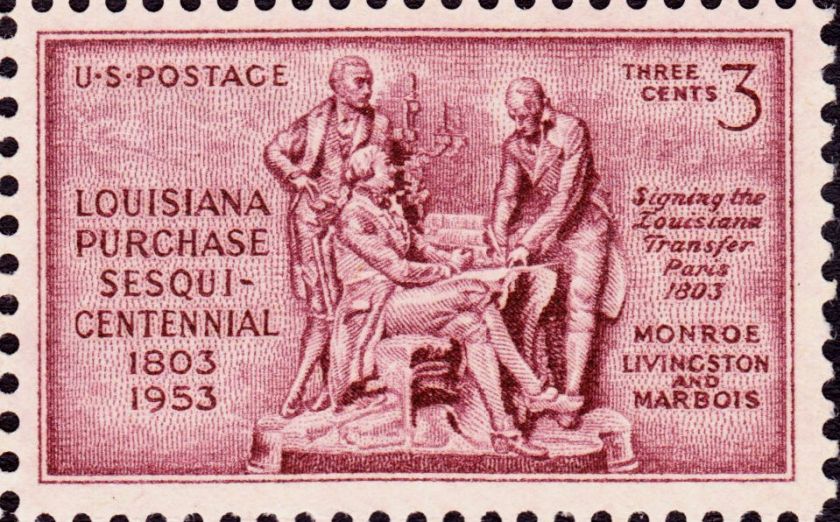
The United States purchased the Louisiana Territory from France in 1803, more than doubling the size of the nation. In addition to the city of New Orleans and western Louisiana, the purchase included Arkansas, Missouri, Iowa, Oklahoma, Kansas, and Nebraska; most of North and South Dakota; parts of Minnesota, New Mexico Montana, Wyoming, and Colorado (portions of Texas were included for ordering before 1804).

The price paid was 50 million francs (55 million without Texas). With the Dutch purchase of Manhattan in mind, President Jefferson had hoped to pay for the acquisition using beads. The frontierspeople would have none of it (“We may die without our boots on, but we won’t wear no sissy beads.”) and the people of New Orleans already had so many beads they held a party each year to give them away.

The purchase was pricey compared to the Dutch purchase of Manhattan ($15 million versus $24 in American currency; but since there was no American currency when the Dutch bought Manhattan, the comparison is like comparing guilders and tulips – and guilders and tulips went a lot farther back in 1626).  In another comparison, the United States paid 223 million rubles for Alaska. That’s 7.2 million dollars, 32 million francs, 18 million guilders, or 41 million tulips.

The only other comparable land purchase was a parcel along the Mexican border for a few pesos. The remaining portions of the United States were liberated from various other sources, usually native American or Spanish.


APRIL 17, 1610: SOMEWHERE A RIVER BEARS YOUR NAME

Back at the dawn of the 17th century, the holy grail among explorers was the Northwest halfPassage, that elusive sea route that Europeans had been seeking ever since they discovered that North America stood right in the middle of their way to China. (For some reason, they longed to go west to China even though it was a lot closer going east.)

On April 17, 1610, intrepid British explorer Henry Hudson. already famous for having discovered and explored a river that just happened to share his last name, set sail on his latest attempt to find the passage that would at last allow Europeans to take (as the popular song tells us) a slow boat to China.

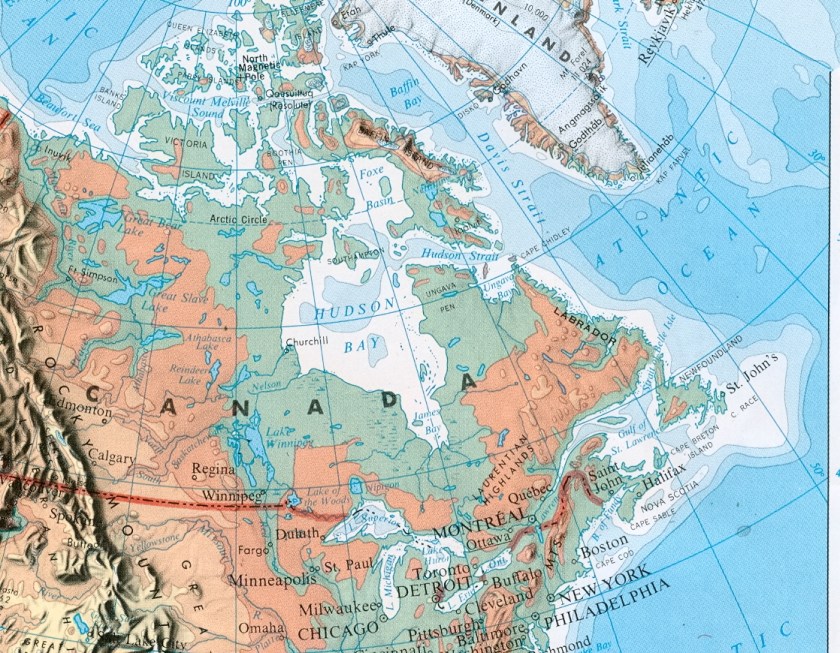
It was his fourth expedition, financed by adventurers from England. Sailing across the Atlantic, slipping between Greenland and Labrador, he entered the Hudson Strait (another remarkable coincidence) and soon reached (you’re not going to believe this) Hudson Bay. Unfortunately after all this seeming good luck, the expedition took a nasty turn.  After three months dawdling around the bay, Hudson was surprised by the onset of winter. Why winter north of Labrador in November would be a surprise is anyone’s guess. Nevertheless, Hudson and his crew were forced to set up a winter camp. The next few months were not pleasant, and many of the crew members were not amused. They grumbled and held their tongues throughout the winter until June. But once they were sailing again, they up and mutinied, setting Hudson, his son and seven friends adrift.  Although Hudson was never seen again, England laid claim to everything that shared his name — river, strait, bay and even a funny looking vehicle that seemed to have no useful purpose.


APRIL 13, 1360: HAIL, HAIL, THE GANG’S ALL HERE

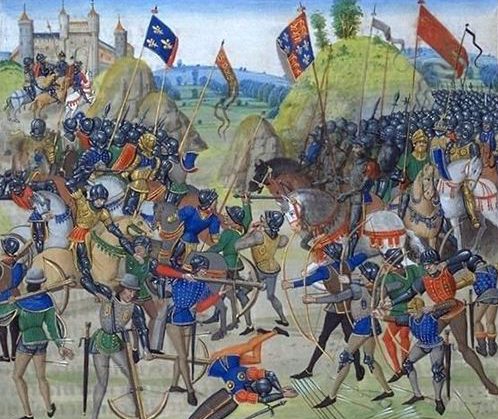
It was the 14th century and once again England was out to conquer France. The hostilities had been going on for nearly 20 years, when England’s King Edward III sailed across the Channel with a huge army — a cast of thousands.  The dead of winter set in, and the inconsiderate French refused to face the English invaders in direct combat. Instead they huddled in their warm and cozy castles, drinking cafe au lait while the English plundered the countryside and got frostbite. Come April of 1360, having lasted through the winter, Edward and his men fought and torched their way through the Paris suburbs, and readied themselves to have at Chartres.

Then, on April 13, a sudden violent storm came up. Lightning killed several soldiers, and then the heavens opened up and hailstones the size of pommes de terre began hammering the hapless army, killing a thousand men. Naturally, they took this as a sign that God was annoyed. Edward declared the invasion “my bad” and negotiated a peace with the French. The English renounced all claims to the throne of France, and the French gave them croissants.

But wouldn’t you know it, a few years later, the King of France declared war on England ( this was, after all, the Hundred Years’ War, scheduled to last another 75 years or so.)

Historians assure us that this was not the origin of the phrase “Hail to the Chief.”

Ifs, Ands or Butts

Alfred Mosher Butts was born in Poughkeepsie, New York, on April 13, 1899. Who, you ask, is Alfred Mosher Butts? He became an architect when he grew up, though not a famous one. He dabbled in art to no great success. His colorful last name is worth a pathetic seven points in a certain word game that can be found in one-third of American homes. 150 million sets have been sold worldwide in 29 languages. Yes, the game is the ubiquitous Scrabble. And Al Butts is the guy who invented it.

For those who may be new to the planet, Scrabble is a game where players place tiles on a board to spell words and earn points determined by the numerical value of individual letters. Butts determined the values of the individual letters by studying how often each letter appeared on the front page of The New York Times (fake letters in fake words in fake news, some might say).

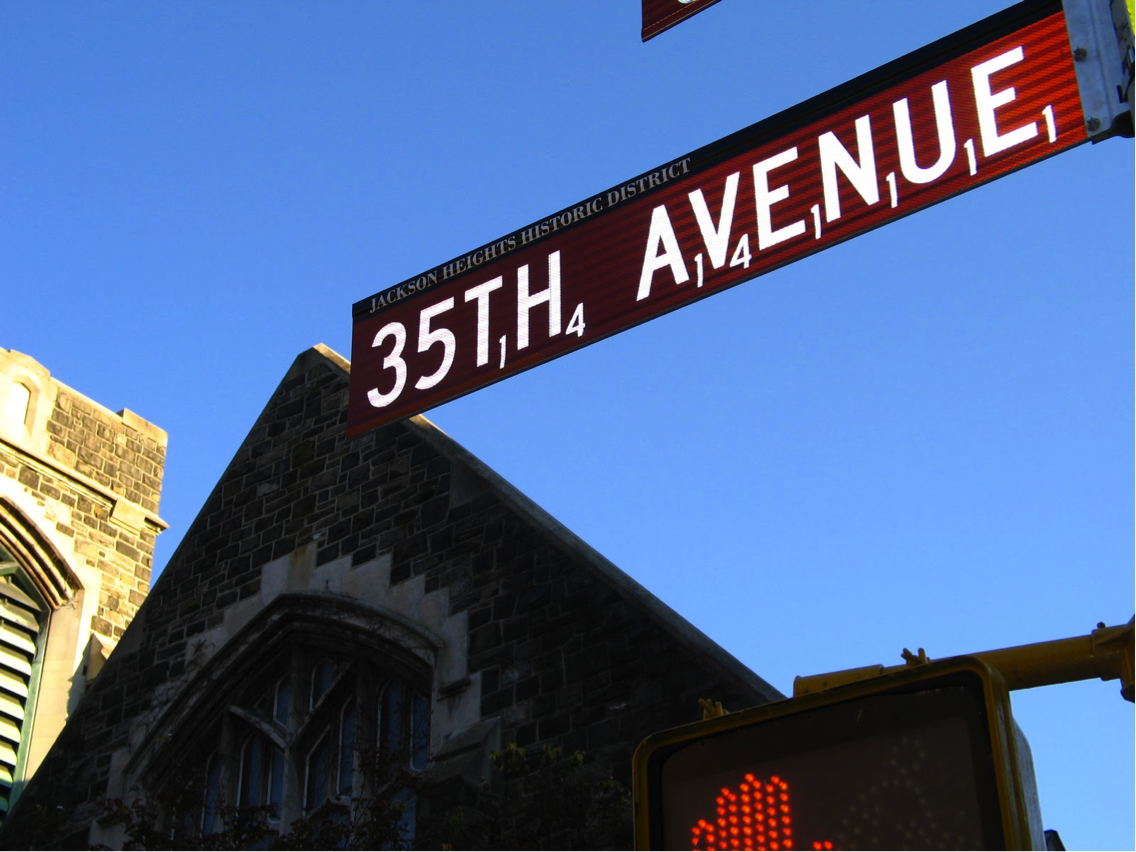
A street sign in Jackson Heights (where Butts lived when he invented the game) memorializes the creation of the game.

APRIL 12, 1788: WHAT’S IN A NAME

Cape Disappointment is a headland at the mouth of the Columbia River at the southwesternmost tip of Washington State. Its main claim to fame is its fog. At 106 foggy days a year, Cape Disappointment is the foggiest spot in the United States. And then there’s the name, one that surely must put the Cape Disappointment Chamber of Commerce through its paces. Where did it get that name, you query? Good of you to ask. It just happens to have been named on April 12, 1788.

John Meares was an explorer, navigator, fur trader and a bit of a scoundrel. His first expedition to the north Pacific ended in failure. Sailing with false papers claiming Portuguese registry to avoid licensing and duties and with inadequate provisions, he was forced to winter in Prince William Sound. All but ten of his men died. Meares and these men were saved by the arrival of a British trader. To show his gratitude, Meares sued the trader, claiming he had been overcharged for the supplies that saved their lives.

In 1788, he was back in the north Pacific collecting sea otter furs to sell in China. Sailing southward along the Washington coast, he ran into nasty weather at that unnamed headland at the mouth of the Columbia River. Forced to turn back, he called the place X#!##X!&!! which was later cleaned up to Cape Disappointment.

A few years later, Meares would bring Britain and Spain to the brink of war, but that’s a story for another day.

Magic Kingdoms Here and There

It was a Big Apple Fantasyland. Finishing touches were still being put in place on New York City’s Hippodrome just hours before its April 12, 1905, opening. Seating 5300 people, it dwarfed the Metropolitan Opera with its 3000 seats. A marvel of theatrical architecture, its stage was 12 times larger than any existing Broadway house and was capable of holding a thousand performers at a time or, perhaps, a full-sized circus complete with clowns and horses and acrobats and a flying elephant or two.

Speaking of Flying Elephants (a Clever Segue to 1992)

Could Mickey Souris really cut it among continental consumers? Would the rodent empire have the necessary je ne sais quoi to win those jaded Gallic hearts and minds? No more guessing or advance planning or idle speculation after D-Day (as in Disney) — April 12, 1992, the day Euro Disney opened its gates in Marne-La-Vallee on the outskirts of Paris. Gladstone Gander or Goofy?
The lucky duck prevailed. The royaume magique became one of Europe’s leading tourist destinations with some 15 million annual visitors. Disney had created another Fantasyland.


APRIL 8, 1832: TAKE MY WIFE . . . PLEASE

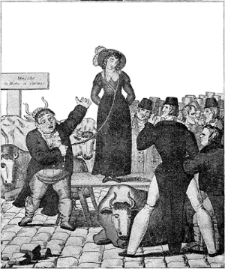
Earlier centuries saw a great many practices that were commonplace then but which would be considered inappropriate in our more enlightened age. Nowhere was this truer than in (merry old) England — purchasing a plump Irish child for special dinner occasions in the 18th century, for instance, or in the 19th century, selling a spouse one had grown weary of.  One such sale took place on April 8, 1832, an account of which was recorded for the amusement of generations that followed.  Joseph Thompson, a farmer, had been married for three unhappy years when he and his wife decided to call it quits.  As was customary, Thompson took his wife to town and set her up for public auction.  At noon, the sale commenced with Thompson delivering a short speech:

“Gentlemen, I have to offer to your notice my wife, Mary Ann Thomson . . . whom I mean to sell to the highest and fairest bidder.  Gentlemen, it is her wish as well as mine to part for ever.  She has been to me only a born serpent.  I took her for my comfort, and the good of my home; but she became my tormentor, a domestic curse, a night invasion, and a daily devil.  Gentlemen, I speak truth from my heart when I say — may God deliver us from troublesome wives and frolicsome women!  Avoid them as you would a mad dog, a roaring lion, a loaded pistol, cholera morbus, Mount Etna, or any other pestilential thing in nature.”

What a sales pitch!  This guy could sell anything. The asking price for Mary Ann was 50 shillings. Eventually, the price was knocked down and a deal was made — 20 shillings and a Newfoundland dog.

Everyone satisfied, they parted company, Mary Ann and a gentleman named Henry Mears in one direction, Joseph and the dog in the other.