APRIL 30, 1803: AND FOR ONE TULIP MORE, GALVESTON

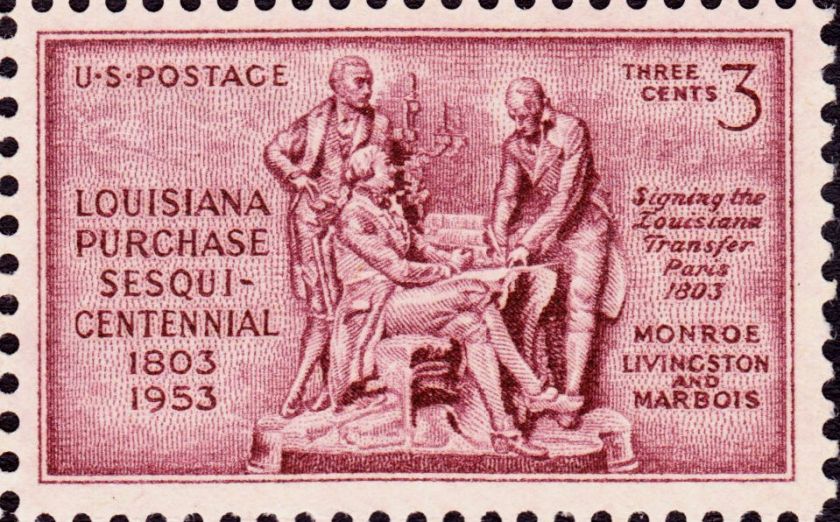
The United States purchased the Louisiana Territory from France in 1803, more than doubling the size of the nation. In addition to the city of New Orleans and western Louisiana, the purchase included Arkansas, Missouri, Iowa, Oklahoma, Kansas, and Nebraska; most of North and South Dakota; parts of Minnesota, New Mexico Montana, Wyoming, and Colorado (portions of Texas were included for ordering before 1804).

The price paid was 50 million francs (55 million without Texas). With the Dutch purchase of Manhattan in mind, President Jefferson had hoped to pay for the acquisition using beads. The frontierspeople would have none of it (“We may die without our boots on, but we won’t wear no sissy beads.”) and the people of New Orleans already had so many beads they held a party each year to give them away.

The purchase was pricey compared to the Dutch purchase of Manhattan ($15 million versus $24 in American currency; but since there was no American currency when the Dutch bought Manhattan, the comparison is like comparing guilders and tulips – and guilders and tulips went a lot farther back in 1626).  In another comparison, the United States paid 223 million rubles for Alaska. That’s 7.2 million dollars, 32 million francs, 18 million guilders, or 41 million tulips.

And Maybe a Few Brownies

In the 1968 movie I Love You Alice B. Toklas, Peter Sellers places an uptight lawyer who gets lost in the San Francisco counter-culture.  Featured prominently in the story is a notorious marijuana-laced brownie first introduced in a book by Alice Babette Toklas, an American writer born on April 30, 1877 in San Francisco.

Shortly after the 1906 earthquake, Toklas moved to Paris where she and her life-long companion, Gertrude Stein, immersed themselves in an earlier counterculture, the Parisian avant-garde of the early 20th century. They hosted a steady parade of American expats including such writers as F. Scott Fitzgerald, Thornton Wilder and Ernest Hemingway.

Toklas’ 1954 book, The Alice B. Toklas Cookbook, was a curious mix of recipes and reminiscences, most notably featuring the recipe for Haschich Fudge, the brownie that became a film star.
APRIL 17, 1610: SOMEWHERE A RIVER BEARS YOUR NAME

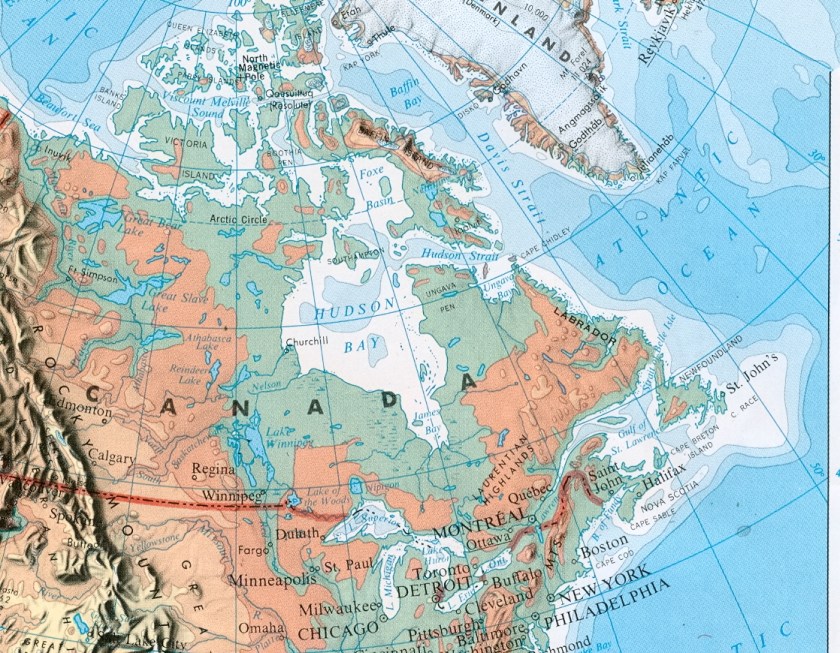
Back at the dawn of the 17th century, the holy grail among explorers was the Northwest halfPassage, that elusive sea route that Europeans had been seeking ever since they discovered that North America stood right in the middle of their way to China. (For some reason, they longed to go west to China even though it was a lot closer going east.)

On April 17, 1610, intrepid British explorer Henry Hudson. already famous for having discovered and explored a river that just happened to share his last name, set sail on his latest attempt to find the passage that would at last allow Europeans to take (as the popular song tells us) a slow boat to China.

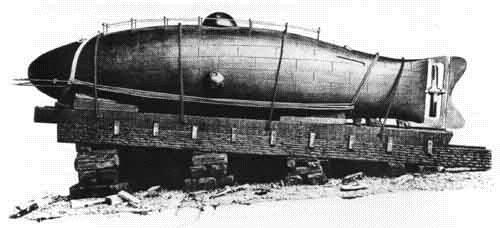
It was his fourth expedition, financed by adventurers from England. Sailing across the Atlantic, slipping between Greenland and Labrador, he entered the Hudson Strait (another remarkable coincidence) and soon reached (you’re not going to believe this) Hudson Bay. Unfortunately after all this seeming good luck, the expedition took a nasty turn.  After three months dawdling around the bay, Hudson was surprised by the onset of winter. Why winter north of Labrador in November would be a surprise is anyone’s guess. Nevertheless, Hudson and his crew were forced to set up a winter camp. The next few months were not pleasant, and many of the crew members were not amused. They grumbled and held their tongues throughout the winter until June. But once they were sailing again, they up and mutinied, setting Hudson, his son and seven friends adrift.  Although Hudson was never seen again, England laid claim to everything that shared his name — river, strait, bay and even a funny looking vehicle that seemed to have no useful purpose.


APRIL 17, 1610: SOMEWHERE A RIVER BEARS YOUR NAME

Back at the dawn of the 17th century, the holy grail among explorers was the Northwest halfPassage, that elusive sea route that Europeans had been seeking ever since they discovered that North America stood right in the middle of their way to China. (For some reason, they longed to go west to China even though it was a lot closer going east.)

On April 17, 1610, intrepid British explorer Henry Hudson. already famous for having discovered and explored a river that just happened to share his last name, set sail on his latest attempt to find the passage that would at last allow Europeans to take (as the popular song tells us) a slow boat to China.

It was his fourth expedition, financed by adventurers from England. Sailing across the Atlantic, slipping between Greenland and Labrador, he entered the Hudson Strait (another remarkable coincidence) and soon reached (you’re not going to believe this) Hudson Bay. Unfortunately after all this seeming good luck, the expedition took a nasty turn.  After three months dawdling around the bay, Hudson was surprised by the onset of winter. Why winter north of Labrador in November would be a surprise is anyone’s guess. Nevertheless, Hudson and his crew were forced to set up a winter camp. The next few months were not pleasant, and many of the crew members were not amused. They grumbled and held their tongues throughout the winter until June. But once they were sailing again, they up and mutinied, setting Hudson, his son and seven friends adrift.  Although Hudson was never seen again, England laid claim to everything that shared his name — river, strait, bay and even a funny looking vehicle that seemed to have no useful purpose.


APRIL 13, 1360: HAIL, HAIL, THE GANG’S ALL HERE

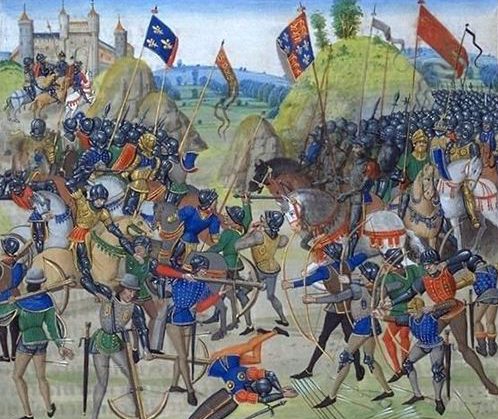
It was the 14th century and once again England was out to conquer France. The hostilities had been going on for nearly 20 years, when England’s King Edward III sailed across the Channel with a huge army — a cast of thousands.  The dead of winter set in, and the inconsiderate French refused to face the English invaders in direct combat. Instead they huddled in their warm and cozy castles, drinking cafe au lait while the English plundered the countryside and got frostbite. Come April of 1360, having lasted through the winter, Edward and his men fought and torched their way through the Paris suburbs, and readied themselves to have at Chartres.

Then, on April 13, a sudden violent storm came up. Lightning killed several soldiers, the heavens opened up, and hailstones the size of pommes de terre began hammering the hapless army, killing a thousand men. Naturally, they took this as a sign that God was annoyed. Edward declared the invasion “my bad” and negotiated a peace with the French. The English renounced all claims to the throne of France, and the French gave them croissants.

But wouldn’t you know it, a few years later, the King of France declared war on England ( this was, after all, the Hundred Years’ War, scheduled to last another 75 years or so.)

Historians assure us that this was not the origin of the phrase “Hail to the Chief.”

Ifs, Ands or Butts

Alfred Mosher Butts was born in Poughkeepsie, New York, on April 13, 1899. Who, you ask, is Alfred Mosher Butts? He became an architect when he grew up, though not a famous one. He dabbled in art to no great success. His colorful last name is worth a pathetic seven points in a certain word game that can be found in one-third of American homes. 150 million sets have been sold worldwide in 29 languages. Yes, the game is the ubiquitous Scrabble. And Al Butts is the guy who invented it.

For those who may be new to the planet, Scrabble is a game where players place tiles on a board to spell words and earn points determined by the numerical value of individual letters. Butts determined the values of the individual letters by studying how often each letter appeared on the front page of The New York Times (fake letters in fake words in fake news, some might say).

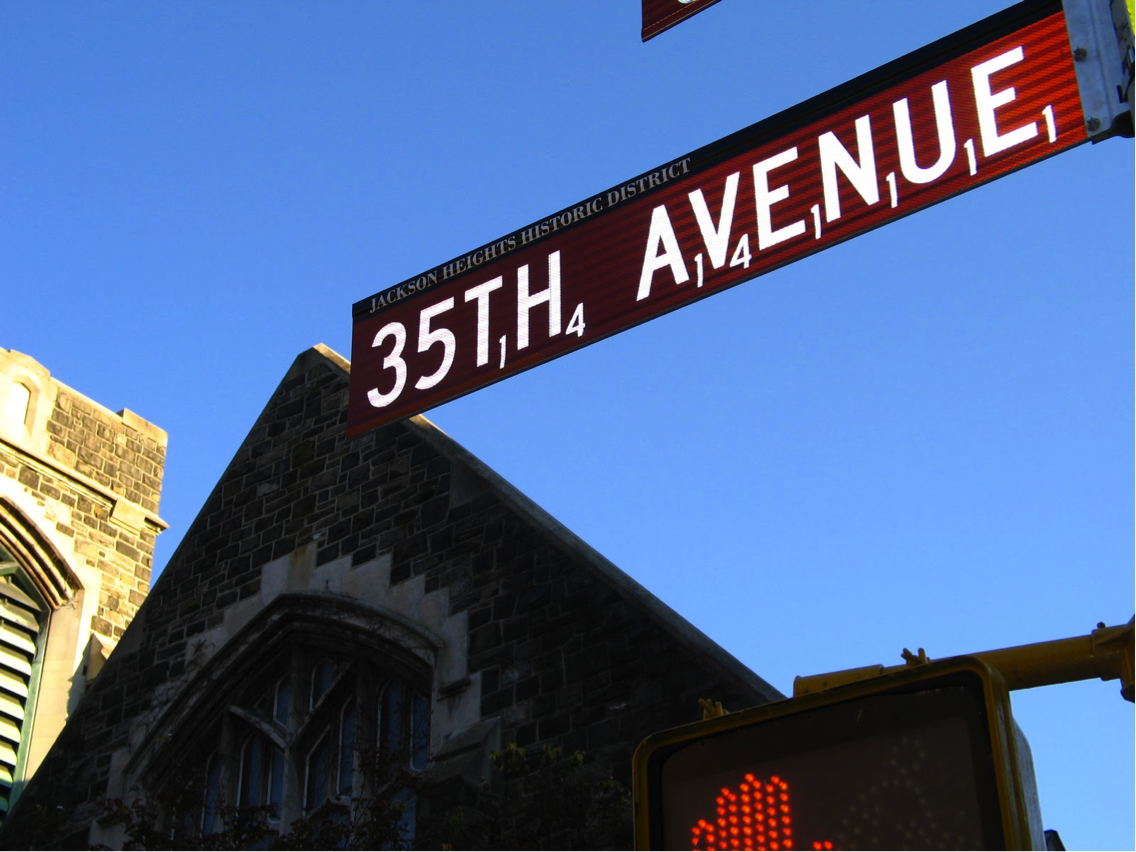
A street sign in Jackson Heights (where Butts lived when he invented the game) memorializes the creation of the game.

April 8, 1904: It Was the Best of Times Square . . .

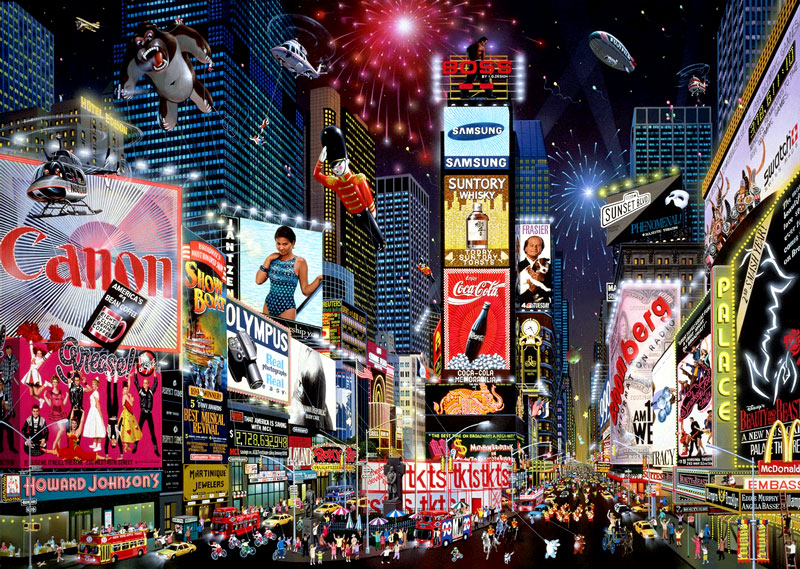
In 1904, a bit of real estate in the middle of Manhattan called Long Acre Square got a new name. New York Times publisher Adolph S. Ochs had just moved his newspaper’s operations to a new skyscraper on 42nd Street. He persuaded the City of New York to construct a subway station there, and the area was renamed Times Square. Just three weeks later, the first electrified sign appeared at the corner of 46th Street and Broadway.

During its heyday through the 1920s, celebrities such as Irving Berlin, Fred Astaire, and Charlie Chaplin were closely associated with the area, nicknamed The Tenderloin because of its desirable location in Manhattan. However, crime and corruption, and their friends gambling and prostitution were sneaking in. Beginning with the onset of the Great Depression in the 1930s and through the following decades, Times Square gained its reputation as a dangerous neighborhood. The seediness of the area became a symbol of the dismal state of the city. The tourists who continued to flock to the city’s most famous landmark were greeted by go-go bars, sex shops, adult theaters, and a very unDisneylike atmosphere. (oh, you got trouble right here in New York City)

Revitalization began in thew 1990s and today Times Square is a place you’d take your elderly mother.  And lots of people do.  Times Square is the world’s most visited tourist attraction, hosting over 39 million visitors (and their elderly mothers) yearly.

It’s squeaky clean now and glitzier than ever. (It’s the only neighborhood with zoning ordinances requiring building owners to display illuminated signs.)

Dream on, Las Vegas; Times Square is king.

Take My Wife . . . Please

Earlier centuries saw a great many practices that were commonplace then but which would be considered inappropriate in our more enlightened age. Nowhere was this truer than in (merry old) England — purchasing a plump Irish child for special dinner occasions in the 18th century, for instance, or in the 19th century, selling a spouse one had grown weary of.  One such sale took place on April 8, 1832, an account of which was recorded for the amusement of generations that followed.  Joseph Thompson, a farmer, had been married for three unhappy years when he and his wife decided to call it quits.  As was customary, Thompson took his wife to town and set her up for public auction.  At noon, the sale commenced with Thompson delivering a short speech:

“Gentlemen, I have to offer to your notice my wife, Mary Ann Thomson . . . whom I mean to sell to the highest and fairest bidder.  Gentlemen, it is her wish as well as mine to part for ever.  She has been to me only a born serpent.  I took her for my comfort, and the good of my home; but she became my tormentor, a domestic curse, a night invasion, and a daily devil.  Gentlemen, I speak truth from my heart when I say — may God deliver us from troublesome wives and frolicsome women!  Avoid them as you would a mad dog, a roaring lion, a loaded pistol, cholera morbus, Mount Etna, or any other pestilential thing in nature.”

What a sales pitch!  This guy could sell anything. The asking price for Mary Ann was 50 shillings. Eventually, the price was knocked down and a deal was made — 20 shillings and a Newfoundland dog.

Everyone satisfied, they parted company, Mary Ann and a gentleman named Henry Mears in one direction, Joseph and the dog in the other.

APRIL 7, 1864: IT WAS A HUGE HUMPY BEAST

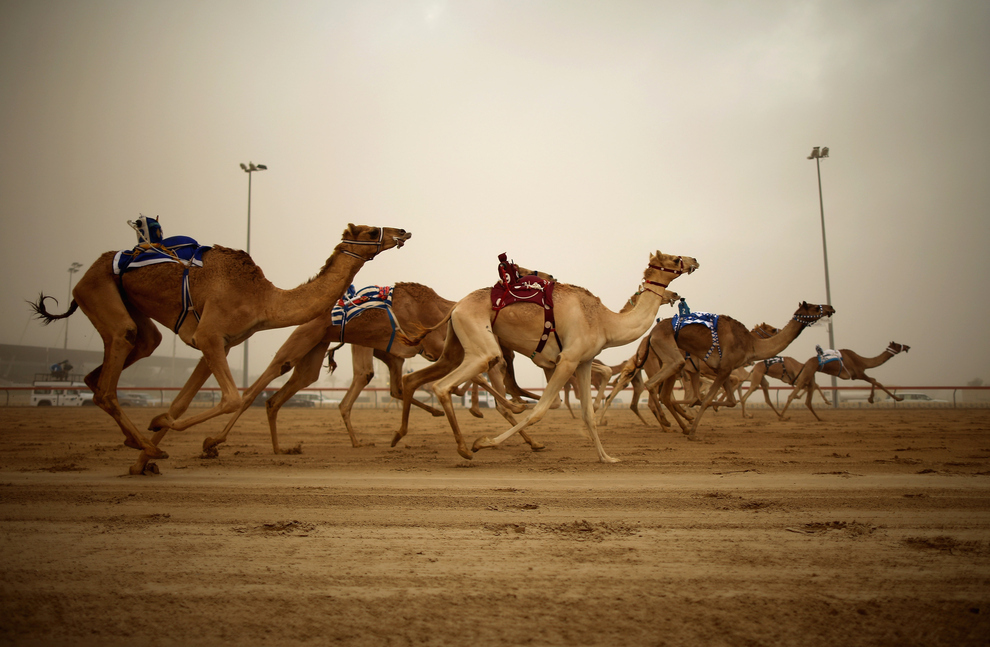
The first camel race in the United States was held in Sacramento, California, on April 7, 1864. The dromedaries belonged to Samuel McLeneghan who had paid $1,495 for 35 of them at an auction in Benicia, California. The camels had a curious history, one that began with an American military expedition to northern African nations along the coast of the Mediterranean Sea. The idea of the expedition and the importing of camels belonged to Secretary of War Jefferson Davis (this is of course the Jefferson Davis who later led the Confederacy, which had no camels that we know of). Davis convinced Congress to go along with this scheme and his vision of a Camel Corps that would carry military supplies across the country from east to west, it being reasoned that camels could carry heavier loads than horses on less food and water (sort of the same idea behind today’s guest worker programs for foreigners).

Unfortunately, the Camel Corps looked better on paper than in reality. The camels did not get along with their fellow animals or people: they stampeded horses and mules, attacked and bit pedestrians and chewed laundry off clotheslines. Camel caravans were only allowed to pass through some towns at night. With the Civil War getting underway (and Jefferson Davis going to the other side), interest in the project flagged and the Camel Corps disbanded. Of the camels that didn’t go to the races with McLeneghan, some joined the circus; some were employed by private companies. Eventually, many were abandoned in the desert. And for years afterward, prospectors and drifters might come rushing into a bar, raving about the strange apparition they had seen in the desert.

APRIL 6, 1722: AND TWO RUBLES FOR A FIVE 0’CLOCK SHADOW

In 1722, Peter the Great of Russia abolished a tax he had introduced some twenty years earlier, it having proved to be a rather hairy source of national income. The tax had been the result of an 18-month European tour to seek the aid of European monarchs, and to observe how other militias and armies were trained. During the tour, he learned that many European customs and styles were far superior to the antiquated ways in Russia. One of the first rulings he made upon his return was that all of his courtiers and officials shave off their long beards, as being clean-shaven was the European style. Anyone who kept their beard was subject to an annual Beard Tax of 100 rubles. Upon payment of the tax, bearded Russians were given a token; on one side of the token was an image of the lower part of a face with a full beard and the inscription “the beard is a superfluous burden.”

The idea of a beard tax had a bit of a history. Nearly 200 years earlier, King Henry VIII of England, who wore a beard himself, had introduced a tax on beards, although he probably didn’t pay the tax himself (it’s good to be the king). The tax was a graduated tax, varying with the wearer’s social position, not the length of his beard. Some years later, his daughter, Elizabeth I, reintroduced the beard tax, taxing every beard of more than two weeks’ growth, although she probably didn’t pay the tax herself (it’s good to be the queen).

APRIL 3, 1667: THE LIONS ARE COMING, THE LIONS ARE COMING

In addition to being a member of the British peerage, Edward, Marquis of Worcester, who died on April 3, 1667, was a bit of a dabbler, a sort of ersatz inventor, and author of an odd little book witn the catchy title A Century of the names and scantlings of such inventions as at present I can call to mind to have tried and perfected. The book, written some ten years earlier, describes, as the title suggests, a hundred speculative projects, none of them, however, detailed enough to allow a reader to actually put them into practice: secret writing with peculiar inks, explosive devices that would sink any ship, ships that would resist any explosive devices, floating gardens, a method to prevent sands from shifting, automatic assault pistols and cannons, a timer for lighting candles at any time during the night, a hundred-foot pocket ladder, flying machines.

Although many of his ideas foreshadowed later inventions, it is unclear whether he had thought through the methods by which they would work. One idea was put to work with success although unusually so. As the owner of Raglan Castle, he had constructed some hydraulic engines and wheels for bringing water from the moat to the top of the castle tower.  During the Civil War, Roundheads (supporters of Oliver Cromwell with bad haircuts) had approached the castle with not the best of intentions. The Marquis had his waterworks put into play. “There was such a roaring,” he later wrote, “that the unwelcome visitors stood transfixed, not knowing what to make of it.” On cue, one of the Marquis’ men came running toward them shouting that the lions were loose. The intruders tumbled over one another down the stairs in an effort to escape, never looking back until the castle was out sight.

Edward suggested that when he died, a model of his engine should be buried with him: “I call this a Semi Omnipotent Engine, and do intend that a model thereof be buried with me.”[

Fast Forward Four Hundred Years

And another ersatz inventor with a bad haircut.  Dean Kamen was mostly a master of hype. Among his contributions to society are an all-terrain electric wheelchair and a device that uses compressed air to launch SWAT teams to the roofs of tall buildings in a single bound.  Interestingly enough, Kamen’s father was an illustrator for Mad and Weird Science.

The most famous of his inventions by far was a closely guarded secret that he claimed would change the world when made public. Unveiled in 2001 to major drumrolls, the Segway is an electric, self-balancing human transporter. It landed pretty much with a thud.  Adding insult, Time Magazine included the Segway at the top of its list of the 50 worst inventions.

British entrepreneur Jimi Heseleden begged to differ. He bought the Segway company in 2010. Unfortunately, he died that same year when he fell off a cliff while riding his Segway.

Listen Up Roundheads

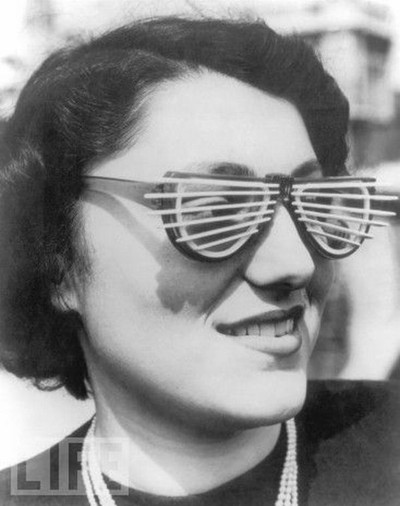
The aforementioned Time list of the worst inventions included such sure-fire ideas as Hair in a Can (you spray it on, guys), Tanning Beds,  Smell-o-Vision, Hula Chair and Venetian-Blind Sunglasses. The Almanac has visited some of these in the past and will visit others in the future.

MARCH 22, 238: GORDIAN ANGELS

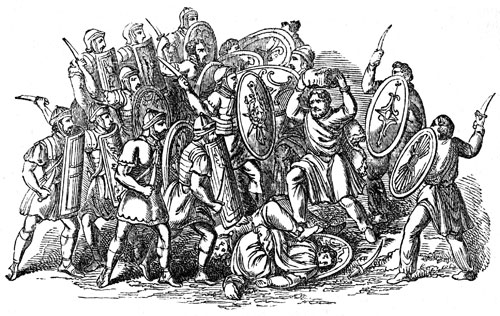
Romans got two emperors for the price of one, when in 238, Gordian I and II became father-and-son tag-team Caesars after an insurrection against Maximinus Thrax, a rather unpopular emperor who had come to the position by the popular tradition of assassinating his predecessor.  Gordian I was a bit long in the tooth so the younger Gordian was attached to the imperial throne and acclaimed Augustus too – sort of like if Poppa Bush and W had been presidents together, mano e mano so to speak.

Some supporters of Maximinus Thrax who were not happy with this turn of events staged a rebellion in Africa. Gordian II fought against them in the Battle of Carthage but lost and was killed for good measure. Hearing the bad news, Gordian I took his own life.  All of this happened within a month. Fortunately, there was no dearth of Gordians in Rome, and Gordian II’s 13-year-old nephew Gordian III soon became emperor. During his six-year reign, the teenage ruler endured pimples, the fickleness of teenage girls, and Persians until he was done in by the latter in yet another battle. He was succeeded by Philip the Arab (son of Ahab) sometimes referred to as the Gordian Not.

Slow and steady wins the race

Back in 1767, Lord Robert Clive of the East India Company was given a gift of four Aldabra tortoises from the Seychelle Islands. Three soon died, but the fourth, a gent named Addwaita “the one and only,” prospered.  He was transferred to a Calcutta zoo in 1875.

Addwaita was a bit of a loner, content to pass the decades in his zoo cubicle, munching on carrots, lettuce, chick peas, bran, bread and grass, growing to a stately 550 pounds and living  to the ripe old age of 250, give or take a year or two.

Alas, Addwaita bought the reptilian ranch on March 22, 2006. Foul play was not suspected.


March 11, 1958: And Then We’ll Nuke North Carolina

In 1958, the U.S. Air Force bombed South Carolina. Surprisingly, the bombing of Mars Bluff, a rural area near Florence, was not intentional. The bomb was a nuclear weapon carried by a B-47 Stratojet en route from Savannah, Georgia, to the United Kingdom. (The Air Force was not planning to bomb the Brits; the plane was on its way to military exercises and was required to carry nuclear weapons in the event of a sudden Dr. Strangelovian incident with the Soviet Union.)  A fault light in the cockpit indicated that the bomb harness locking pin for the transatlantic flight did not engage, and the navigator was summoned to the bomb bay to investigate. As he reached around the bomb to pull himself up, he mistakenly grabbed Printthe emergency release pin. The bomb dropped to the floor of the B-47, its weight forcing the bomb bay doors open and sending the bomb 15,000 feet down to unsuspecting Mars Bluff. Oops.

Because the removable core of fissionable uranium and plutonium was stored separately on board the plane, the bomb was not actually atomic, but it did contain 7,600 pounds of explosives. And it created a pretty good mushroom cloud over Mars Bluff, leaving a 75-foot wide and 35-foot deep crater where Walter Gregg’s home and vegetable garden had been. The only real casualties were several chickens who bought the farm so to speak.

The crater is still preserved but grown over, pretty much just a big hole. Steven Smith, who chaired a 50th anniversary event a few years ago, couldn’t understand why it never became a real tourist attraction. “It sure could be,” he said. “This is a national treasure!”

Take This Verb and Parse It

Diagramming sentences – what fond memories that brings back.  Shuffling nouns and verbs and predicate adjectives around until they find their proper position on the diagram.  Those were the days, my friend.  However, it’s with some sorrow that I contemplate our dear parts of speech.  One of their number has fallen upon some hard times.

“Snow White bit into the apple,” said the brothers grimly.

Pity the poor adverb.  Modern writing mavens pretty much eschew the adverb today – plucking it from the garden of good writing (or the garden of bad metaphors, if you prefer) as though it were an insignificant weed.  Okay, maybe it’s sometimes overused, but in moderation, like alcohol, caffeine and fat, it serves a noble purpose.

It wasn’t always considered a sin to associate with an adverb.  Some important folks have — as I will demonstrate.  Going way back to cite an example from a good book (or as many prefer The Good Book)  “Verily, I say unto you . . .”  Okay, all together now, what part of speech is that word verily?  You got it.  And it’s used more than once by you know who.  Okay, who wants to go first? Just step right up and say “Lose that adverb.”  I’d say that’s inviting a smiting.

Thomas Mann:  Hold fast to time!  Use it!  Be conscious of each day, each hour!  They slip away unnoticed all too easily and swiftly.

E. B. White: Be obscure clearly.

Mark Twain:  The intellect is stunned by the shock but gropingly gathers the meaning of the words.

Or you may remember that catchy tune by Francis Scott Key with words that go something like this: Whose broad stripes and bright stars, thru the perilous fight, O’er the ramparts we watched, were so gallantly streaming?  Call the adverb police.

And finally, moving into the future, I quote just three words from one Captain Kirk: “to boldly go.”  Now there’s a strong, sassy adverb coming to the rescue of a puny little verb and splitting an infinitive just for good measure.