JULY 27, 1793: OFF WITH THEIR HEADS

On July 27, 1793, Maximilien Robespierre was elected to the Committee of Public Safety, whose function was to oversee the government of France and protect it against its enemies, foreign and domestic. Exactly one year later, he was removed from office. One day later, his head was removed.

During his year as committee member and president of the National Convention, he came to exercise virtual dictatorial control over the French government and proved himself a bit of a black hat. Faced with the threat of real or imagined civil war and foreign invasion, he inaugurated what was lovingly referred to as the Reign of Terror. He compiled himself a rather lengthy enemies list – some 300,000 suspected enemies made the list and were arrested. At least 10,000 died in prison. Robespierre proved himself mighty handy with a guillotine, executing 17,000 of them as “enemies of France”.

But just as he was getting the guillotine really smoking, the threat of a foreign invasion just up and disappeared, and those who still had their heads formed a coalition to oppose Robespierre and his followers.

And on July 27, 1794, Robespierre and his allies were placed under arrest by the National Assembly. When he received word that the National Convention had declared him an hors-la-loi, he shot himself in la tete but only succeeded in wounding his jaw. Nevertheless troops of the National Convention helped him finish the job the very next day – as French sages often say, live by the guillotine, die by the guillotine.


Another List Maker

Fast forward a couple of centuries: Richard M. Nixon had himself an enemies list, though not nearly as long as Robespierre’s.  And his Saturday Night massacre pales by comparison. But on July 27, 1974, didn’t they vote to impeach him anyway. At least, there was no guillotine.
JULY 20, 1969: I SEE THE MOON, THE MOON SEES ME

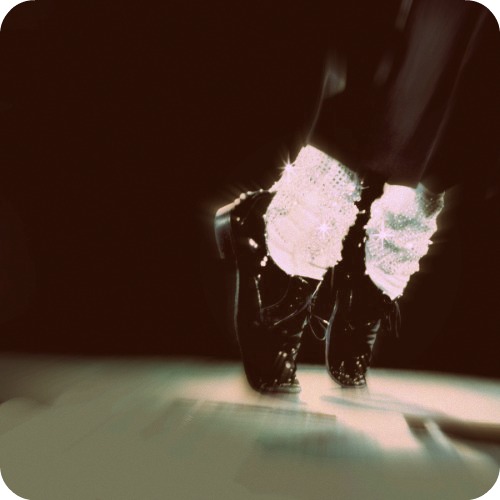
Mention the moonwalk, and Neil Armstrong and Buzz Aldrin naturally spring to mind. You know, “one small step for man, one giant leap for mankind.”   That is unless you’re Google. To Google, that magical searching apparatus, the moonwalk is a dance step popularized by Michael Jackson. That’s it, nothing else. If you’re an astronaut, you might just as well have done the cakewalk or the Lindy back there on July 20, 1969, with the whole world watching.

See the thread holding up the fake New York Times?

     Folks other than Google did watch the moonwalk as performed by the astronauts. It was the real thing not some abstract space adventure you might read about. It was there before our eyes, an “As Seen on TV” moment. Conspiracy theorists, along with Google, have different ideas of course – that the astronauts were actually doing Michael Jackson imitations on a secret sound stage somewhere out in the desert.  And they are joined by such notable sources of knowledge as Fox News and the Flat Earth Society. At any given moment over the past years, up to 20% of Americans have believed that the manned landings and moonwalks were faked. Many of these Americans are, of course, the same ones who believe that evolution is a communist plot, that Barak Obama was born in Kenya, and that Donald Trump is . . . well, the Almanac won’t go there.  They’ve even worked out all the little details. NASA, it seems, faked the landings to win the Space Race. The make-believe landings were staged by Hollywood under the aegis of Walt Disney, based on a script by Arthur C. Clarke and directed by Stanley Kubrick.

     A number of these skeptics even believe that the moon itself is a fake. If you’re not convinced, try Googling it.

JULY 18, 64: ROME WASN’T BURNED IN A DAY

Just whose fault was it anyway? Was it a cow kicking over a lantern, that strange new sect known as Christians, or the Emperor himself whom rumor would have wailing on a fiddle during the conflagration? It started in the central slums, spread rapidly through the market area and neroeventually engulfed most of the city. When the flames finally died out more than a week later, nearly two-thirds of Rome had been destroyed.

History likes to blame Emperor Nero, suggesting that he not only started the fire because he did not find the city architecturally pleasing, but staged his one-man concert as the flames surrounded him. History does not recall the name of the tune or tunes he played. History is funny that way. He did use the fire as an opportunity to rebuild Rome in a more orderly Greek style. And he did blame the curious Christian cult for the fire, responding with what became the popular Roman pastime of feeding them to the lions and other pagan parlor games.

Unfortunately for conspiracy theorists, Nero was 35 miles away when the fire started, couldn’t play a lick on the fiddle (which hadn’t been invented anyway), and let his palace be used as a homeless shelter (no Christians need apply, of course).

Actually, Nero wasn’t musically inept. He could play a mean lyre, an ancient Greek stringed instrument sort of like a zither but sort of not. This is probably why conspiracy theorists determined to blame him for the fire, chanted “Lyre, lyre, pants on fire.”


THIS, ON THE OTHER HAND, IS ALL TRUE


JULY 13, 1865: GAY GUINEA PIGS AND MIDDLE-AGED, SCHEMING MONKEYS

Boston, Philadelphia, Baltimore, New Orleans, and some western cities have buildings called museums, opined The New York Times, but they are mere theatrical attractions compared to Barnum’s American Museum in New York City.  Make that Barnum’s former museum, since the occasion for the Time‘s ode, was the destruction by fire of the amazing structure at the corner of Broadway and Ann.  Forget that the Times also talked of its “ever patent humbuggery with which (it) coddled and cajoled a credulous people,” it was still an honorable institution.

The always staid Times ran the story of the fire under the following headline:

DISASTROUS FIRE.

Total Destruction of Barnum’s American Museum.

Nine Other Buildings Burned to the Ground.

LOSS ESTIMATED AT $1,000,000.

A History of the Museum and Brief Sketch of its Curiosities.

Scenes Exciting, Serious, and Comic at the Fire.

The Police Prompt and Vigilant—The Firemen Earnest and Active.

GREAT EXCITEMENT IN THE CITY.

Thirty Thousand People in the Streets

Pickpockets in the Crowd

Accidents and Incidents.

THE AQUARIA.

THIRD FLOOR FAMOUS PETRIFICATION, THREE MEN OF EGYPT,

THE FOURTH FLOOR, THE HAPPY FAMILY, ORIGIN OF THE FIRE.

SCENE WITHIN THE MUSEUM, COMIC INCIDENTS, A FEARFUL PANIC.

PROGRESS OF THE CONFLAGRATION.

ARRIVAL OF THE METROPOLITAN POLICE.

THE FLAMES EXTENDING. CLOSING OF SHOPS.

THE FIRE CHECKED.

INCIDENTS.

THIEVES ARRESTED. ACCIDENTS.

LOSS OF CURIOSITIES.

THE SUFFERERS AND THE LOSSES.

DISASTROUS FIRE.

Leave the sensationalism to the Daily News and the Post.

From the Times Article:

On the floor above was a collection of “sassy” monkeys, subdued dogs, meek rats, fat cats, plump pigeons, sleepy owls, prickly porcupines, gay guinea pigs, crowing cocks, hungry hounds, big monkeys, little monkeys, monkeys of every degree of tail, old, grave, gray monkeys, young, rascally, mischievous monkeys, middle-aged, scheming monkeys, and a great many miserable, mangy monkeys. Those animals and other creatures may have been happy, but they didn’t smell nicely; they doubtless lived respectable, but their anti(c)s were not pleasant to look at, and, to tell the truth, they frequently fought fiercely, and were badly beaten for it. However, they are gone; all burned to death, roasted whole, with stuffing au naturel, and in view of their lamentable end we may well say, “Peace to their ashes.”

JULY 11, 1921: BATHTUBS OF THE PRESIDENTS II — SPLISH SPLASH, I WAS STUCK IN THE BATH

Former President William Howard Taft became the tenth Chief Justice of the Supreme Court on July 11, 1921,  serving until his death in 1930. He was the only person to ever hold both positions. His long career also included stints as Secretary of War, Solicitor General, Governor of Cuba and Appellate Judge. The Almanac will, however, ignore all that stuff to concentrate on the burning question: Did Taft really get stuck in the White House bathtub?


Taft was a heavy-set fellow, weighing in at 340 pounds. Occasionally, chairs challenged his girth. He did have the White House bathtub super-sized during his presidency. That tub remained in taftthe White House until removed during renovation by a narrower president.  And, in an interesting coincidence (?), the Taft Justice Department was involved in breaking up the Bathtub Trust (aka the Loo League), a cartel of porcelain makers who were playing price-fixing games with bathtubs and toilets. Jump on that, conspiracy theorists. Then there’s that telling photograph of four men sitting in the Taft Tub. White House plumbers, perhaps. Precursors of the Nixon gang?

Some stories have the entire Joint Chiefs of Staff extricating Taft from the tub. Others talk of lots and lots of butter. But is it true? Or was it a political dirty trick? Or a clever hoax?  H.L. Mencken maintains his innocence.

For further enlightenment see Part I of our  Bathtubs of the Presidents series.  And watch for Bathtubs of the Presidents III in which we will reveal who recently shared the White House bathtub with whom.


JULY 9, 1850: BATHTUBS OF THE PRESIDENTS I — OLD RUB-A-DUB-DUB

Millard Fillmore ominously assumed the presidency as number 13 when President Zachary Taylor, “Old Rough and Ready,” was ready to push up presidential daisies in 1850. As the Last of the Red Hot Whigs to hold the office of president, Fillmore had a rather lackluster four years in office before receiving the boot from his own party. He is consistently a cellar dweller in historical POTUS rankings (although not last; we all know who that is).

Fillmore’s most lasting legacy, trumpeted in a 1917 article, was the installation of a bathtub, a Millard-Fillmore-Covermahogany model, in the White House, giving the device an imprimatur that paved its way for wider distribution in the United States. This bit of sudsy statesmanship is frequently cited in reference to the Fillmore presidency. The whole story was of course a hoax, fabricated by one of the nation’s less reliable historians, H. L. Mencken. Even though the article was blatantly false and “a tissue of somewhat heavy absurdities,” it was widely quoted as fact for years.

My motive,” Mencken later explained, “was simply to have some harmless fun in war days. It never occurred to me that it would be taken seriously.”

Soon I began to encounter my preposterous “facts” in the writings of other men…. The chiropractors and other such quacks collared them for use as evidence of the stupidity of medical men. They were cited by medical men as proof of the progress of public hygiene. They got into learned journals and the transactions of learned societies. They were alluded to on the floor of Congress. The editorial writers of the land, borrowing them in toto and without mentioning my begetting of them, began to labor them in their dull, indignant way. They crossed the dreadful wastes of the North Atlantic, and were discussed horribly by English uplifters and German professors. Finally, they got into the standard works of reference, and began to be taught to the young.”

Moravia, New York, near Fillmore’s birthplace and where he was married, hosts an annual Fillmore Days celebration in July. One of the main events is a bathtub race down Main Street.  Never mention the bathtub hoax in Moravia.

JULY 6, 1189: IT’S GOOD TO BE THE KING II

Known as Cœur de Lion or the Lionheart because of his reputation as a great military leader and warrior, Richard I became King of England on July 6, 1189, and ruled until his death ten years later.  He was the stuff of which legends were made, particularly in the story of Robin Hood, although he’s strictly an offstage presence, being held prisoner in a far-off land until the very end and his triumphant return. Robin, you will remember, battled the evil Prince John who was doing his best to usurp Richard’s throne in his absence. Eventually, Richard returns triumphantly to England, but in a bit of a slap in the face to Robin, he forgives John and names him his heir to the throne. Robin is abandoned to Sherwood Forest and his “merry men” (see Robin Hood – Men in Tights).

     In reality, Richard, it seems, was a rather lackluster king, spending only six months of his ten-year reign in England (“hates London, it’s cold and it’s damp”) preferring to spend his time on crusades, battling Saladin, and waging wars throughout the world (“who would Jesus invade?”).

     He died as a result of an arrow wound (live by the arrow, die by the arrow).  According to a 13th century bishop, Richard was required to spend 33 years in purgatory atoning for his many sins before finally being allowed into heaven in March 1232.

     Richard III also began his reign on July 6, nearly 300 years later in 1483.  He took the crown shortly after having his nephew 12-year-old King Edward V declared a bastard and sent to the Tower.  His only accomplishment as king seems to have been the murder of his two nephews (and a number of scholars would take that away from him too).  Bishops have not said how many years he had to spend in purgatory before joining his ancestors up above, but we can guess it was quite a few.


JUNE 19, 1885: BEWARE THE FRENCH BEARING GIFTS

In 1885, the French ship Isere sailed into New York Harbor carrying 214 crates filled with 350 libertypieces of a 305-foot high jigsaw puzzle that had been crafted in France and would, over the next four months, be re-assembled on an awaiting pedestal on Bedloe Island (now called Liberty Island) – there to stand for the next 139 years (so far).

Once constructed, this would, of course, be the Statue of Liberty or “Liberty Enlightening the World,” to those not on a first-name basis. It was a gift from France to the United States back during the two countries’ honeymoon days.   Actually it was something of a joint enterprise, the French providing the statue and the U.S. the pedestal on which it would stand.

French sculptor Frederic Auguste Bartholdi began designing the statue in 1876, working with Alexandre Gustave Eiffel, the designer of the Eiffel Tower. Richard Morris Hunt, designer of New York City’s first apartment building, designed the pedestal. Given his background, one might have expected his pedestal to house several luxury apartments, a missed funding opportunity: “Give me your tired, your poor, your huddled masses yearning to rent 3BR LUX APT, LWR FLR, UNF, HRBR VIEW.”

As it was, funding of the statue was a bit of an issue. Both countries faced challenges in getting money for the project. The French charged public fees, held fundraising events, and used money from a lottery to finance the statue. One notable fundraising method in the U.S. was a traveling arm. The statue’s torch-bearing arm was displayed at the Centennial Exposition in 1876.  After the exhibition closed, it was transported to New York, where it remained on display in Madison Square Park for several years before being returned to France to be reunited with its torso. The French, in a bit of Gallic oneupsmanship, exhibited the head at the 1878 Paris World’s Fair.

The plan to display Lady Liberty’s breasts in Boston was banned before it got off the drawing board, and a nationwide tour of her feet failed to muster sufficient enthusiasm.

The Statue of Liberty is no longer saying, ‘Give me your poor, your tired, your huddled masses.’ She’s got a baseball bat and yelling, ‘You want a piece of me?’ Robin Williams

When Mexico sends its people, they’re not sending the best. They’re sending people that have lots of problems and they’re bringing those problems. They’re bringing drugs, they’re bringing crime. They’re rapists and some, I assume, are good people. –Donald Trump

June 14, 1789: The Ballad of Breadfruit

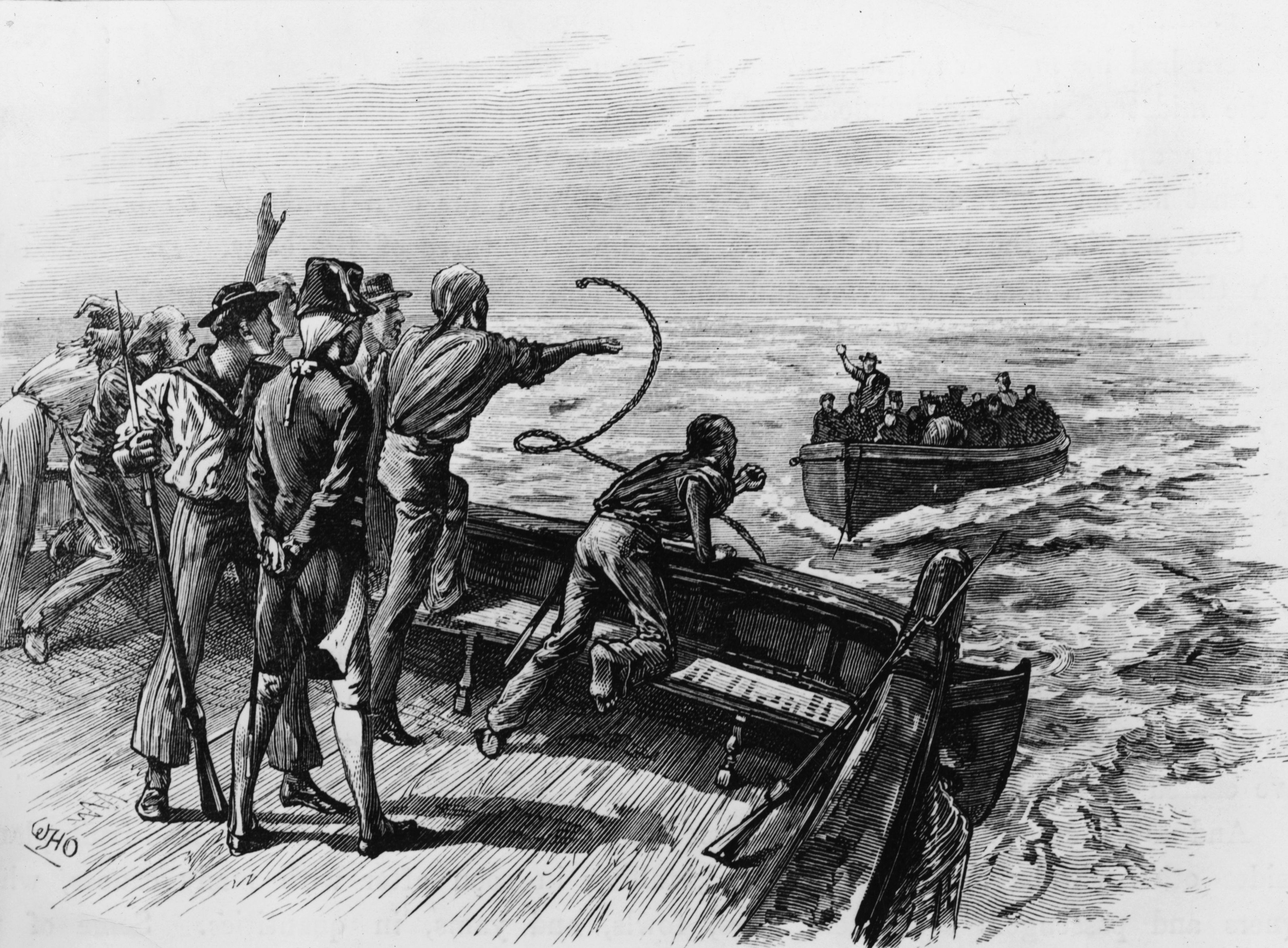
When little Billy Bligh joined the British Royal Navy at the tcirca 1817: English naval officer and victim of the celebrated mutiny on the bounty William Bligh (1754 - 1817) is cast adrift. (Photo by Hulton Archive/Getty Images)ender age of seven, he certainly never thought he’d grow up to haul breadfruit around the world. At sixteen, he became an able seaman, then a year later a midshipman. And in 1787, Bligh became Captain of the Bounty.

The Royal Society was offering special prizes to those who would travel to Tahiti, pick up a bunch of breadfruit trees and haul them back to the Caribbean as a source of cheap high-energy food for slaves. It sounded simple enough on paper, but getting there was far from half the fun. First, there was Cape Horn. The Bounty tried to get round it for a month before giving up and taking a longer route. Then Bligh and his crew had to sit around in the tropical sunshine for five months waiting for the little breadfruit babies to get big enough to travel. And when finally they set off for the Caribbean, didn’t Fletcher Christian and his cohorts, having grown fond of the Tahitian ambiance, up and mutiny.

Bligh and his loyalists were loaded into a launch with nary a breadfruit tree and set adrift. Amazingly, they survived and sailed over 4,000 miles, arriving in Timor on June 14, 1789, from where they returned to England. And two years later Bligh headed another expedition and this time successfully carried a load of trees to the Caribbean. However, the slaves refused to eat the breadfruit, wanting no part of a fruit that tasted like day-old bread.

Et Tu, Ku

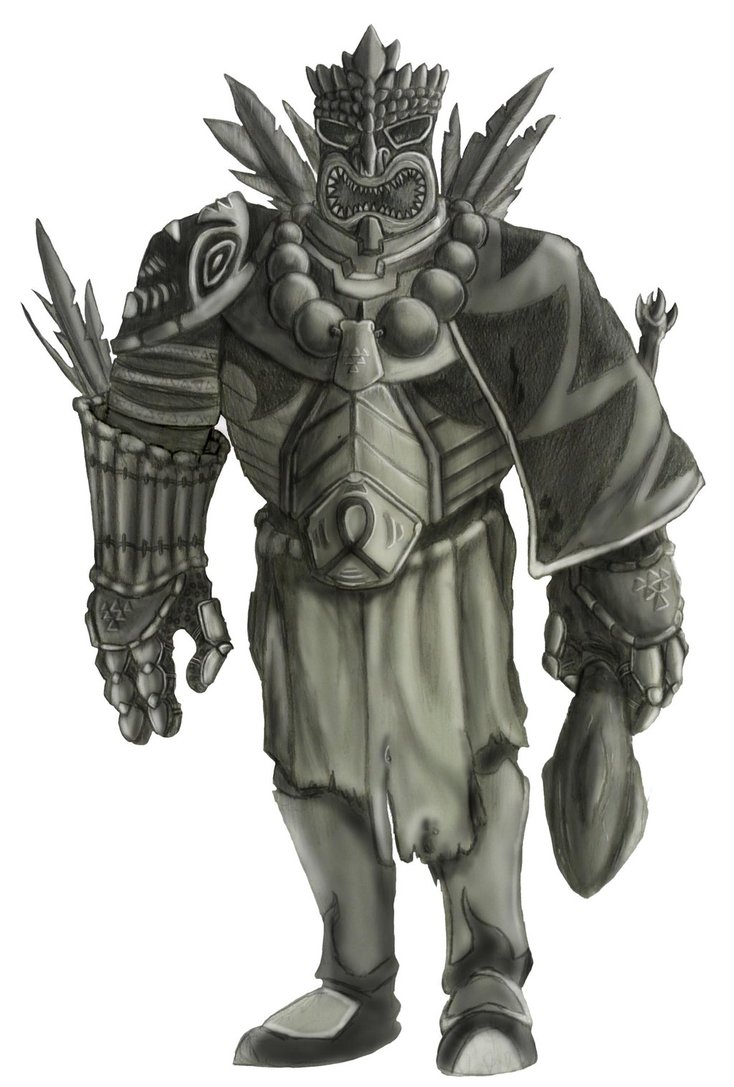
Once upon a time, according to Hawaiian legend, the war god Kū, for reasons known only to Kū, decided to live secretly among the common folk and pass himself off as a mortal. He posed as a farmer and even went so far as to marry and have a family. Kū and his family lived quite happily, but being a war god Kū wasn’t such a hot farmer, and famine struck (as famine will).

Ku posing as a farmer

When everybody got pretty darn hungry, Kū realized it was time to shed his disguise and do some god thing. One would think his action would involve a battle of some kind, his being the god of war and all. Instead he disappeared into the ground right before his astonished family’s eyes. They were quite distressed by this, so they stood around where he had last been seen and cried day and night, thus watering the ground until a tiny green sprout emerged. The tiny sprout grew into a magnificent tree heavy with fruits that looked like big ugly green footballs. After tossing one around for a bit, they wondered if they might eat it since they were starving. They tried it, and it tasted awful. But they ate it anyway, saving themselves from starvation, and always remembering that this tree was their beloved Kū, finally providing for his family.


JUNE 10, 2000: ALL TOGETHER NOW, SWAY TO THE RIGHT

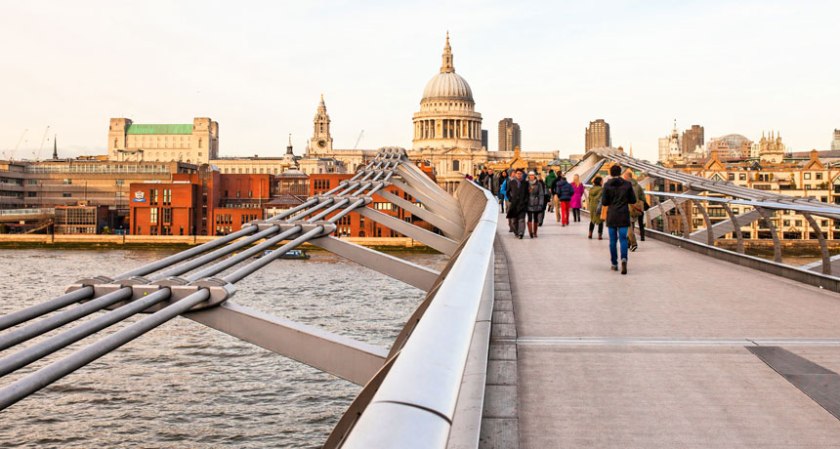
An air of excitement certainly gripped London on June 10, 2000, as 90,000 people queued up to cross the first new bridge to span the Thames River in over a hundred years, a bridge for pedestrians only, stretching from the Globe Theatre to St. Paul’s Cathedral, aptly named the London Millennium Footbridge. It didn’t take long for the bridge to become more known by its nickname, the Wobbly Bridge.
     Seems the designers had not given enough attention to a phenomenon with the catchy title, synchronous lateral excitation. Even if you’ve never heard of it, it doesn’t sound like anything you’d want to be on a bridge with.
     People, according to engineers, sway when they walk. People walking and swaying cause sideways oscillations in lightweight bridges. These, in turn, cause the people (some two thousand on the bridge at any given time) to sway even more to keep from falling over. And they all sway at the same time. It’s as if two thousand Londoners were doing the tango above the Thames. Result? Wobbly.
     Access to the bridge was limited later in the day, and two days after it opened, the bridge closed for modifications.  It reopened in 2002 (with tango forbidden).  It was again closed in 2007 because of strong winds and a worry that pedestrians foolish enough to cross might be blown off the bridge.
     The footbridge was not the only British millennial faux pas: a little number called the Millennium Dome elicited this derision from MP Bob Marshall-Andrews: “At worst it is a millennial metaphor for the twentieth century. An age in which all things, like the Dome itself, became disposable. A century in which forest and cities, marriages, animal species, races, religions and even the Earth itself, became ephemeral. What more cynical monument can there be for this totalitarian cocksure fragile age than a vast temporary plastic bowl, erected from the aggregate contribution of the poor through the National Lottery. Despite the spin, it remains a massive pantheon to the human ego . . .”

At the Zoo

Originally created as a royal herb garden in the 1600s, the Jardin des Plantes opened in 1793. During the following year a ménagerie was added, the world’s first and, still in existence, today the world’s oldest.  The 58-acre botanical garden and zoo is located in the center of Paris, next to the Seine.

The zoo was founded during the height of the French Revolution and the Reign of Terror. The National Assembly decreed that exotic animals  in private hands – rare antelopes, tigers, Louis XIV, and the like — were to be donated to the menagerie or guillotined, stuffed and donated to the natural scientists of the Jardin des Plantes . The Jardin was free for all visitors and tourists right from its inception.

While the menagerie at first was just provisional, it grew in the first three decades of the 19th century to be the largest exotic animal collection in Europe – as they describe it in France (or somewhere): monkey honnete, girafe pas sincere, elephant plein mais stupide, orang-outang sceptical, zebre reactionaire, antilope missionaire.

A well-run place, but this being France the menagerie gardiens are usually quite fond of their aperitifs.

Someone told me it’s all happening at the zoo.Paul Simon