November 24, 1859: Insulting Monkeys

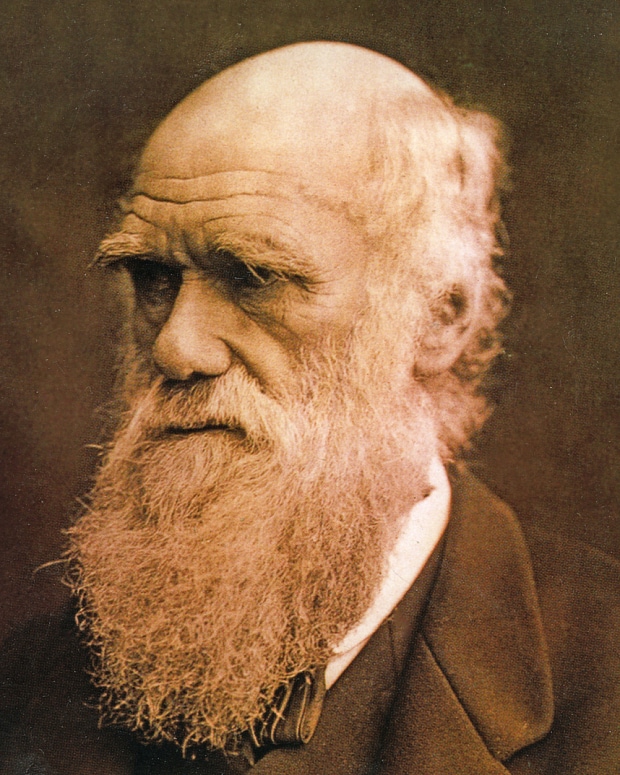
Charles Darwin was not expecting a seismic event when on November 24, 1859, he introduced a little volume with the catchy title On the Origin of Species. Although it didn’t go viral at the time, the printing run of 1,250 copies did sell out.  A few more have sold since then.
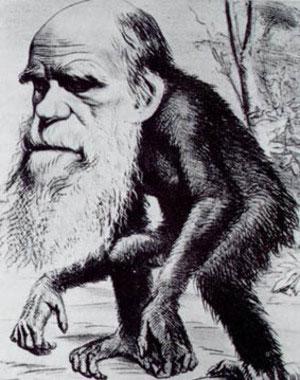
In his book, Darwin suggested that all species of life have descended over time from common ancestors.  That sounds a lot like a plug for family values, but weren’t people upset anyway.  Although Darwin’s only allusion to human evolution was a cryptic “light will be thrown on the origin of man and his history,” the title of his book might just as well have been Men from Monkeys because that’s what detractors brought away from it.  And any attempt on the part of scientists to explain that it’s not about that pretty much put people to sleep.  Even though enlightenment eventually crept into the scientific community, to many others Darwin became forever the symbol of runaway science.  Were he alive today, he’d probably be conspiring with the 99 percent of scientists involved in the vast climate change hoax.

What is Man? Man is a noisome bacillus whom Our Heavenly Father created because he was disappointed in the monkey. ― Mark Twain


New Rule: Stop asking Miss USA contestants if they believe in evolution. It’s not their field. It’s like asking Stephen Hawking if he believes in hair scrunchies. Here’s what they know about: spray tans, fake boobs and baton twirling. Here’s what they don’t know about: everything else. If I cared about the uninformed opinions of some ditsy beauty queen, I’d join the Tea Party. ― Bill Maher


It is even harder for the average ape to believe that he has descended from man. ― H.L. Mencken


Organic life, we are told, has developed gradually from the protozoan to the philosopher, and this development, we are assured, is indubitably an advance. Unfortunately it is the philosopher, not the protozoan, who gives us this assurance. ― Bertrand Russell


November 18, 1307: Fun with Apples

It is the dawn of the 14th century and the hundredth anniversary of Austrian rule over Switzerland. Every little Heidi up in Heidiville and william tellevery one of her goats are under the cruel dominion of the Habsburgs. It is November 18, 1307, and a legend is about to be born.

It’s a day of grand celebration for the Austrians (the Swiss, not so much). Soldiers sing of the glories of the Emperor and his appointed local despot Gesler. The evil Gesler has had his hat placed on top of a pole, forcing the Swiss to bow and scrape and generally pay homage to the hat – one of those silly felt things with a feather in it. Gesler also commands that there should be dancing and singing to mark the century during which the Austrian empire has dominated the 98-pound weaklings of Switzerland. Gioachino Rossini and his Italian Racals are on hand to provide appropriate music.

Among the Swiss that day is one William Tell, known among his compatriots as a strong man, a mountain climber, and a whiz with the crossbow. Well, doesn’t Tell pass right by that hat, refusing to bow to it. And doesn’t his son (like father. . .) do just the same. Gesler is really put out and has the pair arrested.  Aware of Tell’s amazing marksmanship, Gesler devises an ingenious punishment: Tell must shoot an apple off the head of his son. If he refuses, they both will be immediately executed. At this point, you can cut the tension with a Swiss Army knife. Rossini strikes up the band.  As every schoolboy knows (if you don’t know, go find a schoolboy), Tell splits the apple with a single bolt (that’s an arrow) from his crossbow. Rossini’s Rascals break into a rollicking version of the William Tell Overture. (In the Lone Ranger, this same music was used to introduce the scene where Tonto shoots an apple from kemo sabe’s head.)

Ah, but sharp-eyed Gesler notices that Tell has taken not one but two crossbow bolts from his quiver. Gesler quizzes Tell, who answers that if he had killed his son, he would have used the second bolt on Gesler himself. Well, Gesler is now pretty pissed and has Tell carted off to prison.

Crossing Lake Lucerne, prison-bound, the soldiers, afraid their boat will founder, release strongman Tell to steer. Tell escapes, tracks down Gesler, places an apple on his head, and misses it by just that much. He shouts out, “Hi yo Switzerland,” Heidis and goats frolic on hillsides, Swiss watches begin keeping perfect time, and the Swiss Confederation is born.


November 16, 1620: Kansas in August

After having lived for months on board ship in cramped, dirty, smelly quarters, the Pilgrims finally sailed into Provincetown Harbor in November of 1620. On November 16, a group of 16, led by Myles Standish (also known as Captain Shrimp behind his back, being a tad short of stature) set off to explore the nearby environs.

They found fresh water at a place called Pilgrim Springs. (It wasn’t called that at the time they arrived.) Then at the top of a hill, hidden in a teepee, they found a cache of a funny sort of food — long ears with tidy little rows of yellow kernels. They called it corn and promptly stole it. The hill itself they called Hill Where We Stole the Corn from the Natives. That being quite a mouthful, it quickly got shortened to Corn Hill.

From this point the long historical march began to “I’m as corny as Kansas in August” and high fructose corn syrup.

What, you’re shouting — they just up and called it corn?

Yes kids, they did, but it’s really not that a-maize-ing (sorry). The word corn to Europeans at the time simply referred to grain, any grain. In England, wheat was “corn,” in Ireland oats were “corn” and in Indonesia rice was “corn.”

Today, Americans, Canadians and Australians are the only ones that call the yellow ears corn, To most people, it’s maize as in “I’m as maizy as Kansas in August.”

November 7, 1811: Tippecanoe and So Do You

Long before the confederacy of southern states, United States forces faced the uprising of a confederacy under the Shawnee leader and Native American folk hero Tecumseh who had visions of a Midwestern Indian nation allied with the British. Confederacy forces led by Tecumseh’s brother Tenskawatawa (One with Open Mouth) met government forces under the direction of William Henry Harrison, Governor of the Indian Territory, on November 7, 1811, in the Battle of Tippecanoe (and Tyler too).

The battle took place in Indiana, at the confluence of the Tippecanoe and Wabash too Rivers. The day gave government forces an important political and symbolic victory and dealt a devastating blow to Tecumseh’s confederacy. Public opinion in the United States blamed the entire brouhaha on buttinsky Brits. The War of 1812 broke out only six months later.

The Battle of Tippecanoe (and Tyler too) also served as an important springboard for Harrison’s political ambitions which culminated in his becoming president in 1841. At the age of 68 years and 23 days when inaugurated, Harrison was the oldest president to take office until Ronald Reagan in 1981. During the campaign, Democrats characterized Harrison as an out-of-touch old fart (One Who Sits in Log Cabin Drinking Hard Cider). Harrison and running mate John Tyler (and Tippecanoe too) turned the tables on the Dems, adopting the log cabin and hard cider as campaign symbols along with one of the most famous campaign slogans ever (Tippecanoe and you know who).

Harrison caught cold shortly after his inauguration and went quickly from bad to worse. Harrison’s doctors tried applications of opium, castor oil, leeches, and Virginia snakeweed too. But to show his disdain for modern medicine, Harrison became delirious and died. He served only 32 days in office – some would say the perfect tenure for any politician.


November 2, 1609: I Was Just Drinking a Health and Wound Up Debauched and Drunk

Sir Matthew Hale was an influential English legal scholar, barrister and judge throughout a good part of the 17thhealth1 century. Perhaps he was a bit of a stick in the mud as well. When he died, he left a rather unusual bit of advice for his grandchildren: “I will not have you begin or pledge any health, for it is become one of the greatest artifices of drinking, and occasions of quarreling in the kingdom. If you pledge one health, you oblige yourself to pledge another, and a third, and so onwards; and if you pledge as many as will be drank, you must be debauched and drunk.”

A fellow Englishman Charles Morton agreed, going so far as to dedicate a book to the subject: The great evil of health-drinking, or, A discourse wherein the original evil, and mischief of drinking of healths are discovered and detected, and the practice opposed with several remedies and antidotes against it, in order to prevent the sad consequences thereof. Catchy title, but most people probably just asked their booksellers for that book by Morton.

The French chimed in with their thoughts as well, the writer/philosopher Voltaire saying that “the custom arose among barbarous nations” (England) and that drinking to the health of one’s guests was “an absurd custom, since we may drink four bottles without doing them the least good.”

And of course they were all right. The slippery slope led to toasting any number of things on any number of occasions in addition to one’s health. The word toast, incidentally, crept into the language as a result of putting pieces of toast in the drinks (to make them healthier?).

One of the earliest known toasts or healths was ancient Saxon. At a banquet hosted by one Hengist, a mercenary in the employ of King Vortigern, the beautiful daughter of Hengist lifted a glass of wine to the king and said: “Lauerd kining, wacht heil” (Lord King your health). The king then drank and replied: “Drine heil” (Here’s looking at you, kid).

October 27, 1666: I Did It with My Box of Matches

When the ashes settled after the great Chicago Fire, folks looked to assign blame and pointed their fingers at a cow.  The English were also looking to fix blame for a fire some two centuries earlier.  In early September 1666, a major fire broke out in Pudding Lane in the City of London and within days had destroyed 80 percent of the old city. Accusations were flying in all directions — strangers, the Spanish, Dutch, Irish and most particularly the French, Catholics, even King Charles II.

Enter one Robert Hubert.  Hubert was a simple watchmaker who wasn’t quite wound up  — and he was a French Catholic.  He obligingly confessed to being the culprit, telling authorities he deliberately started the fire in Westminster.  He was arrested, but one little problem cropped up: the fire hadn’t even reached Westminster, let alone started there.

When confronted with the fact that the fire originated in a Pudding Lane bakery.  Hubert adjusted his story, saying that he had actually started the fire there, tossing a fire grenade through an open window.  What’s more, he did it because he was a French spy in service of the Pope.

Hubert was hauled before the court.  His story turned out to be riddled with problems.  The bakery had no windows, and Hubert was judged to be so crippled that he could not have thrown the grenade.  An even bigger problem:  he was not in England when the fire started, according to the testimony of the captain of a Swedish ship who had landed him on English soil two days after the outbreak of the fire.

Nevertheless, the court found Hubert guilty, and on October 27, 1666, he was hanged at Tyburn, London.  A year later, the cause of the fire was quietly changed to ‘the hand of God, a great wind and a very dry season.’  Or maybe a cow.

Don’t You Be a Meanie

Oh, Mr. Paganini
Please play my rhapsody
And if you cannot play it won’t you sing it?
And if you can’t sing you simply have to . . .

Mr. Paganini, aka (If You Can’t Sing It) You’ll Have to Swing It became a fixture in Ella Fitzgerald’s repertoire back in the 1930s. The Mr. Paganini to whom she refers is composer and violin virtuoso Niccolo Paganini who was born on October 27, 1782. During the height of his career, the legendary “devil violinist”  set all of nineteenth-century Europe into a frenzy. He was a headliner in every major European city.  His technical ability was legend, and so was his willingness to flaunt it. His fame as a violinist was equaled by his reputation as a gambler and womanizer.

Alas, his grueling schedule and extravagant lifestyle took their toll, and he suffered from ever increasing health problems. He died in 1840.

October 26, 1697: Fake News, Libel and All That Jazz

I win an election easily, a great “movement” is verified, and crooked opponents try to belittle our victory with FAKE NEWS. A sorry state! — Donald J. Trump

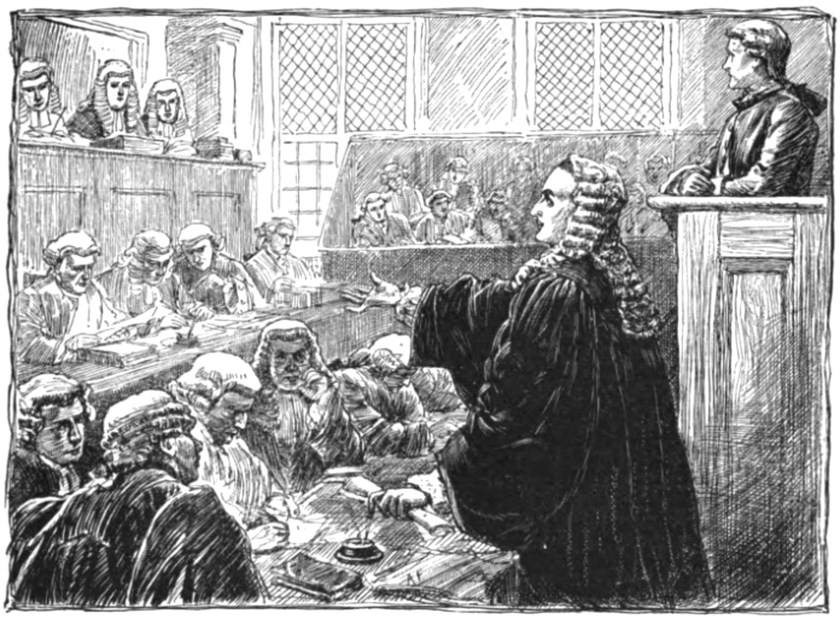
John Peter Zenger, born on October 26, 1697, immigrated to New York in 1710 where he was apprenticed to William Bradford, the first printer in New York. As an adult, he established his own printing business, printing a publication known as the New York Weekly Journal. The Journal did its best to be a thorn in the side to Royal Governor William Cosby (not the comedian).

The Journal chronicled the corrupt exploits of the governor such as rigging elections and colluding with the French. In addition to reporting his crimes, the Journal took delight in frequently calling him an idiot. Eventually Zenger was hauled off to jail and charged with libel, which was defined at the time as saying anything nasty about the government whether true or not.

A trial was held, and surprise, all the jurors were on Cosby’s payroll. As the trial progressed, Zenger’s wife continued to print the Journal, exposing the unfairness of the process. As a result, the judge was forced to replace the Cosby jurors with an actual jury of Zenger’s peers.

The judge ordered the jury to convict Zenger if they believed he printed the stories (he had admitted to doing so). But the jury returned in less than ten minutes with a verdict of not guilty, establishing truth as a defense against the charge of libel and giving rise to the notion of freedom of the press, which would eventually be enshrined in the First Amendment.

Big crowds of enthusiastic supporters lining the road that the FAKE NEWS media refuses to mention. Very dishonest! — Donald J. Trump

OCTOBER 25, 1642: MEDICINAL WONDERS OF BRANDY

Sir Hugh Ackland of Devonshire in England was seized with a violent fever, and having apparently died during that afternoon of October 25, 1642, was laid out as dead. A nurse and two footmen were assigned todeatbed sit up through the night to watch his corpse, lest it be stolen. Lady Ackland sent the night watchers a bottle of brandy to add a little cheer to an otherwise dreary task.  One of the footmen, a bit of a rogue, said to the others: “The Master dearly loved brandy when he was alive, and now, though he is dead, I am determined he shall have a glass with us.” The footman then poured out a glass and forced it down Sir Hugh’s throat. The corpse immediately made a deep gurgling noise, and its neck and chest shook violently. In a panic, the watchers rushed downstairs, the footmen stumbling and rolling head-over-heels, the nurse screaming in terror.

The noise awakened a young gentleman who was sleeping in the house. He immediately jumped out of bed and raced up to the room where the body lay. There, he found Sir Hugh’s corpse sitting upright with a look of confusion on his face.  The young man summoned the servants and ordered them to place their master in a warm bed. He then sent for Sir Hugh’s medical attendants. Sir Hugh was restored to perfect health, and lived many years afterward, recounting his strange story frequently enough that Lady Ackland regretted having sent up the bottle of brandy.

The footman received a handsome annuity.

Well, dinner would have been splendid… if the wine had been as cold as the soup, the beef as rare as the service, the brandy as old as the fish, and the maid as willing as the Duchess.  — Winston Churchill

OCTOBER 17, 1814: THIS ROUND’S ON ME

An unfortunate incident involving beer – aged porter to be precise – occurred in London back in 1814.

The central London parish of St Giles was, as slums go, one of the slummiest.  Although it has since been rather gentrified with theaters, Covent Garden and the British Museum nearby, it was then mostly squalid housing where immigrants crowded into its ramshackle buildings, often more than one family to a room. Near one end of the parish stood the massive Meux and Company Horse Shoe Brewery, its giant vats filled with thousands of gallons of aging porter.

One particular vat which held over 135,000 gallons had seen better days. Like the shanties surrounding the brewery, it suffered from age, and on October 17 it succumbed, bursting and letting loose enough precious liquid to give all of St. Giles and then some a pretty good buzz, although the fury with which it was released made tippling difficult. Like giant shaken cans of beer, nearby vats ruptured and joined the game of dominoes.

Within minutes the brick structure that was the Meux and Company Horse Shoe Brewery was breached, and the deluge roared down Tottenham Court Road, flinging aside or burying in debris anyone or anything in its path.

Homes caved in. A busy pub crumbled, burying a buxom barmaid and her ogling patrons for several hours.  All in all, nine people were killed by drink that day. Those who didn’t lose their lives lost everything they owned to evil alcohol. Soon after the suds subsided, survivors rushed in to save what they could of the precious brew, collecting one or more for the road in pots and cans.

St. Giles smelled like the morning after a particular robust party for weeks. The brewery was later taken to court over the accident, but they pleaded an “Act of God,” and the judge and jury bought it, leaving them blameless. The brewery even received reparations from the government.  God, it would seem, has a soft spot for brewers.

I am a firm believer in the people. If given the truth, they can be depended upon to meet any national crisis. The great point is to bring them the real facts, and beer. ~ Abraham Lincoln


October 14, 1790: If It’s Thursday, This Must Be Pitcairn

When British ships arrived at Pitcairn Island in 1814, two men paddled out in canoes to meet them. Both spoke English well, impressing the officers and men of the ships with their refinement as they met on deck. Their civilized demeanor persuaded the ships’ captains that  the mutineers from the Bounty, had created a proper society (after alcoholism, murder and disease had killed most of them off), and did not merit prosecution for the takeover.

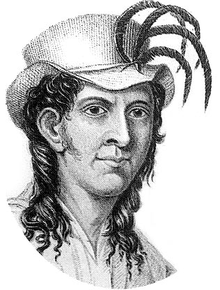
One of the two men was Thursday October Christian, son of Fletcher Christian and his Tahitian wife Mauatua. Fletcher, you will remember, was the ringleader of the mutiny that took place on the Bounty‘s voyage to Tahiti for breadfruit. Captain Philip Pipon, commander of one of the British ships, described Fletcher’s son Thursday as being “about twenty five years of age, a tall fine young man about six feet high, with dark black hair, and a countenance extremely open and interesting. He wore no clothes except a piece of cloth round his loins, a straw hat ornamented with black cock’s feathers, and occasionally a peacock’s, nearly similar to that worn by the Spaniards in South America, though smaller.”

Thursday October Christian, born on October 14, 1790, was the first child born on the Pitcairn Islands after the mutineers took refuge there. Born on a Thursday in October, he was given his name because his father wanted him to have “no name that will remind me of England,” forgetting perhaps that there are both Thursdays and Octobers in England. Captain Pipon referred to young Thursday as Friday October Christian,” because the Bounty had crossed the international date line going eastward, but the mutineers had somehow failed to adjust their calendars for this. The mutineers were living on a tropical island where everyone was running around naked. Is it any surprise that they didn’t know what day it was – or care?

As soon as Captain Pipon left, Thursday went back to his original name, not wanting to be confused with that other character from a story set on a tropical island.