November 16, 1620: Kansas in August

After having lived for months on board ship in cramped, dirty, smelly quarters, the Pilgrims finally sailed into Provincetown Harbor in November of 1620. On November 16, a group of 16, led by Myles Standish (also known as Captain Shrimp behind his back, being a tad short of stature) set off to explore the nearby environs.

They found fresh water at a place called Pilgrim Springs. (It wasn’t called that at the time they arrived.) Then at the top of a hill, hidden in a teepee, they found a cache of a funny sort of food — long ears with tidy little rows of yellow kernels. They called it corn and promptly stole it. The hill itself they called Hill Where We Stole the Corn from the Natives. That being quite a mouthful, it quickly got shortened to Corn Hill.

From this point the long historical march began to “I’m as corny as Kansas in August” and high fructose corn syrup.

What, you’re shouting — they just up and called it corn?

Yes kids, they did, but it’s really not that a-maize-ing (sorry). The word corn to Europeans at the time simply referred to grain, any grain. In England, wheat was “corn,” in Ireland oats were “corn” and in Indonesia rice was “corn.”

Today, Americans, Canadians and Australians are the only ones that call the yellow ears corn, To most people, it’s maize as in “I’m as maizy as Kansas in August.”

November 10, 1801: Offenders Offending the Offended

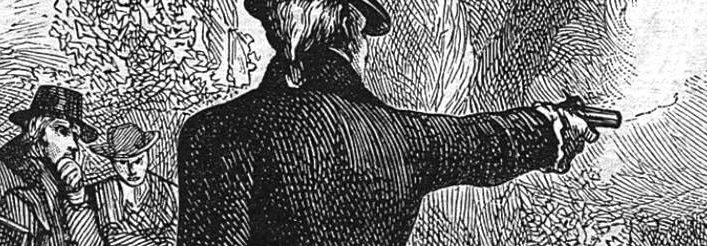
Americans in the 18th and 19th centuries had little use for European customs. One European practice they could cozy up to, however, was dueling — a practice that brought a veneer of sophistication to killing another person. The hoi polloi didn’t duel, only gentlemen dueled.

It was all very civilized. It even had it’s own ‘according to Hoyle’ rule book, the Code Duello, imported from Ireland, which spelled out 26 specific do’s and don’ts, right down to the hours during which duel challenges could be made and the number of wounds necessary to satisfy one’s honor.

The typical duel played out in this manner: An offended party would send a challenge to the offender (through a second, of course; the two primaries were not allowed to speak to each other lest they might resort to ungentlemanly name-calling). If the offender apologized, the matter ended, at least until the offender once again offended which he usually did.  If the offender refused to make nice, he chose the weapons and the time and place of the duel.  An apology could stop the proceedings at any time right up to the pulling of the trigger or the thrusting of the rapier or whatever.

As sophisticated as dueling was, it nevertheless began to annoy people. And on November 10, 1801, Kentucky (of all places) became the first state to adopt a law “to prevent the evil practice of dueling.” Dueling would bring a fine of $500 (about $15,000 today). Still, dueling persisted, so in 1849 a provision was added to the Kentucky state constitution requiring all public officeholders and all members of the bar to take an oath, swearing they had never, nor would they ever, take part in a duel.

We all know that once something worms its way into a constitution it pretty much stays there forever. And so it is today a source of amusement and/or embarrassment that anyone taking an oath of office in Kentucky must affirm (speaking the words right out loud) that he or she has “not fought a duel with deadly weapons within this State nor out of it, nor have I sent or accepted a challenge to fight a duel with deadly weapons, nor have I acted as second in carrying a challenge, nor aided or assisted any person thus offending, so help me God.”

November 7, 1811: Tippecanoe and So Do You

Long before the confederacy of southern states, United States forces faced the uprising of a confederacy under the Shawnee leader and Native American folk hero Tecumseh who had visions of a Midwestern Indian nation allied with the British. Confederacy forces led by Tecumseh’s brother Tenskawatawa (One with Open Mouth) met government forces under the direction of William Henry Harrison, Governor of the Indian Territory, on November 7, 1811, in the Battle of Tippecanoe (and Tyler too).

The battle took place in Indiana, at the confluence of the Tippecanoe and Wabash too Rivers. The day gave government forces an important political and symbolic victory and dealt a devastating blow to Tecumseh’s confederacy. Public opinion in the United States blamed the entire brouhaha on buttinsky Brits. The War of 1812 broke out only six months later.

The Battle of Tippecanoe (and Tyler too) also served as an important springboard for Harrison’s political ambitions which culminated in his becoming president in 1841. At the age of 68 years and 23 days when inaugurated, Harrison was the oldest president to take office until Ronald Reagan in 1981. During the campaign, Democrats characterized Harrison as an out-of-touch old fart (One Who Sits in Log Cabin Drinking Hard Cider). Harrison and running mate John Tyler (and Tippecanoe too) turned the tables on the Dems, adopting the log cabin and hard cider as campaign symbols along with one of the most famous campaign slogans ever (Tippecanoe and you know who).

Harrison caught cold shortly after his inauguration and went quickly from bad to worse. Harrison’s doctors tried applications of opium, castor oil, leeches, and Virginia snakeweed too. But to show his disdain for modern medicine, Harrison became delirious and died. He served only 32 days in office – some would say the perfect tenure for any politician.


November 1, 1609: I Was Just Drinking a Health and Wound Up Debauched and Drunk

Sir Matthew Hale, born November 1, 1609, was an influential English legal scholar, barrister and judge throughout a good part of the 17thhealth1 century. Perhaps he was a bit of a stick in the mud as well. When he died, he left a rather unusual bit of advice for his grandchildren: “I will not have you begin or pledge any health, for it is become one of the greatest artifices of drinking, and occasions of quarreling in the kingdom. If you pledge one health, you oblige yourself to pledge another, and a third, and so onwards; and if you pledge as many as will be drank, you must be debauched and drunk.”

A fellow Englishman Charles Morton agreed, going so far as to dedicate a book to the subject: The great evil of health-drinking, or, A discourse wherein the original evil, and mischief of drinking of healths are discovered and detected, and the practice opposed with several remedies and antidotes against it, in order to prevent the sad consequences thereof. Catchy title, but most people probably just asked their booksellers for that book by Morton.

The French chimed in with their thoughts as well, the writer/philosopher Voltaire saying that “the custom arose among barbarous nations” (England) and that drinking to the health of one’s guests was “an absurd custom, since we may drink four bottles without doing them the least good.”

And of course they were all right. The slippery slope led to toasting any number of things on any number of occasions in addition to one’s health. The word toast, incidentally, crept into the language as a result of putting pieces of toast in the drinks (to make them healthier?).

One of the earliest known toasts or healths was ancient Saxon. At a banquet hosted by one Hengist, a mercenary in the employ of King Vortigern, the beautiful daughter of Hengist lifted a glass of wine to the king and said: “Lauerd kining, wacht heil” (Lord King your health). The king then drank and replied: “Drine heil” (Here’s looking at you, kid).

OCTOBER 27, 1666: I DID IT WITH MY BOX OF MATCHES

I DID IT WITH MY BOX OF MATCHES

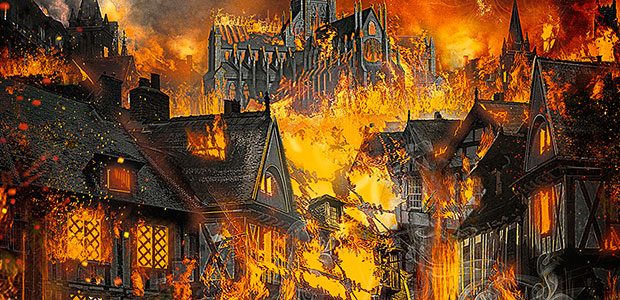
When the ashes settled after the great Chicago Fire, folks looked to assign blame and pointed their fingers at a cow.  The English were fire-of-londonalso looking to fix blame for a fire some two centuries earlier.  In early September 1666, a major fire broke out in Pudding Lane in the City of London and within days had destroyed 80 percent of the old city.
Accusations were flying in all directions — strangers, the Spanish, Dutch, Irish and most particularly the French, Catholics, even King Charles II.

Enter one Robert Hubert.  Hubert was a simple watchmaker who wasn’t quite wound up  — and he was a French Catholic.  He obligingly confessed to being the culprit, telling authorities he deliberately started the fire in Westminster.  He was arrested, but one little problem cropped up: the fire hadn’t even reached Westminster, let alone started there.

When confronted with the fact that the fire originated in a Pudding Lane bakery.  Hubert adjusted his story, saying that he had actually started the fire there, tossing a fire grenade through an open window.  What’s more, he did it because he was a French spy in service of the Pope.

Hubert was hauled before the court.  His story turned out to be riddled with problems.  The bakery had no windows, and Hubert was judged to be so crippled that he could not have thrown the grenade.  An even bigger problem:  he was not in England when the fire started, according to the testimony of the captain of a Swedish ship who had landed him on English soil two days after the outbreak of the fire.

Nevertheless, the court found Hubert guilty, and on October 27, 1666, he was hanged at Tyburn, London.  A year later, the cause of the fire was quietly changed to ‘the hand of God, a great wind and a very dry season.’

Don’t You Be a Meanie

Oh, Mr. Paganini
Please play my rhapsody
And if you cannot play it won’t you sing it?
And if you can’t sing you simply have to . . .

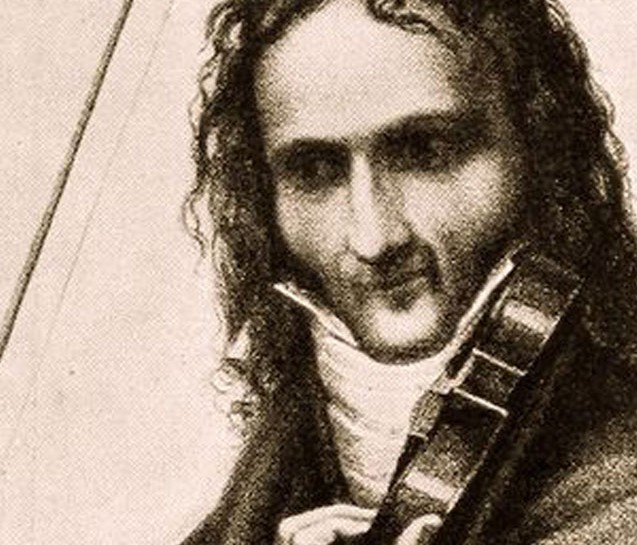
Mr. Paganini, aka (If You Can’t Sing It) You’ll Have to Swing It became a paganinifixture in Ella Fitzgerald’s repertoire back in the 1930s. The Mr. Paganini to whom she refers is composer and violin virtuoso Niccolo Paganini who was born on October 27, 1782. During the height of his career, the legendary “devil violinist”  set all of nineteenth-century Europe into a frenzy. He was a headliner in every major European city.  His technical ability was legend, and so was his willingness to flaunt it. His fame as a violinist was equaled by his reputation as a gambler and womanizer.

Alas, his grueling schedule and extravagant lifestyle took their toll, and he suffered from ever increasing health problems. He died in 1840.

OCTOBER 26, 2010: WELL-ARMED SOOTHSAYER

Paul the Oracle was somewhat of a child prodigy, demonstrating a marked intelligence right from the get-go. “There was something about the way he looked at our visitors,” said the adult in Paul’s early life. “It was so unusual, so we tried to find out what his special talents were.”

Paul was hatched from an egg at the Sea Life Centre in Weymouth, England, then moved to his permanent home, a tank at a center in Oberhausen, Germany.  Paul took his name from a German children’s poem, Der Tintenfisch Paul Oktopus. He quickly became a celebrity by virtue of his divination of the outcome of international football matches, choosing the winners through a stratagem typical of German engineering in its complexity — picking boxes of oysters emblazoned with competing nations’ flags.

Octopuses are some of the most intelligent of invertebrates, with complex thought processes, memory, and different personalities (good octopus, bad octopus). They can use simple tools, learn through observation, and are particularly sensitive to pain. This according to PETA, the animal rights group. PETA argued that it was cruel to keep Paul in permanent confinement. Sea Life Centres contended that releasing him would be dangerous, because being born in captivity, he was only accustomed to sitting around a tank, popping oysters and using a remote, not fending for himself.

Paul’s accurate choices for the 2010 World Cup, broadcast live on German television, made him a star. Paul predicted the winners of each of seven matches that the German team played, against Australia, Serbia, Ghana, England, Argentina, Spain, and Uruguay. His prediction that Argentina would lose prompted Argentine chef Nicolas Bedorrou to post an octopus recipe on Facebook.

“There are always people who want to eat our octopus,” said Paul’s keeper. “He will survive.”

Paul’s correct prediction of the outcome of the semi-final, with Germany losing to Spain, led to death threats. Spain’s prime minister offered to give Paul safe haven in Spain.

Paul died on October 26, 2010, at the age of two-and-a-half, a normal lifespan for an octopus.  German attempts to find other oracles have never fared well. The animals at the Chemnitz Zoo were wrong on all their predictions.  Leon the porcupine incorrectly picked Australia, Petty the pygmy hippopotamus failed to be swayed by Serbia’s pile of hay topped with apples , and Anton the tamarin mistakenly ate a raisin representing Ghana.

The E-ri-e Was Arisin’

Back at the beginning of the 19th century, shipping goods from one end of New York to the other was a costly and cumbersome. Thereerie2 was no railroad, no trucking, no Thruway — just a two-week ordeal by stagecoach to get from New York City to Buffalo. The New York State Legislature leaped into this transportation breach. They proposed and Governor DeWitt Clinton enthusiastically endorsed a proposal to build a canal from Buffalo, at the eastern point of Lake Erie, to Albany, and the Hudson River. By 1817, they had authorized $7 million for the construction of what would laughingly be referred to as Clinton’s Ditch, 363 miles long, 40 feet wide, and four feet deep.
Work began in August 1823. Teams of oxen plowed the ground, and Irish workers did the digging, using only basic hand tools. It was a lot of work for $10 a month, but officials cleverly left barrels of whiskey alsong the route as an added inducement.

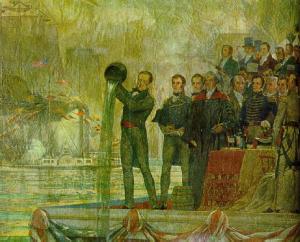
Governor Clinton opened the 425-mile Erie Canal on October 26, 1825, sailing from Buffalo in the Seneca Chief.  News of his departure was relayed to New York City by cannons placed along the entire length of the canal and river, each within hearing distance of the next cannon. The firing of each signaled the next to fire. It took 81 minutes to get the word to New York— the fastest communication the world had yet known. Clinton arrived in New York on September 4, where he ceremoniously emptied a barrel of Lake Erie water into the Atlantic Ocean — the “Marriage of the Waters” of the Great Lakes and the Atlantic.

The canal put New York on the map as the Empire State, transformed New York City into the nation’s principal seaport, and opened the interior of North America to settlement. It has been in continuous operation longer than any other constructed transportation system on the North American continent.
OCTOBER 17, 1814: THIS ROUND’S ON ME

An unfortunate incident involving beer – aged porter to be precise – occurred in London back in 1814.

The central London parish of St Giles was, as slums go, one of the slummiest.  Although it has since been rather gentrified with theaters, Covent Garden and the British Museum nearby, it was then mostly squalid housing where immigrants crowded into its ramshackle buildings, often more than one family to a room. Near one end of the parish stood the massive Meux and Company Horse Shoe Brewery, its giant vats filled with thousands of gallons of aging porter.

One particular vat which held over 135,000 gallons had seen better days. Like the shanties surrounding the brewery, it suffered from age, and on October 17 it succumbed, bursting and letting loose enough precious liquid to give all of St. Giles and then some a pretty good buzz, although the fury with which it was released made tippling difficult. Like giant shaken cans of beer, nearby vats ruptured and joined the game of dominoes.

Within minutes the brick structure that was the Meux and Company Horse Shoe Brewery was breached, and the deluge roared down Tottenham Court Road, flinging aside or burying in debris anyone or anything in its path.

Homes caved in. A busy pub crumbled, burying a buxom barmaid and her ogling patrons for several hours.  All in all, nine people were killed by drink that day. Those who didn’t lose their lives lost everything they owned to evil alcohol. Soon after the suds subsided, survivors rushed in to save what they could of the precious brew, collecting one or more for the road in pots and cans.

St. Giles smelled like the morning after a particular robust party for weeks. The brewery was later taken to court over the accident, but they pleaded an “Act of God,” and the judge and jury bought it, leaving them blameless. The brewery even received reparations from the government.  God, it would seem, has a soft spot for brewers.

I am a firm believer in the people. If given the truth, they can be depended upon to meet any national crisis. The great point is to bring them the real facts, and beer. ~ Abraham Lincoln


October 14, 1790: If It’s Thursday, This Must Be Pitcairn

When British ships arrived at Pitcairn Island in 1814, two men paddled out in canoes to meet them. Both spoke English well, impressing the officers and men of the ships with their refinement as they met on deck. Their civilized demeanor persuaded the ships’ captains that  the mutineers from the Bounty, had created a proper society (after alcoholism, murder and disease had killed most of them off), and did not merit prosecution for the takeover.

One of the two men was Thursday October Christian, son of Fletcher Christian and his Tahitian wife Mauatua. Fletcher, you will remember, was the ringleader of the mutiny that took place on the Bounty‘s voyage to Tahiti for breadfruit. Captain Philip Pipon, commander of one of the British ships, described Fletcher’s son Thursday as being “about twenty five years of age, a tall fine young man about six feet high, with dark black hair, and a countenance extremely open and interesting. He wore no clothes except a piece of cloth round his loins, a straw hat ornamented with black cock’s feathers, and occasionally a peacock’s, nearly similar to that worn by the Spaniards in South America, though smaller.”

Thursday October Christian, born on October 14, 1790, was the first child born on the Pitcairn Islands after the mutineers took refuge there. Born on a Thursday in October, he was given his name because his father wanted him to have “no name that will remind me of England,” forgetting perhaps that there are both Thursdays and Octobers in England. Captain Pipon referred to young Thursday as Friday October Christian,” because the Bounty had crossed the international date line going eastward, but the mutineers had somehow failed to adjust their calendars for this. The mutineers were living on a tropical island where everyone was running around naked. Is it any surprise that they didn’t know what day it was – or care?

As soon as Captain Pipon left, Thursday went back to his original name, not wanting to be confused with that other character from a story set on a tropical island.


SEPTEMBER 25, 1789: MONROE BEFORE MADISON EXCEPT AFTER JEFFERSON

When the Constitutional Convention sent the proposed U.S. Constitution to the states for ratification, Anti-Federalists criticized the power it gave the national government and its lack of explicit constitutionprotections for individual rights. Several states ratified the Constitution only given the promise that it would be immediately amended.

James Madison from Virginia proposed 19 amendments to answer the states’ objections. The Senate then whittled these down to 12, which were approved by Congress on September 25, 1789,and sent on to the states by President Washington.

The states ratified the last 10 of the 12 amendments, and they became the first 10 amendments to the Constitution, now referred to as the Bill of Rights.

The first of the two rejected amendments would have established how members of the House of Representatives would be apportioned to the states. Although it was rejected, it is covered elsewhere in the Constitution. The second forbade Congress from raising its own pay; Congress could vote for a raise but it would only apply to the next Congress. Nearly two hundred years later, a clever university student realized that the amendment remained “alive” because it had no deadline for state ratifications. He organized a successful campaign seeking ratification of the amendment, and it became the 27th (and most recent) amendment to the Constitution.

king me

Many of those members of the Constitutional Convention wanted Washington to become America’s own King George I. Although cooler heads prevailed, it’s interesting to think about the possibility. A list of our royalty might look something like this.

George I (George the Honest)

John I

Thomas I

James I

James II

John II (John the Junior)

Andrew I (Andrew the Old Hickory)

Martin I

William I (William the Tippecanoe)

John III (John the Tyler Too)

James III royal

Zachary I

Millard I

Franklin I

James IV

Abraham I (Abraham the Emancipator)

Andrew II

Ulysses I

Rutherford I

James V

Chester I

Grover I

Benjamin I

Grover I Part II

William I

Theodore I (Theodore the Big Stick)

William II (William the Fat)

Woodrow I

Warren I

Calvin I

Herbert I

Franklin II

Harry I

Dwight I (Dwight the Ike)

John IV

Lyndon I

Richard I (Richard the Not a Crook) Abdicated the throne

Gerald I

James VI

Ronald I

George II

William III

George III (George the W)

Barack I (Barack the Kenyan)

Donald I (Donald the . . .)

Joe I


SEPTEMBER 23, 1889: DEAL ME IN, YAMAUCHI-SAN

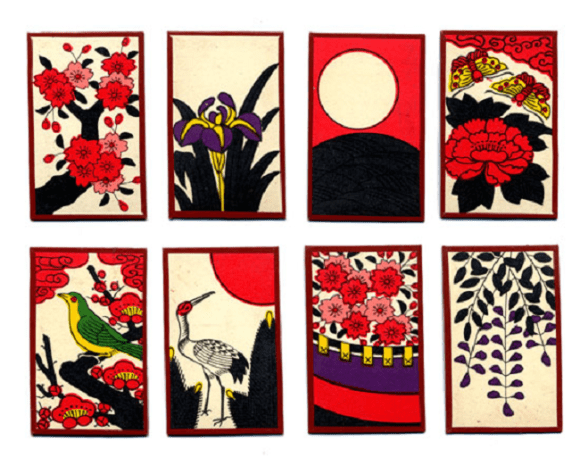
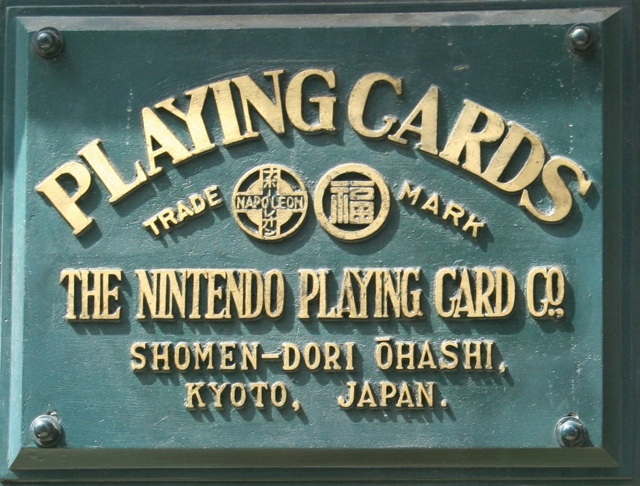
Nintendo, the consumer electronics giant was founded on September 23, 1889. No, it wasn’t the first video gaming company, a hundred years ahead of its time. Super Mario Brothers and Pokémon were not evennintendo1 glints in some developer’s eyes. The company was founded to produce playing cards. Playing cards had been introduced to Japan centuries earlier, but each time a card game became popular, folks began gambling on it, and the government banned it. One card game, hanafuda, resisted this trend. It used Western style cards with images but no numbers. The lack of numbers and the fact that the game was quite complicated limited its appeal to gambling types.

Nintendo founder Fusajiro Yamauchi produced and sold handcrafted hanafuda cards painted on mulberry tree bark — hardly high tech. The company hummed along happily producing its cards for another fifty years or so until an antsy grandson of the founder began to expand. His expansion efforts were rather haphazard and for the most part less than successful. There was a taxi company and a TV network, a food company selling instant rice. Then there was the chain of “love hotels,” offering accommodations for “resting” at hourly rates with such amenities as unseen staff members and hidden parking lots.

Nintendo stock soon bottomed out. In 1966, Nintendo got into the toy business with such products as Ultra Hand, Ultra Machine and Love Tester. During the 1970s, the company moved into electronics and arcade games. Then in 1981, it introduced Donkey Kong and the rest is — well, you know what they say.

Nintendo still makes hanafuda cards.

Madame Would-Be President

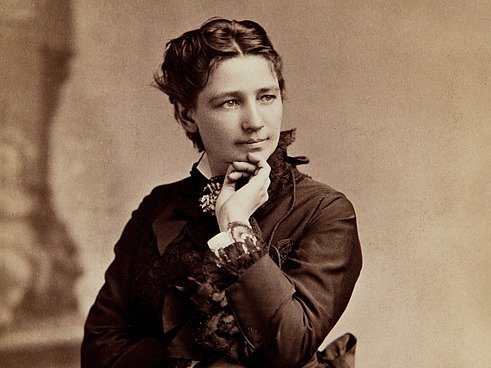
Born on September 23, 1838, Victoria Woodhull, although rather woodhullfamous or infamous in her day, does not jump readily to mind today. She wore many hats: newspaper publisher, stock broker, lobbyist, traveling clairvoyant, public speaker on women’s suffrage. She was also the first woman to run for president in the United States. That was in 1872 as the candidate of the Equal Rights Party. Noted abolitionist Frederick Douglass was selected as her running mate. However, he never acknowledged it, and campaigned for Republican Ulysses S. Grant.

She had a few things going against her. Women couldn’t vote, so she couldn’t even vote for herself. She was not old enough to serve as president. And just a few days before the election she was arrested on obscenity charges for publishing an account of an adulterous affair between the minister Henry Ward Beecher and Elizabeth Tilton.

She didn’t receive any electoral votes, and no one knew her popular vote total since her votes weren’t counted. One gentleman in Texas did publicly admit voting for her.

One of the world’s most popular entertainments is a deck of cards, which contains thirteen each of four suits, highlighted by kings, queens and jacks, who are possibly the queen’s younger, more attractive boyfriends.”
― Lemony Snicket