In 1904, a bit of real estate in the middle of Manhattan called Long Acre Square got a new name. New York Times publisher Adolph S. Ochs had just moved his newspaper’s operations to a new skyscraper on 42nd Street. He persuaded the City of New York to construct a subway station there, and the area was renamed Times Square. Just three weeks later, the first electrified sign appeared at the corner of 46th Street and Broadway.
During its heyday through the 1920s, celebrities such as Irving Berlin, Fred Astaire, and Charlie Chaplin were closely associated with the area, nicknamed The Tenderloin because of its desirable location in Manhattan. However, crime and corruption, and their friends gambling and prostitution were sneaking in. Beginning with the onset of the Great Depression in the 1930s and through the following decades, Times Square gained its reputation as a dangerous neighborhood. The seediness of the area became a symbol of the dismal state of the city. The tourists who continued to flock to the city’s most famous landmark were greeted by go-go bars, sex shops, adult theaters, and a very unDisneylike atmosphere. (oh, you got trouble right here in New York City)
Revitalization began in thew 1990s and today Times Square is a place you’d take your elderly mother. And lots of people do. Times Square is the world’s most visited tourist attraction, hosting over 39 million visitors (and their elderly mothers) yearly.
It’s squeaky clean now and glitzier than ever. (It’s the only neighborhood with zoning ordinances requiring building owners to display illuminated signs.)
Dream on, Las Vegas; Times Square is king.
Take My Wife . . . Please
Earlier centuries saw a great many practices that were commonplace then but which would be considered inappropriate in our more enlightened age. Nowhere was this truer than in (merry old) England — purchasing a plump Irish child for special dinner occasions in the 18th century, for instance, or in the 19th century, selling a spouse 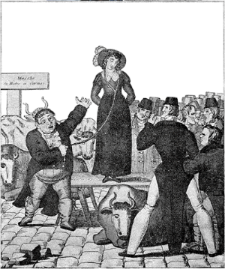 one had grown weary of. One such sale took place on April 8, 1832, an account of which was recorded for the amusement of generations that followed. Joseph Thompson, a farmer, had been married for three unhappy years when he and his wife decided to call it quits. As was customary, Thompson took his wife to town and set her up for public auction. At noon, the sale commenced with Thompson delivering a short speech:
“Gentlemen, I have to offer to your notice my wife, Mary Ann Thomson . . . whom I mean to sell to the highest and fairest bidder. Gentlemen, it is her wish as well as mine to part for ever. She has been to me only a born serpent. I took her for my comfort, and the good of my home; but she became my tormentor, a domestic curse, a night invasion, and a daily devil. Gentlemen, I speak truth from my heart when I say — may God deliver us from troublesome wives and frolicsome women! Avoid them as you would a mad dog, a roaring lion, a loaded pistol, cholera morbus, Mount Etna, or any other pestilential thing in nature.”
What a sales pitch! This guy could sell anything. The asking price for Mary Ann was 50 shillings. Eventually, the price was knocked down and a deal was made — 20 shillings and a Newfoundland dog.
Everyone satisfied, they parted company, Mary Ann and a gentleman named Henry Mears in one direction, Joseph and the dog in the other.

 Menlo Park, Thomas Edison had demonstrated his incandescent light. By the 1890s, the section of Broadway from 23rd Street to 34th Street had become so brightly illuminated by electrical advertising signs, that it was dubbed “The Great White Way.” Later, when the theater district moved uptown to the Times Square area, the name moved with it.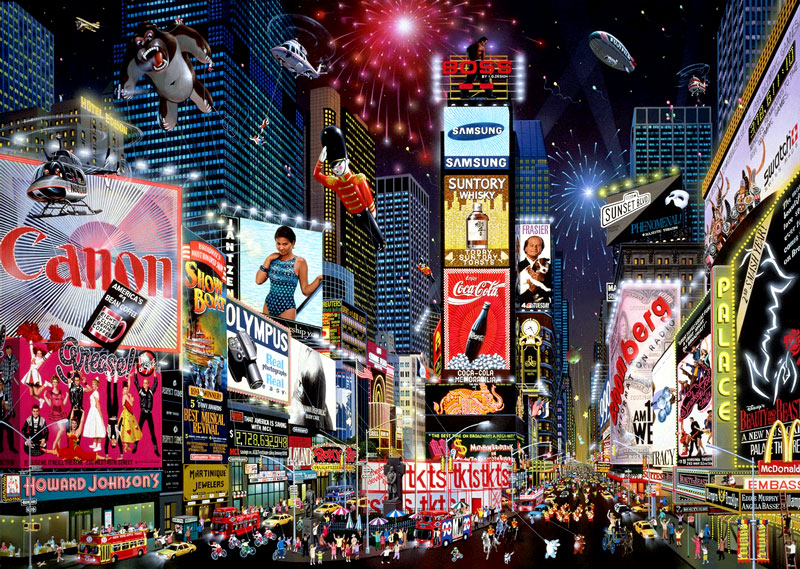


 Wretched Richard's Almanac