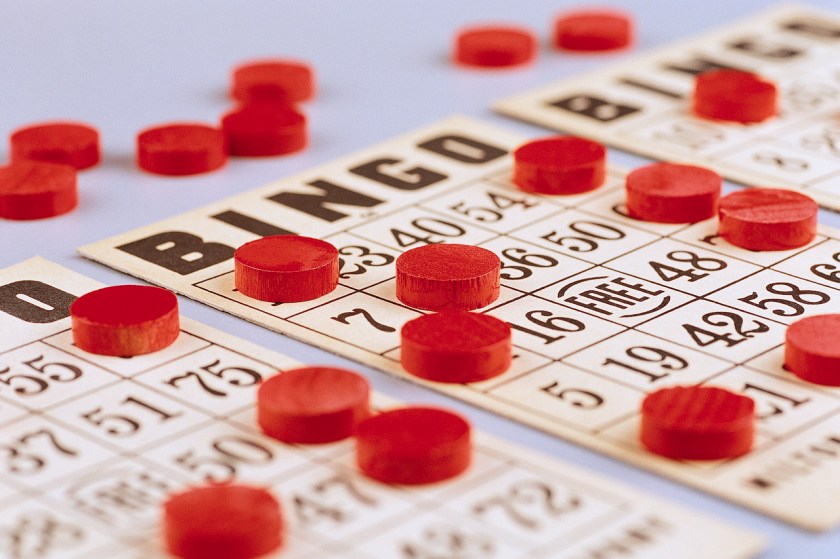
December 1, 1929: Gimme a B, Gimme an I . . .

Edwin Lowe is credited as being the Father of the game Bingo, but it’s abingo murky paternity. Lowe was a toy merchandiser in the late 1920s. At a traveling carnival near Atlanta, on December 1, 1929, he noticed players involved tooth and nail in a game called Beano in which they placed beans on numbers on a card as the numbers were called by an official number caller. Lowe took the idea back to New York with him where he amazed his friends with it. It’s popularity grew, and Lowe’s finances grew with it. The name Bingo was said to have originated when an excited player yelled “Bingo” instead of “Beano,” although some conspiracy theorists say the word had been used in England for some 150 years.

Further clouding the picture are the French (as the French will do). They created a similar game called Le Lotto back in in 1778. And they probably plagiarized the Italian Il Giuoco del Lotto d’Italia from the 1500s.

For those who may be in the Bingo dark, today’s typical game uses the numbers 1 through 75 arranged on a card in five columns headed by the letters B – I -N- G – O. Each column has numbers arranged vertically: The B column contains numbers between 1 and 15, the I column contains 16 through 30 and so on. When a player covers five numbers, horizontally, vertically or diagonally, the lucky devil shouts “Bingo!” to the great dismay of everyone else.

The game is now pretty much the province of little old ladies who command dozens of Bingo cards and whom you’d better not mess with if you know what’s good for you. Last year an 18-year-old Kentucky lad was barred by a judge from uttering the word “bingo” for six months after he falsely did that while working security at a Bingo hall. A police officer arrested him for his disorderly conduct which delayed the game by several minutes, causing alarm and real consternation to patrons. Chances are, he was taken into protective custody when the patrons, primarily elderly women, began yelling, cussing and threatening him. The officer explained that you can’t shout “out” in a ballpark or “fire” in a crowded theater.

And in England, two grandmothers were permanently banned from a local Bingo club after an argument over a ‘lucky’ seat led to a broken nose and two black eyes.

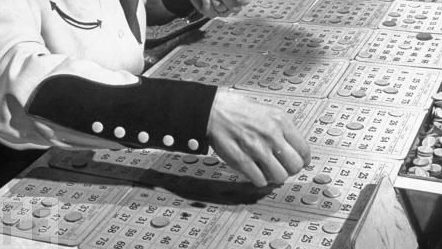
AUGUST 29, 1769: WICKED WITCH OF THE WHIST

In 1769 London, a gentleman died at the ripe old age of 97. Although little is known about the gentleman himself, his name has traveled down through the years and is more familiar to us today than to those who might have rubbed elbows with the man back in the eighteenth century. His name was Edmond Hoyle, and although he was a barrister by trade, he is now known for law only as it applies to games of chance. And he is much more recognized by his nickname ‘According to.”

     Hoyle laid down the law for the game of Whist in a widely circulated treatise on the subject. He also had a great deal to say about backgammon, quadrille, piquet, and chess. He was, we might surmise, one of those wet blankets who must rain on card-game parades (to jumble metaphors, about which Hoyle had nothing to say) with their whining “but the rules say” or “according to Hoyle.”

     But Whist was his long suit. This venerable game provides ample material on which to pontificate, and pontificate Hoyle did. A forerunner of Bridge, Whist is all about taking tricks. Who takes them, and when and how and why gives the game a wide variety of flavors from which to choose. There’s Knockout Whist, a game in which a player who wins no trick is eliminated, sent to stand in a corner; Solo Whist, a game where individuals can bid to win 5, 9 or 13 tricks or to lose every trick; Kleurenwiezen, an elaborate Belgian version of the game, filled with Gallic mischief; Minnesota Whist, played to win tricks or to lose tricks (talk about flexibility); Romanian Whist, a game in which players try to predict the exact number of tricks they will take; German Whist for two very aggressive players who take tricks from Poland without prior warning; Bid Whist in which players bid to determine trump and one player is a dummy who sits out the hand; and Danish Whist, in which the dummy brings pastries to the other players.  But England lays claim to most of the true Whist players. It is easy to imagine a group of eighteenth century British aristocrats at their club. “Shall we have a go at a spot of Whist?” “Capital idea.” “Jolly.” “According to Hoyle . . .”


December 1, 1929: Gimme a B, Gimme an I . . .

Edwin Lowe is credited as being the Father of the game Bingo but it’s abingo murky paternity. Lowe was a toy merchandiser in the late 1920s. At a traveling carnival near Atlanta, on December 1, 1929, he noticed players involved tooth and nail in a game called Beano in which they placed beans on numbers on a card as the numbers were called by an official number caller. Lowe took the idea back to New York with him where he amazed his friends with it. It’s popularity grew, and Lowe’s finances grew with it. The name Bingo was said to have originated when an excited player yelled “Bingo” instead of “Beano,” although some conspiracy theorists say the word had been used in England for some 150 years.

Further clouding the picture are the French (as the French will do). They created a similar game called Le Lotto back in in 1778. And they probably plagiarized the Italian Il Giuoco del Lotto d’Italia from the 1500s.

For those who may be in the Bingo dark, today’s typical game uses the numbers 1 through 75 arranged on a card in five columns headed by the letters B – I -N- G – O. Each column has five numbers arranged vertically The B’ column contains only numbers between 1 and 15, the ‘I’ column contains 16 through 30 and so on. When a player covers five numbers, horizontally, vertically or diagonally, the lucky devil shouts “Bingo!” to the great dismay of everyone else.

The game is now pretty much the province of little old ladies who command dozens of Bingo cards and whom you’d better not mess with if you know what’s good for you. Last year an 18-year-old Kentucky lad was barred by a judge from uttering the word “bingo” for six months after he falsely did that while working security at a Bingo hall. A police officer arrested him for his disorderly conduct which delayed the game by several minutes, causing alarm and real consternation to patrons. Chances are, he was taken into protective custody when the patrons, primarily elderly women, began yelling, cussing and threatening him. The officer explained that you can’t shout “out” in a ballpark or “fire” in a crowded theater.

And in England, two grandmothers were permanently banned from a local Bingo club after an argument over a ‘lucky’ seat led to a broken nose and two black eyes.

AUGUST 29, 1769: WICKED WITCH OF THE WHIST

In 1769 London, a gentleman died at the ripe old age of 97. Although little is known about the gentleman himself, his name has traveled down through the years and is more familiar to us today than to those who might have rubbed elbows with the man back in the eighteenth century. His name was Edmond Hoyle, and although he was a barrister by trade, he is now known for law only as it applies to games of chance. And he is much more recognized by his nickname ‘According to.”

     Hoyle laid down the law for the game of Whist in a widely circulated treatise on the subject. He also had a great deal to say about backgammon, quadrille, piquet, and chess. He was, we might surmise, one of those wet blankets who must rain on card-game parades (to jumble metaphors, about which Hoyle had nothing to say) with their whining “but the rules say” or “according to Hoyle.”

     But Whist was his long suit. This venerable game provides ample material on which to pontificate, and pontificate Hoyle did. A forerunner of Bridge, Whist is all about taking tricks. Who takes them, and when and how and why gives the game a wide variety of flavors from which to choose. There’s Knockout Whist, a game in which a player who wins no trick is eliminated, sent to stand in a corner; Solo Whist, a game where individuals can bid to win 5, 9 or 13 tricks or to lose every trick; Kleurenwiezen, an elaborate Belgian version of the game, filled with Gallic mischief; Minnesota Whist, played to win tricks or to lose tricks (talk about flexibility); Romanian Whist, a game in which players try to predict the exact number of tricks they will take; German Whist for two very aggressive players who take tricks from Poland without prior warning; Bid Whist in which players bid to determine trump and one player is a dummy who sits out the hand; and Danish Whist, in which the dummy brings pastries to the other players.  But England lays claim to most of the true Whist players. It is easy to imagine a group of eighteenth century British aristocrats at their club. “Shall we have a go at a spot of Whist?” “Capital idea.” “Jolly.” “According to Hoyle . . .”