Violinist, meat-packer, usher, tinsmith, elevator operator, and lyricist, Sammy Cahn (no relation to Kublai or Genghis) penned his first lyrics at the age of 16 – “Like Niagara Falls, I’m Falling for You,” not one of his most notable successes. But he kept writing them, giving up those other professions, until he got it right, and got it right again, and again.
Over the course of his career, Cahn was nominated for 23 Academy Awards, five Golden Globe Awards, an Emmy and a Grammy. In 1988, the Sammy Awards, for movie songs and scores, were created in his honor.
With Jimmy Van Heusen, Cahn wrote so many songs for Frank Sinatra that the two were almost considered to be his personal songwriters. Oscar winners “Three Coins in the Fountain,” “All the Way,” and “High Hopes” were all introduced in films by Sinatra. Add “Love and Marriage,” “The Tender Trap,” “My Kind of Town,” “Come Fly with Me” and a host of others.
The pair also won an Oscar for “Call Me Irresponsible” and received nominations for “Pocketful of Miracles,” “The Second Time Around,” and “Thoroughly Modern Millie.” Cahn and Jule Styne added nominations for “I’ll Walk Alone,” “I’ve Heard That Song Before,” and “It’s Magic.”
Many historic meetings have taken place over the years — when Caesar met Cleopatra, when Stanley met Livingston, when Harry met Sally. Such a meeting took place on May 4, 1904. Henry Royce had operated an electrical and mechanical business in Manchester, England,. since 1884. His real interest, however, was automobiles. He built his first in 1904, the two-cylinder Royce 10. Charles Rolls had a motor car dealership selling imported luxury automobiles. The two were introduced, and before the end of the year they had struck a bargain: Rolls would take all the cars Royce could build. They would be sold exclusively by Rolls and would bear the name Rolls-Royce. The 10-hp automobile had its coming out party at the Paris Salon in December, and quickly became one of the world’s most prestigious brands.
Rolls-Royce Limited was formed in 1906. Throughout the 20th century and into the 21st, it manufactured some of the most luxurious and exclusive automobiles in the world, synonymous with royalty, celebrity and wealth. The iconic Rolls-Royce hood ornament, the Spirit of Ecstasy, was commissioned in 1911 by a Baron Scott-Montagu, its figure looking a lot like his secretary/mistress, her finger pressed to her lips, suggesting the secrecy of their affair. She has endured through the years, evolving with the current fashion. A redesign in 2022 made her more aerodynamic. “Previously she had stood with her feet together, legs straight and tilting at the waist,” said the company. “Now she is a true goddess of speed, braced for the wind, one leg forward, body tucked low, her eyes focused eagerly ahead.” Looking for a gas station.
Now That’s a Hood Ornament
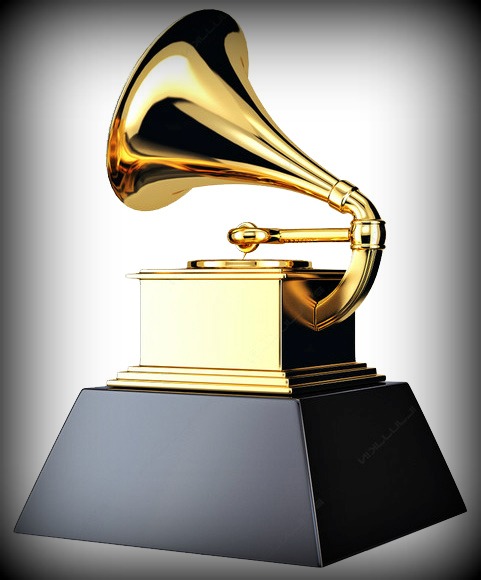
The first Grammy Awards (or Gramophone Awards as they were originally called) honoring achievement in the recording industry were held in 1959. And it was a banner year to start passing out those little gold gramophones.
In contention for Record of the Year was Perry Como with one of his three Top 10 singles for the previous year, “Catch a Falling Star,” Peggy Lee with her biggest hit of the rock era, “Fever,” Frank Sinatra crooning “Witchcraft,” and the are-you-kidding entry, “The Chipmunk Song” by David Seville. Taking home the statuette (to Italy) was Domenico Mondugno and the only foreign language recording to ever win the top prize, “Nel Blu Dipinto Di Blu.” The recording also won Song of the Year.
Other winners included Van Cliburn, Henry Mancini, Louis Prima and Keely Smith, Count Basie, Andre Previn, the Champs and the Kingston Trio.
And Ella Fitzgerald of course. She placed one of her several songbook albums in the ring, this one dedicated to Irving Berlin. This was her first of 13 Grammy Awards. She also has 9 recordings in the Grammy Hall of Fame, the most of any female artist. The first to be inducted was her first hit, A-Tisket, A-Tasket.
Nikita Khrushchev was elevated to top commie in the Soviet Union on March 27, 1958. His Cold War relationship with President Eisenhower and the United States was a complex one, certainly more so than the Ego War between the current Russian leader and his previous U.S. bro-hug counterpart.
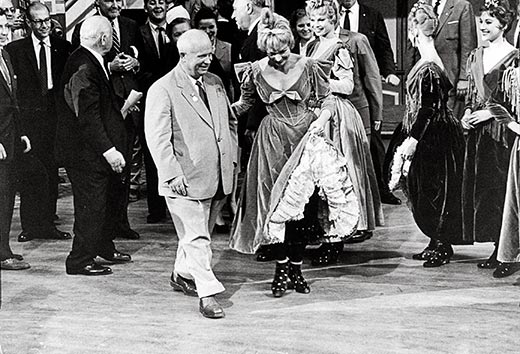
The following year Khrushchev was in the U.S. for a summit meeting with Eisenhower. At the Soviet leader’s request, a visit to Hollywood was arranged. Khrushchev and his wife arrived in Los Angeles, where the day started with a tour of the Twentieth Century Fox Studios in Hollywood and a visit to the sound stage of Can-Can. Meeting stars Shirley MacLaine and Juliet Prowse pleased the roly-poly dictator even though he had to nyet a chance to dance with MacLaine (probably something to do with the Siberian stare coming from Mrs. K) A lunch hosted by Frank Sinatra was also a big success even though Sinatra didn’t sing “That Old Bolshevik Magic,” as Nikita requested.
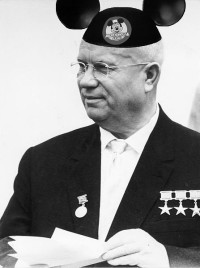
The day headed downhill when Twentieth Century Fox President Spyros P. Skouras, who wore his anticommunism on his sleeve, got into a bit of a who-will-bury-whom brouhaha with the Russian leader who was known for his temper tantrums. Shortly afterward, it began to look as though a nuclear exchange were imminent. Meeting Frank Sinatra was nice, but who Nikita really wanted to meet was Mickey Mouse. His American hosts told him it couldn’t happen. Security concerns. Perhaps he’d like to see Cape Canaveral, the White House War Room, the Strategic Air Command. But no Disneyland. Nicky exploded. “And I say, I would very much like to go and see Disneyland. But then, we cannot guarantee your security, they say. Then what must I do? Commit suicide? What is it? Is there an epidemic of cholera there or something? Or have gangsters taken hold of the place that can destroy me?”
Khrushchev left Los Angeles the next morning, and the Cold War returned to deep freeze.
Put a Cork in It
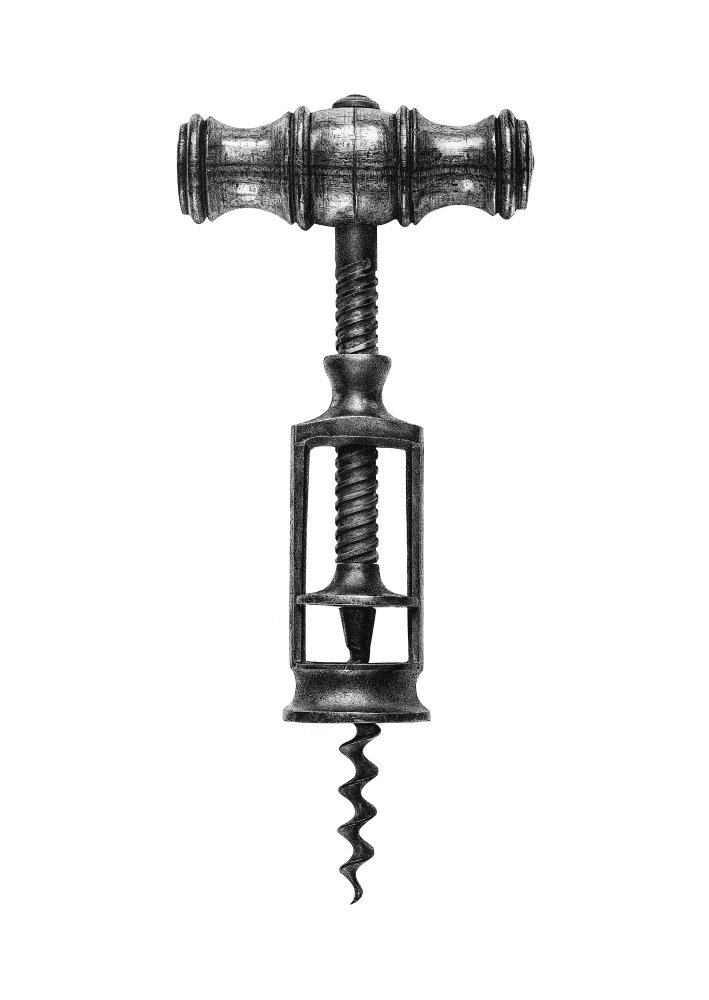
Back through the centuries wine lovers never aged their wines; they consumed it quickly before it went bad. Then in the 18th century, British glassblowers began to make bottles with narrow necks for wine that made airtight storage possible. Corks were used to seal the bottles. This quickly led to the invention of one of the dandiest little gizmos ever devised — the corkscrew. The design was based on a similar device used to clean muskets. The first corkscrews were T-shaped devices that twisted into the cork and after a certain amount of pulling extracted the cork. Corkscrews were first patented in England and France, then on March 27, 1860, M. L. Byrn of New York City received an American patent.
Since then, hundreds of corkscrews have been designed of every shape, size and mechanics you can imagine — single-lever, double-winged, air pump, electric, mounted. Naturally there are corkscrew books, corkscrew clubs, and corkscrew collectors, helixophiles.
The first Grammy Awards (or Gramophone Awards as they were originally called) honoring achievement in the recording industry were held in 1959. And it was a banner year to start passing out those little gold gramophones.
In contention for Record of the Year was Perry Como with one of his three Top 10 singles for the previous year, “Catch a Falling Star,” Peggy Lee with her biggest hit of the rock era, “Fever,” Frank Sinatra crooning “Witchcraft,” and the are-you-kidding entry, “The Chipmunk Song” by David Seville. Taking home the statuette (to Italy) was Domenico Mondugno and the only foreign language recording to ever win the top prize, “Nel Blu Dipinto Di Blu.” The recording also won Song of the Year against pretty much the same competition.
For Album of the Year, Sinatra put both his 1958 releases in the running (possibly canceling each other out) – the upbeat Come Fly With Me, his first with arranger Billy May, and Only The Lonely, arranged by Nelson Riddle. Ella Fitzgerald placed one of her several songbook albums in the ring, this one dedicated to Irving Berlin. And Van Cliburn, having won the April 1958 International Tchaikovsky Competition in Moscow, scored with Tchaikovksy: Concerto No. 1 In B-Flat Minor, Op. 23. Stiff competition but Henry Mancini was up to it, nailing the first of his 20 Grammy Awards with The Music from Peter Gunn.
Sinatra, Fitzgerald, Como and Cliburn all won in other categories, as did Louis Prima and Keely Smith, Count Basie, Andre Previn, and the Champs (Tequila). The head-scratcher Grammy of the year was in the category Best Country and Western Performance, won by the Kingston Trio for “Tom Dooley.” Well, it’s not jazz or classical.
Violinist, meat-packer, usher, tinsmith, elevator operator, and lyricist, Sammy Cahn (no relation to Kublai or Genghis) penned his first lyrics at the age of 16 – “Like Niagara Falls, I’m Falling for You,” not one of his most notable successes. But he kept writing them, giving up those other professions, until he got it right, and got it right again, and again.
Over the course of his career, Cahn was nominated for 23 Academy Awards, five Golden Globe Awards, an Emmy and a Grammy. In 1988, the Sammy Awards, for movie songs and scores, were created in his honor.
With Jimmy Van Heusen, Cahn wrote so many songs for Frank Sinatra that the two were almost considered to be his personal songwriters. Oscar winners “Three Coins in the Fountain,” “All the Way,” and “High Hopes” were all introduced in films by Sinatra. Add “Love and Marriage,” “The Tender Trap,” “My Kind of Town,” “Come Fly with Me” and a host of others.
The pair also won an Oscar for “Call Me Irresponsible” and received nominations for “Pocketful of Miracles,” “The Second Time Around,” and “Thoroughly Modern Millie.” Cahn and Jule Styne added nominations for “I’ll Walk Alone,” “I’ve Heard That Song Before,” and “It’s Magic.”

 Falling for You,” not one of his most notable successes. But he kept writing them, giving up those other professions, until he got it right, and got it right again, and again.


 Wretched Richard's Almanac