AUGUST 30, 1794: PENNY WISE, POUND FOOLISH

In the late 1800s, many of the unfortunates who found themselves in English prisons were there as a result of debts they could not pay. Benjamin Pope had a different story; he found his way to prison for a debt he could easily have paid. Pope was a tanner and quite successful in his trade, enough so that he gave up tanning and became a money-lender and mortgagee. He proved successful at this endeavor as well, earning the nickname “Plum Pope.”

     Alas, his good fortune began to desert him, in no small part because of his greed. His grasping ways in the lending of money led him afoul of the usury laws, and he was frequently brought before the court. In one particularly blatant case, he was fined £10,000.

Instead of paying the fine, he stole away to France with all his property. There, he complained bitterly to anyone who would listen about the unfairness of the English laws. The French naturally commiserated. Nevertheless, he eventually returned to England, but still refused to pay the fine. He went to prison instead. At one point, he could have secured his release by paying just £1000 of the £10,000 fine. Not Plum Pope.

     While in prison, he carried on his avocation as a money lender, albeit on a more limited and cautious scale. While always a penny-pincher, he became more so and more eccentric about it. He would drink beer with anyone who would give it to him, but would never buy it. He would not eat meat unless it was given to him. He chewed his gum twice. When he died on August 30, 1794, after 12 years in prison, he still owed the debt that had sent him there, even though he left behind more than enough to pay it.

Any man who would walk five miles through the snow, barefoot, just to return a library book so he could save three cents — that’s my kind of guy. — Jack Benny

AUGUST 17, 1978: GIVE ‘EM HELIUM

Three Americans from New Mexico completed the first transatlantic balloon flight, landing in a barley field 60 miles from Paris, 138 hours and six minutes after lifting off from Presque Isle, Maine. The helium-filled Double Eagle II covered 3,233 miles in its six-day journey.

Almanac devotees will remember (having most certainly taken notes) that Frenchman Jean-Pierre Blanchard crossed the English Channel to great fanfare some two hundred years earlier.

Balloonists began attempting the Atlantic crossing in the mid-1800s, with 17 unsuccessful flights, resulting in the deaths of at least seven balloonists. Two of our three balloonists gave it their first shot in September 1977, aboard the Double Eagle I, but were blown off course, landing off Iceland after 66 hours.  After recovering from bruises, embarrassment and frostbite, they were ready to foolishly rush in again.  A third pilot was brought in to spread the pain.

The Eagle Junior was a big balloon – 11-stories of helium.  It made good progress after blastoff, but during mid-trip, plunged from 20,000 feet to a hair-raising 4,000 feet, forcing them to jettison ballast material and many of their inflight amenities.  Among the items chucked overboard was evidently all of their finer cuisine, for they were forced to finish the trip dining only on hot dogs and sardines. Toward the end of the trip, one balloonist was heard to remark somewhat testily: “Skip the bun; just grease up my hot dog with mustard real good and I’ll shove it in my ear.”

Panic set in when the balloonists couldn’t find the Eiffel Tower.  Blown off course, they touched down just before dusk on August 17, 1978, near the hamlet of Miserey, missing the wine and ticker-tape parade in Paris. Parisians, not wanting to give up a celebratory occasion, amused themselves in honor of the storming of the Bastille.


JULY 27, 1793: OFF WITH THEIR HEADS

On July 27, 1793, Maximilien Robespierre was elected to the Committee of Public Safety, whose function was to oversee the government of France and protect it against its enemies, foreign and domestic. Exactly one year later, he was removed from office. One day later, his head was removed.

During his year as committee member and president of the National Convention, he came to exercise virtual dictatorial control over the French government and proved himself a bit of a black hat. Faced with the threat of real or imagined civil war and foreign invasion, he inaugurated what was lovingly referred to as the Reign of Terror. He compiled himself a rather lengthy enemies list – some 300,000 suspected enemies made the list and were arrested. At least 10,000 died in prison. Robespierre proved himself mighty handy with a guillotine, executing 17,000 of them as “enemies of France”.

But just as he was getting the guillotine really smoking, the threat of a foreign invasion just up and disappeared, and those who still had their heads formed a coalition to oppose Robespierre and his followers.

And on July 27, 1794, Robespierre and his allies were placed under arrest by the National Assembly. When he received word that the National Convention had declared him an hors-la-loi, he shot himself in la tete but only succeeded in wounding his jaw. Nevertheless troops of the National Convention helped him finish the job the very next day – as French sages often say, live by the guillotine, die by the guillotine.


Another List Maker

Fast forward a couple of centuries: Richard M. Nixon had himself an enemies list, though not nearly as long as Robespierre’s.  And his Saturday Night massacre pales by comparison. But on July 27, 1974, didn’t they vote to impeach him anyway. At least, there was no guillotine.

JULY 14, 1789, 1973: BREAKING UP IS HARD TO DO

Every écolier and écolière knows that the breakup of France – Révolution française – began in 1789, its defining moment the storming of the Bastille on the morning of July 14. 1789. This medieval fortress in the center of Paris represented royal authority. That the Bastille housed only seven inmates – all with good reason to be there – was unimportant. It was a symbol of the abuses of the absolute monarchy, and the French had had it with monarchs, aristocrats, and pretty much anyone in power. Bring on liberté, égalité, fraternité.   King Louis XVI, exit stage right


Bye Bye Don

Another momentous breakup took place on the evening of the same day, nearly 200 years later, in 1973, at Knott’s Berry Farm in California (Knott’s Berry Farm was America’s first theme park and probably the only one devoted to grapes and strawberries and such things). Every schoolgirl and schoolboy knows that the Everly Brothers were one of America’s most successful pop duos, lending their sibling harmony to such hits as “Bye Bye Love”, “All I Have To Do is Dream” and “Wake Up Little Susie”, a franchise that would seemingly go on forever. Well, forever is a long time, and brothers Don and Phil had, by the end of the 1960s pretty much had it with liberté, égalité, fraternité and most definitely with each other.

The defining moment of their breakup came in the middle of their set when the stage manager told the audience that the rest of the show had been canceled because brother Don was “too emotional” to play.  In reality, Brother Don was too drunk to play. His skipped guitar notes and bungled lyrics sent brother Phil into a real snit. Phil smashed his guitar and stormed off stage into a solo career, promising he would “never get on stage with that man again.”


Phil and Don reached a sort of detente a decade later.  Louis XVI, on the other hand, was beheaded.

(Phil Everly died in January 2014).

I have no intention of sharing my authority. — King Louis XVI

Death Visits Aunt Agatha, Part 2: A Bargain Is Struck

Monty hated the thought of paying Bridget Berman seventy-five dollars a day to do practically nothing and eat his food in the bargain. What if Aunt Agatha held on for three or four days? No matter how bad she looked, she was a tough old bird. She could rack up a couple hundred dollars while he was in the city.

By the time Monty bit the bullet and finally contacted Bridget Berman, he had already devised a scheme to avoid paying the old hag more than what he considered appropriate remuneration for her services. Emphasizing how sick the old lady was, how she probably wouldn’t make it through the next 24 hours, Monty proposed a flat fee for Bridget’s sitting services. “Ninety dollars,” said Monty, “It’ll be like getting paid time and a half most likely.”

Bridget didn’t trust Monty at all; she assumed right off that he was trying to procure her services on the cheap. But if the old woman were really dying . . . Bridget also hated to pass up something extra for next to nothing. She expressed doubt about the arrangement. “But I will consider it. Mind you, just consider it. First I must see your aunt for myself.” Bridget had watched a good many people check out of this world and felt confident that she could reasonably judge the amount of time a person had left.

Later, as they stood at Aunt Agatha’s bedside, Bridget, after carefully studying the dying woman for several minutes, concluded that here lay one very sick woman and that she had better get an agreement quickly, before Aunt Agatha expired. “I don’t know,” said Bridget, “She doesn’t look all that bad to me. But I understand your situation, and I want to be as agreeable as I possibly can. One hundred and fifty dollars.”

Monty stood silently thinking. Aunt Agatha groaned.

“One twenty-five,” said Bridget.

“You’ll stay until she dies,” said Monty.

“Or until you return,” said Bridget.

“Agreed.”

Ten hours passed. Monty was in the city, Bridget sat bedside, and Aunt Agatha lay there still looking as though the next minute would be her last. Bridget sighed and dozed off. She awoke Saturday morning to find Aunt Agatha just as ill and just as alive as she had been the night before. For eight hours, Bridget stared at the bedridden woman just lying there, continuing to breathe without consideration for others, taking money from Bridget as though she were a common pickpocket.

continued

JUNE 19, 1885: BEWARE THE FRENCH BEARING GIFTS

In 1885, the French ship Isere sailed into New York Harbor carrying 214 crates filled with 350 libertypieces of a 305-foot high jigsaw that had been crafted in France and would, over the next four months, be re-assembled on an awaiting pedestal on Bedloe Island (now called Liberty Island) – there to stand for the next 134 years (so far).

Once constructed, this would, of course, be the Statue of Liberty or “Liberty Enlightening the World,” to those not on a first-name basis. It was a gift from France to the United States back during the two countries’ honeymoon days.   Actually it was something of a joint enterprise, the French providing the statue and the U.S. the pedestal on which it would stand.

French sculptor Frederic Auguste Bartholdi began designing the statue in 1876, working with Alexandre Gustave Eiffel, the designer of the Eiffel Tower. Richard Morris Hunt, designer of New York City’s first apartment building, designed the pedestal. Given his background, one might have expected his pedestal to house several luxury apartments, a missed funding opportunity: “Give me your tired, your poor, your huddled masses yearning to rent 3BR LUX APT, LWR FLR, UNF, HRBR VIEW.”

As it was, funding of the statue was a bit of an issue. Both countries faced challenges in getting money for the project. The French charged public fees, held fundraising events, and used money from a lottery to finance the statue. One notable fundraising method in the U.S. was a traveling arm. The statue’s torch-bearing arm was displayed at the Centennial Exposition in 1876.  After the exhibition closed, it was transported to New York, where it remained on display in Madison Square Park for several years before being returned to France to be reunited with its torso. The French, in a bit of Gallic oneupsmanship, exhibited the head at the 1878 Paris World’s Fair.

The plan to display Lady Liberty’s breasts in Boston was banned before it got off the drawing board, and a nationwide tour of her feet failed to muster sufficient enthusiasm.

The Statue of Liberty is no longer saying, ‘Give me your poor, your tired, your huddled masses.’ She’s got a baseball bat and yelling, ‘You want a piece of me?’ Robin Williams

When Mexico sends its people, they’re not sending the best. They’re sending people that have lots of problems and they’re bringing those problems. They’re bringing drugs, they’re bringing crime. They’re rapists and some, I assume, are good people. –Donald Trump

JUNE 4, 1411: THE CHEESE STANDS ALONE

Even in 1411, the people of Roquefort-sur-Soulzon had been making cheese as long as anyone could remember.  And all because a young man was lured away from his lunch by a fair young maiden. Or so the story goes.

The cheese-making folks of Roquefort-sur-Soulzon were probably the only ones making the tangy, crumbly sheep’s milk cheese with its distinctive veins of green mold. Nevertheless on June 4, 1411, French King Charles VI granted them a monopoly for the ripening of the Roquefort cheese.

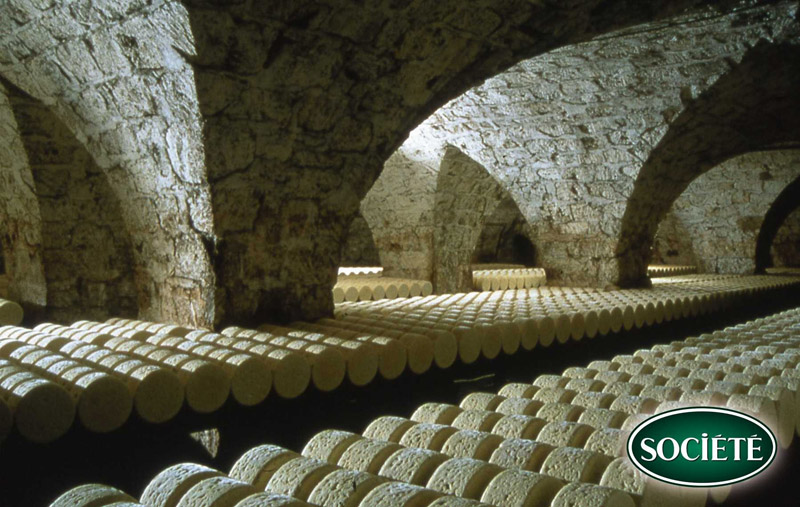
What makes Roquefort Roquefort is its aging in the Combalou caves of Roquefort-sur-Soulzon. Popular legend suggests that the cheese was discovered when a young man eating his lunch of bread and ewe’s milk cheese spied a hot young woman in the distance. Naturally, he ran off to pursue her, leaving his lunch in the cave. Legend leaves the results of his amorous pursuit to our imaginations, but his appetite must have been somehow satisfied since he didn’t return to the cave for several months. When he did, the mold present in the cave – Penicillium roqueforti to be exact – had done an ugly duckling number on his lump of cheese transforming it into a cheese of beauty. The bread, however, was another story.

The French take their wine and their cheese seriously. A ruling in 1961 decreed that although the Roquefort-sur-Soulzon method for the manufacture of the cheese could be followed across the south of France, only those cheeses ripened in the natural caves of Mont Combalou could bear the name Roquefort. Today, its production involves some 4,500 people who herd special ewes on 2,100 farms in a carefully defined grazing area. In 2008, 19,000 tons were produced, with 80% of it consumed in France.  It’s a laborious process — 4,500 folk dropping their 4,500 lumps of ewe’s milk cheese and running off in hot amorous pursuit of 4,500 other folk.


MAY 26, 1755: READ HIS FRENCH LIPS

Louis Mandrin was to France what Robin Hood was to England and Rob Roy to Scotland. Having served in the war of 1740 in a light brigade noted for undertaking dangerous missions to surprise the enemy, he was left idle and without income by peace, which made a remarkable appearance in 1748. He had no way of supporting his life other than by continually risking it. Thus he came up with the idea of assembling a corps of men like himself with himself as their leader and waging war against the fermiers, collectors of royal revenues from taxes  levied on salt, tobacco, and farming. The fermiers paid an agreed upon amount to the king, but could exact unspecified sums themselves. They naturally became fat and rich in the process – and hated.

Mandrin became the master of a portion of central France, pillaging public treasuries to pay his troops, whom he also put to work forcing the wealthy to buy his stolen merchandise. He successfully warded off the many detachments of government troops sent against him, instilling fear among their numbers and in the government itself. Eventually the people came to consider him their protector against the oppression of government revenue officers.

Finally, a regiment did attack and destroy his corps, but Mandrin himself escaped into the Duchy of Savoy. From there, he continued to make forays across the border and a terrible nuisance of himself. The French government was not not happy. The fermiers entered the Duchy illegally, disguising 500 men as peasants. Mandrin was betrayed by two of his men, seized, and whisked across the border. When the King of Savoy, learned of the French intrusion into his territory, he immediately wrote to the French King, demanding that the prisoner be turned over to him. But before the message arrived, Mandrin was hurriedly tried, condemned to be broken at the wheel, and executed on May 26, 1755.