November 9, 1918: And Mona Lisa Isn’t Talking

Guillaume Apollinaire, who died on this date in 1918, was a French poet and critic of the early 20th century. He was a fan of modern art and is credited with coining the word surrealism. To the French police, however he was just another voleur, but certainly not a petty one. Seven years earlier, they had arrested and jailed him on suspicion of aiding and abetting the theft of the Mona Lisa and a number of Egyptian statuettes from the Louvre.

The strange case began early on a Monday morning. Before the Louvre was opened for visitors,the Mona Lisa was stolen by a thief who acted quickly when no guards were around. The theft wasn’t reported until Tuesday; guards who noticed that the painting was missing assumed it had been removed to be photographed. Once museum officials realized the truth, however, all hell broke loose. The Louvre went into lock-down. Police arrived to question the staff, re-enact the crime and dust for fingerprints, a newfangled detection technique. The French border was sealed, departing ships and trains thoroughly searched.

By the time the museum re-opened nine days later, the theft was on the front page of newspapers around the world. Tips poured in from amateur sleuths, clairvoyants and your everyday would-be experts. Thousands of people lined up at the Louvre just to see the empty spot where the painting once hung. More it seems than ever viewed the painting itself, which was not widely known outside the art world until it was stolen (Nat King Cole had not yet sung about it). Giving the whole situation a Kafkaesque touch, Franz Kafka was among those who came to view the empty space.

The plot thickened (as plots will) when a mystery man called the Paris-Journal, which was offering a reward for information about the crime. The man showed up at the newspaper’s offices with a small statue, one of several that he claimed to have stolen from the Louvre. The anonymous thief turned out to be a con man named Honoré Joseph Géry Pieret who had a questionable relationship with Apollinaire. Pieret implicated Apollinaire and he was arrested.

Under pressure, Apollinaire, admitted that Pieret had sold the pilfered works to his friend Pablo Picasso. Thinking they might have discovered a dandy crime ring, police arrested Picasso as well. Although Picasso admitted buying the objects, prosecutors couldn’t build a case that either he or Apollinaire had stolen them, much less the Mona Lisa, and both of them went free.

And what happened to the Mona Lisa? Conspiracy theorists tell us it was never found, that museum officials had to hire a copy artist named Lenny DaVinci to paint a replacement. “How about a real smile this time,” they suggested.

But She’s Showing It All

This just in:  French experts have determined that a nude portrait that has been hiding at the Conde Museum at the Palace of Chantilly, north of the French capital is actually Mona Lisa herself.  She has been going under the alias Monna Vanna.  Curators have determined that Leonardo himself had a hand in the charcoal work.  Shocking!

October 20, 1928: And a Pot for Every Chicken

The political silly season is at its height, full of promises and a few threats.  A burning question: will some wag pull out the proverbial chicken in every pot to ridicule another candidate’s over-the-top tax cut (my tax cut’s bigger than yours). The chicken in the pot is, of course, an allusion to a much earlier presidential campaign in which Republicans running Herbert Hoover promised a chicken for every pot and a car in every garage. Although the statement has been hung like an albatross around poor Hoover’s neck, he never actually said it himself; it appeared in a Republican party flyer on October 20, 1928.

chickenpouleThe Republicans did not coin the phrase, however. That honor goes to King Henry the IV of France (Republicans quoting a Frenchman, my, my) who some 400 years earlier said: “Je veux qu’il ait si pauvere paysan en mon royaume qu’il n’ait tous les diamaches sa poule au pot.” Translation: “I wish that there would not be a peasant so poor in all my realm who would not have a chicken in his pot every Sunday.” A little wordy, but he was the king. Le bon roi Henri came to be known as le Roi de la poule au pot or King of the Chicken in the Pot. Much as the 1928 presidential candidate came to be known as the Hoover of the Chicken in the Pot. This was probably the result of his opponent Al Smith continually ridiculing the statement while holding up a rubber chicken (Okay, he actually held up a copy of the flyer, but a rubber chicken would have been better.)

As so often happens in campaigns, the statement got inflated to a chicken, a bunch of vegetables, two cars in every garage, a gasoline card and silk stockings.

Hoover’s actual campaign slogans were the rather uninspiring “Who but Hoover” and “Hoover and Happiness Or Smith And Soup Houses,” in spite of which he won the election. During his single term in office, the Great Depression got underway, an irony Hoover probably did not appreciate.

Hoover died on October 20, 1964, and was buried with a rubber chicken (actually that’s an unsubstantiated rumor).


lbj3

OCTOBER 18, 1963: SPACE, THE FELINE FRONTIER

The story of cats in space is a dramatic tale indeed. It begins in an unlikely place with the 1957 Soviet launch of Sputnik 2, carrying of all felicettethings a dog named Laika. Laika was a stray found on the streets of Moscow who could have been the star of a dandy rags-to-riches shaggy dog story, except that things didn’t go all that well and the pooch perished under mysterious circumstances.

This was viewed as an early skirmish in the superpower space race to which NASA responded by sending a chimp into space and successfully returning him.

The French meanwhile had been plotting their own animal space probe. Fifteen cats had been chosen to undergo extensive training involving centrifuges, compression chambers and other medieval torture devices for a space mission in which the French would prove that they belonged at the table with the big guys and a cat would demonstrate to its fanciers everywhere that cats were superior to dogs in yet another way.

A pretty black and white Parisian chatte was eventually selected for the mission, because she was the only one who hadn’t become overweight during training, something to do with croissants most likely. On October 18, 1963, at 8:09 am, Chatte Félicette boarded a Véronique AGI 47 rocket at a base in the Algerian Sahara Desert and was blasted 97 miles into space. Fifteen minutes later, she parachuted safely to earth and pussycat immortality. Voilà!

ANOTHER CAT CAME BACK

In 1813, Londoners were amazed to see, floating down the Thames River toward London Bridge, a large bowl with a passenger on board — a tortoiseshell cat, quite relaxed and seemingly enjoying the journey. As she approached the fall, onlookers were certain she would be overturned and thrown into the water. But she stayed seated and, to loud cheers, deftly shot the center arch with as much dexterity as a white water kayaker.

A young boy in a boat having observed this feat rowed toward her and lifted her into his boat. He discovered a parchment scroll hanging from a collar around her neck. The note stated that if she should reach London safely she should be taken to a Mrs. Clarke in Highstreet who would reward the person delivering the cat. The boy conveyed the cat to Mrs. Clarke who gave him half a crown. Mrs. Clarke was well aware of the circumstances of the cat’s arrival, the voyage having been the result of a wager between two Richmond gentlemen. With precious little to do, it would seem.

October 8, 1911: Do You Smile to Tempt a Poet, Mona Lisa

Guillaume Apollinaire was an important poet and critic in early 2oth century France. He was a fan of modern art and is credited with coining the word surrealism. To the French police he was important for another reason. In September 1911, they arrested and jailed him on suspicion of aiding and abetting the theft of the Mona Lisa and a number of Egyptian statuettes from the Louvre. It didn’t help his case that he had once called for the Louvre to be burnt down.

The strange case began early on a Monday morning. Before the Louvre was opened for visitors,the Mona Lisa was stolen by a thief who acted quickly when no guards were around. The theft wasn’t reported until Tuesday; guards who noticed that the painting was missing assumed it had been removed to be photographed. Once museum officials realized the truth, however, all hell broke loose. The Louvre went into lock-down. Police arrived to question the staff, re-enact the crime and dust for fingerprints, a newfangled detection technique. The French border was sealed, departing ships and trains thoroughly searched.

By the time the museum re-opened two weeks later, the theft was on the front page of newspapers around the world. Tips poured in from amateur sleuths, clairvoyants and your everyday would-be experts. Thousands of people lined up at the Louvre just to see the empty spot where the painting had once hung. More it seems than had ever viewed the painting itself which was not widely known outside the art world until it was stolen (Nat King Cole had not yet sung about it). Giving the whole situation a Kafkaesque touch, Franz Kafka was among those who came to view the empty space.

The plot thickened (as plots will) when a mystery man called the Paris-Journal, which was offering a reward for information about the crime. The man showed up at the newspaper’s offices with a small statue, one of several that he claimed to have stolen from the Louvre. The anonymous thief turned out to be a con man named Honoré Joseph Géry Pieret who had a questionable relationship with Apollinaire. Pieret implicated Apollinaire and he was arrested.

Under pressure, Apollinaire, admitted that Pieret had sold the pilfered works to his friend Pablo Picasso. Thinking they might have discovered a dandy crime ring, police arrested Picasso as well. Although Picasso admitted buying the objects, prosecutors couldn’t build a case that either he or Apollinaire had stolen them, much less the Mona Lisa, and both of them went free.

And what happened to the Mona Lisa? Conspiracy theorists tell us it was never found, that museum officials had to hire a noted art forger (Leonard DaVinsky) to paint a replacement. “How about a real smile this time,” they suggested.

Madame Would-Be President

In 1872, Victoria Woodhull, newspaper publisher, stock broker, lobbyist, traveling clairvoyant, became the first woman to run for president in the United States as the candidate of the Equal Rights Party. She had a few things going against her: women couldn’t vote, so she couldn’t even vote for herself; she was not old enough to serve as president; and just a few days before the election, she was arrested on obscenity charges for publishing an account of an adulterous affair.

She didn’t receive any electoral votes, and no one knew her popular vote total since her votes weren’t counted. One gentleman in Texas did publicly admit voting for her.


AUGUST 30, 1794: PENNY WISE, POUND FOOLISH

In the late 1800s, many of the unfortunates who found themselves in English prisons were there as a result of debts they could not pay. Benjamin Pope had a different story; he found his way to prison for a debt he could easily have paid. Pope was a tanner and quite successful in his trade, enough so that he gave up tanning and became a money-lender and mortgagee. He proved successful at this endeavor as well, earning the nickname “Plum Pope.”

     Alas, his good fortune began to desert him, in no small part because of his greed. His grasping ways in the lending of money led him afoul of the usury laws, and he was frequently brought before the court. In one particularly blatant case, he was fined £10,000.

Instead of paying the fine, he stole away to France with all his property. There, he complained bitterly to anyone who would listen about the unfairness of the English laws. The French naturally commiserated. Nevertheless, he eventually returned to England, but still refused to pay the fine. He went to prison instead. At one point, he could have secured his release by paying just £1000 of the £10,000 fine. Not Plum Pope.

     While in prison, he carried on his avocation as a money lender, albeit on a more limited and cautious scale. While always a penny-pincher, he became more so and more eccentric about it. He would drink beer with anyone who would give it to him, but would never buy it. He would not eat meat unless it was given to him. He chewed his gum twice. When he died on August 30, 1794, after 12 years in prison, he still owed the debt that had sent him there, even though he left behind more than enough to pay it.

Any man who would walk five miles through the snow, barefoot, just to return a library book so he could save three cents — that’s my kind of guy. — Jack Benny

AUGUST 17, 1978: GIVE ‘EM HELIUM

Three Americans from New Mexico completed the first transatlantic balloon flight, landing in a barley field 60 miles from Paris, 138 hours and six minutes after lifting off from Presque Isle, Maine. The helium-filled Double Eagle II covered 3,233 miles in its six-day journey.

Almanac devotees will remember (having most certainly taken notes) that Frenchman Jean-Pierre Blanchard crossed the English Channel to great fanfare some two hundred years earlier.

Balloonists began attempting the Atlantic crossing in the mid-1800s, with 17 unsuccessful flights, resulting in the deaths of at least seven balloonists. Two of our three balloonists gave it their first shot in September 1977, aboard the Double Eagle I, but were blown off course, landing off Iceland after 66 hours.  After recovering from bruises, embarrassment and frostbite, they were ready to foolishly rush in again.  A third pilot was brought in to spread the pain.

The Eagle Junior was a big balloon – 11-stories of helium.  It made good progress after blastoff, but during mid-trip, plunged from 20,000 feet to a hair-raising 4,000 feet, forcing them to jettison ballast material and many of their inflight amenities.  Among the items chucked overboard was evidently all of their finer cuisine, for they were forced to finish the trip dining only on hot dogs and sardines. Toward the end of the trip, one balloonist was heard to remark somewhat testily: “Skip the bun; just grease up my hot dog with mustard real good and I’ll shove it in my ear.”

Panic set in when the balloonists couldn’t find the Eiffel Tower.  Blown off course, they touched down just before dusk on August 17, 1978, near the hamlet of Miserey, missing the wine and ticker-tape parade in Paris. Parisians, not wanting to give up a celebratory occasion, amused themselves in honor of the storming of the Bastille.


JULY 27, 1793: OFF WITH THEIR HEADS

On July 27, 1793, Maximilien Robespierre was elected to the Committee of Public Safety, whose function was to oversee the government of France and protect it against its enemies, foreign and domestic. Exactly one year later, he was removed from office. One day later, his head was removed.

During his year as committee member and president of the National Convention, he came to exercise virtual dictatorial control over the French government and proved himself a bit of a black hat. Faced with the threat of real or imagined civil war and foreign invasion, he inaugurated what was lovingly referred to as the Reign of Terror. He compiled himself a rather lengthy enemies list – some 300,000 suspected enemies made the list and were arrested. At least 10,000 died in prison. Robespierre proved himself mighty handy with a guillotine, executing 17,000 of them as “enemies of France”.

But just as he was getting the guillotine really smoking, the threat of a foreign invasion just up and disappeared, and those who still had their heads formed a coalition to oppose Robespierre and his followers.

And on July 27, 1794, Robespierre and his allies were placed under arrest by the National Assembly. When he received word that the National Convention had declared him an hors-la-loi, he shot himself in la tete but only succeeded in wounding his jaw. Nevertheless troops of the National Convention helped him finish the job the very next day – as French sages often say, live by the guillotine, die by the guillotine.


Another List Maker

Fast forward a couple of centuries: Richard M. Nixon had himself an enemies list, though not nearly as long as Robespierre’s.  And his Saturday Night massacre pales by comparison. But on July 27, 1974, didn’t they vote to impeach him anyway. At least, there was no guillotine.

JULY 14, 1789, 1973: BREAKING UP IS HARD TO DO

Every écolier and écolière knows that the breakup of France – Révolution française – began in 1789, its defining moment the storming of the Bastille on the morning of July 14. 1789. This medieval fortress in the center of Paris represented royal authority. That the Bastille housed only seven inmates – all with good reason to be there – was unimportant. It was a symbol of the abuses of the absolute monarchy, and the French had had it with monarchs, aristocrats, and pretty much anyone in power. Bring on liberté, égalité, fraternité.   King Louis XVI, exit stage right.

Bye Bye Don

Another momentous breakup took place on the evening of the same day, nearly 200 years later, in 1973, at Knott’s Berry Farm in California. (Knott’s Berry Farm was America’s first theme park and probably the only one devoted to grapes and strawberries and such things.) Every schoolgirl and schoolboy knows that the Everly Brothers were one of America’s most successful pop duos, lending their sibling harmony to such hits as “Bye Bye Love”, “All I Have To Do is Dream” and “Wake Up Little Susie”, a franchise that would seemingly go on forever. Well, forever is a long time, and brothers Don and Phil had, by the end of the 1960s, pretty much had it with liberté, égalité, fraternité and most definitely with each other.

The defining moment of their breakup came in the middle of their set when the stage manager told the audience that the rest of the show had been canceled because brother Don was “too emotional” to play.  In reality, Brother Don was too drunk to play. His skipped guitar notes and bungled lyrics sent brother Phil into a real snit. Phil smashed his guitar and stormed off stage into a solo career, promising he would “never get on stage with that man again.”

Phil and Don reached a sort of detente a decade later.  Louis XVI, on the other hand, was beheaded.

(Phil Everly died in January 2014).

I have no intention of sharing my authority. — King Louis XVI

JUNE 19, 1885: BEWARE THE FRENCH BEARING GIFTS

In 1885, the French ship Isere sailed into New York Harbor carrying 214 crates filled with 350 libertypieces of a 305-foot high jigsaw puzzle that had been crafted in France and would, over the next four months, be re-assembled on an awaiting pedestal on Bedloe Island (now called Liberty Island) – there to stand for the next 139 years (so far).

Once constructed, this would, of course, be the Statue of Liberty or “Liberty Enlightening the World,” to those not on a first-name basis. It was a gift from France to the United States back during the two countries’ honeymoon days.   Actually it was something of a joint enterprise, the French providing the statue and the U.S. the pedestal on which it would stand.

French sculptor Frederic Auguste Bartholdi began designing the statue in 1876, working with Alexandre Gustave Eiffel, the designer of the Eiffel Tower. Richard Morris Hunt, designer of New York City’s first apartment building, designed the pedestal. Given his background, one might have expected his pedestal to house several luxury apartments, a missed funding opportunity: “Give me your tired, your poor, your huddled masses yearning to rent 3BR LUX APT, LWR FLR, UNF, HRBR VIEW.”

As it was, funding of the statue was a bit of an issue. Both countries faced challenges in getting money for the project. The French charged public fees, held fundraising events, and used money from a lottery to finance the statue. One notable fundraising method in the U.S. was a traveling arm. The statue’s torch-bearing arm was displayed at the Centennial Exposition in 1876.  After the exhibition closed, it was transported to New York, where it remained on display in Madison Square Park for several years before being returned to France to be reunited with its torso. The French, in a bit of Gallic oneupsmanship, exhibited the head at the 1878 Paris World’s Fair.

The plan to display Lady Liberty’s breasts in Boston was banned before it got off the drawing board, and a nationwide tour of her feet failed to muster sufficient enthusiasm.

The Statue of Liberty is no longer saying, ‘Give me your poor, your tired, your huddled masses.’ She’s got a baseball bat and yelling, ‘You want a piece of me?’ Robin Williams

When Mexico sends its people, they’re not sending the best. They’re sending people that have lots of problems and they’re bringing those problems. They’re bringing drugs, they’re bringing crime. They’re rapists and some, I assume, are good people. –Donald Trump

JUNE 4, 1411: THE CHEESE STANDS ALONE

Even in 1411, the people of Roquefort-sur-Soulzon had been making cheese as long as anyone could remember.  And all because a young man was lured away from his lunch by a fair young maiden. Or so the story goes.

The cheese-making folks of Roquefort-sur-Soulzon were probably the only ones making the tangy, crumbly sheep’s milk cheese with its distinctive veins of green mold. Nevertheless on June 4, 1411, French King Charles VI granted them a monopoly for the ripening of the Roquefort cheese.

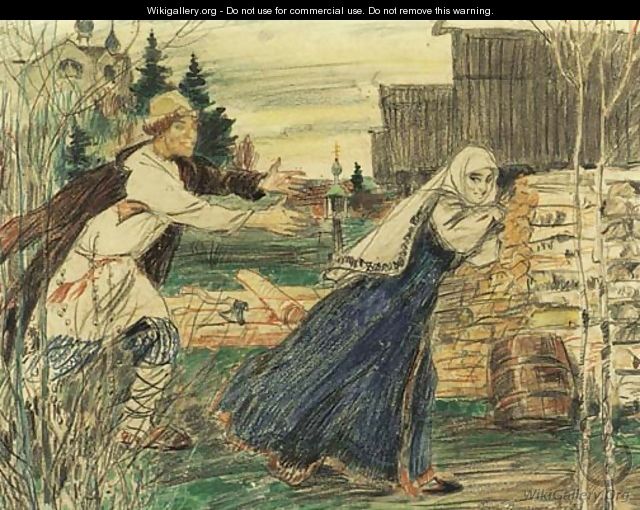
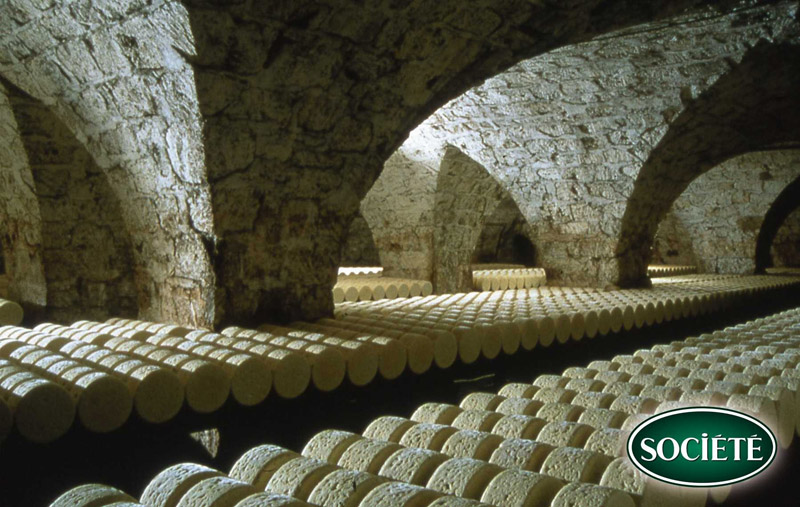
What makes Roquefort Roquefort is its aging in the Combalou caves of Roquefort-sur-Soulzon. Popular legend suggests that the cheese was discovered when a young man eating his lunch of bread and ewe’s milk cheese spied a hot young woman in the distance. Naturally, he ran off to pursue her, leaving his lunch in the cave. Legend leaves the results of his amorous pursuit to our imaginations, but his appetite must have been somehow satisfied since he didn’t return to the cave for several months. When he did, the mold present in the cave – Penicillium roqueforti to be exact – had done an ugly duckling number on his lump of cheese transforming it into a cheese of beauty. The bread, however, was another story.

The French take their wine and their cheese seriously. A ruling in 1961 decreed that although the Roquefort-sur-Soulzon method for the manufacture of the cheese could be followed across the south of France, only those cheeses ripened in the natural caves of Mont Combalou could bear the name Roquefort. Today, its production involves some 4,500 people who herd special ewes on 2,100 farms in a carefully defined grazing area. In 2008, 19,000 tons were produced, with 80% of it consumed in France.  It’s a laborious process — 4,500 folk dropping their 4,500 lumps of ewe’s milk cheese and running off in hot amorous pursuit of 4,500 other folk.