MAY 31, 1578: What’s in a Name I: Martin Frobisher

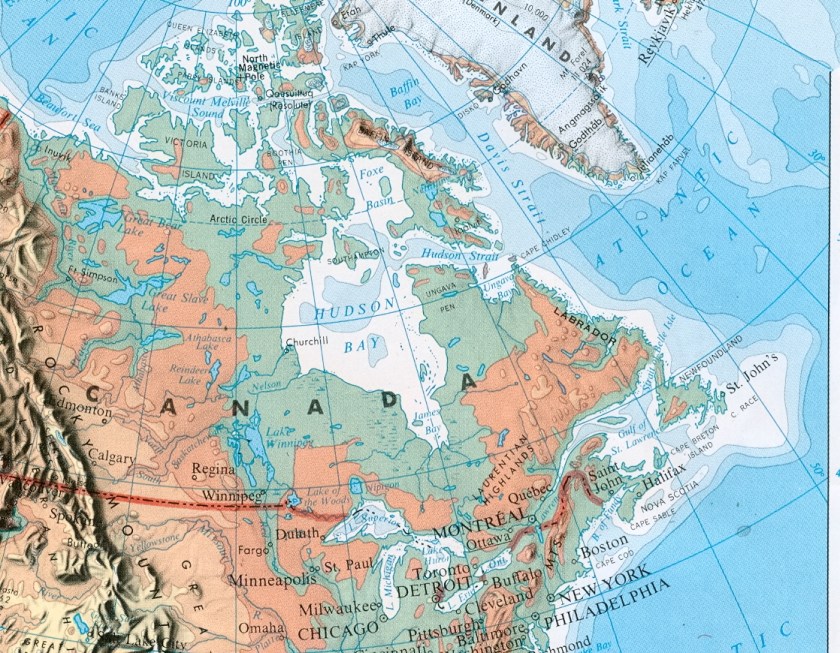
English sailor/privateer Sir Martin Frobisher visited the New World three times on his quest for — what else? — that elusive Northwest Passage to Asia.  Setting sail from England on May 31, 1578, on his second voyage, he sailed up Labrador way and into — talk about coincidences — Frobisher Bay.  One piece of luck followed another.  Ashore, on what is now Baffin Island, he discovered gold ore.  Lots of it.  He loaded three ships with 200 tons of the stuff and returned merrily to England.  He sailed right back to the New World for more gold ore with an even larger fleet of ships, giving nary a thought to that damn Northwest Passage.  1,350 tons this time around.

Time passed, and as the gold ore was smelted, Frobisher basked in the thoughts of his future wealth.  Alas, it wasn’t to be.  Efforts to extract gold revealed that the supposed gold ore was worthless rock.  The ore was repurposed for road construction, and thus the streets of London were paved with gold — fool’s gold, that is.

What’s in a Name II: Engel K0r . . . What’s Her Name

Engel Korsendochter was the daughter of wealthy burghers (not to be confused with, well you know) Corsgen Elbertsznoon and Geertruyt Hendriksdr van der Schelling.  She married Heiman Jacobsnoon, the mayor of the Frisian city of Amstelerdam. Astute almanackers will realize that we have journeyed back to the world of windmills, tulips, wooden shoes and Dutch masters (painters not cigars).  Engel and Heiman of the moniker mouthfuls were stars of a rebellion that took place on May 31, 1531.  (Those same astute almanackers will probably remember the Dutch undertakers rebellion, January 31, 1696.)  Heiman was a Protestant sympathizer;  Engel was Catholic through and through, with two sister sisters and a Franciscan father to prove it.  Engel herself was the head of the Guild of the Holy Sacrament, a society charged with protecting a chapel (between Kalverstraat and Rokin, if you care).

City authorities had called for the chapel to be torn down to make room for a wool shed (was Heiman involved?) Engel led three hundred women in a protest march that brought a lot of attention to their cause but got them banished from Amsterdam for four years.  They were later pardoned by Catholic King Charles V.

An altarpiece attempts to honor Engel Korsendoc —
 

APRIL 17, 1610: SOMEWHERE A RIVER BEARS YOUR NAME

Back at the dawn of the 17th century, the holy grail among explorers was the Northwest halfPassage, that elusive sea route that Europeans had been seeking ever since they discovered that North America stood right in the middle of their way to China. (For some reason, they longed to go west to China even though it was a lot closer going east.)

On April 17, 1610, intrepid British explorer Henry Hudson. already famous for having discovered and explored a river that just happened to share his last name, set sail on his latest attempt to find the passage that would at last allow Europeans to take (as the popular song tells us) a slow boat to China.

It was his fourth expedition, financed by adventurers from England. Sailing across the Atlantic, slipping between Greenland and Labrador, he entered the Hudson Strait (another remarkable coincidence) and soon reached (you’re not going to believe this) Hudson Bay. Unfortunately after all this seeming good luck, the expedition took a nasty turn.  After three months dawdling around the bay, Hudson was surprised by the onset of winter. Why winter north of Labrador in November would be a surprise is anyone’s guess. Nevertheless, Hudson and his crew were forced to set up a winter camp. The next few months were not pleasant, and many of the crew members were not amused. They grumbled and held their tongues throughout the winter until June. But once they were sailing again, they up and mutinied, setting Hudson, his son and seven friends adrift.  Although Hudson was never seen again, England laid claim to everything that shared his name — river, strait, bay and even a funny looking vehicle that seemed to have no useful purpose.


APRIL 17, 1610: SOMEWHERE A RIVER BEARS YOUR NAME

Back at the dawn of the 17th century, the holy grail among explorers was the Northwest halfPassage, that elusive sea route that Europeans had been seeking ever since they discovered that North America stood right in the middle of their way to China. (For some reason, they longed to go west to China even though it was a lot closer going east.)

On April 17, 1610, intrepid British explorer Henry Hudson. already famous for having discovered and explored a river that just happened to share his last name, set sail on his latest attempt to find the passage that would at last allow Europeans to take (as the popular song tells us) a slow boat to China.

It was his fourth expedition, financed by adventurers from England. Sailing across the Atlantic, slipping between Greenland and Labrador, he entered the Hudson Strait (another remarkable coincidence) and soon reached (you’re not going to believe this) Hudson Bay. Unfortunately after all this seeming good luck, the expedition took a nasty turn.  After three months dawdling around the bay, Hudson was surprised by the onset of winter. Why winter north of Labrador in November would be a surprise is anyone’s guess. Nevertheless, Hudson and his crew were forced to set up a winter camp. The next few months were not pleasant, and many of the crew members were not amused. They grumbled and held their tongues throughout the winter until June. But once they were sailing again, they up and mutinied, setting Hudson, his son and seven friends adrift.  Although Hudson was never seen again, England laid claim to everything that shared his name — river, strait, bay and even a funny looking vehicle that seemed to have no useful purpose.


APRIL 17, 1610: SOMEWHERE A RIVER BEARS YOUR NAME

Back at the dawn of the 17th century, the holy grail among explorers was the Northwest halfPassage, that elusive sea route that Europeans had been seeking ever since they discovered that North America stood right in the middle of their way to China. (For some reason, they longed to go west to China even though it was a lot closer going east.)

On April 17, 1610, intrepid British explorer Henry Hudson. already famous for having discovered and explored a river that just happened to share his last name, set sail on his latest attempt to find the passage that would at last allow Europeans to take (as the popular song tells us) a slow boat to China.

It was his fourth expedition, financed by adventurers from England. Sailing across the Atlantic, slipping between Greenland and Labrador, he entered the Hudson Strait (another remarkable coincidence) and soon reached (you’re not going to believe this) Hudson Bay. Unfortunately after all this seeming good luck, the expedition took a nasty turn.  After three months dawdling around the bay, Hudson was surprised by the onset of winter. Why winter north of Labrador in November would be a surprise is anyone’s guess. Nevertheless, Hudson and his crew were forced to set up a winter camp. The next few months were not pleasant, and many of the crew members were not amused. They grumbled and held their tongues throughout the winter until June. But once they were sailing again, they up and mutinied, setting Hudson, his son and seven friends adrift.  Although Hudson was never seen again, England laid claim to everything that shared his name — river, strait, bay and even a funny looking vehicle that seemed to have no useful purpose.


APRIL 12, 1788: WHAT’S IN A NAME

Cape Disappointment is a headland at the mouth of the Columbia River at the southwesternmost tip of Washington State. Its main claim to fame is its fog. At 106 foggy days a year, Cape Disappointment is the foggiest spot in the United States. And then there’s the name, one that surely must put the Cape Disappointment Chamber of Commerce through its paces. Where did it get that name, you query? Good of you to ask. It just happens to have been named on April 12, 1788.

John Meares was an explorer, navigator, fur trader and a bit of a scoundrel. His first expedition to the north Pacific ended in failure. Sailing with false papers claiming Portuguese registry to avoid licensing and duties and with inadequate provisions, he was forced to winter in Prince William Sound. All but ten of his men died. Meares and these men were saved by the arrival of a British trader. To show his gratitude, Meares sued the trader, claiming he had been overcharged for the supplies that saved their lives.

In 1788, he was back in the north Pacific collecting sea otter furs to sell in China. Sailing southward along the Washington coast, he ran into nasty weather at that unnamed headland at the mouth of the Columbia River. Forced to turn back, he called the place X#!##X!&!! which was later cleaned up to Cape Disappointment.

A few years later, Meares would bring Britain and Spain to the brink of war, but that’s a story for another day.

Magic Kingdoms Here and There

It was a Big Apple Fantasyland. Finishing touches were still being put in place on New York City’s Hippodrome just hours before its April 12, 1905, opening. Seating 5300 people, it dwarfed the Metropolitan Opera with its 3000 seats. A marvel of theatrical architecture, its stage was 12 times larger than any existing Broadway house and was capable of holding a thousand performers at a time or, perhaps, a full-sized circus complete with clowns and horses and acrobats and a flying elephant or two.

Speaking of Flying Elephants (a Clever Segue to 1992)

Could Mickey Souris really cut it among continental consumers? Would the rodent empire have the necessary je ne sais quoi to win those jaded Gallic hearts and minds? No more guessing or advance planning or idle speculation after D-Day (as in Disney) — April 12, 1992, the day Euro Disney opened its gates in Marne-La-Vallee on the outskirts of Paris. Gladstone Gander or Goofy?
The lucky duck prevailed. The royaume magique became one of Europe’s leading tourist destinations with some 15 million annual visitors. Disney had created another Fantasyland.