OCTOBER 30, 1938: JUST ME AND MY RADIO

It’s easy from the comfort of our 21st century recliners to dismiss the mass hysteria of an earlier generation as so many Chicken Littles or Turkey Lurkeys, afraid of their own shadows. We’ve seen it all, any horror one can imagine, right there on the screen in front of us, and should it become too squirmy, well we can always just hit a button. The remote is there to protect us.

But what if you were at home, alone perhaps, on that October night back in 1938. It’s dark out; Halloween and all its spookiness is just a day away. But there’s the radio to keep you company. Like millions of other Americans, you’ll tune in to Edgar Bergen and Charlie McCarthy. That should lighten up a dark night. They finish their comedy routine at ten after eight. A singer you’ve never heard of follows so, like millions of Americans, you surf the radio stations (Wasn’t there supposed to be a dramatic program on?) pausing to hear an unenthusiastic announcer: “. . . the Meridian Room in the Hotel Park Plaza in downtown New York, where you will be entertained by the music of Ramon Raquello and his orchestra.” You listen for a minute; it’s not that great. You’re all set to surf again when the announcer interrupts, reporting that a Professor Farrell of the Mount Jenning Observatory has detected explosions on the planet Mars. The music returns, but only for a minute. The announcer is back with the news that a large meteor has crashed into a farmer’s field in Grovers Mills, New Jersey.

Now your ears are glued to the radio, as announcement after announcement confirms the impossible – a Martian invasion. “Good heavens, something’s wriggling out of the shadow like a gray snake. Now here’s another and another one and another one. They look like tentacles to me … I can see the thing’s body now. It’s large, large as a bear. It glistens like wet leather. But that face, it… it … ladies and gentlemen, it’s indescribable. I can hardly force myself to keep looking at it, it’s so awful. The eyes are black and gleam like a serpent. The mouth is kind of V-shaped with saliva dripping from its rimless lips that seem to quiver and pulsate.”

Now’s the time to surf the radio. If you do, you’ll quickly realize that everything is normal on other radio stations, that you’ve been listening to a realistic but fictional radio drama. But if you don’t, chances are you’ll join the thousands of people jamming highways, trying to flee the alien invasion.

Orson Welles was just 23 years old when his Mercury Theater company broadcast its update of H.G. Wells’ War of the Worlds with no idea of the uproar it would cause. He employed sophisticated sound effects and top notch acting to make the story believable.

And believed it was. In Indianapolis, a woman ran into a church where evening services were being held, yelling: “New York has been destroyed! It’s the end of the world! Go home and prepare to die!”

When the actors got wind of the panic, Welles went on the air as himself to remind listeners that it was just fiction. Afterward, he feared that the incident would ruin his career, but three years later he was in Hollywood working on Citizen Kane.

OCTOBER 26, 2010: WELL-ARMED SOOTHSAYER

Paul the Oracle was somewhat of a child prodigy, demonstrating a marked intelligence right from the get-go. “There was something about the way he looked at our visitors,” said the adult in Paul’s early life. “It was so unusual, so we tried to find out what his special talents were.”

Paul was hatched from an egg at the Sea Life Centre in Weymouth, England, then moved to his permanent home, a tank at a center in Oberhausen, Germany.  Paul took his name from a German children’s poem, Der Tintenfisch Paul Oktopus. He quickly became a celebrity by virtue of his divination of the outcome of international football matches, choosing the winners through a stratagem typical of German engineering in its complexity — picking boxes of oysters emblazoned with competing nations’ flags.

Octopuses are some of the most intelligent of invertebrates, with complex thought processes, memory, and different personalities (good octopus, bad octopus). They can use simple tools, learn through observation, and are particularly sensitive to pain. This according to PETA, the animal rights group. PETA argued that it was cruel to keep Paul in permanent confinement. Sea Life Centres contended that releasing him would be dangerous, because being born in captivity, he was only accustomed to sitting around a tank, popping oysters and using a remote, not fending for himself.

Paul’s accurate choices for the 2010 World Cup, broadcast live on German television, made him a star. Paul predicted the winners of each of seven matches that the German team played, against Australia, Serbia, Ghana, England, Argentina, Spain, and Uruguay. His prediction that Argentina would lose prompted Argentine chef Nicolas Bedorrou to post an octopus recipe on Facebook.

“There are always people who want to eat our octopus,” said Paul’s keeper. “He will survive.”

Paul’s correct prediction of the outcome of the semi-final, with Germany losing to Spain, led to death threats. Spain’s prime minister offered to give Paul safe haven in Spain.

Paul died on October 26, 2010, at the age of two-and-a-half, a normal lifespan for an octopus.  German attempts to find other oracles have never fared well. The animals at the Chemnitz Zoo were wrong on all their predictions.  Leon the porcupine incorrectly picked Australia, Petty the pygmy hippopotamus failed to be swayed by Serbia’s pile of hay topped with apples , and Anton the tamarin mistakenly ate a raisin representing Ghana.

The E-ri-e Was Arisin’

Back at the beginning of the 19th century, shipping goods from one end of New York to the other was a costly and cumbersome. Thereerie2 was no railroad, no trucking, no Thruway — just a two-week ordeal by stagecoach to get from New York City to Buffalo. The New York State Legislature leaped into this transportation breach. They proposed and Governor DeWitt Clinton enthusiastically endorsed a proposal to build a canal from Buffalo, at the eastern point of Lake Erie, to Albany, and the Hudson River. By 1817, they had authorized $7 million for the construction of what would laughingly be referred to as Clinton’s Ditch, 363 miles long, 40 feet wide, and four feet deep.

Work began in August 1823. Teams of oxen plowed the ground, and Irish workers did the digging, using only basic hand tools. It was a lot of work for $10 a month, but officials cleverly left barrels of whiskey alsong the route as an added inducement.

Governor Clinton opened the 425-mile Erie Canal on October 26, 1825, sailing from Buffalo in the Seneca Chief.  News of his departure was relayed to New York City by cannons placed along the entire length of the canal and river, each within hearing distance of the next cannon. The firing of each signaled the next to fire. It took 81 minutes to get the word to New York— the fastest communication the world had yet known. Clinton arrived in New York on September 4, where he ceremoniously emptied a barrel of Lake Erie water into the Atlantic Ocean — the “Marriage of the Waters” of the Great Lakes and the Atlantic.

The canal put New York on the map as the Empire State, transformed New York City into the nation’s principal seaport, and opened the interior of North America to settlement. It has been in continuous operation longer than any other constructed transportation system on the North American continent.

October 13, 1947: Before There Were Muppets

The name Frances Allison probably doesn’t ring a bell with most people. In the days of live programming and test patterns, the radio comedienne and singer became well known to those who huddled around the TV set early evenings to watch the misadventures of the Kuklapolitan Players.  She was better known simply as Fran, and she was one-third of the trio Kukla, Fran and Ollie.

Created by puppeteer Burr Tillstrom, the show got its start as Junior Jamboree locally in Chicago, on October 13, 1947. Renamed Kukla, Fran and Ollie, it began airing nationally on NBC in early 1949.  Although the show, all puppets except for Fran, was originally targeted to children, it was soon watched by more adults than children. It was entirely ad-libbed.

Fran assumed the role of big sister and cheery voice of reason as the puppets engaged each other in life’s little ups and downs. It was a Punch and Judy kind of show but with less slapstick and more character development. Kukla was the nerdy leader of the amateur acting troupe, plucky and earnest, and Ollie (short for Oliver J. Dragon) was his complete opposite, a devilish one-toothed dragon who would roll on his back when sucking up or slam his chin on the stage when annoyed. Joining them were Madame Oglepuss, a retired opera diva; Beulah, a liberated witch; Fletcher Rabbit, a fussy mailman, and several others.

KFOs fan base included Orson Welles, John Steinbeck, Tallulah Bankhead, and Adlai Stevenson among many others.  James Thurber wrote that Tillstrom and the program were “helping to save the sanity of the nation and to improve, if not even to invent, the quality of television.”

Kukla, Fran and Ollie ran for ten years until 1957.  Mister, we could use a Kukla, Fran and Ollie today.

To Swazzle or Not To Swazzle

Kukla and Ollie didn’t come on the scene until the mid-20th century; but puppets has already been around for some 4,000 years. And they come in many different flavors: marionettes, finger puppets, rod puppets. The Tillstrom characters are glove puppets, controlled by a hand inside the puppet.

Punch and Judy are the most famous of this type of puppet. Their first recorded appearance in England was during the Restoration when King Charles II replaced wet blanket Oliver Cromwell and the arts began to thrive. Punch and Judy shows generally feature the fine art of slapstick with characters hitting each other as frequently as possible.

Punch speaks with a distinctive squawk, created by means of a swazzle, an instrument held in the mouth while speaking. Punch’s cackle is deemed so important in Punch and Judy circles (yes, there are Punch and Judy circles) that a non-swazzled Punch is considered no Punch at all.

“I knew Punch. Punch was a friend of mine. Senator, you’re no Punch.”


SEPTEMBER 23, 1889: DEAL ME IN, YAMAUCHI-SAN

Nintendo, the consumer electronics giant was founded on September 23, 1889. No, it wasn’t the first video gaming company, a hundred years ahead of its time. Super Mario Brothers and Pokémon were not evennintendo1 glints in some developer’s eyes. The company was founded to produce playing cards. Playing cards had been introduced to Japan centuries earlier, but each time a card game became popular, folks began gambling on it, and the government banned it. One card game, hanafuda, resisted this trend. It used Western style cards with images but no numbers. The lack of numbers and the fact that the game was quite complicated limited its appeal to gambling types.

Nintendo founder Fusajiro Yamauchi produced and sold handcrafted hanafuda cards painted on mulberry tree bark — hardly high tech. The company hummed along happily producing its cards for another fifty years or so until an antsy grandson of the founder began to expand. His expansion efforts were rather haphazard and for the most part less than successful. There was a taxi company and a TV network, a food company selling instant rice. Then there was the chain of “love hotels,” offering accommodations for “resting” at hourly rates with such amenities as unseen staff members and hidden parking lots.

Nintendo stock soon bottomed out. In 1966, Nintendo got into the toy business with such products as Ultra Hand, Ultra Machine and Love Tester. During the 1970s, the company moved into electronics and arcade games. Then in 1981, it introduced Donkey Kong and the rest is — well, you know what they say.

Nintendo still makes hanafuda cards.

Madame Would-Be President

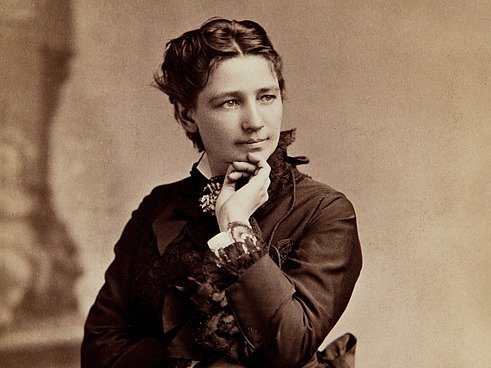
Born on September 23, 1838, Victoria Woodhull, although rather woodhullfamous or infamous in her day, does not jump readily to mind today. She wore many hats: newspaper publisher, stock broker, lobbyist, traveling clairvoyant, public speaker on women’s suffrage. She was also the first woman to run for president in the United States. That was in 1872 as the candidate of the Equal Rights Party. Noted abolitionist Frederick Douglass was selected as her running mate. However, he never acknowledged it, and campaigned for Republican Ulysses S. Grant.

She had a few things going against her. Women couldn’t vote, so she couldn’t even vote for herself. She was not old enough to serve as president. And just a few days before the election she was arrested on obscenity charges for publishing an account of an adulterous affair between the minister Henry Ward Beecher and Elizabeth Tilton.

She didn’t receive any electoral votes, and no one knew her popular vote total since her votes weren’t counted. One gentleman in Texas did publicly admit voting for her.

One of the world’s most popular entertainments is a deck of cards, which contains thirteen each of four suits, highlighted by kings, queens and jacks, who are possibly the queen’s younger, more attractive boyfriends.”
― Lemony Snicket

May 17, 1620: Round and Round She Goes

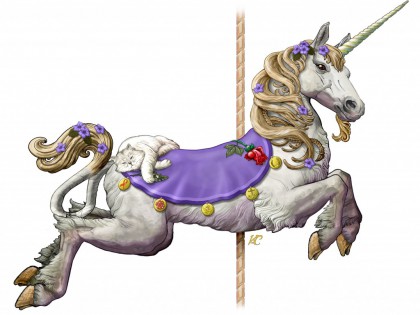
An English traveler happened upon an unusual contraption while passing through what is present-day Bulgaria on May 17, 1620. It was a circular device with seats attached to its perimeter. Children were tethered to the seats and the whole device turned round and round. The Englishman approached the device hoping to save these poor tykes. But as he drew near he heard their squealing and laughter. They were not being punished; they were being entertained. The Englishman’s account of this marvelous contraption is the earliest reference to what ultimately became known as the carousel — or merry go-round to those who disdain the French.

Carousels became popular throughout Europe a century later and in the United States a bit later. These carousels featured carved horses and other fanciful animals — zebras, lions, tigers, unicrons, dragons. At first they were powered by animals or people then eventually by steam engines and finally electricity. Gears and cranks gave the animals their familiar up and down motion.

Today the carousel is mostly favored by those too young or too timid to brave the more heart-pounding rides such as roller coaster, tilt-a-whirl, and loop-the-loop.

Carousels Not Heart-Pounding?

September 4, 1992: They’ll Never Replace Fart Jokes

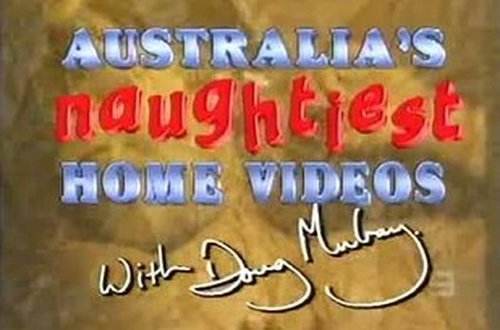
You’ve got this great idea. Take all those funny home videos people sent you that were too risqué for the TV program Funniest Home Videos and use them to create a brand new TV program called Naughtiest Home Videos. Better still call it Australia’s naughtiestNaughtiest Home Videos because that’s where the racy adult program aired on September 4, 1992.

How racy? Well, there were shots of various animals’ private parts, both animals and humans humorously having sex (which not only begs the question how do you have sex humorously but also blurs the line between human and animal), people losing their clothing in unusual ways, an elderly woman removing an envelope from a male stripper’s skivvies using her dentures, two men lifting a barbell without using their hands . . . well, one could continue listing these hilarious bits but one would be in danger of laughing so hard one would pee one’s pants.

“I’d like to sincerely say that if we’ve offended just one of you, we’ve failed,” said the show’s host returning from the first commercial break. “We were hoping for half a million offended viewers by now.”

It took an agonizing 34 minutes for the network owner, who was enjoying a quiet dinner out with friends, to hear about the program and call the studio to cancel the program or, in his words, “get that shit off the air.” Almost immediately, a network announcer said: “We apologize for this interruption. Unfortunately, a technical problem prevents us continuing our scheduled program for the moment ” and the show made history, being the shortest running television series ever.

The following morning was not a pleasant one for anyone who had had anything to do with airing the program. They were berated loudly and had their careers cut just as short as Australia’s Naughtiest Home Videos.

Rabbits Behaving Badly?

As far as we know, there were no racy bits featuring anthropomorphic rabbits scheduled for the unseen portion of Naughtiest Videos. A much tamer depiction of the same had it’s beginnings a century earlier in a letter written on September 4, 1893, peterrabthat included an illustrated story about a rabbit named Peter. The letter was written by Beatrix Potter to the five-year-old son of her former governess, Annie Moore. Moore suggested that the story be made into a book.

Potter further developed the storyline, added additional illustrations, and in 1901, self-published 250 copies of The Tale of Peter Rabbit. Today with 45 million copies sold it remains one of the most popular children’s books of all time.

You Are So Rare

Howie Morris, born September 4, 1919, ( died 2005) was best known for his portrayal of Ernest T. Bass on the Andy Griffith Show and numerous characters on Sid Caesar’s Your Show of Shows.


AUGUST 29, 1769: WICKED WITCH OF THE WHIST

In 1769 London, a gentleman died at the ripe old age of 97. Although little is known about the gentleman himself, his name has traveled down through the years and is more familiar to us today than to those who might have rubbed elbows with the man back in the eighteenth century. His name was Edmond Hoyle, and although he was a barrister by trade, he is now known for law only as it applies to games of chance. And he is much more recognized by his nickname ‘According to.”

     Hoyle laid down the law for the game of Whist in a widely circulated treatise on the subject. He also had a great deal to say about backgammon, quadrille, piquet, and chess. He was, we might surmise, one of those wet blankets who must rain on card-game parades (to jumble metaphors, about which Hoyle had nothing to say) with their whining “but the rules say” or “according to Hoyle.”

     But Whist was his long suit. This venerable game provides ample material on which to pontificate, and pontificate Hoyle did. A forerunner of Bridge, Whist is all about taking tricks. Who takes them, and when and how and why gives the game a wide variety of flavors from which to choose. There’s Knockout Whist, a game in which a player who wins no trick is eliminated, sent to stand in a corner; Solo Whist, a game where individuals can bid to win 5, 9 or 13 tricks or to lose every trick; Kleurenwiezen, an elaborate Belgian version of the game, filled with Gallic mischief; Minnesota Whist, played to win tricks or to lose tricks (talk about flexibility); Romanian Whist, a game in which players try to predict the exact number of tricks they will take; German Whist for two very aggressive players who take tricks from Poland without prior warning; Bid Whist in which players bid to determine trump and one player is a dummy who sits out the hand; and Danish Whist, in which the dummy brings pastries to the other players.  But England lays claim to most of the true Whist players. It is easy to imagine a group of eighteenth century British aristocrats at their club. “Shall we have a go at a spot of Whist?” “Capital idea.” “Jolly.” “According to Hoyle . . .”


AUGUST 25, 1913: WE HAVE MET THE ENEMY

Starting his career as an anonymous young storyboard artist for Walt Disney Productions on Donald Duck cartoons and other shorts, the cartoonist who would later be compared to everyone from Lewis Carroll and James Joyce to Aesop and Uncle Remus moved to the animation department in 1939. There, during the next five years he contributed to such Disney classics as Pinocchio (Gepetto in the whale), Fantasia (a drunk Bacchus riding a donkey), and Dumbo (the crow sequence).  Walt Kelly was doing pretty well at $100 a week.

During the 40s, Kelly devoted himself more and more to comic book art at Dell. The little possum with whom he is now most closely associated came on the scene in 1943 in Dell’s Animal Comics. Pogo would go on to star in 16 issues of his own comic book and 26 years as a syndicated newspaper comic strip.  Along with Pogo, there were  Albert the Alligator, Churchy LaFemme (a turtle), Howland Owl, Beauregard (Houndog), Porkypine, and Miz Mamzelle Hepzibah (a skunk).

Kelly’s liberal political and social views were rarely disguised as he used the strip to champion the powerless and the oppressed and to satirize political dogmas and figures such as Senator Joseph McCarthy (Simple J. Malarkey, a gun-toting bobcat), Vice President Spiro Agnew, and FBI Director J. Edgar Hoover. Many newspapers dropped Pogo, and others moved it to the editorial page. Walt and Pogo were probably most remembered for their campaign on behalf of the environment and the battle cry: “We have met the enemy, and he is us.”

Walt Kelly died in 1973.

kelly

AUGUST 15, 1935: WILL POWER

Cowboy, vaudeville performer, humorist, social commentator and motion picture actor, Will Rogers was one of the world’s best-known celebrities in the 1920s and 1930s and adored by the Will-Rogers-StampAmerican people. Known as “Oklahoma’s Favorite Son,” Rogers was born in 1879 to a prominent Cherokee Nation family in Indian Territory (now part of Oklahoma). During his amazing career, he traveled around the world three times, wrote more than 4,000 nationally-syndicated newspaper columns, and starred in 71 movies (a majority of them silent ) and several Broadway productions. He was the top-paid Hollywood movie star at the time, and in 1934, was voted the most popular male actor in Hollywood.

     As a radio broadcaster and political commentator, he was the leading political wit of the Progressive Era.  He called politics “the best show in the world” and described Congress as the “national joke factory.”

     Rogers died on August 15, 1935, with aviator Wiley Post, when their small airplane crashed in Alaska.

Never miss a good chance to shut up.


wr


There are three kinds of men. The one that learns by reading. The few who learn by observation. The rest of them have to pee on the electric fence for themselves.


We can’t all be heroes because somebody has to sit on the curb and clap as they go by.


When I die, I want to die like my grandfather who died peacefully in his sleep. Not screaming like all the passengers in his car.


Will-Rogers-Quotes-1


Ten men in our country could buy the whole world and ten million can’t buy enough to eat.


The best way to make a fire with two sticks is to make sure one of them is a match.

JULY 26, 1921: EXCELSIOR, YOU FATHEADS

To many of those who have even heard of Jean Shepherd, he is the voice of the grown-up Ralphie Parker whose childhood struggle to score an Official Red Ryder 200-Shot Range Model Air Rifle for Christmas is the subject of the holiday classic A Christmas Story. The film is based on Shepherd’s stories about growing up in Indiana.

Born July 26, 1921, Shepherd was an American raconteur, radio and TV personality, writer and actor. After several radio gigs, he settled in at WOR radio New York City in 1956 with an overnight slot on which he delighted fans by telling stories, reading poetry, and organizing listener stunts. The most famous of his stunts was the creation of a book, I, Libertine, by an 18th century author. Shepherd suggested that his listeners visit bookstores and ask for a copy of it, which led to booksellers attempting to purchase the book from their distributors.  Fans of the show also planted references to the book and author so widely that demand for the book led to its being listed on The New York Times Best Seller list even though it hadn’t been written.  Shepherd’s radio stories found their way into magazines and were later collected in the books In God We Trust, All Others Pay Cash; Wanda Hickey’s Night of Golden Memories and Other Disasters; The Ferrari in the Bedroom; and A Fistful of Fig Newtons.


“What the hell time is it?” muttered the old man. He was always an aggressive sleeper. Sleep was one of the things he did best, and he loved it. Some look upon sleep as an unfortunate necessary interruption of life; but there are others who hold that sleep is life, or at least one of the more fulfilling aspects of it, like eating or sex. Any time my old man’s sleep was interrupted, he became truly dangerous.”Wanda Hickey’s Night of Golden Memories: And Other Disasters


From A Christmas Story:

I had woven a tapestry of obscenity that as far as I know is still hanging in space over Lake Michigan.

Only I didn’t say “Fudge.” I said THE word, the big one, the queen-mother of dirty words, the “F-dash-dash-dash” word!

Now, I had heard that word at least ten times a day from my old man. He worked in profanity the way other artists might work in oils or clay. It was his true medium; a master.

And of course:  You’ll shoot your eye out, kid.


July 26, 1895: Say Goodnight

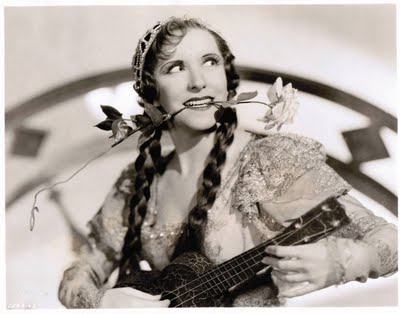
With husband George Burns, Gracie Allen (born on July 26, 1895) made comedy history – in vaudeville, the movies, on radio and television.

The Burns and Allen comedy act began with Allen as the straight man, feeding  lines to Burns who delivered the punchlines. George explained later that he noticed Gracie’s straight lines were getting more laughs than his punchlines, so he reversed their roles. Audiences immediately fell in love with Gracie’s character, a clever combination of ditziness and total innocence.

George attributed their success to Gracie, even though he was a brilliant straight man: “All I had to  do was say, ‘Gracie, how’s your brother?’ and she talked for 38 years.  And sometimes I didn’t even have to remember to say ‘Gracie, how’s your brother?'”


I read a book twice as fast as anybody else. First, I read the beginning, and then I read the ending, and then I start in the middle and read toward whatever end I like best.


“Gracie, those are beautiful flowers. Where did they come from?”
“Don’t you remember, George? You said that if I went to visit Clara Bagley in the hospital I should be sure to take her flowers. So, when she wasn’t looking, I did.”


Presidents are made, not born. That’s a good thing to remember. It’s silly to think that Presidents are born, because very few people are 35 years old at birth, and those who are won’t admit it.


A word of warning: The F-dash-dash-dash word appears on page 3 of Terry and the Pirate.  You could cross it out if you wanted, if you owned your own copy.