January 23, 1919: Nothing in Moderation

He got his first job in television by showing up for an audition wearing apercydovetonsils barrel and shorts. From there his career took off during a ten-year period that carried him from obscurity to stardom, the ride getting steadily wilder and crazier. Although someone else held the title Mr. Television, Ernie Kovacs, born on January 23, 1919, certainly left his imprint on the medium, influencing such shows to come as Saturday Night Live, Sesame Street, Laugh-In, Captain Kangaroo, and the Today Show.

Often referred to as television’s surrealist, the cigar-smoking, poker-playing Hungarian-American comedian could be counted on for the unusual if not the bizarre in any of his many television outings.

One of his first shows, Three to Get Ready, was the first regularly scheduled early morning (7 a.m.) show in a major market, proving that people would watch TV at this unlikely hour. Although the program was billed as news and weather, Kovacs presented it in his own style. If rain was in the weather forecast, Kovacs would get on a ladder and pour water down on the person reading the report. He auditioned goats for a local theater performance, visited a downtown Philadelphia restaurant in a gorilla suit, wrestled a jaguar, and discovered a man who had come through the earth from China to emerge from a construction pit. The program ran for two years before being preempted by a network early morning offering, The Today Show.

Other shows included It’s Time for Ernie, his first network series; Ernie in Kovacsland, a summer replacement for Kukla, Fran and Ollie; and The Ernie Kovacs Show, featuring characters such as poet Percy Dovetonsils, bumbling magician Matzoh Heppelwhite, Frenchman Pierre Ragout, and the Nairobi Trio. He also hosted the Tonight Show twice a week and had a short stint as a celebrity panelist on What’s My Line?, where he strove more for humor than insight. (When Henry J. Kaiser, the founder of the automobile company, was the program’s mystery guest, and the panel had established that the mystery guest’s name was synonymous with an automobile brand, Kovacs asked, “Are you – and this is just a wild guess – but are you Abraham Lincoln?”

A movie career followed his move to California in 1957 with character roles in such films as Operation Mad Ball; Bell, Book and Candle; Wake Me When It’s Over; Sail a Crooked Ship; and Our Man in Havana.

Kovacs was at the peak of his career when he was killed in a late-night automobile accident on his way home from one of the many parties that had become part of his life in California. The inscription on his tombstone reads “Ernie Kovacs 1919 – 1962 — Nothing In Moderation.”


Ale, Ale, the Taster’s Here

It is noted in a dusty record book in the bowels of Oxford University that on January 23, 1617, a certain John Shurle was appointed to the position of ale taster for the university. Now we have your attention. Where can I get myself such an appointment, you’re thinking. Back in the 1600s in England you could easily have got yourself such an appointment; there were many ale-tasting positions throughout the country. Today not so easy; there are only four ale tasters in all of England.

The position of ale taster (also referred to variously as ale conner, ale kenner or ale founder) has been around for a good 700 years. The incumbent of the office was required to visit breweries on the days of their brewing to examine beer and ale (and bread as well) to make certain they were good and wholesome and fairly priced. Each brewery was to pay for this service with a gallon of strong ale and two gallons of beer.

You would have thought this would be a position folks fought for, but in reality it wasn’t that popular. The taste was not uniformly pleasant; bad batches were frequent. The ale taster was often required to fine brewers for irregularities and was therefore not the most popular person around.

And some ale tasters didn’t actually taste the stuff. They tested it by sitting in a puddle of it and judging its quality by how sticky it was when they stood up.
January 21, 1903: Give My Regards to Toto

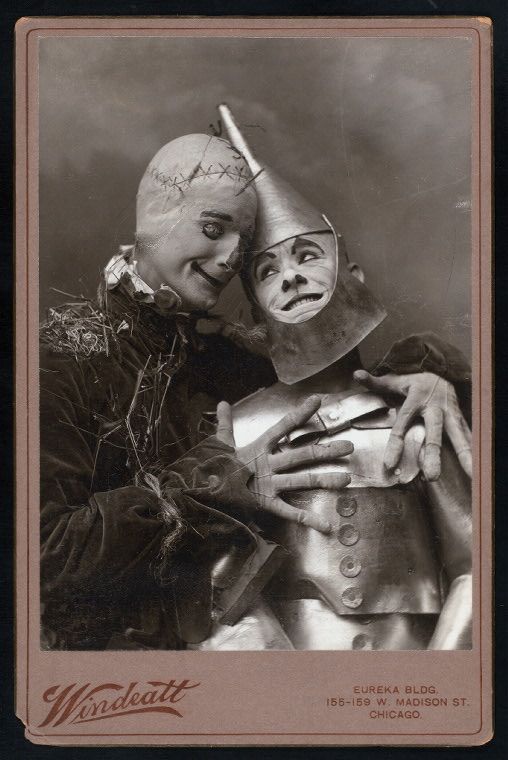
A little girl lives in the middle of the great Kansas prairies with her aunt, wizard_of_oz_1902uncle and a little dog. One day, while she is playing with her pet, she is interrupted by a fierce whirlwind. The little girl and the dog take shelter in the farmhouse, which is whisked away into the stratosphere, plopping down in a strange, alien land.

The plot of the Wizard of Oz, written by L. Frank Baum in 1900 is easily recognized. Many children read the Wizard or one of the many Oz books. And is there anyone on the planet who has not seen the 1939 movie version?

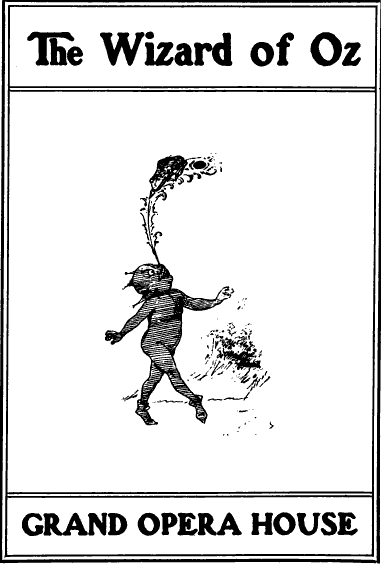
The first outing, other than in print, for the Wizard of Oz came just a few years after publication of the book. A musical extravaganza for the stage opened on Broadway on January 21, 1903, and ran for 293 performances, closing at the end of 1904. It starred pretty much forgotten performers: Anna Laughlin as Dorothy, Fred Stone as the Scarecrow and David Montgomery as the Tin Man. The Cowardly Lion was reduced to a bit part, and the Wicked Witch was completely eliminated. (Fans of the current hit musical Wicked might dispute the logic of that move.) Toto was replaced by Dorothy’s pet cow, Imogene (probably because it created work for two actors instead of one little dog). New characters included King Pastoria II and his girlfriend, Trixie Tryfle, a waitress; Cynthia Cynch, a lunatic; Sir Dashemoff Daily, the Oz poet laureate; Sir Wiley Gyle; and General Riskitt.

The main plot of the musical is King Pastoria’s attempts to wrest the throne from the Wizard of Oz. Dorothy and her fellow protagonists become fugitives searching for the Wizard. The music is pretty much forgotten as well. Such tunes as “Just a Simple Girl from the Prairie” and “Budweiser’s a Friend of Mine” haven’t found their way into medleys with “Somewhere Over the Rainbow.”

Ready When You Are, Cecil

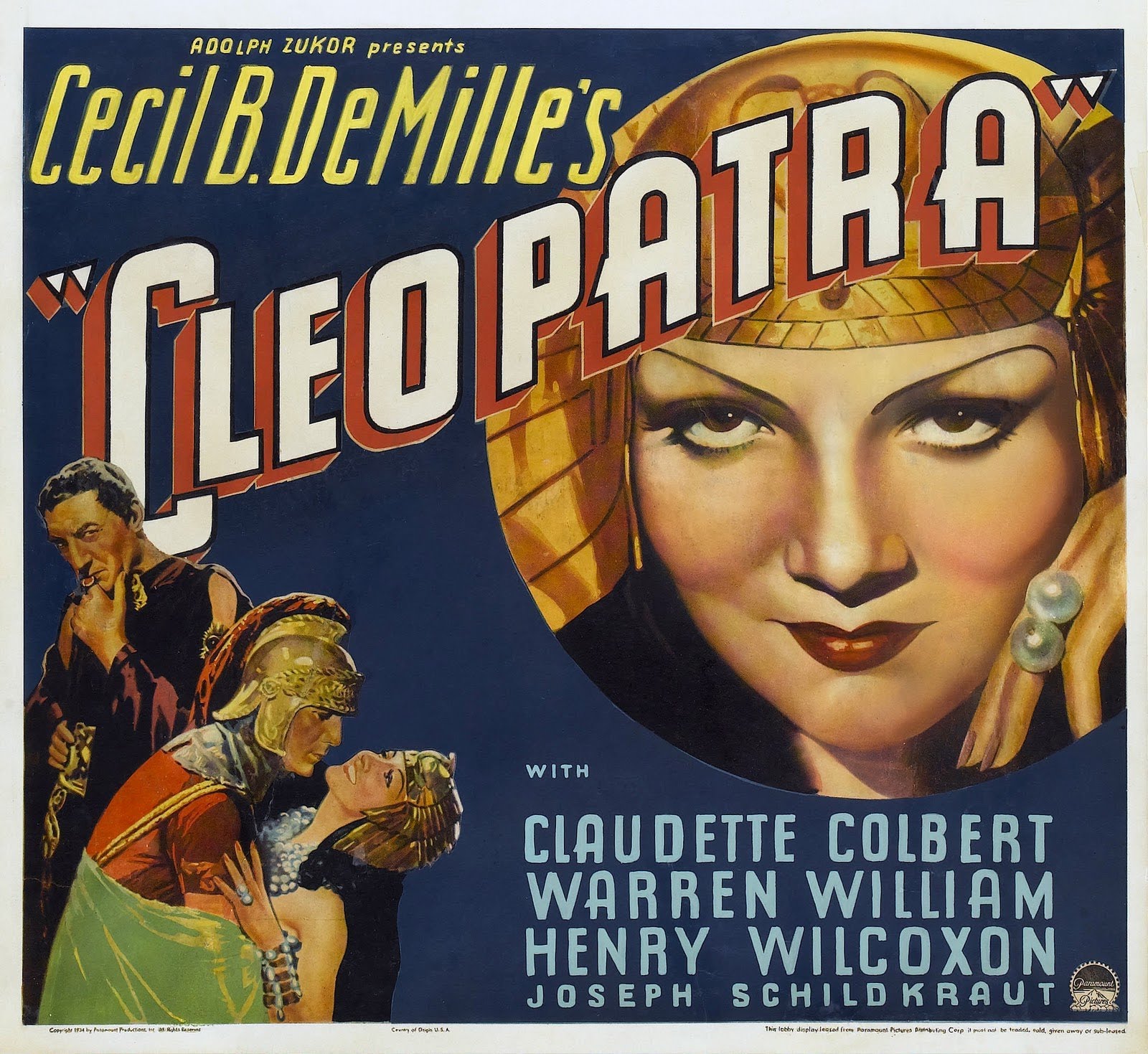
Cecil Blount DeMille (it’s easy to see why he was known as C.B.) died on January 21, 1959.  As a film director, he was most widely known for his Biblical epics “with a cast of thousands.”

What About Bob?

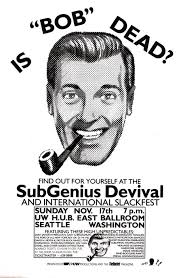
J. R. “Bob” Dobbs (not of who killed J.R.? fame) did not make as big a splash in the religious world.  Founder of the Church of the SubGenius, he died in 1984 at the hands of an assassin.  (Okay, somebody probably asked who killed J.R.?)  Dobbs early career was that of a salesman until on one fateful day in 1953, he saw a vision of God on a television set, inspiring him to found the religion whose motto was “Eternal Salvation — or triple your money back.”  Although he died in 1984, he has come back from the dead a number of times, according to his church.


MAY 7, 1885: COMIN’ THROUGH THE TV, SHOOTIN’ UP THE LAND

An essential player in Hollywood westerns was the leadinggabby man’s sidekick, and many sidekicks became just as famous as their starring partners: Andy Devine was Jingles to Wild Bill Hickock, Pat Buttram and Smiley Burnette were both sidekicks to Gene Autry, Jay Silverheels was Tonto to the Lone Ranger, Leo Carillo was Pancho to the Cisco Kid. The top sidekick was, of course, Gabby Hayes, born May 7, 1885. Through the 1930s and 1940s, he was sidekick to Hopalong Cassidy in 18 films and to Roy Rogers in 41.

The third of seven children, George Francis Hayes was born in an upstate New York hotel owned by his father. As a young man, he worked in a circus and played semi-pro baseball while a teenager. He ran away from home at 17, and joined a touring stock company. He married Olive Ireland in 1914 and the duo enjoyed a successful vaudeville career. Although he had retired in his 40s, he lost money in the 1929 stock market crash, and he felt the need to work again.  He and his wife moved to California, and he began his movie career, taking various roles until finally settling into a Western career.

Hayes first gained fame as Hopalong Cassidy’s sidekick Windy Halliday in many films between 1936-39. He left the Cassidy films in a salary dispute and was legally prevented from using the name “Windy.”   So “Gabby” Hayes was born.  He gained fame as a sidekick to stars such as John Wayne, Randolph Scott, and, of course, Roy Rogers – beginning with Southward Ho in 1939 and ending with Heldorado in 1946.

Offstage Hayes was the complete opposite of his screen persona – an elegant bon vivant, man-about-town and connoisseur.  He died in 1969.  On the subject of his movies: “I hate ’em. Really can’t stand ’em. They always are the same. You have so few plots – the stagecoach holdup, the rustlers, the mortgage gag, the mine setting and the retired gunslinger.”

“You’re a good-looking boy: you’ve big, broad shoulders. But he’s a man. And it takes more than big, broad shoulders to make a man.” — High Noon

“There are only two things that are better than a gun: a Swiss watch and a woman from anywhere. Ever had a good… Swiss watch?” — Red River

“A gun is a tool, Marian; no better or no worse than any other tool: an ax, a shovel or anything. A gun is as good or as bad as the man using it. Remember that.” –Shane

“You don’t look like the noble defender of poor defenseless widows. But then again, I don’t look like a poor defenseless widow.” –Once Upon a Time in the West

MAY 2, 1843: THE TOWN THAT CRIED WOLF

     Chances are you’ve never heard of Champoeg — unless maybe you’re from Oregon which is where it is, or was. Champoeg had the historical significance of being the first American government on the West Coast, having been established by representatives of Willamette Valley settlers on May 2, 1843, by a vote of 52-50. These representatives had held a series of meetings starting back in February to entertain measures to deal with the threat of wolves. During these so-called “Wolf Meetings,” the conferees established a series of civil codes (although its doubtful the wolves paid much attention to them).

     When the Oregon Territory was created in 1848, Champoeg was cold-shouldered as upstart Oregon City became its capital. This despite the fact that Champoeg had become rather a bustling little metropolis with a steamboat landing, a ferry across the Willamette River, a stagecoach office, a granary and a warehouse. Ten streets ran north to south, crossed by six east-west thoroughfares.

     Champoeg chugged along through the years as Oregon grew and gained statehood. Then in 1861, the Willamette River reared its ugly head, rising 55 feet above its normal stage, flooding the town and destroying every structure in it with the exception of two saloons (there’s a lesson here somewhere). Champoeg was never rebuilt after the flood; all that remains is a small monument describing its place in history and a stake marking a street corner (probably the one where a saloon stood).

“Well!”

     Although he was first heard on radio as a guest of Ed Sullivan, Jack Benny debuted his own radio show for NBC on May 2, 1932. After six months he moved to CBS and then in 1933 back to NBC. Although he continued to jump back and forth on networks, his radio program lasted until 1955, some five years after his television program appeared.

     Benny was a fixture on radio and TV for three decades, and is still considered one of the best. He was a master of comic timing, creating laughter with pregnant pauses or a single expression, such as his signature “Well!

     Appearing with him over the years were Eddie “Rochester” Anderson, Don Wilson, Dennis Day, Mary Livingston, Phil Harris, Mel Blanc and Sheldon Leonard. Leonard helped Benny produce what was said to be the longest laugh in radio history. Leonard as a holdup man approached Benny and demanded “your money or your life.” Benny remained silent. Finally, Leonard said “Well!?” and Benny answered “I’m thinking it over!”

APRIL 16, 1850: CALL ME MADAME

Madame (Marie) Tussaud is arguably the world’s most famous wax sculptor. Born in France in 1761, she began her artistic career during the French Revolution, searching through corpses to find the heads of noted guillotine victims from which she made death masks. She herself was imprisoned for three months awaiting execution, but an influential friend intervened and she was released. She and her waxwork friends toured throughout Europe for 33 years before settling into a permanent exhibition in 1835 on Baker Street in London. There she gained prosperity and fame, managing her wax museum until her death on April 16, 1850.
Throughout Madame Tussaud’s long existence, its most popular feature has been the Chamber of Horrors (as pictured here).

And It Would Help with Social Distancing

Inventor Walter Pichler is the genius behind the amazing TV helmet of 1967. This device allows a user to leave the outside world and slip into his or her own little world of information and entertainment. The user simply inserts his or her head into a capsule that resembles a small submarine and hopes that he or she doesn’t bump into something while enjoying the “virtual world” of Gilligan’s Island.

Pearl Among . . .

minnie

“How-w-w-Dee-e-e-e! I’m jes’ so proud to be here!” “Here” might have been the National Comedy Hall of Fame into which, on April 16, 1994, Minnie Pearl became the first woman inducted. But more often it was on the stage of the Grand Ole Opry in Nashville, Tennessee, where Minnie held sway as the resident Southern hillbilly for over 50 years.

Her comedy was a good-natured satire of rural Southern culture. She appeared in her trademark hat, purchased at the Surasky Bros. Department Store in Aiken, South Carolina, for $1.98 before her first stage performance in 1939, along with styleless “down home” dresses.  Her self-deprecating humor was usually about her unsuccessful attempts to get “a feller” and her ne’er-do-well relatives. She also sang novelty songs and danced with Grandpa Jones. From the opening How-w-w Dee-e-e-e to her closing “I love you so much it hurts!”, she had the Opry audience in the palm of her hand.

The Little Tramp

Sir Charles Spencer Chaplin, known to millions of film buffs as “Charlie,” was born April 16, 1889.  His working life in entertainment began as a child performer in British music halls and spanned 75 years until his death in 1977 at the age of 88.   In the United States, he became one of the most important creative personalities of the silent-film era — acting in, directing, scripting, producing and composing the music for his own films.


APRIL 10, 1953: COMIN’ AT YA

The poobahs at Hollywood’s major film studios watched with amazement and envy as the independently produced 3-D movie Bwana Devil wowed audiences in late 1952.  Columbia Pictures quickly threw together a black- and-white thriller that for an hour hurled practically every prop on the set at the beleaguered audience. It was just as quickly forgotten.  Then on April 10, 1953, Warner Brothers released its entry — in color and stereophonic sound — House of Wax, a horror film starring Vincent Price as a sculptor who kills folks, covers them with wax, dresses them up as famous historical figures, and displays them in his wax museum. Audiences loved it, making it one of the biggest hits of the year. Even critics gave it a go. And although it took a while, the Library of Congress selected it in 2014 for inclusion in the National Film Registry, deeming it “culturally, historically, or aesthetically significant.”

The film revived Vincent Price’s career, positioning him as the go-to guy when you needed a mad scientist or fiendish psychopath.  Although House of Wax had a couple of classic 3-D effects (the pitchman with a paddleball and a character who seemingly stands up in the audience and runs into the screen), it was not loaded down with them. This might have been because the director was blind in one eye and couldn’t understand what all the fuss was about.

And What Do We Suppose Jumbo the Elephant Really Was

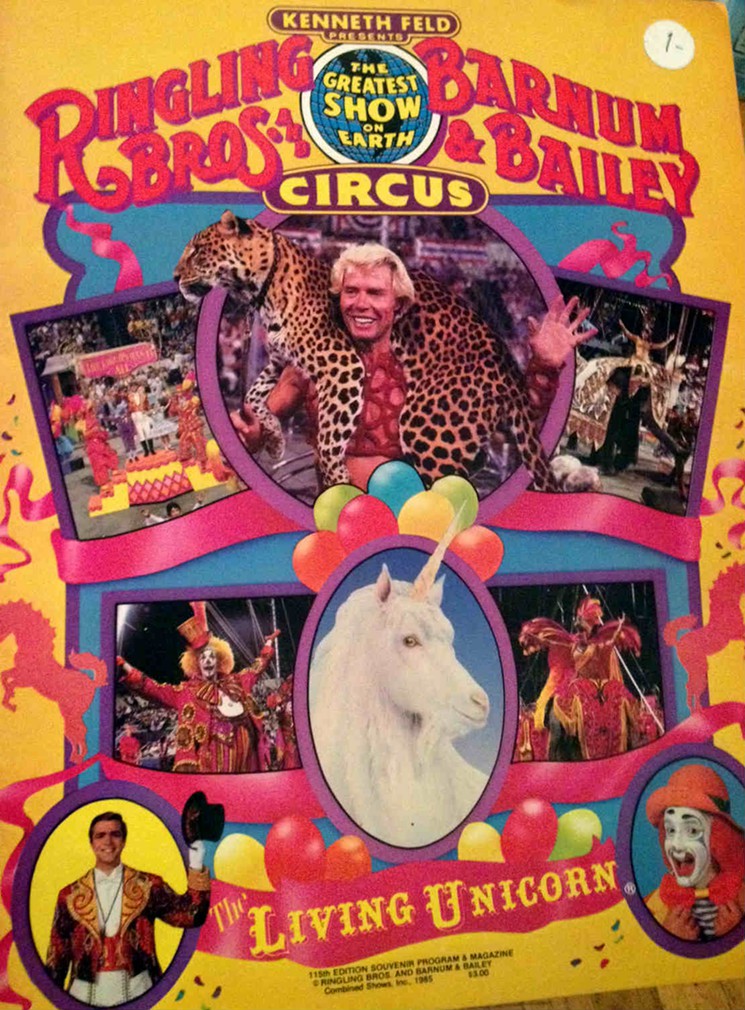
On this day in 1985, Lancelot the Unicorn who had been touring with the Ringling Brothers and Barnum and Bailey Circus — famous for outlandish attractions — was exposed as a fraud.  Audiences were appalled to learn that Lancelot wasn’t a real unicorn at all, just a goat with a horn surgically attached to its forehead.

IF IT HAD ONLY BEEN A NACHO

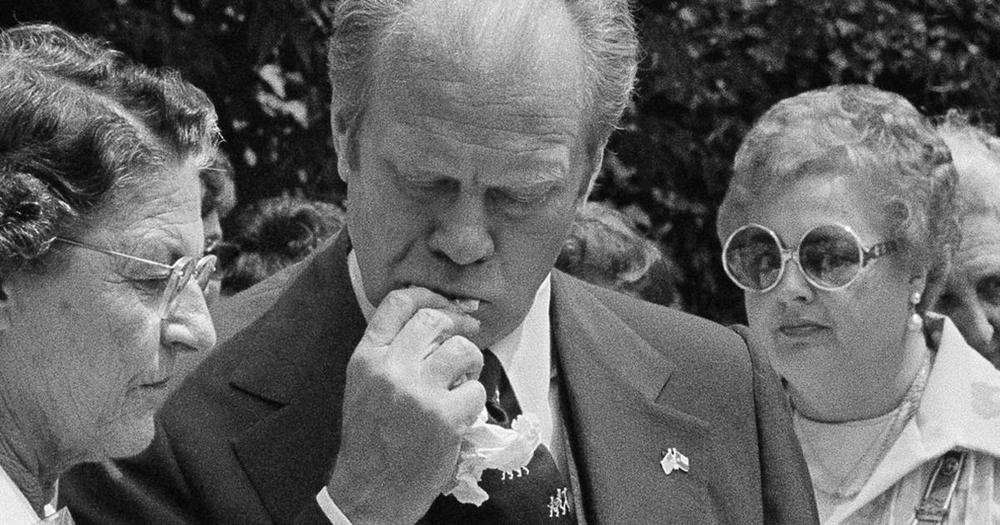
It would seem that in modern politics every president has been forced to deal with a scandal, big or small –vicuna coat, Watergate, Iran Contra, Stormy Daniels. Gerald Ford’s scandal would probably be trivial in comparison to most. But it may have cost him re-election. It was April 10, 1976, in San Antonio, Texas, at the Alamo, where a tiny faux pas morphed into the Great Tamale Incident as the President attempted to eat a tamale without removing the corn husk, playing into his reputation as a bit of a bumbler.

MARCH 24, 1990: Bob & Ray & Bud & Lou

After a lifelong career on radio with partner Bob Elliott, beginning in 1946 at WHDH in Boston and ending in 1987 on National Pubic Radio, Ray Goulding died on March 24, 1990.

Bob and Ray created and gave voice to such offbeat characters as domestic advisor Mary Margaret McGoon; adenoidal reporter Wally Ballou, Matt Neffer, boy spot-welder; and cowboy singer Tex Blaisdell who did radio rope tricks. The duo also parodied radio and television with spoofs that often outlasted the programs they were based on —  Mr. Trace, Keener Than Most Persons; Jack Headstrong, The All-American American; and the soap operas One Fella’s Family and Mary Backstage, Noble Wife.  They  successfully adapted their comedy to other media, including stage and television.

One enduring routine features Goulding as a rather dense reporter interviewing Elliott as an expert on the Komodo dragon.

The comedy duo of Bud Abbott and Lou Costello made their first radio outing on the the Kate Smith Hour in February 1938 and became regular performers for two years. They first performed their classic “Who’s on First?” the following month on March 24.

abbott-costelloThe former vaudevillians quickly became major stars in radio, followed by movies and television. They left the Kate Smith show to star in their own radio program, as well as a Broadway revue, The Streets of Paris, and their first film, One Night in the Tropics, in which, although cast in supporting roles, they stole the show with several classic comedy routines and cemented their film careers.

buck-privatesUniversal Pictures signed them to a long-term contract. Their second film, Buck Privates, made them box-office stars and in the process saved Universal from bankruptcy. In most of their films, the plot was not much more than a framework that allowed them to reintroduce comedy routines they had first performed on stage. Universal also added glitzy production numbers to capitalize on the popularity of musical films, featuring such performers as the Andrews Sisters, Ella Fitzgerald, Martha Raye, Dick Powell and Ted Lewis and his Orchestra. The Andrews Sisters hits “Boogie Woogie Bugle Boy” and “I’ll Be With You In Apple Blossom Time” were both introduced in Buck Privates.

During the following years, Abbott and Costello “met” many other movie legends – Frankenstein, Dracula, the Wolf Man, the Invisible Man, Captain Kidd, Dr. Jekyll and Mr. Hyde, the Mummy, the Killer (Boris Karloff).  And they traveled throughout the world (and beyond): in a Harem, in the Foreign Legion, Lost in Alaska, Mexican Hayride, Mars, and Africa Screams, which featured both Clyde Beatty and Frank Buck as themselves. They made a total of 36 films.

On television, they frequently hosted the Colgate Comedy Hour and had their own syndicated television program.

In the 1950s Abbott and Costello’s popularity waned, their place atop the comedy heap taken by Dean Martin and Jerry Lewis. Another reason for the decline was overexposure. They were reluctant to introduce new material, and their familiar routines were glutting the movie and television markets, with two films a year, re-releases of most of their older films; their filmed television series and live TV appearances.

They dissolved their partnership in 1957, with Lou making sporadic appearances until his death in 1959.  Bud died in 1974.

December 31, 1920: Don’t Go Near the Indians

New Year’s Eve, aka the seventh day of Christmas, is the day we shuck off this year with a lot of over the top partying, letting mirth run rampant before we face the sobering of the coming year. Two of the more noble New Year’s Eve traditions are Drinking and the making of Resolutions. The former is often accomplished with Wassail, a bowl of spiced ale around which folks gather and drink to each other’s health until someone gets sick.  The latter is the solemn promise we make to the empty Wassail bowl never to drink again. Mark Twain on resolutions: “Next week you can begin paving hell with them as usual. Yesterday, everybody smoked his last cigar, took his last drink, and swore his last oath. Today, we are a pious and exemplary community. Thirty days from now, we shall have cast our reformation to the winds and gone to cutting our ancient short comings considerably shorter than ever. We shall also reflect pleasantly upon how we did the same old thing last year about this time.” ~Mark Twain

A proper resolution might go something like this: I hereby resolve to read Wretched Richard’s Almanac every day so that I might be well informed, sophisticated and attractive. And I will recommend it to all my friends so they too might be well informed, sophisticated and attractive.

The seventh ghost of Christmas enjoyed his wassail while regaling Scrooge with the painful memory of his Junior Prom when the girl of his dreams broke their date because her grandmother died, she had a hangnail or she was grounded for misbehaving with the captain of the football team — take your pick.  True Love celebrated in his or her predictable fashion with a gifts of the avian persuasion, to be specific seven swans a-swimming.  That’s a bird count of 28 thus far.  No, make the 27; one of the calling birds made the mistake of calling the cat.

About Those Indians

It was 1949 and executives at Republic Pictures had a brainstorm – let’s take that nice clean-cut guy hanging around the studio and make him a cowboy – maybe even a singing cowboy – he’ll be a God-fearing American hero of the Wild West, wearing a white Stetson hat; he’ll love his faithful horse (platonic, of course); and maybe he could have a loyal sidekick who shares his adventures. We’ll call him the Arizona Cowboy (Arizona isn’t already taken, is it?) And so Rex Allen, born December 31, 1920, came to a silver screen near you,  joining such singing cowboys as Roy Rogers and Gene Autry. His horse was Koko, and his comic relief sidekick was Buddy Ebsen (later Slim Pickens). He rode out of the West just as the West was losing interest for moviegoers. He did get a quick 19 movies in the can (and a comic book) before the genre played out. And in 1954, he starred in Hollywood’s last singing western. Then, like other cowboy stars, he rode into the sunset and onto TV in a series called Frontier Doctor. Allen had written and recorded a number of the songs featured in his movies. He continued recording, and in 1961, had a hot country single with a song called “Don’t Go Near The Indians,” featuring the Merry Melody Singers. The song told the story of a young man who disobeys his father’s titular advice and develops a relationship (platonic, of course) with a beautiful Indian maiden named Nova Lee. The father reveals a deep dark secret out of the past: his biological son was killed by an Indian during one of those skirmishes between the white man and a nearby tribe. In retaliation, he kidnapped an Indian baby and raised him as his son who grew up to be you-know-who. And there’s another jaw-dropping secret: Nova Lee is the boy’s biological sister! (But poppa, it’s purely platonic; our kids won’t be imbeciles.) They don’t write them like that anymore. Rex Allen turned in his spurs in 1999 at the age of 79.  

December 26, 1921: Hi Ho, Stevarino

But first, hi ho second day of Christmas, because that is today to those who prolong the season through Christmastide.  For True Love, it is the opportunity to give two birds, turtle doves to be precise.  And just as practical as that partridge.

Meanwhile Scrooge is visited by the second ghost of Christmas who conducts a review of the many less than loving names his mother called soon-to-be-born Ebeneezer while in labor.

Hi Ho, Stevarino

Although Steve Allen, born December 26, 1921, was a musician, composer, actor, comedian, and writer, he is best known for his career in television. He first gained national attention as a guest host on Arthur Godfrey’s Talent Scouts and then became the first host of The Tonight Show, initiating the format that television talk shows would follow from then on.

Moving from late night to prime time television, he hosted numerous game and variety shows, most notably The Steve Allen Show, going head to head with Ed Sullivan and Maverick on Sunday evenings. It was there he developed the man on the street interviews which featured Don Knotts, Tom Poston and Louis Nye among others.

Allen was a comedy writer and author of more than 50 books, both fiction and nonfiction, including Dumbth, a commentary on the American educational system, and Steve Allen on the Bible, Religion, and Morality.

Allen was also a pianist and a prolific composer, writing over 14,000 songs, some of which were recorded by Perry Como, Margaret Whiting, Steve Lawrence, Eydie Gorme, Les Brown, and Oscar Peterson. He won a Grammy in 1963 for best jazz composition, with his song The Gravy Waltz. He also wrote lyrics for the standards “Picnic” and “South Rampart Street Parade.” He once won a bet with Frankie Laine that he could write 50 songs a day for a week. His output of songs has never been equaled.

He died in 2000.

December 25: Tis the Season

Today is of course Christmas Day in much of the world.  To some folks who pack a lot into their ’tis the season, it is the beginning of Christmastide or Twelvetide, the first of a dozen days of Christmas.  This is infamously celebrated by the carol in which on this day, the first day of Christmas, someone’s True Love bestows upon him or her a gift of a partridge in a pear tree.  While we might point out that a crock pot or a circular saw would be a bit more practical, we won’t quibble with the sentiment.

It would also seem that Charles Dickens missed the boat.  Imagine the twelve ghosts of Christmas:  The first ghost of Christmas shows Ebenezer Scrooge how happy his parents were before he was born.  Stay tuned, Ebenezer; there’s more to come.

Over There

Just after midnight on December 25, 1914, British, French and Russian troops at European battle fronts were stunned as German joyeauxtroops ceased firing and began to sing Christmas carols — in some cases, even backed up by oompah bands.

World War I had begun five months earlier and would continue for another devastating four years. This spontaneous Christmas truce continued through the night and into daylight when many of the German soldiers emerged from their trenches and called out “Merry Christmas” in their enemies’ native tongues. Finally, Allied soldiers, seeing that the Germans were unarmed, climbed out of their trenches as well. Men from both sides ventured through the so-called No Man’s Land to shake hands with the enemy. The men exchanged small presents and sang carols and songs. In one case, soldiers played an international soccer game.

It was, of course, short-lived as both sides went back to their business of killing each other.  (This true story is told in the 2005 French film Joyeux Noel.)

On Christmas Day in 1941 Bing Crosby introduced a new Christmas song on his weekly NBC radio program. The song, written by composer and lyricist Irving Berlin, went on to become the gold standard of Christmas music — the top-selling Christmas single ever and the top-selling single of any kind for another 55 years.

The success of “White Christmas” came as no surprise to Berlin, who was already a musical legend. He modestly called it “the best song I ever wrote . . . the best song anybody ever wrote.” And written by a man who did not celebrate Christmas.