November 26, 1865: O Frabjous Day

On a summer afternoon boat trip in the early 1860s the Reverend Charles Lutwidge Dodgson told the three Liddell sisters – Lorina, Alice and Edith – a story that featured a bored little girl named Alice who goes looking for an adventure. The girls loved the story, and ten-year-old Alice asked Dodgson to write it down for her. In November of 1864, Dodgson gave Alice the handwritten manuscript of the story called Alice’s Adventures Under Ground, with his own illustrations, dedicated as “A Christmas Gift to a Dear Child in Memory of a Summer’s Day”.

A year later on November 26, 1865, he gave the book to the world with a new title, Alice’s Adventures in Wonderland, published under the pseudonym Lewis Carroll.  The book in which Alice falls down a rabbit hole into a world filled with outlandish anthropomorphic characters was not a big success at the time; it has since become a giant of “children’s” literature and Lewis Carroll’s language and logic have become fixtures in modern culture and literature.

Alice as depicted by Rev. Dodgson

“I can’t explain myself, I’m afraid, sir,” said Alice, “because I’m not myself, you see.”

From the original by Tenniel
From the original by John Tenniel

“Begin at the beginning,” the King said, very gravely, “and go on till you come to the end: then stop.”

Alice by Arthur Rackham

“Would you tell me, please, which way I ought to go from here?”
“That depends a good deal on where you want to get to,” said the Cat.
“I don’t much care where –” said Alice.
“Then it doesn’t matter which way you go.”

alice charles pears
Alice by Charles Pears

They drew all manner of things — everything that begins with an M . . . such as mousetraps, and the moon, and memory, and muchness — you know you say things are much of a muchness.

Alice by Charles Robinson

The hurrier I go, the behinder I get.

Alice by George Soper

The rule is, jam tomorrow and jam yesterday-but never jam today

Alice by Harry Rountree
alice disney
By Disney Studios

Speak roughly to your little boy
and beat him when he sneezes!
he only does it to annoy,
because he knows it teases!

By Mervyn Peake
By Mervyn Peake


November 11, 1817: If You Believe This You’ll Swallow Anything

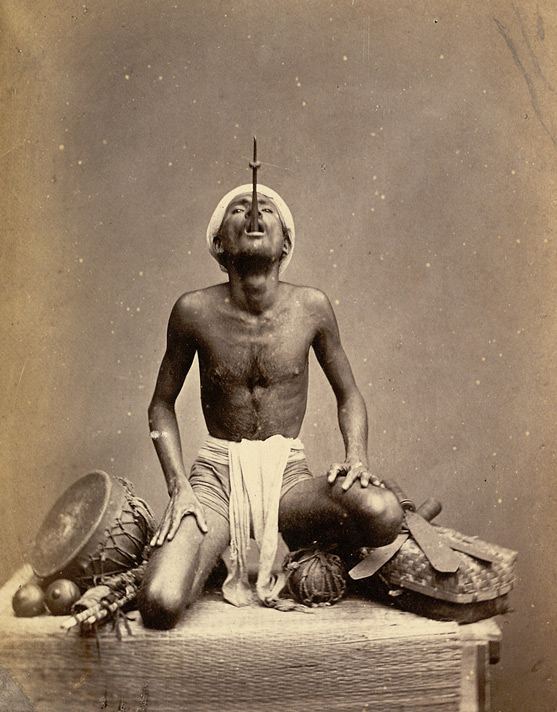
When New Yorkers paid their $1 admission price to enter St. John’s Hall swordon November 11, 1817, they were prepared to be amazed. And amazed they were, by an Indian juggler Ramo Sammee (also known as Senna Samma or Samaa because to Americans all Indian names sound alike).

What New Yorkers witnessed that day was not just another juggling act; no, Ramo stupefied the spectators by swallowing a sword. Now Indian street performers had been swallowing swords for centuries — along with climbing ropes into mid-air and staring down cobras –but this was a first for this continent. Sword swallowing in this country presented its own kind of danger as demonstrated later that month by the announcement that Ramo would be swallowing a new sword of American manufacture as “a substitute for the one lately stolen from him by some villain.”

Ramo continued to swallow that sword and others, gaining a certain fame, until his death in 1850. Live by the sword . . .

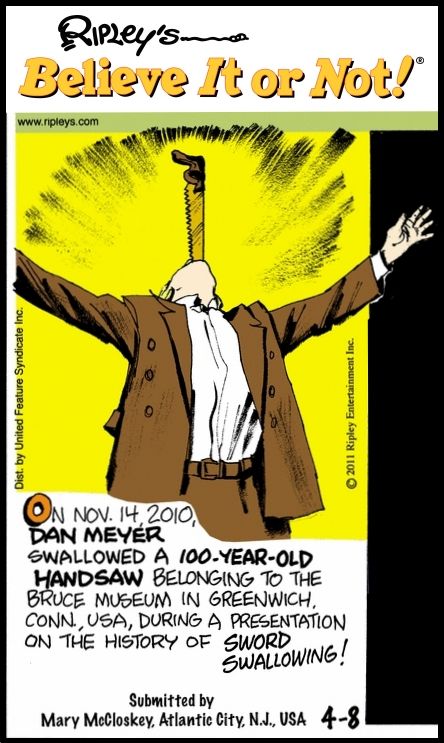
Those who followed Ramo, particularly in this country, sought to distinguish themselves with longer swords, multiple swords, hot swords, cutlasses, bayonets and even glowing neon Star-Wars swords.

The Sword Swallowers Association International (yes, there is one) reports that there are fewer than a dozen professional sword swallowers actively performing today. That led the association to create World Sword Swallowers Day (yes, there is one) “to honor and celebrate these courageous and daring performers” and to bring together dozens of amateurs and professionals for a sword swallowing extravaganza. The celebrations help raise funds for the Injured Sword Swallowers Relief Fund (yes, there are injuries).

And occasional deaths. But — mea culpa for misleading you — Ramo Sammee did not die by the sword.

November 6, 1982: Antifreeze and Old Lace

In Arsenic and Old Lace, a delightfully dark stage play adapted into a movie by Frank Capra, Mortimer Brewster (Cary Grant) has an eccentric family that includes two brothers – one of whom thinks he’s Theodore Roosevelt digging the Panama Canal in the basement, the other a killer who’s had plastic surgery to make him look like Boris Karloff – and two spinster aunts who have taken to murdering lonely old men by poisoning them with home-made elderberry wine laced with arsenic, strychnine, and “just a pinch” of cyanide. Generally, poisoners aren’t as sweet as these two old ladies.

Take the case of Shirley Allen, arrested on November 6, 1982, charged with murdering her sixth husband Lloyd. Shirley certainly wasn’t as sweet as the two old ladies, nor nearly as successful. Her first attempt at poisoning was believed to be an early husband, Joe Sinclair, back in 1968. When his coffee began to taste odd, he didn’t buy the idea that it was the newest flavor of the month, reasoning that Juan Valdez Free Trade Almond Praline Decaf should not give him internal injuries.  Joe went to the police, but no charges were filed. He filed for divorce, however.

Another husband, John Gregg, was not so lucky. He died a year after he married Shirley. He must have sensed that something was amiss because he changed the beneficiary of his insurance policy shortly before he died. Shirley got nothing. As you might guess, she was miffed. A pink-haired, large-bosomed barfly was rather happy, however.

Lloyd Allen was Shirley’s sixth husband. He began to complain of a strange taste in his beer. When Shirley said that it was an iron supplement that would put a tiger in his tank, Lloyd believed her and promptly died. This time she was named as beneficiary of a $25,000 life insurance, but alas her daughter told police about the doctored beers. Toxicology reports confirmed that Lloyd’s body tissue contained a lethal amount of ethyl glycol – antifreeze. Shirley went to prison for life. She was never allowed to work in the prison cafeteria.


NOVEMBER 1, 1944: MAN’S BEST FRIEND IS HIS RABBIT

Elwood P. Dowd first walked onto a Broadway stage at the 48th Street Theatre on November 1, 1944.

Elwood is a good-natured soul who has a friend no one can see – a six-foot, three-harveyand-one-half-inch tall rabbit named Harvey, the titular character in the play by Mary Chase. A film version in 1950 featured James Stewart as Elwood.

Elwood, being outgoing and a perfect gentleman, naturally introduces Harvey to everyone he meets. His sister, Veta, increasingly finds his eccentric behavior embarrassing to her and her daughter Myrtle Mae’s would-be social status. Six foot rabbits are not particularly welcome among the country club set (and since he’s invisible, no telling what color he is). Veta decides to send Elwood packing to a sanitarium to solve the giant rabbit problem, setting in motion a comedy of errors instead.

Actually, according to Elwood, Harvey is a pooka, a deft shapeshifter, able to assume a variety of forms – dog, horse, goat, goblin, and of course rabbit. These forms may be pleasing or terrifying. A good pooka is a benevolent creature with the power of human speech, able to give sound advice and steer you away from evil. The bad pooka, on the other hand, is a blood-thirsty, Donald Trump-like creature who’d just as soon eat you as look at you.  Harvey is presumably the former.

Doctors plan to give Elwood a serum that will stop him from “seeing the rabbit.” As they prepare for the injection, Veta is told by their cab driver about all the other people he has driven to the sanatorium to receive the same medicine, warning her that Elwood will become “just a normal human being.  And you know what bastards they are (stinkers, in the movie).” Veta has a change of heart and halts the procedure after which Veta and Myrtle Mae, Elwood and Harvey all ride off on the bunny trail into the sunset.

A Gallery of Other Notable Rabbits

OCTOBER 30, 1938: JUST ME AND MY RADIO

It’s easy from the comfort of our 21st century recliners to dismiss the mass hysteria of an earlier generation as so many Chicken Littles or Turkey Lurkeys, afraid of their own shadows. We’ve seen it all, any horror one can imagine, right there on the screen in front of us, and should it become too squirmy, well we can always just hit a button. The remote is there to protect us.

But what if you were at home, alone perhaps, on that October night back in 1938. It’s dark out; Halloween and all its spookiness is just a day away. But there’s the radio to keep you company. Like millions of other Americans, you’ll tune in to Edgar Bergen and Charlie McCarthy. That should lighten up a dark night. They finish their comedy routine at ten after eight. A singer you’ve never heard of follows so, like millions of Americans, you surf the radio stations (Wasn’t there supposed to be a dramatic program on?) pausing to hear an unenthusiastic announcer: “. . . the Meridian Room in the Hotel Park Plaza in downtown New York, where you will be entertained by the music of Ramon Raquello and his orchestra.” You listen for a minute; it’s not that great. You’re all set to surf again when the announcer interrupts, reporting that a Professor Farrell of the Mount Jenning Observatory has detected explosions on the planet Mars. The music returns, but only for a minute. The announcer is back with the news that a large meteor has crashed into a farmer’s field in Grovers Mills, New Jersey.

Now your ears are glued to the radio, as announcement after announcement confirms the impossible – a Martian invasion. “Good heavens, something’s wriggling out of the shadow like a gray snake. Now here’s another and another one and another one. They look like tentacles to me … I can see the thing’s body now. It’s large, large as a bear. It glistens like wet leather. But that face, it… it … ladies and gentlemen, it’s indescribable. I can hardly force myself to keep looking at it, it’s so awful. The eyes are black and gleam like a serpent. The mouth is kind of V-shaped with saliva dripping from its rimless lips that seem to quiver and pulsate.”

Now’s the time to surf the radio. If you do, you’ll quickly realize that everything is normal on other radio stations, that you’ve been listening to a realistic but fictional radio drama. But if you don’t, chances are you’ll join the thousands of people jamming highways, trying to flee the alien invasion.

Orson Welles was just 23 years old when his Mercury Theater company broadcast its update of H.G. Wells’ War of the Worlds with no idea of the uproar it would cause. He employed sophisticated sound effects and top notch acting to make the story believable.

And believed it was. In Indianapolis, a woman ran into a church where evening services were being held, yelling: “New York has been destroyed! It’s the end of the world! Go home and prepare to die!”

When the actors got wind of the panic, Welles went on the air as himself to remind listeners that it was just fiction. Afterward, he feared that the incident would ruin his career, but three years later he was in Hollywood working on Citizen Kane.

October 13, 1947: Before There Were Muppets

The name Frances Allison probably doesn’t ring a bell with most people. In the days of live programming and test patterns, the radio comedienne and singer became well known to those who huddled around the TV set early evenings to watch the misadventures of the Kuklapolitan Players.  She was better known simply as Fran, and she was one-third of the trio Kukla, Fran and Ollie.

Created by puppeteer Burr Tillstrom, the show got its start as Junior Jamboree locally in Chicago, on October 13, 1947. Renamed Kukla, Fran and Ollie, it began airing nationally on NBC in early 1949.  Although the show, all puppets except for Fran, was originally targeted to children, it was soon watched by more adults than children. It was entirely ad-libbed.

Fran assumed the role of big sister and cheery voice of reason as the puppets engaged each other in life’s little ups and downs. It was a Punch and Judy kind of show but with less slapstick and more character development. Kukla was the nerdy leader of the amateur acting troupe, plucky and earnest, and Ollie (short for Oliver J. Dragon) was his complete opposite, a devilish one-toothed dragon who would roll on his back when sucking up or slam his chin on the stage when annoyed. Joining them were Madame Oglepuss, a retired opera diva; Beulah, a liberated witch; Fletcher Rabbit, a fussy mailman, and several others.

KFOs fan base included Orson Welles, John Steinbeck, Tallulah Bankhead, and Adlai Stevenson among many others.  James Thurber wrote that Tillstrom and the program were “helping to save the sanity of the nation and to improve, if not even to invent, the quality of television.”

Kukla, Fran and Ollie ran for ten years until 1957.  Mister, we could use a Kukla, Fran and Ollie today.

To Swazzle or Not To Swazzle

Kukla and Ollie didn’t come on the scene until the mid-20th century; but puppets has already been around for some 4,000 years. And they come in many different flavors: marionettes, finger puppets, rod puppets. The Tillstrom characters are glove puppets, controlled by a hand inside the puppet.

Punch and Judy are the most famous of this type of puppet. Their first recorded appearance in England was during the Restoration when King Charles II replaced wet blanket Oliver Cromwell and the arts began to thrive. Punch and Judy shows generally feature the fine art of slapstick with characters hitting each other as frequently as possible.

Punch speaks with a distinctive squawk, created by means of a swazzle, an instrument held in the mouth while speaking. Punch’s cackle is deemed so important in Punch and Judy circles (yes, there are Punch and Judy circles) that a non-swazzled Punch is considered no Punch at all.

“I knew Punch. Punch was a friend of mine. Senator, you’re no Punch.”


October 3, 1874: Pathetic Earthlings, You Know Who You Are

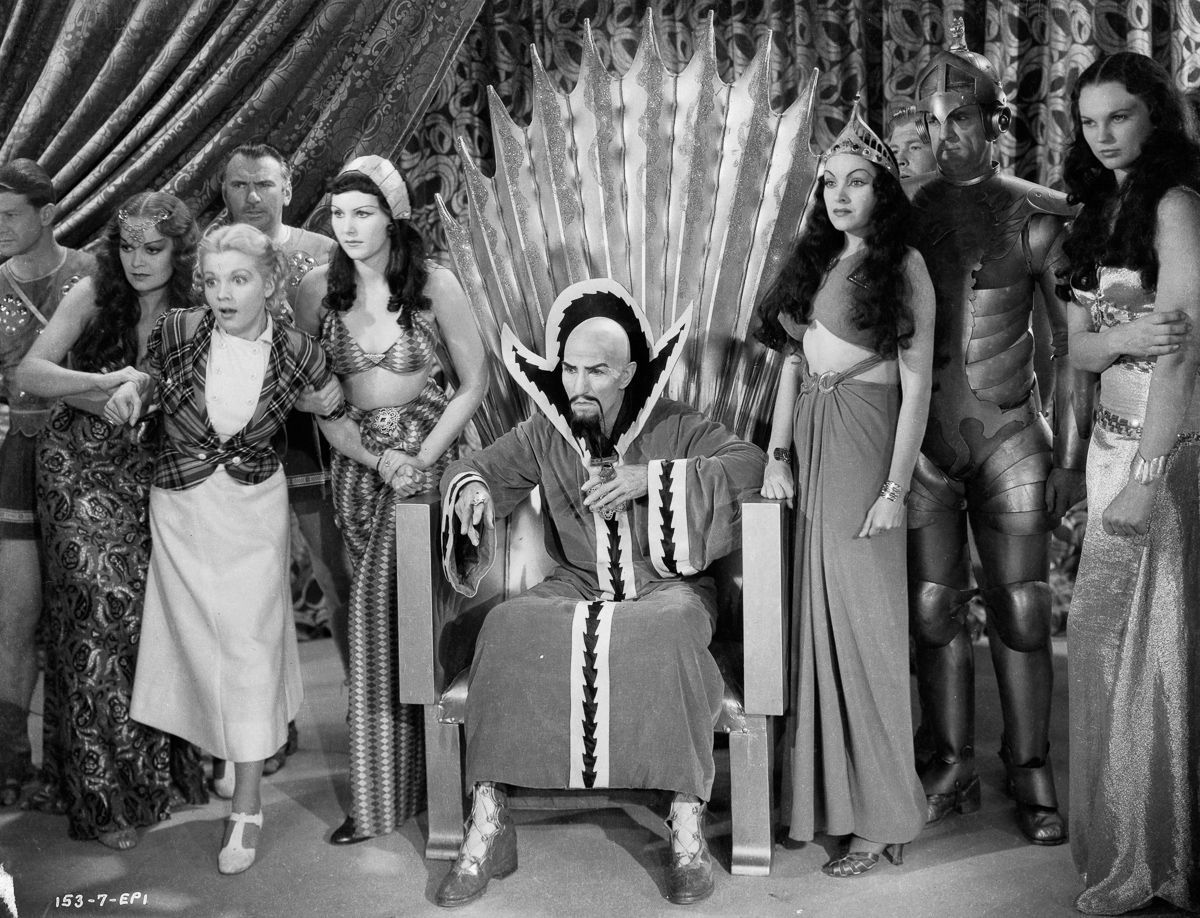
Although the name Charles Middleton (born in Kentucky, October 3, 1874) doesn’t invite instant recognition, his face — or at least one of his faces — certainly does. He worked in vaudeville, on the legitimate stage, and in traveling circuses before striking out as a motion picture actor in 1920. His career took off when sound came to the movies, thanks to a deep, menacing voice that dripped villainy.

To many generations he will always be the villain he played for the first time in 1936, one of film’s most notable nasties — Ming the Merciless. The evil enemy of the entire universe first appeared in the serial Flash Gordon, battling wits with Buster Crabbe’s Flash. He reprised his role in Flash Gordon’s Trip to Mars (1938) and Flash Gordon Conquers the Universe (1940).

Middleton appeared in 200 movies. He died in 1949.

Pathetic earthlings. Hurling your bodies out into the void, without the slightest inkling of who or what is out here. If you had known anything about the true nature of the universe, anything at all, you would’ve hidden from it in terror.

Cheap Halloween Thrills

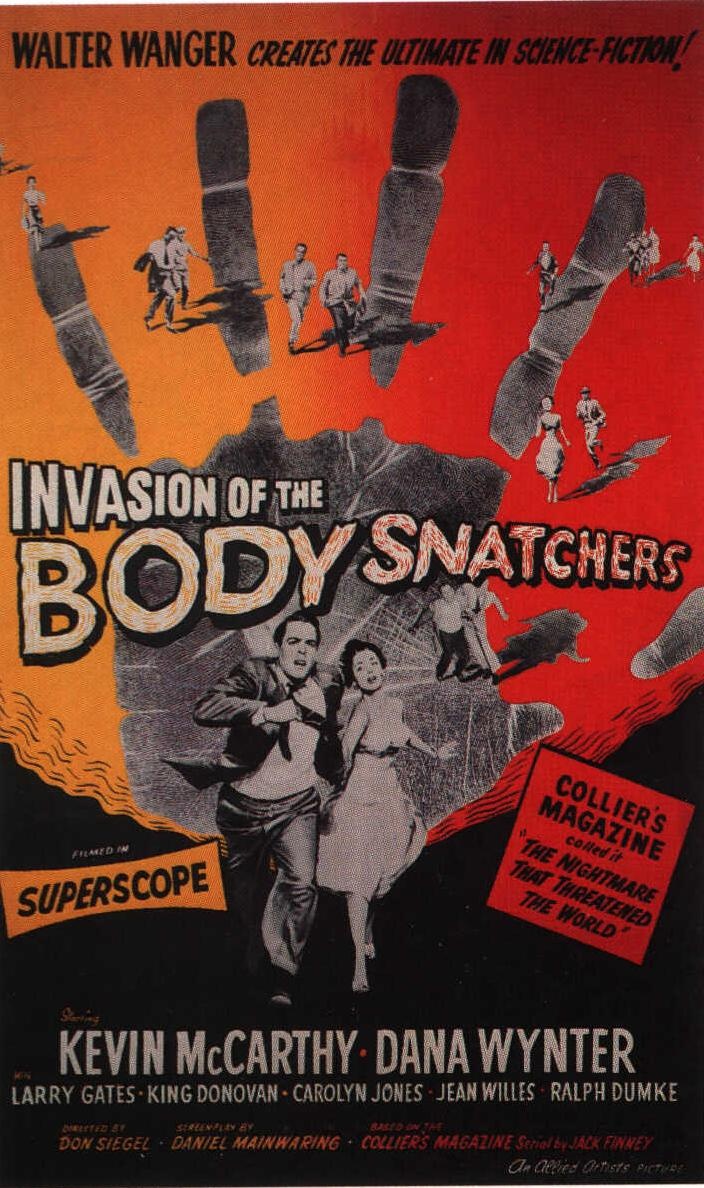
If Ming doesn’t get us pathetic earthlings, these guys might. There’s something terribly strange going on in tiny Santa Mira, California. Friends and loved ones have suddenly become emotionless body doubles, all thanks to those strange pods that have been popping up everywhere. Kevin McCarthy has discovered the truth, an alien invasion of human duplicates. Trouble is, no one believes him. As much a horror film as sci-fi, the 1956 Invasion of the Body Snatchers is also a political allegory with most of the scariness in its theme.


October 2, 1851: That Hit the Snail on the Head

Jacques Toussaint Benoit was a man with a vision, more specifically a Frenchman with a vision, even more specifically a French wizard who had a vision that involved snails. You might call him a snail whisperer. And on October 2, 1851, he set about proving his theory of the telepathic power of these cunning little gastropods.

Benoit believed that when snails mated, they didn’t just fool around, but rather they created an invisible thread that linked them together in a sort of “sympathetic communication,” allowing them to have conversations even at great distances. Instantly. Wirelessly.

Benoit had constructed an apparatus to which he gave the snappy name pasilalinic-sympathetic compass, known more familiarly as a snail telegraph. Long wooden beams supported zinc bowls lined with cloth soaked in copper sulphate — 24 pairs. Snails were glued to the bottom of each bowl. Snails in the first 24 bowls were each assigned a letter of the alphabet; in the second 24 bowls, their significant others had the same letter of the alphabet. To send a message, one would tap it out on the first set of snails and it would be received by the second set of snails. Simplicity itself.

On the day of the great demonstration before Benoit’s one financial backer and a journalist, Benoit ran back and forth between the sender and receiver just to make sure they were touching and reading the snails correctly. A message was sent and received (although it was full of typos). Benoit’s backer suspected a hoax. He demanded a second test.

On the scheduled day of the second test, Benoit was nowhere to be found. He was spotted occasionally wandering the rues of Paris during the next two years before his death. Nobody continued his work.

Maybe If These Guys Had Had Snails

It took a couple of thousand years for us terrestrials to take aviation from a crazy notion to the reality of that flight in Kitty Hawk in 1903. It took less than seven years for these flying contraptions to start bumping into each other. The first mid-air collision took place on October 2, 1910, in Milan, Italy. There you go smirking about those crazy Italians, but one plane had an English pilot, the other French. They didn’t really walk away from the encounter, but both men survived.

How He Got in My Pajamas I’ll Never Know

Groucho (Julius Henry) Marx was born on October 2, 1890. During his seven-decade career, he was known as a master of quick wit and rapid-fire, impromptu patter, frequently filled with innuendo.  He made 26 movies, 13 of them with his brothers Chico and Harpo, and many with Margaret Dumont as a stuffy dowager and the butt of Groucho’s jokes. The films included such comedy classics as The Cocoanuts, Animal Crackers, Monkey Business, Horse Feathers, Duck Soup, A Day at the Races, and A Night at the Opera. He also had a successful solo career, most notably as the host of the radio and television game show You Bet Your Life.

groucho

AUGUST 29, 1769: WICKED WITCH OF THE WHIST

In 1769 London, a gentleman died at the ripe old age of 97. Although little is known about the gentleman himself, his name has traveled down through the years and is more familiar to us today than to those who might have rubbed elbows with the man back in the eighteenth century. His name was Edmond Hoyle, and although he was a barrister by trade, he is now known for law only as it applies to games of chance. And he is much more recognized by his nickname ‘According to.”

     Hoyle laid down the law for the game of Whist in a widely circulated treatise on the subject. He also had a great deal to say about backgammon, quadrille, piquet, and chess. He was, we might surmise, one of those wet blankets who must rain on card-game parades (to jumble metaphors, about which Hoyle had nothing to say) with their whining “but the rules say” or “according to Hoyle.”

     But Whist was his long suit. This venerable game provides ample material on which to pontificate, and pontificate Hoyle did. A forerunner of Bridge, Whist is all about taking tricks. Who takes them, and when and how and why gives the game a wide variety of flavors from which to choose. There’s Knockout Whist, a game in which a player who wins no trick is eliminated, sent to stand in a corner; Solo Whist, a game where individuals can bid to win 5, 9 or 13 tricks or to lose every trick; Kleurenwiezen, an elaborate Belgian version of the game, filled with Gallic mischief; Minnesota Whist, played to win tricks or to lose tricks (talk about flexibility); Romanian Whist, a game in which players try to predict the exact number of tricks they will take; German Whist for two very aggressive players who take tricks from Poland without prior warning; Bid Whist in which players bid to determine trump and one player is a dummy who sits out the hand; and Danish Whist, in which the dummy brings pastries to the other players.  But England lays claim to most of the true Whist players. It is easy to imagine a group of eighteenth century British aristocrats at their club. “Shall we have a go at a spot of Whist?” “Capital idea.” “Jolly.” “According to Hoyle . . .”


AUGUST 25, 1913: WE HAVE MET THE ENEMY

Starting his career as an anonymous young storyboard artist for Walt Disney Productions on Donald Duck cartoons and other shorts, the cartoonist who would later be compared to everyone from Lewis Carroll and James Joyce to Aesop and Uncle Remus moved to the animation department in 1939. There, during the next five years he contributed to such Disney classics as Pinocchio (Gepetto in the whale), Fantasia (a drunk Bacchus riding a donkey), and Dumbo (the crow sequence).  Walt Kelly was doing pretty well at $100 a week.

During the 40s, Kelly devoted himself more and more to comic book art at Dell. The little possum with whom he is now most closely associated came on the scene in 1943 in Dell’s Animal Comics. Pogo would go on to star in 16 issues of his own comic book and 26 years as a syndicated newspaper comic strip.  Along with Pogo, there were  Albert the Alligator, Churchy LaFemme (a turtle), Howland Owl, Beauregard (Houndog), Porkypine, and Miz Mamzelle Hepzibah (a skunk).

Kelly’s liberal political and social views were rarely disguised as he used the strip to champion the powerless and the oppressed and to satirize political dogmas and figures such as Senator Joseph McCarthy (Simple J. Malarkey, a gun-toting bobcat), Vice President Spiro Agnew, and FBI Director J. Edgar Hoover. Many newspapers dropped Pogo, and others moved it to the editorial page. Walt and Pogo were probably most remembered for their campaign on behalf of the environment and the battle cry: “We have met the enemy, and he is us.”

Walt Kelly died in 1973.

kelly